Religion
Mystical Theology 1: The Reformation of the Heart
Mystics locate nearness to God not in the purification of the mind but in the reformation of the heart and its attachments. Drawing on Rumi's parable of the mouse and the wheat store, Hamid Entezam describes vices as the openings through which Satan enters, and sees the struggle against the self as the path to deliverance and freedom from worldly bonds.
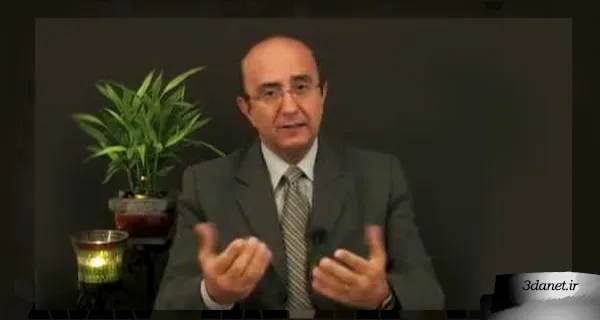
Text of Hamid Entezam's lecture titled Mystical Theology 1 (The Reformation of the Heart) - 2007 In this series of sessions, Hamid Entezam explains and elucidates God from the perspective of mystics. It should be noted that this series of sessions on mystical theology continued for 18 sessions.
Session One: The Reformation of the Heart
Essentially, all of us religious people seek to draw near to God Almighty or attain proximity, and to acquire as much knowledge and information about God as possible. The question is, what is the best form of proximity to God? In our daily prayers, we repeatedly recite the phrase: ((Qul Huwa Allahu Ahad)). One of the meanings of "Ahad" is that because He is unique, He is, in a sense, also beyond reach; it is as if God has cast a veil around Himself and does not wish to be known beyond a certain stage. That is, He is singular and alone. And we, as humans with our limited capacity, must be content with removing the veils that stand between us and God to the extent of our ability. Although the veils will never be completely removed, and we will never be able to know God perfectly. Now, the question is, what things distance us from God?
The answer of Muslim philosophers to this question of what distances us from God has always been "ignorance." That is, the veil between man and God is "ignorance." And ignorance means the mind being empty of knowledge and data. But the mystics believed that salvation and deliverance lie not in the refinement and purification of the mind, but in the refinement and purification of the heart. It is not intellectual persuasion that leads people to moral action, but rather love and attachment to something. That is, it is loving and being attached to something that ultimately causes people to seek something. If we want to bring about reform in the world, we must reform attachments, not just mentalities. For example, you want to invite and encourage your child to something; if you proceed solely through talk, preaching, and advice, it will not be effective; you must somehow plant the love of that new thing in your child's heart. If you succeed in planting the love of that thing in your child's heart, your child will become captivated by and attached to that matter. The mystics say, if you want to reform someone's behavior, reform their attachments. In any case, if the mental image were truly sufficient, then whenever we sent people to school and academy, society would be morally reformed. But in principle, we see that this is not the case. How many teachers of ethics are themselves deeply contaminated with corruption; how many people are intellectually persuaded that a certain act is bad, yet they still perform it. And this itself shows that intellectual persuasion is not enough. Something more than this must be at work. Rumi teaches us this very point in the story of "The Mouse and the Wheat Granary." The story goes that some people were harvesting wheat and pouring it into a room, but there was a problem: there was an opening in this room through which mice would enter and eat the wheat:
We labor in this granary of wheat,
The gathered wheat we lose, incomplete.
And then Rumi says, piling wheat in a room that has a hole only attracts mice and, for the time being, adds a plague upon plagues. That is, perhaps if there were no wheat in this house, there would be no mice in the house either. But as soon as you bring wheat into the house without having made preparations and without having blocked the mouse holes and crevices, this not only brings you no good, but perhaps great losses will also become apparent in its wake.
We think at last, with our conscious mind,
This damage to the wheat is from the mouse's guile we find.
Since the mouse has dug a hole into our store,
And by its cunning, our store is ruined evermore.
First, O soul, repel the evil of the mouse,
Then, among the wheat, be fervent
Rumi's point is that as long as we have not closed the portals of the heart, demons can infiltrate the house of our being. As long as these portals for the demon's infiltration exist, our acquisition of knowledge bears no fruit. These portals for the demon's infiltration are those things we call moral vices. Things like envy, oppression, cruelty, hypocrisy, consuming the property of others, lying, greed, and so on. Each of these, on its own, is a portal through which mice enter the house of our being. Rumi says that as long as these portals exist within us, the teachings of religions will be of no avail:
First, O soul, repel the mischief of the mouse
Then, among the wheat, be fervent
One of the principal pillars of the prophetic mission is drawing human attention to the matter of abundant freedom. Rumi had well grasped this firm pillar of the prophetic mission and said:
Since, through freedom, prophethood is a guide
The believers have a freedom from the prophets
Of course, you are aware that what Rumi and other Muslim mystics mean is not political and social freedoms. The freedom to which the prophets invited and to which they devoted their efforts was freedom from the attachments, vices, and strangers that make their home within us. Each of these vices is a fetter on our feet—fetters that prevent us from ascending and detaching ourselves from the earth. For the time being, the prophets' call was for us to seek freedom. The term the Prophet of Islam used was falāḥ, which in today's expression is "freedom." When we say that the prophets called on us to free ourselves from strangers, we are implicitly saying that things enter our inner being and the house of our heart that are not our own; they are not of our kind, yet they appear to be. Most of us, when we commit an ugly act, after a while become distressed, as if our conscience reproaches us. The very fact that we commit an ugly and repulsive act and then blame ourselves indicates that these vices are alien to us. If they were our own and of our kind, we would find peace in performing them, not be afflicted with anxiety, worry, and dread. So, fundamentally, the prophets teach us that strangers infiltrate our inner being, and if we wish to attain peace, we must expel those strangers from within. In any case, expelling strangers and cleansing and refining the inner self has been given many names in the mystical culture of Islam. The ancients called it tazkiyat al-nafs (purification of the soul), and our later scholars call it khod-sāzī (self-cultivation). Our Sufis called it riyāḍa (in its literal sense, riyāḍa means taming and training wild animals; in Sufi terminology, it refers to a spiritual wayfaring and a strict behavioral regimen so that one may rein in the commanding self). To a large extent, these convey the same meaning. So far, we have said that the Prophet's call is essentially to freedom—the freedom that the Prophet terms falāḥ, that the ancients called tazkiyat al-nafs, that later scholars call khod-sāzī, and that the Sufis called riyāḍa. Now I wish to sum it up under a key term that the Holy Prophet used, and that term is jihād al-akbar (the greater struggle). In the words of the Noble Prophet, the greater struggle is the struggle against our own self. Essentially, jihād al-akbar means that a person strives earnestly and without laxity in guarding the self. The first and preliminary stage of jihād al-akbar is, in fact, practical adherence to ethical standards. At first, one avoids vices, but this is the negative aspect. It also has a positive aspect, which is performing good deeds. At higher stages of jihād al-akbar, the believer stations a guard and sentinel over their eyes so that their gaze is not directed at every sight. That is, over time, a person refrains from looking at things that are not explicitly declared forbidden in jurisprudence. The Commander of the Faithful, Ali (peace be upon him), in the Sermon of the Pious in Nahj al-Balagha, mentions one of the qualities of a pious person as follows: the pious person closes their eyes to what God has forbidden them. For a mystic, the forbidden things upon which one must not cast one's eyes extend beyond the scope of jurisprudence; in other words, jurisprudence teaches us the minimum of prohibitions that we must avoid, not the desired maximums. Essentially, the audience of jurisprudence is the common people, and for the time being, nothing more than the minimums is demanded of the common people, but the elect have a special discussion. In any case, for one who wishes to attain higher degrees of nearness to God, seeing other things also becomes forbidden for them, because seeing certain sights can fundamentally make them heedless of God. That is, there are matters that are not forbidden, but if a person looks at them too much, they in fact divert their eyes from higher sights. In any case, if a person turns their attention to those matters, over time they fall into the trap of vulgarity, and their attention becomes caught up in lowly sights. For one who, as Rumi says, aspires to the heights, looking at certain things drives them backward. Rumi addresses the following lines to God:
Would that my soul knew naught but You,
Knew not itself, save You, O soul that knows my meaning.
Whatever I see but Your face, the light of my eyes diminishes;
Admit not everyone, O curtain of my eyelashes.
He says: I set a guard upon my eye, so that nothing other than Him may find its way into my eye. In the same manner, in the greater struggle it is also an obligation that we set a guard upon our ear, so that we do not hear everything. Again, the Commander of the Faithful, Ali (peace be upon him), in describing the pious, says that the pious person entrusts the ear only to speech that is beneficial. Beneficial means that which aids one toward a goal. If something brings us closer to a goal, that thing is beneficial. And if it distances us from the goal, it is called harmful. And between the harmful and the beneficial, there are also things that are neutral, meaning they have neither benefit nor harm; these are called play and amusement. The Quranic term for these games and amusements is laʿib and lahw. In any case, the key point is this: the reason mystics do not permit gazing in every direction and at everything, or listening to everything, is that “whatever the eye beholds, the heart holds dear.” At the outset I said that attachments must be changed; now, if you wish to change your attachments, be careful what your eyes and ears turn their attention to. For the human heart is at the command of its senses. The human heart is subject to the information that channels such as the eyes, ears, and other senses convey to it, and for the time being, the heart’s window to the outside is nothing other than things seen and heard. It is from this perspective that mystics are very strict with themselves regarding what they look at and what they listen to. For the time being, mystics had well understood that one must not only avoid forbidden things, but that for the gradual refinement and purification of the soul, one must also avoid the snare of every temptation that creates heedlessness. For if something is allowed entry into the house of our heart, it will stamp its affection upon our heart. And if the affection, love, and memory of something settle in the human heart and soul, over time they will become his qibla and his object of devotion. It is for this reason that the mystic says we must also set a guard upon the heart, so that the affection and love of just anything do not enter the heart; for if the love of any unworthy and alien thing settles in the human being, he develops an attachment to it and becomes bound to it, and over time that matter will become his qibla. The qibla toward which we pray every day is merely a symbol and an emblem. The aim is that we know what our qibla in life is and to what matters we are attached. Now, it may suffice for a superficial person merely to know that he prays toward the Kaaba, but for the mystic this is a minimum. The ultimate ideal is to know where the qibla lies in life. Wherever your qibla is, your priorities in life will be directed toward that matter. Recall the famous saying of the great Iranian Muslim mystic Abu Saʿid Abu al-Khayr, who says: You are the servant of that to which you are bound. Whatever you are bound to, you are the servant and devotee of it. In any case, a guard must be set upon the heart so that the affection and love of just anything do not enter the human heart. In Islamic mysticism, murāqaba (watchfulness) serves this very purpose: being watchful over what enters the eye, the ear, and the heart. In the Quran, in verse 36 of Surah al-Isra, it is stated: “And do not pursue that of which you have no knowledge. Indeed, the hearing, the sight, and the heart — about all those [one] will be questioned.” Here, the organs and faculties are individually responsible, not merely all of them together. In any case, such watchfulness is specific to those enraptured ones whose direction of movement is the Face of God.
One of the fundamental principles of mystical wayfaring is that a person should gather and concentrate their inner self and be oriented toward a single qibla. A person must avoid dispersion in their attachments and attentions. You will understand this better with an example. When you take a magnifying glass and hold it over a piece of paper, when sunlight passes through it, after a while that point on the paper where the light is concentrated burns. The paper burns because the light is gathered at a focal point. If our existence were like a magnifying glass, with all our attentions, potentials, and talents directed toward a single point, what a transformation and revolution would occur! It would set our present existence on fire and destroy it, and bring us a new existence. In the Holy Quran, God says that the difference between a God-worshipping person and a person who does not worship God boils down to one thing: the God-worshipping person has one claimant, but the God-denying person has many claimants: (( ضَرَبَ اَللّٰهُ مَثَلاً رَجُلاً فِيهِ شُرَكٰاءُ مُتَشٰاكِسُونَ وَ رَجُلاً سَلَماً لِرَجُلٍ هَلْ يَسْتَوِيٰانِ مَثَلاً اَلْحَمْدُ لِلّٰهِ بَلْ أَكْثَرُهُمْ لاٰ يَعْلَمُونَ)) God sets forth a parable: a man who has quarrelsome partners, and another man who is wholly devoted to one man—are the two equal? Imagine a person who has partners and claimants all crowding upon him; one pulls his hand in one direction, and another pulls his hand in another direction. Someone pulls him from behind toward themselves, and someone else grabs his shirt from the front and pulls him toward themselves. If we human beings are truly like this, with every claimant pulling our existence in their own direction, we are exactly like a cart to which horses are harnessed that move in different directions, and nothing will remain of this cart, and the cart will be torn apart. God says that a person who is not a God-worshipper and is a polytheist has many claimants, each pulling them in a direction, and that individual no longer belongs to themselves and cannot attend to themselves, and must answer to a thousand people at once. In contrast to the polytheistic person stands the monotheistic person, who faces a single qibla, must answer to one place, and whose entire attention is directed toward one matter. This was the first part of my remarks, so, for the time being, the veils that exist before us are mostly of the kind of moral vices, which are the openings through which devils infiltrate us. The Greater Jihad is, in truth, an effort to purify the inner self of these vices. Each of these vices that we practically remove from ourselves, one of the veils between us and God is lifted, and we draw closer to God and attain a better knowledge of the Truth.
And now the second part of my remarks. Another matter that helps in removing the veils is precisely what is referred to in Islamic mysticism as removing the rust from the mirror of the heart; that is, the mystic seeks to polish their heart. That which has literally become common as the 'pure-hearted person.' A pure-hearted person is someone who has managed to cleanse the mirror of their heart from rust. Purification and refinement of the soul, cleansing the self of vices, and adherence to moral standards bring many blessings and good deeds for a person. The first blessing of living morally is that a person attains peace. One who does not lie, does not envy, and so on, has peace. Each of these vices that we remove from ourselves is a step we take toward inner peace. Faith is nothing other than this. Faith, in its etymological root, comes from 'amn' (security). That is, a person who has reached security and peace. This is the first blessing and benefit of living morally. But living morally also brings blessings and benefits for society. This is what Rumi says: 'I am secure, and from you a world is in security.' You have become secure and found peace, and from your security and peace, a world is at peace and security because of you. These are the minimums of living morally. In addition to these blessings and good deeds of living morally, the mystics said that purification of the soul and refinement of the inner self also polish the mirror of the heart and prepare the heart for the Truth to shine upon it, for God to manifest within it. A mirror that is murky and covered with rust cannot reflect images well. It cannot report the Truth as it is. For the time being, the mirror must be polished so that the ultimate Truth, which is God, may shine upon it. And this is what we call unveiling and witnessing in mysticism. In explaining this matter in the first book of the Masnavi, Rumi tells the story of the Romans and the Chinese. The people of China and Rum were disputing and quarreling with each other over skill in the art of painting. Finally, the king said, 'We shall arrange a contest, and in this contest you will display your art of painting':
The Chinese said, We are the better painters
The Romans said, Ours is the glory and splendor
The Sultan said, I will put you to the test in this
To see which of you is worthy in his claim
For the contest, they designated two walls that faced each other, so that conditions would be completely identical, and they drew a curtain between these two walls. They gave one wall to the Romans and one wall to the Chinese to paint on for a while, until the day of the contest when the curtain would be removed. The Chinese asked the king to provide them with many materials, such as paint and brushes.
The Chinese asked the king for a hundred colors
So that noble one opened his treasury
Every morning from the treasury, colors
Were a stipend for the Chinese from his bounty
And then they busied themselves with mixing colors and then drew designs upon the wall. Thus, the Chinese were gatherers of external means. But the Romans said:
The Romans said, Neither design nor color
Is fitting for the work, only the removal of rust
They shut the door and began to polish
They became simple and clear like the sky
The Romans asked for no materials or colors at all and said, We only polish and remove the tarnish from the wall given to us, and no color or design is of any use to us. For the time being, they busied themselves with polishing the wall and became clear and simple like the sky. Rumi now makes a digression to state the first point of his story:
From a hundred colors, there is a path to colorlessness
Color is like a cloud, and colorlessness is like the moon
He says color is like a cloud; the cloud is a veil between the moon and the sun. Whereas colorlessness is like the moon and the sun, which are pure light. Light has no color of its own; only when it penetrates an object does it take on the color of that object. Rumi says we must seek colorlessness, not desire many colors. A polytheistic person takes on the color of everyone he meets. He has a hundred colors but no color of his own. Rumi's first point is that one must follow the path of the Romans, who sought no color. In any case, the Romans polished and the Chinese painted, and the day of judgment arrived:
When the Chinese had finished their work
They beat drums for joy
The king entered and saw the designs there
They stole away the mind and understanding
After that, he came towards the Romans
They drew up the curtain from between
The reflection of those images and those works
Struck upon these polished walls
All that he saw there, appeared better here
It stole the eye from its very socket
The king was dazzled by the painting of the Chinese, but when he turned to the painting of the Rūmīs, whatever the Chinese had drawn was polished on the wall and reflected like a mirror by the Rūmīs, and the original appeared even more beautiful. Whatever the king saw on the wall of the Chinese appeared better and was revealed more beautifully on the wall of the Rūmīs. Now Rumi wants to draw a conclusion:
The Rūmīs are those Sufis, O father,
without repetition, book, or art.
But they have polished those breasts,
pure from greed, avarice, stinginess, and hatreds.
That purity of the mirror is the description of the heart,
it is capable of receiving the infinite form.
He says that Sufis are essentially those who devote themselves to polishing their inner being. They cleanse their hearts of vices and make them as clear and transparent as a mirror so that truths may shine upon them. If the heart attains purity, gains luster, and becomes clear, it can manifest countless forms and images. In any case, elsewhere in the Masnavi, Rumi wants to explain why some people are veiled from the truth. God willing, in future sessions you will see that the one who has found a pure inner being sees God manifestly: "The sun is the proof of the sun"; Rumi says the light of the sun is the best proof of the sun. But people who are trapped behind these veils do not see the sun. Now Rumi wants to teach why some people are veiled from the truth and cannot see the obvious:
Do you know why your mirror tells no tales?
Because the rust is not distinguished from its face.
Cleanse the rust from its face,
then perceive that light.
He says, do you know why the mirror of your being does not show truths well? Why does it not bear witness and testify to truths? And why is your being not a good reporter of truths? Because dust has settled on the mirror of your being. The mirror of your heart has become rusted and darkened. A darkened mirror cannot reflect realities clearly. These rusts are the very vices. A being stained with vices never perceives truths. In any case, it is for this reason that the mystics proposed a spiritual wayfaring that was, in truth, for removing the rusts from human existence. For removing the chains from the hands and feet of the human psyche. This wayfaring and these ascetic practices were for making the human a mirror worthy of displaying God.
One of the major veils that I wish to single out from among the veils and say is perhaps the thickest of veils, and which we must strive to the utmost to remove, is arrogance and rebelliousness. One of the moral vices referred to in the Holy Quran, and from which we are emphatically urged to distance ourselves, is pride and arrogance. In verse 18 of Surah Luqman and verse 23 of Surah Al-Hadid, God says He does not love any arrogant boaster. That is, if a person is arrogant and boastful, they will never be granted the success of beholding God and attaining nearness to God. Essentially, the core of the prophetic anthropology was that human beings are inherently and generally rebellious, and as long as this disobedience and rebelliousness exist in humans, as long as selfishness and self-regard are dominant in humans, a person cannot properly and correctly benefit from themselves. They cannot actualize the talents God has bestowed upon them and bring them to fruition. It is for this reason that, according to this prophetic anthropology, the Holy Quran teaches that rebelliousness and disobedience ultimately lead to ruin, decay, and destruction. This rule holds true both for individuals and for human societies. Now the question is: why does the human being rebel and disobey? The Holy Quran gives the answer explicitly: whenever a person feels self-sufficient and without need, they rebel. The reason you see such great emphasis on the


Discussion0 comments
No comments yet; let yours be the first voice.