Religion
Mystical Theology 4: Divine Love
In his exposition of mystical theology, Hamid Entezam argues that love is a more effective path to perfection than fear. Drawing on Quranic verses and the poetry of Rumi, he describes affection as a divine attribute and addresses the objection to ascribing love to God.
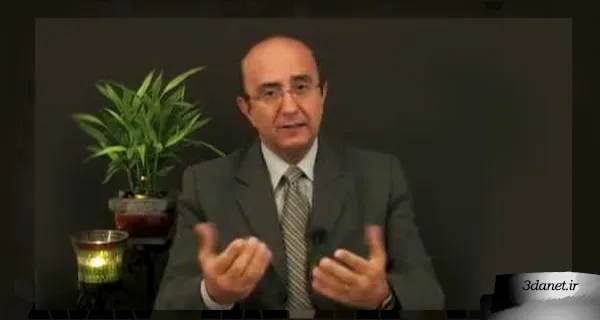
Text of a lecture by Hamid Entezam titled Mystical Theology 4 (Divine Love)—2007 Hamid Entezam, in this series of sessions, explains and elucidates God from the perspective of mystics. It should be noted that this series of sessions on mystical theology continued for 18 installments.
Session Four: Divine Love
The subject of love in the mystical literature of Islam is very vast and at the same time diffuse. We do not have a single source for understanding the subject of love in Islamic mysticism; rather, we have a spectrum of views. For this reason, a theoretical formulation of this subject is not easily possible. In the course of my talk, I will pose some questions and hope that in answering them, the framework and the tent-poles of Islamic amatory mysticism will be elucidated. In the previous session, we spoke of two possible relations or relationships between the human being and God. The first relationship is one based on khawf, and this word is usually translated into Persian as “fear.” But in the previous session, I noted that in the original Qur’anic-Islamic sense and the approach of the mystics, khawf arises from a profound awareness and is born of insight, when a person correctly perceives their true standing, position, and status in this boundless universe. In contrast, jubn is a kind of fear that is based on ignorance and unawareness. People who are cowardly have a fear born of ignorance and unawareness. But the khawf spoken of in the Qur’an is, on the contrary, based on cosmic insight and awareness. Unfortunately, however, many religious people establish a relationship with God that is based on jubn. That is, the image of God formed in their minds is that of a tyrannical, unforgiving master who is constantly monitoring the states, words, and deeds of human beings, seeking an excuse to torment and deal harshly with His creatures. And this is no exaggeration. But we said that Muslim mystics have also reported another relation and relationship between the human being and God. And this relationship is hubb or “love,” which, on the path of perfection and the journey toward God, is more efficient and effective than khawf. That is, with hubb and love, one can reach perfection and God more easily than through khawf. As Rumi says:
The ascetic races on foot with fear,
Lovers fly swifter than lightning and air.
He says the fearful ascetic goes toward the destination on his own two feet, while lovers fly. Therefore, in the opinion of a mystic like Rumi, love can bring us to the Beloved more swiftly. To speak allegorically, we can send a child to school and demand learning from them through fear of punishment, but the learning of a child who goes to school with eagerness and enthusiasm is of a different kind. Which scholar has become learned through fear of retribution and the threat of punishment? Throughout history, inventions and discoveries have been born of two things: need and love. A person must first be in want and need of something to strive and endeavor to attain it. But need alone does not suffice; there must also be a love within a person to endure the hardship of the path. And you see, as it happens, these very two elements of need and love are also very prominent in the worship of God and mystical theology. There is talk both of the human being’s need for God and of the love that arises between the human being and God, making the path to the Divine and the Beloved easier for the wayfarer.
A question arises here: can love and affection truly be attributed to God? As we said, in the category of love, "need" is very prominent. But God is "al-Ṣamad" (the Self-Sufficient). Therefore, some theologians have cast doubt, arguing that attributing love and affection to God undermines His self-sufficiency and lack of need. Note that the term "ḥubb" (love) is not an innovation of Muslim mystics. In the Holy Quran and our religious texts, the word ḥubb is used abundantly in the sense of "liking" and "having intense affection." For instance, the Holy Quran describes matters and things that God does not love. For example, ((... وَ اَللّٰهُ لاٰ يُحِبُّ كُلَّ مُخْتٰالٍ فَخُورٍ ﴿۲۳﴾ )) "God does not love arrogance and pride." There are numerous verses in the Holy Quran where ((ان الله لا یحب)) is used, and likewise, matters that God loves are specified. For example, ((... إِنَّ اَللّٰهَ يُحِبُّ اَلْمُحْسِنِينَ ﴿۱۹۵﴾ بقره )) "God loves the doers of good." So, therefore, there is not the slightest doubt here that the term ḥubb, or loving, is attributed to God in the Holy Quran itself. However, there are three verses in the Holy Quran that all mystics have cited in declaring and proving Divine love.
The first verse is in Surah Āl ʿImrān, verse 31: (( قُلْ إِنْ كُنْتُمْ تُحِبُّونَ اَللّٰهَ فَاتَّبِعُونِي يُحْبِبْكُمُ اَللّٰهُ وَ يَغْفِرْ لَكُمْ ذُنُوبَكُمْ وَ اَللّٰهُ غَفُورٌ رَحِيمٌ ﴿۳۱﴾ "Say, 'If you love God, then follow me; God will love you and forgive you your sins. And God is Forgiving, Merciful.'" Here, the possibility of love existing between human beings and God is explicitly mentioned.
The second verse is in Surah al-Baqarah, verse 165: (( وَ مِنَ اَلنّٰاسِ مَنْ يَتَّخِذُ مِنْ دُونِ اَللّٰهِ أَنْدٰاداً يُحِبُّونَهُمْ كَحُبِّ اَللّٰهِ وَ اَلَّذِينَ آمَنُوا أَشَدُّ حُبًّا لِلّٰهِ وَ لَوْ يَرَى اَلَّذِينَ ظَلَمُوا إِذْ يَرَوْنَ اَلْعَذٰابَ أَنَّ اَلْقُوَّةَ لِلّٰهِ جَمِيعاً وَ أَنَّ اَللّٰهَ شَدِيدُ اَلْعَذٰابِ ﴿۱۶۵﴾ "And among the people are those who take, besides God, equals; they love them as they love God. But those who believe are stronger in love for God. If only those who have wronged could see, when they see the punishment, that all power belongs to God, and that God is severe in punishment."
The third verse is in Surah al-Māʾidah, verse 54: (( يٰا أَيُّهَا اَلَّذِينَ آمَنُوا مَنْ يَرْتَدَّ مِنْكُمْ عَنْ دِينِهِ فَسَوْفَ يَأْتِي اَللّٰهُ بِقَوْمٍ يُحِبُّهُمْ وَ يُحِبُّونَهُ ﴿۵۴﴾ "O you who have believed, whoever of you reverts from his religion, God will soon bring forth a people whom He loves and who love Him." In this verse, the possibility of love, affection, friendship, and attachment between human beings and God is affirmed more than in the two previous verses.
But in the Islamic world, after the passing of the Prophet, mystics emerged and further developed the concept of "ḥubb." What we know today as Divine love is, of course, far richer and more expansive than what is found in the Holy Quran.
In any case, ḥubb is another expression for ʿishq (passionate love). That is, wherever you see the word ʿishq in Islamic mysticism, it is synonymous with ḥubb in the Holy Quran. And as we observed in the aforementioned verses, ḥubb or ʿishq is attributed to God. In other words, the attribute of love holds true for God. And love and passionate love are among God's attributes. And, as it happens, Rumi emphasizes this very point:
Love is an attribute of God, but fear
Is the attribute of a servant afflicted by appetite and belly.
Since you have read "yuḥibbūna" (they love) in the Prophet
Coupled with "yuḥibbuhum" (He loves them) in a discourse,
Therefore, know love as an attribute of the Real; ʿishq too.
Fear is not an attribute of God, O dear one.
Rumi points out that “the Loving” (al-Muḥibb) and “the Beloved” (al-Ḥabīb) are among the Divine Names. Fear, however, is not among the Divine Names. Conversely, although fear is not an attribute of God, cowardice is a human trait belonging to one who is captive to the belly and what lies below it. For fear arises from captivity. A human being who is captive to ignorance, lust, and self-interest is cowardly. This is why Rumi says that fear is the mark and attribute of the captive human. If a person can attain the station of the lover, they have come to bear and possess one of the beautiful names of God. Here, the human being has reached a rank and station far higher than that of the fearful and the terrified. Perhaps here Rumi is also taking a jab at Abū Ḥāmid Muḥammad al-Ghazālī. Ghazālī was also a mystic, but his mysticism was one founded on fear. In Ghazālī’s conception of God, fear is very prominent. Rumi’s mysticism, by contrast, is founded on love. And without doubt, the Masnavi and the Divan-e Shams are the greatest texts we Persian speakers possess concerning divine love. In any case, love and affection are not only applicable to God but can also serve as the basis for the human being’s relation and connection to God. Therefore, according to the mystical view of someone like Rumi, if such a relationship is established, it can act as the driving force of our faith, carrying us more keenly and smoothly to our Beloved and our goal. The image of God in Islamic amorous mysticism, with regard to verse 54 of Surah al-Ma’idah, is that God is manifested in the form of the Beloved. In the mystical literature of Islam, God is manifested as the Beloved and the faithful human being as a lover. According to Islamic mysticism, at the highest level of religious devotion, the human being’s relation to God is that of a lover to the Beloved.
Now, the question is: what kind of beloved is this divine, godly Beloved? Ḥallāj describes this Beloved for us in the most beautiful way. He says: “The Beloved is all coquetry (nāz), not mystery (rāz).” Here Ḥallāj has the philosophers in his sights. For a philosopher, God is an enigma and a puzzle that must be studied with the aid of reason and through demonstrative-logical methods, and ultimately this enigma and puzzle must be solved. As if God were just one enigma among others. And the philosopher hopes to solve this puzzle and enigma through rational effort. But Ḥallāj realized with clarity that God is not a mystery but a Beloved whose coquetry one must endure. If you read the Divan of Hafez from this angle, its verses will convey a new meaning to you.
It is for this reason that love has its own particular courtesy, manners, and spiritual wayfaring. And so, a religion founded upon love will also have its own specific wayfaring. It goes without saying that it will also possess its own special vocabulary and its own particular literature. Look at Islamic jurisprudence. The jurists have a specific vocabulary with which they explicate and teach the religion. The philosophers also have their own specific vocabulary. Amorous mysticism, too, has its own vocabulary and literature. The key point here is that this kind of wayfaring has its requirements. Not everyone can set foot in this valley. The first condition is that a person must first find a heart. Many people are unaware of their heart:
O life of lovers, in death!
You will not find the heart save in heart-losing.
What is Rumi saying? By putting to death one’s own “self” (egoity), a person acquires the capacity for love, because they find their heart. They can experience heart-losing, and subsequently find a new life. But its prerequisite is that their heart be stolen by a Beloved. Rumi’s meaning is that sometimes we possess things of which we ourselves are unaware. Only when someone comes and snatches those things from us do we then realize what we had. The heart is just like this. Until the heart is stolen and taken captive in the clutches of a Beloved, a person does not even know that something called a heart has been placed within their being.
Now, how does God steal the hearts of human beings? Through His own Beauty and Perfection. I will explain more about Beauty in the future. But to put it briefly, as the Prophet says: “Indeed God is Beautiful and He loves beauty.” It is through His Beauty and Perfection that God steals the hearts of those who possess gnosis. It is God who engages in heart-stealing and heart-charming, and if He does not charm the heart, no love will ever come into being. Shihāb al-Dīn Suhrawardī has beautiful verses in his famous work “On the Reality of Love.”
Were there no love, nor the grief of love,
How many fine words you spoke that you heard,
And were it not for the wind, you would have stolen the tip of the lock.
The beloved's cheek you showed to the lover,
It says, as beautifully and completely as possible, that it is God who has shown a glimpse of His beauty to humankind. And with this brief self-manifestation and display of His beauty, He has made humankind His prey. Hafez also says:
I became lovesick because my beloved, like the new moon,
Showed her brow, made a display of coquetry, and veiled her face.
He says that beautiful beloved is just like the moon; it is in the sky for a few nights and then disappears.
Mystics such as Rumi consider the world to be entirely a theophany of God's love. That is, the world would never have appeared if God did not possess love. In Hafez's Divan, there is a long ghazal that begins like this:
In pre-eternity, a ray of your beauty breathed forth in epiphany,
Love appeared and set fire to the whole world.
He says, in pre-eternity, you made one theophany, and with that theophany, you created an uproar in the world.
Sa'di is of the same opinion:
You have drawn a sleeve over your face and cast a design amidst,
Hiding yourself, yet you have cast a tumult into the world.
Each one, without seeing your face, gives a sign of you;
Lift the veil, for you have cast a multitude into conjecture.
No painter sees that he might paint a picture,
And the one who saw, from bewilderment, you have cast the reed pen from his fingers.
This regret consumes me that you have cast your own descriptions
Onto the tongues of the common folk, and cast the tongues of the elect into silence.
All the tumult that has arisen in the world is because of those moments when He lifted the sleeve from His face and revealed His design to the world's people. All mystics emphasize that the beginning of the affair of love was from God's side. It was He who opened the door of love. Rumi also says:
No lover would ever be a seeker of union,
Were not his beloved seeking him.
No lover finds his love without mediation. First, a beloved must show her face, so that afterward a lover may come forth. God's love precedes His servant's love. Only when God loves His servant can the servant love God. It is for this reason that in verse 54 of Surah Al-Ma'idah, God said, "He loves them, and they love Him"—first He loves, and afterward, the creatures will love. It is a bounty that He has placed the heart within the human being. Attar says:
From the wine of love, pouring a little upon Adam's heart,
From his heart to every heart, it passes hand to hand.
Another point is that, according to the opinion of our mystics, love is the substance upon which humanity is founded. The more humans partake of love and affection, the more human they are. Those who do not experience heart-stealing will never taste the sweet flavor of love. This group is closer to the horizon of animality than to the horizon of humanity. Hafez says:
Anyone who is not alive through love in this circle,
By my decree, pray over him as dead, though he is not.
Attar relates a story in the Musibat-nama to show that love is the true gem and essence of humanity. A man had a donkey and one day lost it. He set out through the city, asking people about his donkey. He did not find the donkey until he came upon a preaching assembly. It was a crowded gathering, and the prayer leader was about to ascend the pulpit to preach. The man said to the prayer leader, “I had a donkey with these characteristics that I have lost; have you seen it?” The prayer leader said, “No, I have not seen such a donkey. But you sit in today’s assembly, and I promise you that before the assembly ends, you will find your donkey.” By chance, the topic that day was love. That prayer leader, atop the pulpit, spoke of love with great passion and enthusiasm. At the end of the assembly, he asked those present, “Is there anyone among you who is unaware of love?” A person raised his hand and said that he had never fallen in love in his life. The prayer leader said to the man who had lost his donkey, “Bring a halter, tie up this donkey, pick him up, and take him with you.” His meaning is that those who do not experience love in their lives do not have a truly “human” existence, and the measure of their humanity is low.
A wisdom lies hidden in this story. To the extent that a person is devoid of affection and love, to that same extent they are estranged from God, and to that same extent they distance themselves from humanity.
As I mentioned earlier, for the philosopher, God is a puzzle that must be solved through the method of reasoning and demonstration. For the philosopher, what matters is the language of reasoning and proof. And this language is a language that captivates the intellect. But the language of the lover is the language of gesture, allusion, and metaphor. That is, it is a language that captivates the heart. And it is for this very reason that our mystical literature is more pleasing to the heart than it is agreeable to the intellect. Rumi says in this regard:
Being a lover is known by the heart’s lament,
There is no sickness like the sickness of the heart.
The lover’s ailment is separate from all other ailments,
Love is the astrolabe of God’s mysteries.
Whatever I say in explanation and description of love,
When I come to love itself, I am ashamed of it.
Although the commentary of the tongue makes things clearer,
Yet love unspoken is clearer still.
As the pen hastened in writing,
When it came to love, the pen split upon itself.
Rumi says that love cannot be subjected to rational analysis and dissection. It cannot even be described, nor can it be taught. The words of Abu Sa'id Abu'l-Khayr on this matter are conclusive:
O you unaware of the burning and the being burnt,
Love is something that comes, not something that is taught.
In any case, the seat of love is in the heart. What is effective and influential in the heart is gentleness, tenderness, softness, and compassion. These weapons have the power to conquer the heart. Therefore, the warriors of this field must be equipped with this gear to be victorious. I say this for those who imagine that with force, compulsion, and harshness they can incline people’s hearts toward faith. The human heart cannot be conquered by force and compulsion. The language of the heart is the language of friendship and affection. In the valley of the heart, one cannot take a step with authoritarianism, threats, and intimidation. None of these are effective or path-opening.
Allow me to speak a little about the elements that are involved in love. Muslim mystics say that love is of the nature of an intimate and emotional relationship. Ardent desire, delight, intimacy, and nearness are elements found in love. These elements are involved in love. The loving person experiences all these elements. Abu Nu'aym al-Isfahani, in his book Hilyat al-Awliya', has expressed this point well. He says these elements have a close connection with one another: “The hearts of the saints are the abode of gnosis, the hearts of the gnostics are the abode of love, the hearts of the lovers are the abode of ardent desire, and the hearts of those who ardently desire are the abode of divine intimacy.” Intimacy with God is an all-encompassing experience that expresses heartfelt attachment. For someone who is intimate with God, God is the central concern in life. And, of course, such people find peace of mind only in the company of God. As Rumi says:
No corner is without wild beasts and without a snare,
There is no rest save in the retreat of the Truth
In our mystical literature, the one who is constantly in remembrance (dā’im al-dhikr) is a person who has attained intimacy (uns) with God. That is, the love of the Beloved has settled so magnificently in their heart, and intimacy with the Beloved is so sweet to their palate, that they are perpetually mindful of God. Some religious people mistakenly think that dā’im al-dhikr means merely repeating litanies (awrād) regularly on the tongue, without any particular state emerging in their soul. Whereas, if divine states (ahwāl-i haqqānī), fervent longing, spiritual delight, intimacy, and nearness to the Truth appear in a person, then they are truly dā’im al-dhikr.
Intimacy (uns) is the station of deepening in love. Whenever love deepens, a person attains intimacy. In such a state, love resembles a fire that burns everything except the Eternal and Pre-eternal Beloved. In the words of Rumi:
Love is that flame which, when it blazes up,
Burns all but the Beloved, every single one.
Perhaps now verse 162 of Surah al-An‘ām becomes more meaningful: ((Indeed, my prayer, my rites of sacrifice, my living and my dying are for Allah, Lord of the worlds)). This noble verse finds objective realization in the lovers of the Lord of the worlds. That is, their life and conduct bear witness to the objective realization of this verse. For some, their share of this verse is merely its recitation, and for others, its existential realization! Just as when novices enter Islam, their tongue bears witness to the Oneness of God, "I bear witness that there is no god but God" (ashhadu an lā ilāha illā Allāh), but for the lovers, their very existence is the embodiment of "there is no god but God" (lā ilāha illā Allāh). Rumi also teaches this tale with subtlety:
I am a lover, slain, a sacrifice to Lā,
My soul the parade ground for the drum of affliction.
He says that by the sword of "Lā" (No), the others (aghyār) were slain within my being. For tawḥīd (Divine Unity) means One-ness in life. It is following such an existential experience that intimacy with the Eternal Beloved is realized. It is after these experiences that the lover no longer desires anything other than the Beloved. As Hafez said:
The Friend is with us, what need is there to seek more?
The fortune of companionship with that soul’s intimate suffices us.
Rumi, too, has this same longing:
I have become selfless, yet I desire to be even more selfless than this;
With your eyes I say, I, intoxicated, desire it thus.
I do not desire a crown, I do not desire a throne,
Fallen in your service, upon the ground, I desire.
That beautiful beloved of mine seized me by the throat,
Saying, "What do you desire?" I said, "I desire just this."
He says that even these pressures you exert in life show that you pay attention to me! If someone has such an understanding of their relationship with God, the hardships and difficulties of life will hold a different meaning for them. It is as if there is no such thing as hardship and difficulty. The words of Hafez and Rumi express a state in which the Divine Beloved becomes the qibla (focal point) of a person. We all pray facing the qibla, but we do not live facing the qibla. With the help of a compass, we find the house of the Beloved, but we do not find the Master of the house. What is desired is that we might perform the prayer of the inner being. Now that our tongue has submitted, let our heart also submit.

Discussion0 comments
No comments yet; let yours be the first voice.