Religion
One Generation After Abdolkarim Soroush
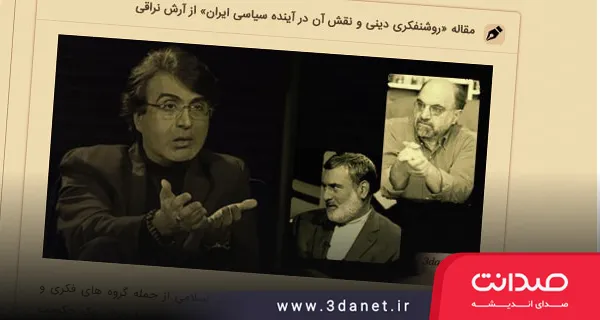
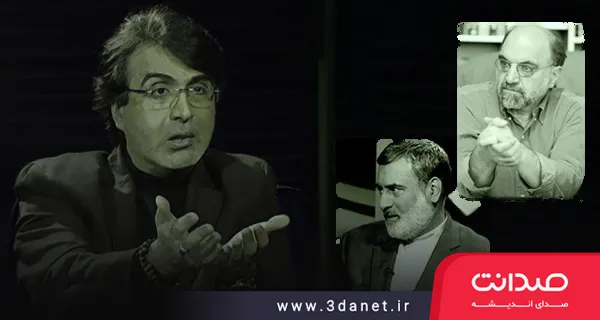
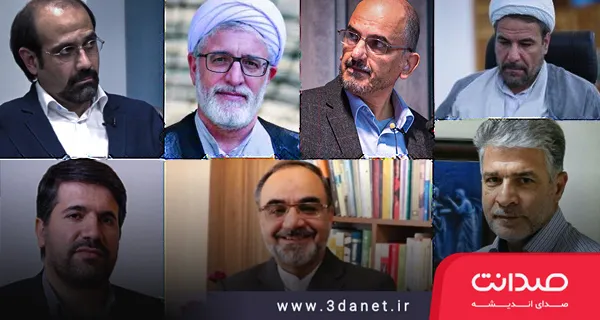
By distinguishing between the essential and the accidental in religion, Abdolkarim Soroush opened new horizons; his students Arash Naraghi and Abolghasem Fanaei, by critiquing and expanding these ideas, formulated theories ranging from 'falsehood in divine speech' to a new jurisprudential paradigm and a theory of tolerance within a single generation after him.
It was the 1980s. His ideas were arriving one after another. At times he spoke of the distinction between
The idea of the essential and accidental in religion, however, had other consequences as well. By distinguishing between the rulings of “acts of worship” (ʿibādāt) and “transactions” (muʿāmalāt), Abdolkarim Soroush considered acts of worship to be eternal and independent matters. He even reminded Ayatollah Montazeri in a letter that the jurists’ model concerning jurisprudence had mainly been acts of worship, and they had analogized the rulings of the chapter on transactions based on pure acts of worship, considering all of them equally eternal and independent[4]—and that this is an error. Although Soroush considered devotional rulings to be eternal and did not equate them with transactional rulings, his students cast doubt on this important point as well. Abolqasem Fanaei, another pupil of Soroush’s circle, stated that “contrary to the claim of some jurists and religious intellectuals, the problems for which a satisfactory answer cannot be found within the framework of the existing paradigm in traditional jurisprudence are not specific to the chapter on ‘transactions’; rather, we face similar problems in the chapter on acts of worship as well.”[5]
On this basis, Fanaei reflected on the matter of “canonical times” (awqāt-i sharʿī). There are some geographical regions where the sun neither rises nor sets. What is the ruling on the canonical times and fasting for the inhabitants of these lands? Fanaei put this question forward and criticized the jurists, arguing that the traditional paradigm lacks the capacity to answer this question and cannot find a suitable response for it. Fanaei proposed another paradigm in opposition to traditional jurisprudence. A paradigm that had the following components:
1- The separation of the essential and the accidental in the Sharia
2- The necessity of the cultural translation of that part of the religious texts that expresses the accidentals of the Sharia
3- The possibility of the evolution of the Sharia and the change of religious rulings after the passing of the Holy Prophet (PBUH)
4- The necessity of expanding the prophetic juristic experience
5- The authoritativeness of conjectural rational and empirical proofs
The foundations that Fanaei chose to outline the new juristic paradigm traced their lineage entirely back to the ideas of Abdolkarim Soroush. With these foundations, Fanaei reached the following opinion regarding “canonical times”: If we suppose that the Prophet (PBUH) were sent today, would the same criteria currently found in the Quran and the Sunnah for determining canonical times be emphasized in the revelation sent down to him? Or would Muslims be asked, or permitted, to translate these criteria into “clock time” themselves by relying on astronomical and mathematical calculations? Fanaei’s final opinion was that if the Prophet (PBUH) were sent as a prophet today, he would introduce another criterion to Muslims for determining canonical times, and that criterion would be the “clock.”[6]
In his reflections, Abdolkarim Soroush had arrived at the theory of religious pluralism. He saw the paths to attaining truth as multiple. For this reason, he had stated that each of the religions has found aspects of the truth. Therefore, the followers of religions should not quarrel with one another. Soroush considered this principle to be effective and worthy of adherence in the life of a Muslim today.[7] Arash Naraghi, however, criticized this idea and recommended another version. “Toleration” was the theory that Naraghi put forward, claiming it to be far more advanced and more problem-solving than the idea of “pluralism.” Naraghi distinguished between “being right” and “having a right.” He claimed that there is a distinction between these two and that no logical entailment exists between them. In his interpretation, from the fact that I have a right to perform act “A,” it does not follow that act A is right. Likewise, from the fact that performing act A is wrong, it does not follow that I do not have a right to perform it or that you have a right to prevent me from performing that act. In the theory of “toleration,” an aspect of the “right to be wrong” must be recognized. In Naraghi’s view, this right has not been seen in the theory of “pluralism,” and it cannot be a problem-solving prescription for humanity today.[8]
Foregrounding Ethics
Soroush had criticized the hypertrophy of jurisprudence in Islam. He sought the present-day need of religious societies in ethics. In an interview, he had said: "The critique of religion must take place from the standpoint of ethics. Therefore, ethics must be placed at the forefront. What we lack today is an ethical view of religion and an ethical view of politics. We must revive both of these anew. Hence, in my opinion, first ethics must be brought to the fore, and secondly, addressing the discussion of ethical religion and ethical politics is among the issues that take first priority."[9] It is these repeated emphases of Soroush on ethics that draw his students into this realm as well. Abolghasem Fanaei names his intellectual project thus: "Religion within the framework of ethics, rationality, and spirituality." With the idea that ethics is prior to religion, he points to the issue that "one can expect and demand of jurists that they weigh and balance their fatwas and the ruling they wish to attribute to God in the form of a fatwa against extra-religious ethical standards."[10] Emphasizing ethical-centeredness in religion, he drew upon Soroush's intellectual foundations and stated that the subject in need of ethical revision and reconstruction is not religion itself, but religious knowledge and religious action.[11]
Attention to ethics was prominent and had taken center stage in the views of Soroush's students. Even jurisprudential rulings, if they were to solve problems for today's world, had to pass through the filter of ethics and be judged. It is on this basis that Soroush Dabbagh brings up the discussion of "hijab" and analyzes it on the scales of ethics. Centering on the ethical act of "chastity," he emphasizes the point that chaste behavior can be actualized both in the form of covering the head and neck and otherwise. In Dabbagh's interpretation, there is no necessary relationship between chastity and covering the neck and hair of the head. In the sense that someone can cover their neck and hair and behave unchastely, and likewise, not cover their neck and hair and behave unchastely.[12] Dabbagh concludes that not covering the neck and hair in the present age is not, in principle, morally reprehensible, and at the same time does not entail violating God's command and intention. Abdolkarim Soroush's students confronted religious texts with an ethical approach and viewed the body of Sharia in this way. They arrived at conclusions that were sometimes not in accord with the dominant practice in established religious thought.
Complete Attention to Mysticism
Abdolkarim Soroush was enamored of Rumi's mysticism. He spoke of "experience-oriented" religiosity in such a way and unveiled its enchantments in such a manner that he demonstrated the centrality of these experiences in religious teachings. Although he believed that religion has no fixed essence,[13] he sought the transcendence of religion in the experience-oriented religiosity of mystics. The experience-oriented religiosity Soroush spoke of belonged to rare individuals.[14] This style of religiosity belonged to a mythical space; whereas the world we live in was termed a demythologized world. Soroush said that the experience-oriented believer sees the world more as being of the nature of dreams than as a real world. Like the images that are in mirrors.[15] Soroush's students, however, tried to ground the mysticism that had gone to dreams and diminish its mythical hue. Soroush Dabbagh spoke of "modern mysticism." He said that in today's disenchanted world, speaking of hard and rigid mysticisms attained through long-term forty-day retreats and grueling austerities has become a difficult and rare matter. Dabbagh believed that the way of looking at these matters has undergone changes, but the discussion of mysticism and the search for spiritual matters in the new world has still not disappeared and has its seekers and attainers.[16]
What Dabbagh meant by modern mysticism was a set of theoretical components that make living in the current disenchanted world possible. Dabbagh sought to reduce the dense tradition of classical mysticism and make it easily accessible for modern humanity as well. That is why, in his view, the modern wayfarer can even “seek salvation among the flowers of the courtyard. A salvation that arrives with bread, basil, cheese, and fresh petunias. Such a mystic, while preoccupied with his own existential solitude, is thinking of the butterflies that fall into the water.”[17] In delineating modern mysticism, Dabbagh also emphasizes ethical actions and considers them a weighty matter in the conduct of the modern mystic. In modern mysticism, existence is sensitive to the ethical actions of all human beings, and nothing is lost within it.
Dabbagh believed that in modern mysticism, the wayfarer can step onto the path of spiritual wayfaring through living in the world and recognizing human interactions, worldly suffering, and earthly love. This is while in traditional mysticism and wayfaring, all gazes were directed toward the heavens, and there was no talk of the earth and its inhabitants except in a figurative sense.[18]
Abolqasem Fanaei also emphasized the mystical and spiritual dimensions of religion and spoke of “sacred spirituality.” In his belief, spirituality is the spirit and essence of religion. In the sense that it is what gives life and meaning to the body and corpse of religion. For religion to be spiritual, all its components, from top to bottom, must be spiritual. The theory of “sacred spirituality” that Fanaei proposed attempted to provide a spiritual and, at the same time, rational interpretation of all religious teachings, including the doctrinal and behavioral teachings of religion.[19]
Arash Naraghi also sought the essence of religiosity in mysticism. In his belief, too, Abrahamic faith and traditional mysticism are hardly found in the modern age. Naraghi believed that the modern wayfarer lives in an era where the divine is absent from the world. In his view, a fundamental transformation in the human outlook has created a situation that can be interpreted as the “eclipse of God.”[20] Naraghi, however, offers hope that even in this era of God’s twilight, faith can still be attained.
Soroush’s students had infused the arduous and rigid mysticism of the traditional age with a touch of grace, brought it into the arena of the contemporary world, and made it possible to follow.
The students stand on the shoulders of their master and draw support from the intellectual foundations he laid. At times they extend his theories, elaborate upon them, and arrive at conclusions; occasionally they criticize his views and do not accept them. This, however, is the true ethos and conduct of acquiring knowledge. It is observing the etiquette befitting the station of intellectual inquiry. These intellectual challenges and this scholarly clash of ideas might lead some to imagine that a new religion is emerging; it might be so alluring as to seem like a new sect is taking shape. But, a thousand times but, this is neither a religion nor a new sect. It is neither a creed nor a novel denomination. It is merely a thought. A thought that is subjected to repeated scrutiny, refined, its adornments enhanced, and can take on the name of a “school.” A school for presenting religion in today’s world. Just one generation after Abdolkarim Soroush.
.
.
Notes
[1] See: Abdolkarim Soroush, “The Essential and the Accidental in Religions,” published in Kiyan, no. 42, 1998. Now in The Expansion of the Prophetic Experience, p. 29 ff.
[2] Abdolkarim Soroush, The Expansion of the Prophetic Experience, p. 55
[3] Ibid., “Truthfulness in the Divine Word,” p. 168
[4] On the Subject of Ijtihad, Abdolkarim Soroush and others, p. 32
[5] Abolqasem Fanai, On Determining Canonical Times and the Manner of Fasting on Long Days, Article Three
[6] Ibid.
[7] See: Abdolkarim Soroush, Sirat-ha-ye Mostaqim (The Straight Paths)
[8] See: Arash Naraghi, Hadith-e Hazer va Ghayeb (The Present and Absent Discourse), p. 177
[9] Interview with Abdolkarim Soroush, A Green Interpretation of Islam through Demythologization and De-despotism, Jaras website, 12/12/88 [March 3, 2010]
[10] Sokhan-e Ma Magazine, Conversation with Abolqasem Fanai, No. 6, pp. 27-30, Farvardin 1394 [March-April 2015]
[11] Ibid.
[12] Hijab in the Scales of Ethics, Soroush Dabbagh
[13] See: Dr. Soroush's article at the Religion and Modernity Conference
[14] Tradition and Secularism, Abdolkarim Soroush et al., p. 183 ff.
[15] Ibid.
[16] A Sketch of Modern Mysticisms, (1), Spiritual Loneliness, Aseman Magazine, 15 Bahman 1390 [February 4, 2012]
[17] Ibid.
[18] See: Soroush Dabbagh, A Sketch of Modern Mysticism, (3) In the Absence of the Other's Suffering, Andisheh Pouya Magazine, Vol. 2, Year 1, Tir and Mordad 1391 [June-August 2012]
[19] Abolqasem Fanai, Sacred Spirituality, The Relationship between Spirituality and Rationality
[20] Arash Naraghi, Hadith-e Hazer va Ghayeb (The Present and Absent Discourse), Faith in the Age of Divine Hiddenness, p. 55
.
.
One Generation After Abdolkarim Soroush
Author: Hadi Tabatabai
This text was published in the sixth issue of Taqrirat magazine.
.
.

Discussion2 comments
سروش و اطرافیان وی چرا به جای اظهار شک در قرآن ، متن جایگزین خود را ارایه نمی دهند تا معلوم شود که چه راهی را پیشنهاد میکنند. چرا به جای اظهار طرفداری از اخلاق ، به سیره و روش پیامبر(ص) و عترت(ع) یعنی الگو های اخلاق توجه نمی کنند؟ چرا به جای ذوب شدن بدون دلیل در اشعار یک شاعر ، توحید و معرفت خدا را از بر گزیدگان خدا نمی آموزند ، مگر به نهج البلاغه دسترسی ندارند؟!
جلسات نقد دين شناسي دکتر سروش http://www.aparat.com/v/TpFnU براي دريافت فايل هاي صوتي به کانال ايشان مراجعه کنيد @khosropanahdezfuli