Religion
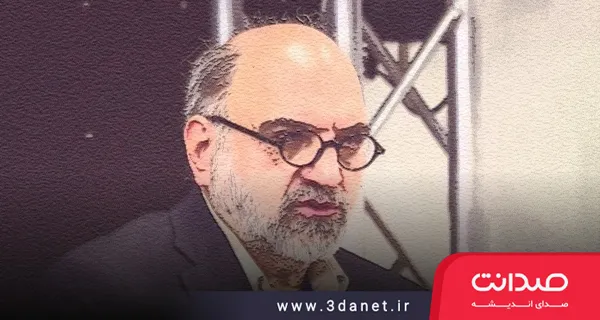
“Panahian; The Confrontation Between Religion and Morality” by Hamid Nourbakhsh
Hamid Nourbakhsh critiques Alireza Panahian's remarks on the opposition between ethics and religion, showing that the proposed 'capacity argument' targets not only ethics but also religion and the Quran, and examines the conflation of ethical and rational issues.

Panahian; The Confrontation Between Religion and Morality
Hamid Nourbakhsh
Introduction by Sedanet: During the pre-dawn hours of Ramadan 1402 (2023), Alireza Panahian appeared on the program “Mahe Man” (“My Moon”), broadcast live on Channel Three, to deliver talks and engage in discussions about erroneous conceptions of religion and the effects of distorting religion—under the title “Correcting Improper Understandings of Religion in the Mission and Words of the Commander of the Faithful.” In the fifth session of this program—on 1402/01/07 (March 27, 2023)—he made remarks concerning the confrontation between morality and religion that sparked considerable controversy in cyberspace. The following article addresses his statements in that program.[1]
First: Panahian here takes something akin to Aristotelian virtue ethics as a model of morality, albeit with a muddled and distorted understanding. As you know, in virtue ethics, “virtue” is a mean between two extremes (or excess and deficiency). What constitutes virtue in the matter of Ali (AS) is the midpoint on the spectrum from compassion to hard-heartedness (the relevant spectrum). That someone might mistake vice for virtue and accuse Ali (AS) of acting contrary to virtue (kindness/compassion) is not the fault of virtue ethics; it is the fault of the person reasoning with virtue ethics who lacks a clear conception of the relevant spectrum. Similarly, Panahian repeatedly conflates morality and the moral agent. He also does not view the moral and immoral actions of the agent as separate and atomistic, nor does he clarify how the moral value of an agent’s various actions relates to one another. That Ibn Sa’d acts immorally in one instance does not entail that all his actions are entirely immoral; Ibn Sa’d could have acted virtuously in one case and viciously in another. In that case, each of his actions bears a separate moral description. In the Aristotelian picture, the agent need not have actualized “all” the virtues for their action to be described as moral. What is the problem with Ibn Sa’d being virtuous on spectrum x and vicious on spectrum y? Regardless of our hatred for Ibn Sa’d, God—who sees even an atom’s weight of good—will also reckon his virtue, even if the algebraic sum of his deeds sends him to hell. Let alone that the discussion here is fundamentally not about divine judgment; rather, it is about the judgment of morality regarding the actions of the moral agent.
Second: Panahian’s argument is the same idea as the “capacity argument”: if one can oppose “w” (here, religion) under the cover of “the name of z,” then z itself inherently possesses the capacity to oppose w. Or, more generally, z also possesses that nominal capacity.
Objection:
1 – Miles Hutchinson enters a citizen’s home under the name of the police and, during an altercation, shoots James Kuzak (a Pennsylvania police officer), ultimately paralyzing him. According to the “capacity argument,” the police inherently possess the capacity to violate citizens’ privacy.
Another example: ISIS massacres innocent citizens in the name of “pure Islam.” According to the “capacity argument,” do you accept that pure Islam has the capacity to massacre innocent citizens?
Likewise, the telegraphic denial that Seyyed Mohammad Ali Ghazi Tabatabai received from Neauphle-le-Château also indicates that an unidentified person, misusing the “name” of Ruhollah, accused Seyyed Mohammad Ali of collaborating with the Shah. According to the “capacity argument,” do you accept that Mr. Khomeini had the capacity for making false accusations against Seyyed Mohammad Ali?
2 – Panahian might resist and accept that the police, pure Islam, and the author of the second telegram (Ruhollah Khomeini) all, like morality, possess the relevant capacities, and thus his argument against morality still works. In that case, Panahian is paying a heavy price to keep the capacity argument standing; a price it seems he must inevitably accept? I will explain why below.
Do all the cases above really have the capacity to be misused? Clearly they do! If they do, then one must conclude that all cases inherently possess the capacity related to each subject. In that case, the “capacity argument” loses its function and value. Because the “capacity argument” sets the criterion for possessing the capacity for misuse so weakly that all the above cases are attributed with their related capacity (violating citizens’ privacy, massacring innocent citizens, and the accusation of collaborating with the Shah). But if all of these possess such a capacity, then the “capacity argument” does not only work against morality. And this is the very exorbitant cost we said Panahian must inevitably pay in his argument.
The criterion of the capacity for misuse in the “capacity argument” is so weak that it cannot even exempt and save the Quran itself from possessing the capacity for misuse. Therefore, this argument also works against the Quran. Moreover, Ali (AS) himself believes that the Quran satisfies the criterion of the capacity argument. For instance, the Kharijites, citing the Quranic phrase “There is no judgment except God’s,” rejected the rulings of the arbitration council and subsequently Ali (AS). Ali’s (AS) reaction to this citation by the Kharijites was that it is a word of truth by which falsehood is intended. The Kharijites’ citation, in light of Ali’s (AS) reaction and the “capacity argument,” yields the conclusion that the Quran inherently has the capacity for falsehood to be intended by it and provides a possibility for misuse. Astonishingly, the Quran itself, in the seventh verse of the third surah[2], confirms such a capacity. But if the “capacity argument” also works against the Quran, it is probably no longer worthwhile for Panahian to stand behind it; because if this argument disables morality, it must also disable the Quran.
Third: Suppose we accept, not with the “capacity argument” but with a better argument, that morality inherently has the capacity to oppose religion. (Why wouldn’t it!) Now, can the existence or possibility of such opposition be a justification for the undesirability of morality for a believer in religion? It does not seem that the “existence of opposition” or the “existence of the capacity for opposition” is a sufficient condition for the undesirability of morality and a complete argument against the validity of religious people’s support for morality; because intra-religious disagreements also satisfy the aforementioned condition. The majority of oppositions to religious interpretations have been made by other religious interpreters. I doubt that jurists have faced as much opposition from philosophers of ethics as they have from each other. But can one conclude the undesirability of religion from the fact that one interpretation of religion stands in opposition to another reading of religion (say, pure Islam)? I doubt Panahian would accept calling Sheikh Ansari’s view on the absolute guardianship of the jurist anti-religion simply because it opposes Mr. Khomeini’s view.
Fourth: When Panahian says, “morality has this capacity to stand against religion,” where is he himself standing? In other words, what is the source of this proposition? Is this proposition a ruling of Sharia? If so, that is a methodological confusion. Because religion itself is one of the parties to the dispute here. Is this proposition a ruling of reason? If yes, then you accept the extra-religious authority of reason. If you accept its authority, you accept the authority of its judgments. If you accept the authority of its judgments, then what is morality but the judgments of this very reason on moral subjects? In that case, what is your problem with the authority of morality?
Fifth: Suppose Panahian can ultimately use virtue ethics successfully to establish an opposition between religion and morality. Now the question is, on what basis do you extend the ruling of the opposition of virtue ethics with religion to the whole of morality? Ali’s (AS) decision can have a consequentialist justification and consequently be moral, and conversely, his opponents’ request can be immoral. Therefore, with an incomplete understanding of Aristotelian ethics, Panahian has unjustifiably reduced morality to virtue ethics.
Sixth: If we review the literature on the religion-morality confrontation, we see that the general strategy of philosophers defending religion has been to avoid establishing or affirming such a confrontation between religion and morality—whether by reducing morality to divine commands, separating their domains, giving priority to one over the other, and so on. Arguing for the existence of a confrontation between religion and morality is, for the defender of religion, a kind of philosophical self-harm; because audiences usually prefer their moral intuitions to the commands of religions.[3] In other words, if you demonstrate that religion and morality are opposed, you have demonstrated that religion can be anti-moral. For the opponent of religion, what could be better than receiving such a favor from you, who bear the title of defending religion? The opponent of religion does not have far to go from demonstrating the “confrontation between religion and morality” to the “illegitimacy of religiosity.”
Seventh/Last: It is fitting to bring this short article to a close with a brief reflection on Mr. Panahian’s historical citations. It seems that Mr. Panahian’s reading of the Kharijite episode is also inconsistent with historical evidence; because, according to the understanding of most historians, the Kharijites’ argument against Ali (AS) was not through morality; rather, they accused Ali (AS) of unbelief and apostasy from religion. Did the Kharijites not say to Ibn Abbas before Nahrawan that if, according to the peace treaty, Ali (AS) is not the Commander of the Faithful, then we are among the faithful, and therefore there is no reason for him to be our commander?[4] Did they not, citing the slogan “There is no judgment except God’s,” consider human beings unqualified to arbitrate? Did they not tell Ibn Abbas that Ali (AS) appointed individuals as arbiters in God’s religion, whereas judgment belongs solely to God and he had no such right? And in response, was it not Ali (AS) who, citing the Quran (5:35), tried to exonerate himself from the accusation of not adhering to God’s word? Did the Kharijites accuse Ali (AS) of failing to execute the “right of testament” or of failing to execute “morality”? In all fairness, where did the Kharijites have a concern for morality?[5] Did Ali (AS) not, in response to the Kharijites’ objection to human arbitration instead of God’s word, argue using the verse (5:95)?[6] Did Ali’s (AS) reasoning have more of a moral flavor, or the Kharijites’?
In the Karbala episode, was the confrontation between Ibn Sa’d’s moral virtue and Husayn’s (AS) religiosity, or between the religiosity of Husayn (AS) and the religiosity of his enemies? Look at Ibn Ziyad’s letter to Umar Sa’d. Where Ibn Ziyad writes not to delay in killing Husayn (AS), for he has betrayed the father of the community [Yazid]; is the argument in this letter based on morality or religion? What confrontation exists between the virtuousness of Ibn Sa’d giving water to the household and the religiosity of Husayn (AS)? What brought Husayn (AS) and Ibn Sa’d to Karbala and shaped Ashura was not a confrontation between the religion of Husayn (AS) and the morality of Ibn Sa’d; rather, it was a confrontation between the religion/morality of Husayn (AS) and the religion/immorality of Ibn Sa’d. On the other side, Husayn’s (AS) slogan was preferring death with dignity over a life of humiliation. What slogan could be more moral than this? Does the history of Shi’ism not know him by the titles of the Imam of “Hayhat minna al-dhilla” (Far be it from us to be humiliated), “freedom,” and “dignity”?
On the eighth day of Muharram, during a conversation with Yazid ibn Husayn al-Hamdani, Ibn Saʿd explicitly states that his motive for confronting Husayn (AS) was to obtain the governorship of Rayy.[7] In all fairness, it is highly unlikely that a figure like Ibn Saʿd came to Karbala with a moral concern; he had clear worldly preoccupations; at most, he occasionally feigned some religious concerns as well. Historical readings usually identify the motives for the killing of Husayn (AS) as either worldly, religious, or stemming from tribal vendettas. After the martyrdom of Husayn (AS), Saʿid ibn al-ʿAs—the Umayyad governor of Medina—ascended the pulpit and, pointing to the grave of the Prophet (PBUH), said: "A day for the day of Badr."[8] Following the affair of Uthman, the Umayyads, ignoring Ali's (AS) efforts to break the siege of Uthman, claimed that Ali (AS) did not lift a finger and that water did not reach Uthman. Aisha was among those who played a significant role in establishing this view. She said, "Do you believe that Ali's (AS) sword was in Medina, and he wanted to defend Uthman but could not?"[9] And thus, the killing of Uthman was attributed to the Banu Hashim. Relying on this very view, Ubaydullah wrote in a letter to Ibn Saʿd: "Prevent Husayn (AS) from accessing water so that he does not drink a single drop and dies of thirst, just as they did to Uthman ibn Affan, that pure and virtuous man."[10] Earlier, at Siffin, Walid ibn Uqba declared in a sermon: "We will deny water to the companions of Ali, just as they deprived the wronged Uthman of water. They besieged him for forty days and denied him cool water and soft food. We will kill them with thirst; may it kill them with thirst."[11] In his final sermon before his martyrdom, Husayn (AS) said: "Woe unto you! Do you kill me for a tradition I have altered? Or for a law I have changed? Or for a crime I have committed? Or for a right I have abandoned?" And the answer he heard is known to all: "We kill you out of hatred for your father."[12] When Amr ibn Saʿid al-Ashdaq heard the wailing of the women of Banu Hashim in Medina, he said: "This wailing and lamentation is in revenge for the wailing and lamentation our women and daughters made in mourning for our elder, Uthman."[13] When Marwan ibn al-Hakam saw the severed head of Husayn (AS), he sarcastically reminded those present of the days and events that had befallen Uthman.[14] In any case, given all the historical evidence indicating the existence of religious, financial, and tribal motives, attributing a moral motive to the killers of Husayn (AS) is a novel notion that apparently only Panahian has discerned! Just as, before this, the general understanding and the judgment of history have been that Husayn (AS) was killed by the most wretched, not by moralists.
Return to the texts and read them with greater fairness. In all fairness, are the verses and narrations that consider the opponents of religion to be corrupt and depraved more numerous and more justified to cite, or the verses and narrations that consider the enemies of religion to be "moral"? [Assuming such verses and narrations even exist.]
Panahian might object that the author of this text attributes to Panahian a claim about the killers of Husayn (a.s.) lacking moral motivation that is stronger than his own assertion; for he fundamentally does not wish to say that the killers of Husayn (a.s.) possessed moral motivation and reasoning; rather, he merely wishes to say that the two elements of “morality” and “enmity toward Husayn (a.s.)” were combined in his killers. And therefore, one could be moral and yet be the killer of Husayn (a.s.). We will respond: without involving moral beliefs (for instance, through a justificatory/causal/explanatory connection) in the motivations of the killers, it is unclear how you achieve your aim of demonstrating a confrontation between religion and morality. If the mere mental combination of morality and killing is the criterion [and its objectivity is not proven], the motivation for killing Husayn (a.s.) can be combined with any belief/motivation/action, and subjective assumptions replace objective analyses. If there is no justificatory/causal/explanatory connection between the “motivation for killing Husayn (a.s.)” and that belief/motivation/action, how can a confrontation be claimed between that belief/motivation/action and religion? Confrontation occurs when, for example, moral beliefs play a justificatory/causal/explanatory role in the motivation for or act of killing Husayn (a.s.). The mere mental coexistence of the motivation for killing with those other hypothetical elements does not establish a confrontation between those other elements and religion; for just as moral beliefs and the motivation for killing Husayn (a.s.) can coexist in the mind, this motivation can also coexist with historical, geographical, and other beliefs. And if mental coexistence alone were sufficient reason for confrontation, then the historical and geographical beliefs of the killers must also be in confrontation with religion. Yet achieving the objective (establishing confrontation) through acquiescence to this point is not feasible; the improbability of this possibility is like the possibility of “the camel passing through the eye of the needle.”
To establish a confrontation between religion and morality, Panahian must necessarily believe that the connection between morality and the motivation for killing Husayn (a.s.) is something more than simultaneous coexistence in the killer’s mind. If Panahian accepts such a connection, then he must stand against all the aforementioned historical evidence. For historical evidence attributes the killing of Husayn (a.s.) to motivations other than moral ones.
And peace be upon those who follow guidance.
Hamid Nourbakhsh; 9th of Ramadan, 1444 AH
Columbia, Missouri
.
.
[1] Watch the full program on YouTube or Aparat; watch a short, controversial clip from this program on YouTube and Aparat. You can read the full transcript of this program here.
[2] He it is Who has sent down to you the Book; in it are verses [that are] precise—they are the foundation of the Book—and others unspecific. As for those in whose hearts is deviation, they follow that of it which is unspecific, seeking discord and seeking an interpretation [suitable to them]. And no one knows its [true] interpretation except Allah. But those firm in knowledge say, “We believe in it. All [of it] is from our Lord.” And no one will be reminded except those of understanding.
[3] Likewise, since, at least for proponents of the official reading, the reason for accepting religion and the validity of religiosity is a rational reason, rational proofs hold a kind of epistemological priority over religious proofs. For this reason, the audience of religion generally requires sufficient justification for accepting religion prior to faith. Among these reasons is the non-confrontation of religion with the pre-religious moral intuitions of the audience.
[4] Sharḥ al-Akhbār / Vol. 2 / p. 46 / Hadith 413
Tārīkh Dimashq / Vol. 42 / p. 466
Al-Kāmil lil-Mubarrad / Vol. 3 / pp. 1079 and 1162
Biḥār al-Anwār / Vol. 33 / p. 349
Al-Futūḥ / Vol. 4 / p. 251
Al-Manaqib li-Ibn Shahr Ashub / Vol. 3 / p. 18.
[5] Let us not stray from fairness: some historians have considered the Kharijites' effort to separate the matter of the caliphate from tribal conflicts to be valuable.
[6] Based on the principle that the sanctity of the blood of Muslims is far greater than the sanctity of the blood of a bird hunted while in a state of ihram, and therefore, adjudication concerning the blood of Muslims must at least meet the conditions for adjudicating the equivalent expiation for hunting (the testimony of two just witnesses).
[7] Kashf al-Ghummah / Vol. 2 / p. 47
[8] Sharh Nahj al-Balaghah / Ibn Abi al-Hadid al-Mu'tazili / Vol. 4 / p. 72. The following sources have also transmitted such a statement from Yazid in the court of Damascus:
Manaqib Ibn Shahr Ashub / Vol. 4 / p. 123
Al-Ihtijaj by Tabarsi / Vol. 2 / p. 122
Amali by Saduq / p. 231
Manaqib Ibn Shahr Ashub / Vol. 4 / p. 123
Bihar al-Anwar / Vol. 45 / p. 133
Tarikh al-Tabari / Vol. 8 / p. 188
Al-Bidayah wa al-Nihayah / Ibn Kathir / Vol. 8, p. 208
Maqatil al-Talibiyyin / Abu al-Faraj al-Isfahani / p. 80
Akhbar al-Tiwal / al-Dinawari / p. 267
Tafsir Ibn Kathir / Vol. 1 / p. 423
Sharh Nahj al-Balaghah / Ibn Abi al-Hadid al-Mu'tazili / Vol. 4 / p. 72
Al-Luhuf / Ibn Tawus / p. 181
Hayat al-Husayn / Vol. 3 / p. 377
Sirah Ibn Hisham / Vol. 3 / p. 143
[9] Al-Jamal / Sheikh Mufid / Aisha's sermon in Mecca
Analytical History of the First Half-Century of Islam / Encyclopedia of Imam Ali ibn Abi Talib / Abd al-Fattah Abd al-Maqsud / Vol. 2 / p. 413
[10] Akhbar al-Tiwal / al-Dinawari / Qom edition / Manshurat al-Radi / p. 255
A'lam al-Wara / Fadl ibn Hasan Tabarsi / Dar al-Kutub al-Islamiyyah / Tehran edition / Vol. 1 / p. 452
Tarikh al-Tabari / Vol. 4 / p. 314
Ansab al-Ashraf / al-Baladhuri / Vol. 3 / p. 180
[11] Tarikh al-Tabari / Dar al-Turath, Beirut / Vol. 4 / p. 572
Al-Muntazam / Ibn al-Jawzi / Dar al-Kutub al-Ilmiyyah, Beirut / Vol. 5 / p. 103
[12] Encyclopedia of the Words of Imam Husayn, peace be upon him / p. 492
Ma'ali al-Sibtayn / Mulla Hadi Ha'iri / Vol. 2 / p. 11
Ihqaq al-Haqq wa Izhaq al-Batil / Shushtari / Vol. 11 / p. 647
Ashura: Roots, Motives, Events, Consequences / Naser Makarem Shirazi / p. 113
Comprehensive Maqtal: From Medina to Medina / Zohni / p. 696
Zaynab al-Kubra, peace be upon her, from the Cradle to the Grave
Ma'ali al-Sibtayn / Vol. 2 / Chapter Ten / The Second Assembly
[13] Ansab al-Ashraf / al-Baladhuri / Vol. 3 / p. 417
[14] Ma'ali al-Sibtayn / Sibṭ Ibn al-Jawzi / p. 266
.
.


Discussion5 comments
با وجود اختلاف فکری زیاد با پناهیان، سخنان وی از موضع اخلاق فضیلت و ... نیست و هیچ کدام از استدلال های نویسنده این متن نمی تواند به سخنان پناهیان مربوط شود. نویسنده مصادره به مطلوب کرده و سفسطه
اقایان، تا کِی میخواهید پشت مبهم گویی و absurdity و این بازی ها ژست آنتی روشنفکری بگیرید و به زعم باطل خودتان مخاطب را مرعوب لفاظی های خود کنید. اقای نور بخش کاملا واضح و بدون تمسک به ابزارهای نخ نما شده ای مانند" نیمه فارسی- نیمه انگلیسی نویسی" ، ردیف کردن دو سه تا اسم و دو سه تا کلمه قلمبه، نقد خودش را نوشته. شما اگر راست میگید مستندات تاریخی او را نقد کنید. یک استدلال در سخن شما هست؟ یک حرف مستند هست؟ این ژست آنتی روشنفکری، که از قضا با درهم امیختن اصطلاحات و نامها و ...برملا میکند که خود سخت مفتون ادای روشنفکرانه است، نه عقل کسی را جذب میکند و نه دلی را می رباید
آقای حمید نوربخش با هویت و موضع اخلاقی مبهم تنها با یک text میپرسند: پنجم: فرض کنید که پناهیان نهایتا بتواند از اخلاق فضیلت به نحو موفقیتآمیزی برای تاسیس تقابل بینِ دین و اخلاق استفاده کند. حال سوال این است که بر چه اساسی حکم تقابل اخلاق فضیلت با دین را به کل اخلاق توسعه میدهید؟ پرسیدن چنین سؤالی مستلزم داشتن موضعی در فلسفه اخلاق، ارائه نظریهای معناشناختی درباره زبانی که استفاده میکنید، یک نظریه زبانشناختی، ارائه موضع دین در باب اخلاق، چرایی حاکمیت دین بر اخلاق واقعی رایج معمول مردمی پایای جهانی در کل جهان و دلیل و همچنین علت بی ارزشی و ناکارمد بودن و absurdity اخلاق برآمده از فلسفه اخلاق یونانی و علت بی توجهی بشریت به اخلاق دانشگاهی است. اگر البته چیزی بجز بی اخلاقی از دانشگاهیان سراغ داشته باشید. در زمانی که فلاسفه main stream مدعی هستند که اخلاق عملی فیلسوف هیچ اهمیتی در ارزیابی نظریات اخلاقی او ندارد، فقط باید به دنبال postdoc degree در فلسفه اخلاق در هاوراد باشید اگر بخواهید چنین موجوداتی را جدی بگیرید.
ارائه نقد صرفا با یک اسم «حمید نوربخش» در مورد این فرد (آقای پناهیان که هویت مشخص دارند)واقعا سؤال برانگیز و غیر معقول است. آین فرد کیست؟ موضع ایشان مبهم و همچنین absurdاست. ایشان بدون ارائه موضع و مبنا و تبیینی از اخلاق از یک فرد،پناهیان، اشکال میگیرد! تمایز قائل شدن بین arch-theory اخلاق یعنی دین، و اخلاق هم یک ادعای گزافه گویانه است و فقط از دست فلاسفه غرب برمیآید. که با توجه به عدم موفقیت برنامههای تحقیقیشان غیر موجه یا غیر مستدل است. ظاهرا جامعه دانشگاهی ایرانی و مخاطبین آنها هیچگاه منبع اتوریته فلسفه را به محک نمیزنند. شما ابتدا باید فلسفه خود را اعتبار سنجی کنید. First things first.!
نقل قول : " اعتراض: ۱ – مایلز هاچینسون تحت نام پلیس وارد خانهی یک شهروند میشود و طی یک درگیری به جیمز کوزاک (افسر پلیس پنسیلوانیا) شلیک میکند که نهایتا باعث فلج شدن او میشود. مطابق «استدلال ظرفیت»، پلیس به خودی خود ظرفیت تجاوز به حریم شهروندان را دارد." وقتی این نوع examplar را در آکادمیای خارج از ایران می شنویم& یک نوع روبریک رایج و عرف کلاسهای درسی است. اما وقتی از ایرانی آنهم در مطالعه و بررسی یک روحانی در ایران می شنویم متوجه می شویم که کپی، کپی ، کپی است. خوب آقای نور بخش لاقل اگر برای اندیشه مستقل و نقاد تصوری در ذهن ندارید لااقل این گونه مطالب غرب را کپی نکنید تا شبهه فکری بودن این نگاشته شما بلافاصله ابطلال نشود. کاش در جامعه فلسفی ایران کمی هم originality ارزش داشت. متاسفانه فقط کپی کاری و به زور چسباندن مطالب دیگران به مسئله مطرح دیده می شود.