Religion
Religion Dies in the Confines of Reason
Rationalist theology loses sight of its destination, for the heart of religion is not argument but the bestowal of meaning on life and the embedding of purpose-oriented values. Faith is an amorous, sheltering experience that crosses the boundaries of reason and apprehends with the heart.
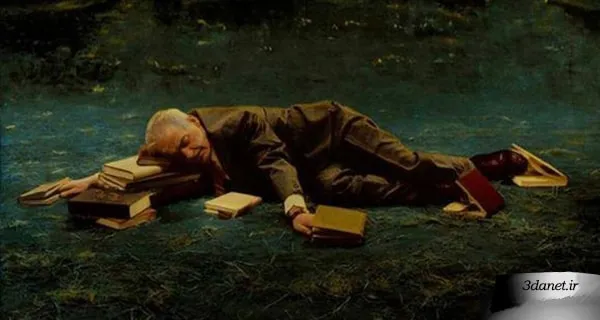
An entirely rationalistic study of religion does not turn out to be very permissible or appropriate. I agree with the statement that the God of religions is completely different from the God of the philosophers. To seek rational proofs for every religious proposition is an unforgivable error. By doing this we get nowhere and lose the destination and purpose altogether. In this writer's opinion, the core or strength of religiosity is not the triumph of religious propositions over various rational arguments; rather, its triumph lies in giving meaning to human lives and embedding "goal-oriented values." If we come and examine religion entirely from a rational standpoint, we will certainly regard it as an imaginary and illusory phenomenon. Although religion is not devoid of reasoning, it is not produced entirely through ratiocination.
But what is the core of religion?! I think the core of religion is faith. As Mujtahid Shabestari says: "In Islam, the foundation of faith and belief is not based on the understanding of a continuous religious, historical, and linguistic tradition. The basis of being a Muslim in every age is not reliance on tradition in the sense of the 'understood' understanding of predecessors, although this nourishment aids the Muslim's faith. The meaning of being a Muslim in every age is to establish a living and transformative relationship with God in that very age, and its leaven is each person's personal experience and understanding of God, not a continuous religious-historical tradition"[1].
Therefore, faith is a kind of relationship with God. This relationship is not formed or experienced under the dominance of reason. Faith is a kind of bracketing of reason and an unbracketing of the heart. I do not rationalize God; I perceive God with the heart. A rational relationship with God is not possible; a loving relationship with Him is possible. Let me give some examples. These examples are all from the Quran. These examples clearly show the nature of the faithful experience of the divine prophets. In these examples, one can fully become aware of the difference between reason and the heart.
In the Quran, there is the story of Abraham and the sacrifice of his son Ishmael. In this story, Abraham saw a dream and considered it true. He took his son to the altar and intended to slaughter him. God became aware of Abraham's faith and gave him a ram (an animal) to slaughter: "He said, 'O my dear son, I have seen in a dream that I [must] sacrifice you; so see what you think.' He said, 'O my father, do what you are commanded. You will find me, God willing, among the steadfast.' / Then when they had both submitted [and bade each other farewell], and he laid him down upon his forehead, / We called out to him, 'O Abraham, / You have fulfilled the vision.' Thus do We reward the doers of good..."[2].
In another story in the Quran, Jacob smelled the scent of his son Joseph from afar, and others called him senile: "He [Joseph] said, 'There is no blame upon you today. God will forgive you, and He is the most merciful of the merciful. / Take this shirt of mine and cast it over my father's face; he will become seeing [again]. And bring me all your family.' / And when the caravan departed, their father said, 'Indeed, I find the scent of Joseph, unless you think me senile.' / They said, 'By God, you are indeed in your old error.' / Then when the bearer of good tidings arrived, he cast it [the shirt] over his face, and he became seeing [again]. He said, 'Did I not tell you that I know from God that which you do not know?'..."[3].
These two examples clearly show the role that faith plays. If the prophets had listened to the voice of reason instead of the voice of the heart, such events would not have occurred. Abraham would not have taken his son to the altar, nor would Jacob have smelled the scent of Joseph’s shirt. This is the story of faith, which makes such things possible. Faith is hearkening to the voice of the heart—hearkening to the voice of a heart that has become aware of God. Such a person reconstructs themselves in connection with God and thereby acquires unique human privileges. As a result of this connection, the individual feels God as a refuge and finds serenity in Him. Thus, whenever they keep His remembrance alive, they find peace, and whenever they find peace in Him, they bestow peace: “Those who have believed and whose hearts find rest in the remembrance of God—verily, in the remembrance of God do hearts find rest”[4]. Therefore, faith is attaining the experience of refuge from God and taking shelter in Him. It is reaching an embrace that emerges from a positive relationship.
Now let me turn to my final explanations. Faith is the triumph of the heart / over reason / in connection with God. In faith, demonstrative or calculative thought does not prevail. The believer does not enter through rationality and does not become preoccupied with final outcomes. The experience of faith is of the nature of love, and love. The believer is a lover, and the lover seeks an embrace. Faith ultimately (as I have said) is the attainment of the experience of refuge—an experience whose seeker is the believer and whose provider is God.
Now readers may suppose that the experience of faith is an anti-rational experience. What I have said by no means implies this. Consider this verse by Hafez:
The sanctuary of love has a threshold far higher than reason,
Only one who carries his soul in his sleeve may kiss that threshold.[5]
I hold that the experience of faith is not anti-rational, but rather reason-avoidant. In their experience of faith, the believer passes beyond reason and transcends it. On the path of faith, hearkening to the voice of reason is, to some extent, a seductive distraction. Reason does not want a person to be a believer; it wants them to be a reasoner and a calculator. Consider this famous example: “A vast sea lies before you. A mother and her child are on the shore. The child enters the sea and begins to play. The mother, by the water’s edge, is peeling fruit for the child. She is waiting for her child to tire of playing in the water and come sit beside her—to eat fruit with her and talk together. Suddenly, everything changes. A tall wave crashes over the child, and the child is tossed up and down in the water. At this moment, the mother realizes her child is drowning. She forgets herself and plunges into the water to save the child. In this instant, it is no longer the mother’s reason that commands. It is the command of the heart that moves the mother.” In this example, if the mother were to act rationally, she would have to reason with herself. She would have to “put two and two together” and choose between her own life and her child’s. But generally, in such situations, the mother makes a loving decision and sets aside the call of reason. She listens to the call of her heart and risks danger. And…
The experience of faith is of a similar kind. Of course, the experience of faith is not heart-wrenching but joy-creating. On the path of faith, the individual sets aside the call of reason and steps forward guided by the heart. In the experience of faith, reason becomes incapable of reasoning and calculation and loses the power to comprehend the event. The experience of faith is a unique experience that exceeds the bounds of reason and takes another path. Reason lacks the capacity to measure and manage faith, and its leap is simply not as great as the leap of the heart. I say again, repeatedly, that faith is an attraction of the heart, not of reason; and therefore, it is sweet like halva, not sour:
The believer, faith, and religion were sweetness and delight,
Where have you ever seen a tray of sour halva?[6]
Consequently, the outcome of reason in loving attractions such as faith is inefficacy and concealment. The dewdrop is incapable of comprehending the sea, and the sea is the symbol of love and all things amorous:
I drew comparisons and the reason’s management on the path of love
Like a dewdrop that draws a line upon the sea[7]
Now, once again, consider the title: "Religion Dies in the Confines of Reason". I said above that the most important matter in religion is faith. Faith is considered the soul of religion, and religion without faith is dead. The category of faith passes beyond the circle of reason, and the experience of faith is not rational but of the heart. The believer enters into a captivating, sweet relationship with God, and from the heart of this connection attains the experience of refuge. Faith places a person in God's embrace and makes them a calm and tranquil human being.
Nevertheless, if someone seeks to understand religion entirely rationally, they have taken its life. For the soul of religion is faith, and a purely rational understanding of religion means disregarding faith. To want to understand all religious matters rationally is a futile and fruitless endeavor. Many religious matters become invalidated by the criterion of reason and fall outside the scope of consideration. Rationality is important, but not in all matters. Indeed, religion includes many matters that reason cannot analyze and calculate, and cannot bring to a conclusion. Faith, miracles, prayer, and so on are all matters that reason does not have the power to address and can make no headway with. We must separate the account of religion from, say, the account of philosophy, sociology, logic, and so forth, and pursue the path appropriate to each.
I conclude my words with these beautiful verses from Rumi, verses that, in the author's opinion, are the most beautiful in the Divan-e Shams:
My ear heard the tale of faith and became intoxicated
Where is the portion of the eye? I long for the vision of faith
A cup of wine in one hand, and the beloved's tresses in the other
Such a dance in the middle of the square is my desire[8]
.
.
[1]- Refer to the article "The Faith of Muslims and Their Tradition."
[2] -As-Saffat/102-105
[3] -Yusuf/92-96
[4] -Ar-Ra'd/28
[5] -Divan-e Hafez/Ghazal No. 121
[6] -Divan-e Shams/Ghazal
[7] -Divan-e Hafez/Ghazal No. 471
[8]-Divan-e Shams/Ghazal No. 441
.
.
Religion Dies in the Confines of Reason
By: Hossein Pourfaraj
October 25, 2016
.
.




.webp)
.webp)
Discussion1 comments
در مرحله اول ، مشاهده مخلوقات و رویداد های طبیعت و وجود انسانها بطور فطری ، انسان را به توحید جذب می نماید. این یک شناخت اجمالی است. در مرحله پیشرفته ، علم به دقت در شناخت موجودات و پدیده ها می پردازد ، قانون های آنها را کشف میکند ، و عقل درپی دلیل قانون ها و دلیل هماهنگی ها ، فقط خدا را می یابد. در مرحله سوم با پشتوانه علمی و عقلی ، معرفت ومحبت درجهت صحیح شکل می گیرد و آمادگی برای پیروی از قرآن کریم و برگزیدگان خدا حاصل می شود. بدون بهره گرفتن از عقل و قرآن و عترت نمی توان در راه صحیح قرار گرفت ،بلکه احساسات شاعرانه عرفای اصطلاحی دویدن در بیراهه است و نتیجه آن فرو رفتن در باتلاقی است که فهمیده یا نفهمیده به انکار توحید منجر می شود.