Philosophy
Reza Naghavi's essay “Religious Testimony and Anti-Religious Testimony!”
If religious fideism can be justified by appealing to the epistemology of testimony, can trust in anti-religious testimony be justified as well? By examining the conditions for testimonial credibility, Reza Naghavi defends the possibility of a rationally grounded irreligiosity based on deference.

Religious Testimony and Anti-Religious Testimony!
Reza Naghavi
PhD Graduate in Philosophy of Religion
Introduction
At least some problems in the philosophy of religion are among the “easy yet impossible” kind; meaning that, at first glance, everyone thinks/can think about the problem and even argues about it; yet the same problem, in the hands of philosophers of religion, turns into a difficult enigma and gives rise to endless dispute[1].
The problem I will address in this note is of this sort. All of us have been familiar since adolescence with the rational problem of “deferring to the expert” in religious and non-religious matters, and we have justified our own emulation of religious authorities in this way; yet today, this same familiar problem has become a complex subject in “religious epistemology” and the “epistemology of testimony,” and philosophers have formed protracted disputes over the conditions for the validity of “testimony,” especially in the realm of religion.
When confronting “religious emulation,” this problem may also have occurred to some of us:
A) “If religious emulation and trust in testimony is a rational method for acquiring belief for the religious, why should it not be possible for the non-religious? Can the non-religious not also base their irreligiosity on emulation and deference?”
In this note, I will attempt to reflect on this very simple problem from the perspective of the epistemology of testimony, using the relatively technical language of philosophers of religion, and for the time being, offer a preliminary defense of an affirmative answer to this question. To this end, I will first outline a summary of the most important views in the epistemology of testimony, and then, with these views in mind, I will discuss the above question.
Before entering the main discussion, it is necessary to mention that the entire focus of this note is on the category of “justification and rationality” and not the category of “truth and falsehood.” Wherever “truth and falsehood” is discussed, it is merely digressive and in connection with “justification.” The dispute over the reasonableness of a proposition is a second-order dispute, and the dispute over the truth/falsehood of a proposition is a first-order dispute.
1- The Most Important Views in the Epistemology of Testimony
The main question regarding the conditions for the validity of testimony is: what conditions are necessary on the part of the source of the testimony (the speaker) and the recipient of the testimony (the hearer) for reasonable/justified trust in testimony? Radical reductionists believe that a person is justified in trusting the testimony of “another” only if they can place that testimony within a broader set of relevant evidence and indicators, and by weighing the evidence, judge the matter at hand directly and first-hand. Hume’s view on the problem of testimony is placed under this approach[2].
Moderate reductionists believe that the ability to directly assess testimony within a broader puzzle of evidence is not necessary for trusting testimony. The main condition for the permissibility of trusting testimony is that the hearer has a reason for the speaker’s trustworthiness, their moral sincerity, and their epistemological competence in the domain under discussion. Elizabeth Fricker defends this view[3].
Non-reductionists claim that even a reason for considering the speaker trustworthy is not necessary; rather, merely having no reason for the speaker’s untrustworthiness is sufficient for justified trust in another’s testimony. In other words, the principle is the speaker’s trustworthiness, unless the contrary is proven. According to this view, “I” am not epistemically a breed apart, and in principle, the epistemic faculties of “the other” are as trustworthy as my own epistemic faculties. Thomas Reid, Richard Foley, and Linda Zagzebski are defenders of this view[4].
Dualists, that is, those who believe in combining the conditions of reductionists and non-reductionists, hold that trust in testimony is justified only if specific conditions are met on the part of the speaker, the hearer, and the environment in which the testimony is exchanged. For example, Jennifer Lackey believes that I am justified in trusting the testimony of "another" if:
a) I myself have a reason for the speaker's trustworthiness (internalist condition)
b) The speaker is genuinely trustworthy (externalist condition)
c) I possess no defeater against the speaker's testimony (internalist condition)
d) There is in fact no defeater against the speaker's testimony (externalist condition)
e) The environment in which the testimony is exchanged is not unreliable; that is, false testimonies are not predominantly exchanged in that environment (externalist condition)[5]
2. The Problem of Religious Testimony
If we set aside adherence to the new term "testimony" and also consider more familiar equivalents such as "taqlid" (emulation) and "ta'abbud" (doctrinal adherence), we can acknowledge that the rational justification of religious beliefs by appealing to "religious testimony" or "religious ta'abbud" has a history as long as the history of religion itself; although its formulations and narratives have varied across different religious and philosophical traditions and have manifested in various guises throughout history.
Our contemporary religious believers and theologians also strive, using the latest achievements of epistemology, to dispel doubts and show that basing religious belief on ta'abbud, even in the realm of the principles of religion, does not conflict with rationality, and under certain conditions, we are permitted, and indeed obligated, to adhere to ta'abbud.
"Epistemology of testimony" has received serious attention from epistemologists since the second half of the twentieth century, and a considerable body of literature has formed around it. Hence, some religious philosophers and theologians in our time seek to defend "religious ta'abbud" by utilizing the category of "testimony" and, in particular, to show that the general body of believers, who are incapable of grasping rational and scientific reasons, are justified in their faith[6]. Zagzebski believes that even the very belief in the existence of God is epistemologically justifiable by appealing to the testimony of the vast multitude of theists in various societies[7].
In contrast, some other epistemologists have argued against the above approach and believe that rationalizing religious ta'abbud by resorting to the epistemology of testimony is not a successful project, and that religious testimonies lack the necessary conditions for trustworthiness[8].
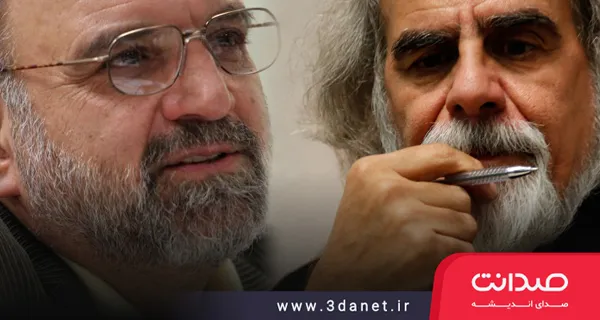
This issue has also been reflected among Iranian thinkers. For two decades, Professor Mostafa Malekian has emphasized the established conflict between rationality and ta'abbud and has endeavored to defend it. Some critics, resorting to the "epistemology of testimony," have criticized Malekian and defended the rationality of "religious ta'abbud"[9]; but Malekian still maintains that religious testimonies lack the necessary conditions for trustworthiness[10]. However, my aim in this essay is not to judge the categorical proposition that "trust in religious testimony is justified/unjustified"; rather, it is to propose the hypothetical proposition that "if religious ta'abbud can be justified by appealing to the epistemology of testimony, then trust in anti-religious testimony can also be justified within the framework of the epistemology of testimony."
3. The Problem of "Anti-Religious Testimony"
Before beginning the discussion, I must distinguish between “relative anti-religious testimony” and “absolute anti-religious testimony.” By “relative anti-religious testimony” I mean that a person, citing the religious testimonies current in their own religious tradition, denies the claims of other religions and denominations. For example, an exclusivist Jew, citing the religious testimony of Judaism, denies all religious claims that conflict with their own religion and considers their sacred texts to contain false and invalid propositions. This type of “anti-religious testimony,” to varying degrees, is a corollary of reliance on religious testimony and is a familiar and customary matter. “Relative anti-religious testimony” is not the subject of my discussion here.
In contrast, by “absolute anti-religious testimony” I mean that a person does not believe in any religion and is an atheist or at most a deist, and justifies their anti-religious beliefs by citing the testimony of experts. At first glance, this seems somewhat strange and peculiar to us. We have rarely heard of anyone basing their irreligiosity and lack of faith on “testimony,” or what is known as “imitation” (taqlid) and “submission” (ta‘abbud). It is as if “imitation” and “submission” in the realm of religious beliefs are the exclusive preserve of the religious, and the irreligious have no right to encroach upon them! Perhaps this is also a form of “epistemic injustice” in the genesis of which the irreligious themselves are not without fault. It is as if there is an unwritten consensus between the religious and the irreligious that “we the religious always have the right to base our religious beliefs on imitation and submission; but you the irreligious must have direct reasoning for each and every one of your beliefs!” Perhaps the irreligious’s share in this unwritten consensus is that they consider basing belief on imitation and submission, or “testimony,” to be incompatible with their own intellectual maturity; but in any case, it seems that:
b) Epistemologically, there is in principle no difference between religious testimony and anti-religious testimony, and if basing religious belief on testimony is reasonable, the irreligious can also, under certain conditions, base their anti-religious beliefs on trust in testimony. The possibilities and challenges for both groups are roughly the same.
To clarify the above claim, I will consider Jennifer Lackey’s dualist theory, which combines internalist and externalist criteria and possesses the greatest explanatory power in the face of our epistemological intuitions, and I will try to address the question: “Does Lackey’s theory allow for ‘anti-religious testimony’?”
For example, suppose Zayd is a prominent and highly skilled philosopher and scholar of religion. He gives Reza anti-religious testimony that “most of the propositions in the Bible are false.” In this scenario, is Reza’s trust in this anti-religious testimony reasonable?
3-1- Internalist Conditions for Trusting Testimony
Regarding the “internalist conditions for trusting testimony,” it can be claimed with greater ease that there is no justified reason for discriminating between “religious testimony” and “anti-religious testimony”; because internalist conditions depend solely on the epistemic perspective of the person themselves and their sincerity and seriousness in seeking the truth, and have nothing to do with the reality of the matter from a third-person perspective. We said that the internalist conditions are:
a- I myself have a reason for the speaker’s trustworthiness
c- I myself have no defeater against the speaker’s testimony
According to the definition of internalism, the fulfillment of these two conditions depends on the sincerity and seriousness of the person themselves. Therefore, if Reza “in his own view” has a reason to trust Zayd’s anti-religious testimony and “in his own view” knows of no defeater against this testimony, then Reza’s trust in Zayd’s anti-religious testimony is justified; even if Reza’s reason for Zayd’s trustworthiness is “in fact” an invalid reason, and even if “in fact” a defeater exists against Zayd’s testimony, but Reza is unaware of it.
3-2- Externalist Conditions for Trusting Testimony
It was said that b. “speaker reliability,” d. “absence of defeaters,” and dh. “reliability of the testimonial environment” are three externalist conditions; meaning that these are real, objective conditions and have nothing to do with the hearer’s sincerity or seriousness. Can it be claimed that, with respect to these three conditions, “religious testimony” is in a significantly better position compared to “anti-religious testimony”? It seems that an affirmative answer to this claim also lacks conclusive reason.
Let us begin with condition dh. “reliability of the testimonial environment.” As it happens, Jennifer Lackey, by appealing to this very condition, claims that trusting “religious testimony” is unreasonable; because religious testimonies are an instance of “belief arising from luck.” Religious testimonies are contradictory, and therefore the majority of them must be false. Consequently, arriving at a true testimony, like finding a golden ring in a heap of rubbish, can only be a matter of good luck[11].
I have elsewhere explained the criticisms of the “belief arising from luck” argument and consider it incomplete[12]. The purpose of mentioning Lackey’s argument is merely that the condition of “reliability of the testimonial environment” has initially been advanced as a reason against “religious testimony” and has exposed it to accusation.
Nevertheless, fairness dictates that if this reason is effective in rendering “religious testimony” unjustified, it will also render “anti-religious testimony” unjustified; because, as some defenders of “religious testimony” have stated, in the broad sense of “luck of birth,” arriving at “anti-religious testimony” is also subject to good luck. In any case, the danger that threatens “anti-religious testimony” with respect to this condition is no greater than the danger that threatens “religious testimony.”
Can it be argued, with respect to conditions b. “speaker reliability” and d. “absence of defeaters,” that religious testimony is superior to anti-religious testimony? Perhaps someone might answer affirmatively here and say that we can, by proving the falsehood of anti-religious testimonies (the product), prove that the source of that testimony (the process) is also unreliable; because in the externalist sense of justification, the definition of an unreliable source is a source that mostly produces false beliefs.
The objection that can be raised against the above response is that the sources of anti-religious testimony make exactly the same claim and believe that by proving the falsehood of religious testimonies, they have proven that the sources of religious testimony are objectively unreliable. Therefore, proving the falsehood of the product will be considered a reason for the unreliability of a process only if it is done intersubjectively and has convinced the majority of intellects; otherwise, every holder of a belief considers the propositions that contradict their beliefs to be false.
So far, I have tried to show that within the framework of Lackey’s theory, trusting anti-religious testimony can also be reasonable. In what follows, I will specifically point to a shared opportunity and a shared challenge facing religious testimony and anti-religious testimony.
4-The Possibility of Mediated Imitation
One of the possibilities available in the epistemology of testimony, which equally facilitates trust in “religious testimony” and “anti-religious testimony,” is the “possibility of mediated imitation.” According to Zagzebski, the permissibility of trusting another is not limited to direct trust but also includes mediated trust. If I, out of epistemic conscience (being adorned with epistemic virtues such as good memory, wisdom, clear reasoning, critical thinking, etc.), believe that Zayd has conscientiously believed that Amr is a conscientious person in forming beliefs, then I can trust Amr, even though I myself have no direct reason for Amr’s conscientiousness. In fact, in this assumption, I have mediately ascertained that if I form my belief based on Amr’s statement, the probability of arriving at the truth is greater than if I were to form a belief myself, relying on my own epistemic faculties.[13] Jennifer Lackey also, while discussing condition b. “speaker reliability,” refers to the issue of “mediated trust”[14].
The permissibility of mediated emulation compensates for individuals' inability to find a trustworthy expert; thus, both the religious and the irreligious can more easily base their religious/anti-religious belief on deference.
5. The Challenge of Conflict and Mutual Annulment
One of the most important common challenges regarding the validity of religious testimony and anti-religious testimony is the challenge of "conflict and mutual annulment." This challenge can be posed at three levels. (a) "Conflict within religious testimonies." For example, the conflict between the religious testimonies of Judaism, Christianity, and Islam. (b) "Conflict within anti-religious testimonies." For example, the conflict between the testimonies of Deist and Atheist schools. (c) "Conflict between religious and anti-religious testimonies."
Some philosophers believe that in any area of human knowledge where conflict and inconsistency among experts and testifiers is severe, distinguishing valid testimony from invalid testimony becomes impossible, and therefore, trusting testimony in those areas is not rational. For example, some epistemologists believe that this is the case in the domain of "ethics," and thus trusting "moral testimony" is unreasonable[15].
David Hume, citing level (a), "Conflict within religious testimonies," believes that trusting testimonies that recount miracles is unreasonable; because:
In matters of religion, whatever is different is contrary... therefore, any miracle claimed to have occurred in one of these religions (and all of them are replete with miracles), since its direct aim is to establish the particular system to which the miracle is attributed, has the same force, though more indirectly, to overthrow every other system.[16]
It can be said that the challenge of conflict and mutual annulment can also be posed, to a significant degree, at levels (b) and (c). I am not here to respond to this challenge, and my claim is only that, in facing this challenge as well, the epistemic situation of "religious testimony" is not much better than that of "anti-religious testimony." If the conflict of testimonies is a justified reason for their mutual annulment of validity, this fire will burn religious and anti-religious testimonies alike; and if conflict cannot be a reason for annulment, then the irreligious can also, despite the conflicts at levels (b) and (c), rationally trust anti-religious testimonies. The conflict among anti-religious testimonies is no less, if not more, than that among religious testimonies.
Religious individuals like Richard Swinburne, in response to the challenge of "conflict and mutual annulment," claim that mere conflict between testimonies is not a reason for the annulment of both sides of the conflict, and we can affirm one and refute the other[17]. It is clear that this possibility also exists for the irreligious.
Conclusion
According to the proposed hypothesis, the "epistemology of testimony," especially in its non-reductionist and permissive approaches, such as those of Thomas Reid, Zagzebski, and Richard Foley, is a double-edged sword that serves both theists and non-theists. If this hypothesis has any share of truth, then the religious should appeal to the category of "testimony" somewhat more cautiously and express their joy at union with this fair-seeming companion more quietly. Paving the road of "deference" is a public-benefit/public-harm endeavor from which both the believer and the atheist can benefit.
.
.
[1]. One example of such issues is the “problem of the luck of birth.” Many people familiar with religion ponder from adolescence the fact that each person usually adopts the religion prevalent in their geographical, social, and familial environment. Thus, the exclusive truth of one religion and the misguidance of the followers of other religions pose a serious challenge to God’s guidance and justice. This seemingly obvious problem has led to protracted disputes in the philosophy of religion and has yet to find any consensual solution. Hick considers this problem a reason for the invalidity of religious exclusivism, and Jennifer Lackey considers it a reason for the unjustifiability of trusting “religious testimony.” In contrast, Plantinga deems Hick’s argument insufficient, and John Greco argues that the “problem of the luck of birth” cannot be a reason for the irrationality of trusting “religious testimony.” This dispute continues.
Regarding the dispute between Hick and Plantinga, see Hick’s article titled “Religious Pluralism in the Scales of Epistemology” and Plantinga’s articles titled “A Defense of Religious Exclusivism” and “On Hick.” In: Abdolkarim Soroush, Sirat-ha-ye Mostaqim [Straight Paths], Tehran: Serat
Jennifer Lackey, The Epistemology of Testimony and Religious Belief, The Oxford Handbook of the Epistemology of Theology Edited by William J. Abraham and Frederick D. Aquino. p 215
John Greco, Religious Knowledge in the Context of Conflicting Testimony, American Catholic Philosophical Association, Proceedings of the ACPA, Vol. 83, P 72-73
[2]. Benjamin McMyler, Testimony, Trust, and Authority. Oxford: Oxford University Press. Pp 23-4
[3]. Elizabeth Fricker, "Testimony and Epistemic Autonomy".in: The Epistemology of Testimony, p 228 .
[4]. Linda Zagzebski, Epistemic Authority, A Theory of Trust, Authority and Autonomy in Belief. Oxford: Oxford university press. pp 39& 59-60& 118
[5]. Jennifer Lackey, Learning from Words, pp 177-178 .
[6]. Two prominent examples of these efforts are:
Linda Zagzebski, Epistemic Authority, A Theory of Trust, Authority and Autonomy in Belief. Oxford: Oxford university press
Wahlberg, Mats. (2014).Revelation as Testimony. A Philosophical-Theological Study. Michigan: Wm. B. Eerdmans Publishing Co.
There is no room in this note to address the views of these thinkers. The author has presented and examined the views of these two philosophers in the book “Revelation as Testimony.”
[7]. Linda Zagzebski, Epistemic Authority, p 186
[8]. Jennifer Lackey, The Epistemology of Testimony and Religious Belief.
[9]. See the article by Mirsaeid Mousavi Karimi titled “A Critique of Mostafa Malekian’s View on Dogmatism in Religion”
[10]. See Professor Malekian’s lecture on “Religious Testimony”
[11]. For further explanation of the “luck of birth” argument, refer to footnote 1.
[12]. Reza Naghavi, Revelation as Testimony, pp. 359-361
[13]. Linda Zagzebski, Epistemic Authority, p 152
[14] .Jennifer Lackey, Learning from Words. p 149
[15]Alison Hills, Moral Testimony: Transmission Versus Propagation, Philosophy and Phenomenological Research, LLC . pp 7-8
[16]. David Hume, An Enquiry Concerning Human Understanding, translated by Kaveh Lajevardi, pp. 124-125
[17]. Swinburne, Richard. 2007. Revelation from Metaphor to Analogy. Oxford: Oxford university press. P 288
.
.


Discussion1 comments
بنظر میرسد اصولا مشکل ، تقلید نیست یعنی تسلیم به افرادی با علم خاص مشکل را حل نمیکند بلکه قلب و احساس افراد مستقلا نیز لازم است... تعبد از طریق مشاهده وعلم و استدلال آغاز میشود ولی با ایمان و باور ادامه یافته مستحکم میگردد... برای همین است که همه نوع اعتقاد ، کفر و ایمان و نفاق و بی ایمانی پنهان رخ میدهد... پیام ها و معجزات پیامبران برای اثبات وجود خدا و خلقت جدید نیست ، بیشتر برای باوراندن و هشدار به قیامت و حساب و کتاب الهی و بیم و امید است... وَقَالُوا أَإِذَا ضَلَلْنَا فِي الْأَرْضِ أَإِنَّا لَفِي خَلْقٍ جَدِيدٍ بَلْ هُمْ بِلِقَاءِ رَبِّهِمْ كَافِرُونَ ﴿۱۰﴾ سجده قُلْ يَتَوَفَّاكُمْ مَلَكُ الْمَوْتِ الَّذِي وُكِّلَ بِكُمْ ثُمَّ إِلَى رَبِّكُمْ تُرْجَعُونَ ﴿۱۱﴾ سجده آیا باور میکنیم که خداوند ، نفوس تمام انسانها را ، بمثابه جعبه سیاه عملکرد آنها ، توسط ملائکه محفوظ نگهمیدارد تا وقوع قیامت ؟ گویا قرآن آخرین معجزه است برای رسیدن به این باور...آنرا متصل و نه گزینشی ، بخوانیم یا خواندن آن را یاد بگیریم شاید به باور برسیم... رسیدن به باور راه دیگری نیز دارد و آن دیدن اقدامات درست و زیست اجتماعی و باور مسلمین است که البته فعلا از این راه محروم هستیم... باید زبان عربی را یاد بگیریم تا به چشم خودمان معجزه را ببینیم...رعایت اتصال در قول الهی و شیوایی و روانی بیان ، ما را یاری میکند... قرآن ضمن اینکه معجزه کلامی است ، شامل فلسفه خلقت و...همچون قطب نمایی در اقتصاد و...نیز هست ، احکام حداقلی و پیش فرض نیز دارد... سایت : "میزان در میزان"