Philosophy
RFI Interview with Dariush Shayegan
In an interview with Radio France on the occasion of his book In Search of Lost Spaces, Dariush Shayegan discusses writing in Persian, the distinction between the essay and the article, and the influence of French literature; he also reflects on the poetry of Sohrab Sepehri and Iranian modernity.
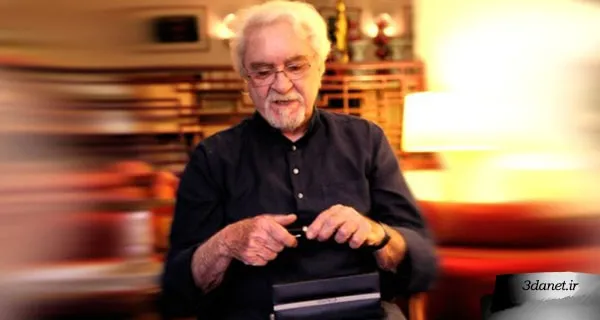
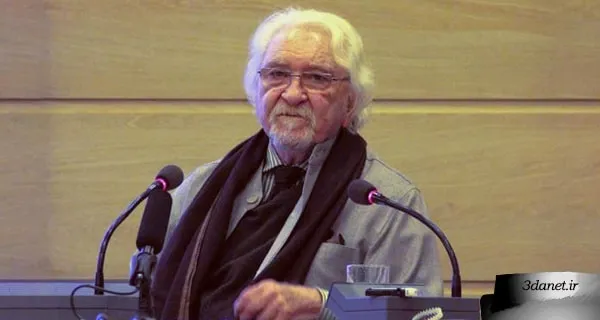
The book In Search of Lost Spaces, a collection of articles on art, has recently been published by Farzan Rooz Publications in Tehran. On this occasion, the Persian service of Radio France Internationale conducted an interview with Dariush Shayegan, the Iranian philosopher and author of the book. Writing in both Persian and French, being influenced by French writers and poets, the difference between an article and an essay, the poetry of Sohrab Sepehri, and the course of thought in contemporary Iran are among the various topics that Dr. Dariush Shayegan addresses in this interview.
.
Dariush Shayegan: Iranian Society Has Overtaken the Intellectuals
First, tell us about your motivation for publishing a book in Persian after several years.
During the time I was in Iran, most of my books, such as Under the Skies of the World and Enchantment and the Forty-Piece Identity, had been translated into Persian and published by friends. I wrote the articles in the present book mainly in French, and some were translated by my friends. Of course, I translated some of the articles myself or wrote them in Persian from the start. My mother tongue is Persian, and if I wrote some of my books in French, it was because I resided in France for 12 years, but my connection with Iran was never severed, and I have recently come to Iran and prefer to write in my mother tongue again, as I did before. For example, I initially wrote books like Religions and Philosophical Schools of India, Asia Against the West, and Mental Idols and Primordial Memory in Persian, and I have a close connection with the Persian language.
Does your writing in Persian differ from writing in French? That is, does the audience affect your style and content?
Yes, when you write in Persian, you have to shift your mental gears. I like to write my material in simple terms. Whereas today, many write in very complex language, and new terminology has become fashionable. But I like to employ a simple and fluid style so that readers can easily understand my meaning. I think the reason for this is that I have also written in other languages, like French and English. When you write in European languages, you cannot be too verbose and must write more concisely and clearly. As a result, when I write in Persian, I benefit from brevity and clarity.
At the book launch event in Tehran, Kamran Fani, distinguishing between an article and an essay, described your book mainly as a collection of essays. What is your assessment of this remark?
I think he has rightly placed emphasis on a fundamental issue. In an essay, the writer is freer and can express a problem and make that problem an inseparable part of their own worldview. That is, a kind of creation takes place in the essay. This style of writing is not very common in Iran. In Europe, as you know, essay writing began with Montaigne in the sixteenth century. Therefore, I think my writings in this book are mainly essays and are less often considered an article in the sense of an article.
At the same event, Mohammad Mansour Hashemi described you as influenced by certain French writers and compared the title of your book to Marcel Proust's In Search of Lost Time. You yourself have also referred to Baudelaire's poems. How have you been influenced by French writers?
I am very influenced by French writers. From childhood, at the age of six, I went to a French school and learned French and Persian together. At that time, I attended Saint Louis School, which was run by French priests. Therefore, I am very familiar with French literature, have read the French neo-realists extensively, and know the eighteenth-century French writers well. I am especially very fond of Charles Baudelaire as a poet. As Walter Benjamin says, Baudelaire is the first poet of modernity. You know that the term modernity itself was coined by Baudelaire in an article titled "The Painter of Modern Life." In this respect, I have been greatly influenced by him and have always thought that it might be good, if I get the chance one day, to write a treatise about him.
Sartre also wrote a book about Baudelaire.
Yes, I read that book by Sartre many years ago. But I believe he did not emphasize certain aspects of Baudelaire, meaning he did not show that Baudelaire is not only the poet of modernity, but also tries to open a window onto the beyond. Therefore, my opinion is that Sartre was unable to access Baudelaire's thought as he deserved.
In your speech at the book launch, you mentioned that Sohrab Sepehri wrote poetry in French toward the end of his life. Could you elaborate on that, if possible?
Sohrab's poetry had gradually become very abstract and, as Rilke would say, his poetry had become intertwined with thought; consequently, the Persian language could not convey those concepts. For example, some of his poems like We Nothing, We Look, which I have translated into French, are more easily understood in that language. Because the French language, since the nineteenth century with Symbolist poets like Rimbaud and Baudelaire and others, has become accustomed to these concepts, and this language has been able to express these concepts well. For this reason, I believe some of Sohrab's last poems were in French. When I was translating his poems, he himself was present. Sometimes I would tell him, Sohrab, try to say this poem in French so I can convey its meaning. That is why the translations I have made of his poems into French are not very faithful to the original text, because I tried to translate these poems as if they had been composed in French. I had this permission from Sohrab himself, and had he not been there, I would not have allowed myself to do so.
It seems this book has also been published in a bilingual edition in Iran.
Yes, Hermes Publications published it. Because the publisher Orphée in France went bankrupt. But I recently heard that this publisher wants to reprint the book.
In the introduction you wrote for that book, you praised Sohrab's poetry and considered him a modernist poet. How do you assess the criticisms leveled at Sohrab's poetry? For instance, Mr. Shafi'i Kadkani has written that Sohrab's poetry led contemporary Iranian poetry astray and resulted in weak imitations of his work.
The late Naderpour, who was my friend, believed that Forough Farrokhzad, who is herself a great poet, was influenced by Sohrab. It is true that Sohrab created new paths, but I really do not have enough mastery of this subject to know to what extent the poets who came after him copied him. But I do know that ghazal composition in Iran reached such a peak that one can no longer write ghazals like Hafez. Sohrab's advantage over others was also that he read a great deal and knew most of the world's renowned poets like T. S. Eliot, René Char, and others, and one could discuss these matters with him. Perhaps his last poems in the Persian language were not very successful. But he was trying to take Persian poetry into a realm whose effects we see in "We Nothing, We Look." Perhaps language itself became an obstacle for him. I am not very qualified in this area, and Mr. Shafi'i Kadkani is more qualified than I am in this field.
Let us return to your book. You have been called a philosopher of culture. What is your own opinion on this?
I don't consider myself a philosopher. I consider myself a free thinker, because I have journeyed through various cultures. I began as an Indologist, then became interested in Islamic mysticism and conducted extensive studies in this field, associating with religious scholars. Then I turned to Christian mysticism, and I also studied philosophy at the University of Geneva, where I focused on German Idealism. There was also a period when I read a great deal of Heidegger. As a result, I believe I am someone who journeys from one culture to another. I don't claim to possess the Jam-e Jam (as Mr. Khorramshahi once opined about me!), but rather I try to see the relationships between cultures and pay attention to the ruptures. When you study Asian cultures like China, India, Buddhism, and so on, you see that they are active up until the seventeenth century. Not just active, but creative as well. But from the seventeenth century onward, they suddenly go into a historical recess. For instance, Mulla Sadra, who represents the pinnacle of Islamic wisdom, is a contemporary of Descartes. It is interesting that Mulla Sadra is the culmination of a cathedral reaching its zenith, whereas Descartes is a beginning. I am very sensitive to these ruptures, to how these differences come into being.
You mentioned the Jam-e Jam. In that session, you said that if anyone possessed this Jam-e Jam, it was Shahrokh Meskoob.
God bless Shahrokh Meskoob. He was a great scholar of the Shahnameh. Of course, the Jam-e Jam actually refers to the cup of Kay Khosrow.
You speak of Mulla Sadra as the end of Islamic thought. How do you assess the course of thought in Iran now?
Of course, I called Mulla Sadra the zenith. Before the Islamic Revolution, we had thinkers like Al-e Ahmad and Shariati who had influence in intellectual society. But I think intellectuals no longer have such influence now. Of course, their books are read to increase knowledge, but they are no longer role models. I think Iranian society has overtaken the intellectuals.
What do you see as the reason for this?
Perhaps the reason is that the intellectuals were unable to move in step with the changes in the world. Perhaps that is it. It is the same in Europe. If you look at the second half of the twentieth century, in France we have great figures like Derrida, Foucault, Deleuze, Baudrillard, and so on, but today such great figures are no longer present in France. It seems to be a global phenomenon.
Among your books, which one has been most well-received by Iranians?
I think the book that has been most embraced by young people is "New Enchantment and the Forty-Piece Identity." This book was originally in French and has recently been reprinted. But this book was very well-received because in it I had presented the duality between tradition and modernity in a different way, meaning we are no longer entirely traditional nor modern, but rather we all have multiple identities and must come to terms with this colorful world. That is why I think this book has been very popular in Iran and has reached its sixth or seventh printing, because it addressed issues like multiculturalism, hybrid thinking, and so on. Young people also think this way. Today, Iranian youth are not very different from young people in other parts of the world. When you talk to them, you see that their intellectual concerns are broader than the current issues of Iran.
Book World, Radio France Internationale | 09 January 2014 or 19 Dey 1392

Discussion1 comments
ما به دکتر شایگان افتخار می کنیم . که یک ایرانی با کوشش و پژوهش های عملی و نظری توانسته این عمق فرهنگ شرقی تا به غربی را به ما معرفی کنند . درود بر شایگان