اندیشهفلسفهخردگفتگوحکمتمعناپرسشفرهنگ
Art
The Architect of Sound: An Essay by Hossein Masoumi Hamedani in Honour of Master Mohammad-Reza Shajarian
Like Persian architecture, the art of Mohammad Reza Shajarian conjured a heavenly balance and equilibrium from earthly elements. A lifelong student who never ceased learning, he brought a refined art to the people—building the voice rather than merely projecting it, and never surrendering to fashion.
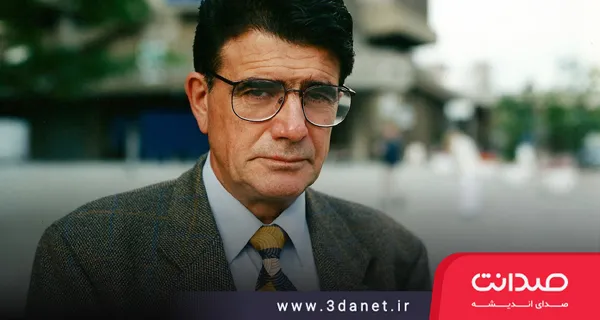
The Architect of Sound
In Honour of Master Mohammad-Reza Shajarian
Hossein Masoumi Hamedani
When visiting many masterpieces of Iranian architecture, our initial feeling is one of wonder—wonder at the work of architects and tile-workers who have placed these earthly and transient elements together in such a way as to create a heavenly balance and equilibrium. The patterns of the Sheikh Lotfollah Mosque in Isfahan evoke in our minds something of the starry sky, which always appears to us in the same state, and gazing upon it makes us forget that the earth and sky of this world are subject to change, that these buildings are also transient, and that we ourselves are transient beings. Thus, our feeling of wonder before these works gives way to a tranquility that, for a few moments, connects us to eternity.
Did the creators of these works have such an ambition in mind? We do not know these creators, and they themselves did not strive to immortalize their names alongside their creations. Today we call these individuals artists, but to be honest, we do not know whether they viewed themselves in this light, that is, whether they saw themselves as exceptional beings endowed with an innate talent denied to others, or whether, more likely, they saw themselves as laborers, builders, architects, and tile-workers. But one thing is certain: these nameless creators left nothing to chance in their work and accounted for everything in their execution. If we, knowing nothing of tile-work, were to observe one of these tile-workers from a corner, seeing how quickly and with what natural flair, seemingly without any effort or thought, they place the tiny components of their work together, we would be both anxious and amazed. We would be anxious lest, in the design of the tile pieces that must be placed side by side, a corner or an edge had not been properly calculated, and this crookedness would be repeated throughout the entire structure, ruining the final result; and we would be amazed when we see that our anxiety was unfounded and every piece has fallen exactly into its proper place.
We call the results of these people's work artworks and the people themselves artists, but in the past, they were called "master craftsmen" or "masters," not artists, as if in our culture the word master carried meanings and connotations far beyond the word artist, and master is the title we now rightfully use for Mohammad-Reza Shajarian. Of course, a voice like Master Shajarian's is granted only to a few people, but what an even smaller group of people, especially those recognized as artists, possess is the effort, perseverance, and meticulousness that Shajarian had. Those who worked closely with him, both during his lifetime and in these days, have often said that he never ceased learning for a moment, and if he heard of a corner of Iranian music in some corner of Iran, from a renowned master or an unknown singer or instrumentalist, he would make his way there to learn it, and he never abandoned this apprenticeship, even when he was recognized as a master himself. I, who met him in person only two or three times, saw the same ease, confidence, and tranquility in his person that I saw in his singing; a tranquility that can only be found in masters who have attained mastery through the path of being a student.
In one of these meetings, speaking about Banan, a singer he greatly admired, he said: "Banan constructed the voice." I do not know how this statement should be interpreted. Did he mean that Banan relied more on his skills than on his natural talent and had not yet reached a balanced mixture of craft and art, such that the listener of his voice, at least the musically knowledgeable listener, could see a bit of the conscious effort he was making in the result of his work, and this feeling prevented them from enjoying his work as they should? I do not think this interpretation is correct, and I consider it more likely that his intention was to praise Banan; he wanted to say that Banan, more than being an artist in the modern sense, more than relying on his God-given voice, drew upon his own effort, and this is what made him great in Shajarian's eyes. He wanted to say that art is construction, not the expression of something pre-made or given.
Shajarian, too, constructed sound, but before he ever took the stage. Listening to his voice was like reading a ghazal of Saadi. It placed no burden of difficulty upon the listener, such that one never sensed the hardships he himself had shouldered to attain such purity. His colleagues have spoken extensively of the difficulty of certain dastgāhs and gushehs he performed, and how few vocalists dared approach them, yet his efforts eased the listener's task, and today we derive the same pleasure from hearing these dastgāhs and gushehs as we do from more familiar and conventional modes.
Shajarian was a traditional "artist," meaning his art belonged to an era when such masters were not yet called artists. Perhaps had he been born in another time, he would have, like many past masters, sung in limited circles, his name forgotten, his voice remaining not on cassette, tape, and compact disc but only within this revolving dome, or like those tile-workers of the Sheikh Lotfollah Mosque, the fruit of his labor would have become part of a structure's design, perhaps one day destroyed by an earthquake or an invader's assault. But fortune favored us, and he, under specific historical conditions, succeeded in bringing a connoisseur's art among us ordinary people and cultivated our ears to hear it. We must, if only once, be grateful to technology for preserving the voices of the likes of Shajarian for us. Nevertheless, he was not seduced by the means at his disposal; he did not surrender the reins to fashionable trends and remained master of his craft. This, in an era where the laxities and temptations of modern life ensnare any artist possessed of innate talent who wishes to advance solely by its aid. Yet this master of traditional music was neither oblivious to the necessity of innovation nor to its perils, and his oeuvre represents an effort to reconcile a part of the past heritage with the exigencies of modern life.
I know nothing of music; what I do know is that Shajarian's voice does not demand that I be a musicologist to enjoy it; just as Saadi's poetry does not require me to know the subtleties of meter and rhyme; just as for centuries people have been thrilled by Rostam's heroics or wept at Sohrab's death upon hearing and reading Ferdowsi's Shahnameh, without knowing the meaning of many words in his poetry; just as those ancient tile-workers do not ask me to be versed in the intricacies of their craft in order to, within their creations—fashioned from this very earthly clay, dust, and color—forget for a moment my own earthly existence and connect with something beyond it.
Shajarian's voice was in the service of Persian poetry, and he fortified immensely the bond that has long existed between Persian poetry and Iranian music. In one of those meetings, I told him that people once said Iranian music kept Persian poetry alive, but today, with all the ghazals and masnavis you have sung and people have heard, it must be said that Iranian music has become the guardian of Persian poetry. You, the reader, ask yourself right now: among the verses of Hafez, Rumi, Saadi, Khayyam, and Attar that you remember, which ones have you memorized by reading and rereading the divans of these greats, and which ones by hearing and rehearing Shajarian's renditions? In an age when our intimacy with past literature diminishes day by day, this is no small service.
What prompted me to write this note is this very last point. It would have been proper for the Academy of Persian Language and Literature, as the institution charged with safeguarding our national language and literature, not to have forgotten to commemorate this great servant of language and literature, and not to have assumed that because he was a musician, commemorating him—even to the extent of offering condolences to a grieving public—must surely be the responsibility of the Academy of Arts. Now that it has forgotten, and it is too late for a reminder, I consider it my duty, as a member of this institution, to honor the memory of this great master, and I imagine that my other colleagues at the Academy, who on another level and through other means safeguard and promote the language and literature of Iran, share this sentiment with me.


Discussion1 comments
درود بر دکتر حسین معصومی همدانی که به زیبایی حق مطلب را ادا کردند. ما نیز چون ایشان چشم به راه پیام تسکینی از فرهنگستان زبان و ادب فارسی بودیم که دریغا و درد نمکدان شکستند و مضایقه کردند!