Philosophy
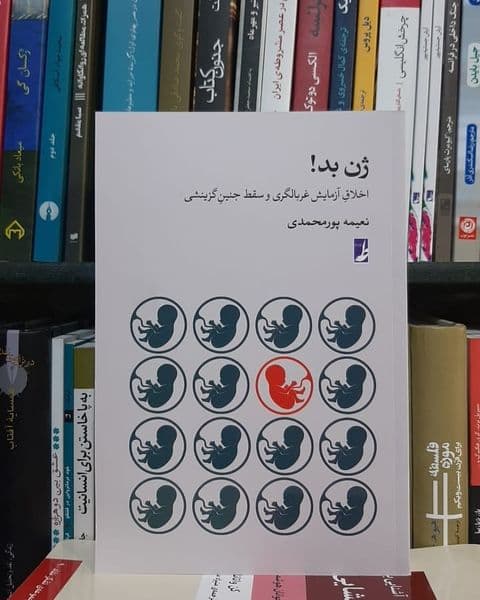
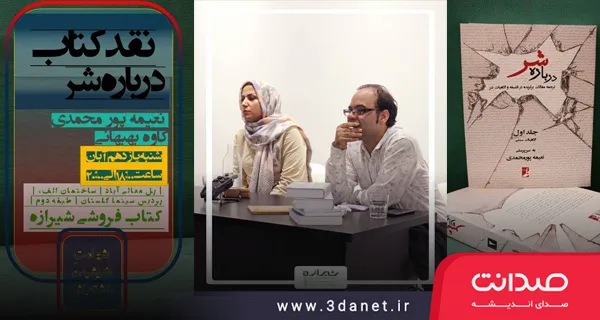
The Bad Gene! The Ethics of Screening and Selective Abortion by Naeimeh Pourmohammadi
The author's experience of having a child with Bardet-Biedl syndrome and the question of the 'right not to know' serve as a prelude to examining the ethical and legal dimensions of fetal screening and therapeutic abortion in Naimeh Pourmohammadi's book Bad Gene!
When they handed me the ultrasound result, it read: “Severe bilateral hydronephrosis[1] in both kidneys,” and they ordered an urgent repeat ultrasound and continuation of necessary measures. By “necessary measure,” they probably meant discarding the baby. I didn’t understand much about hydronephrosis. I went home. By then, he had been my baby for weeks. He was my wanted baby. I had been mothering him for weeks, and whatever he was, he belonged to me. I went neither for the repeat ultrasound nor for the necessary measure. When he came into the world, he had six fingers. It wasn’t good news at all. It was a sign; a sign of a genetic disease. His diaper would stay dry, and it turned out that the hydronephrosis they mentioned was correct. The urinary tract was so narrow it wouldn’t allow urine to pass. He had lost his left kidney and half of his right kidney during the fetal period. To save the remaining kidney, we submitted to three surgeries. He didn’t get better. They only found an emergency, temporary way for urine to exit, which later became permanent. We went to doctors as many times as the hairs on his head, from every specialty: endocrinology, cardiology, ophthalmology, nephrology, and orthopedics. I really loved his fingers. Those very sixth fingers on his hands and feet. With his sister, we had made up poems for his fingers, for those sixth ones, and we would recite them to him. By now, he was gradually learning to walk, and no shoe would fit his foot. There was no choice; we were forced to surgically remove the sixth fingers so he could walk comfortably. It was around that time that, at the Tehran Gene Clinic, they finally told us the name of his disease: Bardet-Biedl syndrome.[2] In these syndromes, everything works precisely like clockwork, according to the calendar that genetics specialists have written for this syndrome: intellectual disability and speech disorder at age three. Night blindness at age eight. Complete blindness at age sixteen, and the possibility of early death before the age of twenty!
Is that it?! Who gave you permission to give me all this information? Did I need this precise calendar? Why did you violate the future life of me and my son with all these minute medical details? Why did you seize control of our private life from before birth? Why, before we, mother and child, had met each other in the real world, did you white-coated specialists hastily judge us and write us a prescription for a necessary measure? The truth is that medicine did not let me enjoy my pregnancy, the moment of my child’s birth, or his infancy, and embittered all those days for me with extra information that I had no urgent need to know at the time. The possibility of enjoyment, the possibility of excitement, the feeling of autonomy, and the thought of having agency—all would have been possible for me if the veil of ignorance between me and reality had not fallen away and reality had not shown me its ugly, cold face. Now I know all my child’s genetic codes and am informed of the minute details of his future. The injustice and discrimination that exist in this process always make me cry out. I still see most mothers who do not know their children’s futures and go to meet the future alongside their children with bright, colorful dreams. Is it fair that they drew a red line through my child’s colorful future file and closed the file before my eyes forever? How good it would have been if I didn’t know! Didn’t I have the right not to know? Now that they gave me all that bad information, why didn’t they give me complete information? Why didn’t someone tell me: You know, but I also have good news for you; your child has a powerful emotional force that can quench you with his affection and empathy; the ability to form relationships with your friends and neighbors; to love your pet dog and cat; to sit at the lunch table and eat happily, to dig in the garden, to accompany you on holiday trips; to delight in sports and dancing with you; and the ability to enjoy everything in this life!
Abortion[3] did not become a problem for me at that time. Back then, I resolved everything very simply for myself: with maternal love and affection. But now, as time passes and the difficulties of caring for my child increase, and the more I read about this, the issue of abortion reveals its more complex layers to me. Abortion is never a simple, one-dimensional issue, and it cannot be resolved with a one-word answer of "yes" or "no." There is a multi-layered and far-reaching problem here, in which various philosophical, ethical, jurisprudential, legal, social, economic, commercial, political, cultural, feminist, environmental, population policy, medical, technological, cognitive science, historical, linguistic, and other angles are directly involved. When we reach a summation of all these dimensions together, the matter becomes very difficult. I opened with a preface from myself and my experience. I will bring the rest of my words throughout the book and especially at its end.
It has been said that the causes and factors of abortion are not outside of these few: "preserving the mother's life," "preserving the mother's physical health," "preserving the mother's mental health," "fetus resulting from rape or incest," "fetal abnormality," "unsuitable economic or social situation," and "the mother's wish"[4] and we know that the legal status of abortion in Iran is such that the Islamic Consultative Assembly passed a single article in 2005, according to which "therapeutic abortion with the definitive diagnosis of three specialist physicians and the approval of forensic medicine before ensoulment up to four months and with the woman's consent is permitted in two cases: fetal illness that, due to retardation or congenital defect, causes hardship for the mother, and maternal illness that is accompanied by a threat to her life." Five conditions have also been included in the single article on therapeutic abortion: 1. The fetus has a disability that causes hardship and difficulty for the mother or child; 2. If the fetus is healthy, the mother is ill and maintaining the pregnancy poses a life-threatening risk to her; 3. The abortion is before ensoulment (four full months); 4. The abortion is confirmed by three specialist physicians; 5. The abortion is performed with the mother's consent.[5]
In Iran, among the multiple factors for abortion, only three factors—preserving the mother's life, preserving the mother's physical health, and fetal retardation—became the basis for the therapeutic abortion law, and other factors did not find their way into the law due to the lack of jurisprudential backing. Permission for abortion in these three situations is also before four months and ensoulment. After four months, abortion is only permitted if the mother's life is endangered (and not the mother's health) and in cases of severe fetal retardation (and not mild retardation). Objections have also been raised against this law, including that fetal and maternal illnesses can be definitively diagnosed after four months of pregnancy, and before that, test results are often not very reliable. The second objection is that the requirements of the single-article law, which demands the diagnosis of three specialist physicians and the approval of forensic medicine, is a time-consuming and difficult process that sometimes takes so long that the legally permitted time for abortion passes. Another objection is that the law states that after ensoulment, one cannot resort to abortion merely due to a threat to the mother's health, because the evil of depriving the fetus of life is greater than the evil of the mother's impaired life, but sometimes the mother, by continuing the pregnancy, falls into a state of very severe illness that is not permissible.[6]
According to Iranian law, a fetus poses a life-threatening risk and a threat to the mother's physical health if the mother suffers from one of these illnesses: heart diseases that cause heart failure; vascular diseases and high blood pressure; pulmonary diseases accompanied by respiratory failure; kidney diseases accompanied by kidney failure; cancer that requires immediate chemotherapy, especially cancers related to the uterus; brain and nerve diseases such as treatment-resistant epilepsy and various motor neuron diseases if exacerbated by pregnancy; the presence of space-occupying brain masses requiring treatment and surgery; blood diseases; mental illnesses with a high probability of suicide; gastrointestinal diseases including fatty liver of pregnancy; infectious diseases including the AIDS virus; joint diseases including lupus; and advanced skin diseases.[7]
Also, the permissible instances of abortion due to fetal abnormalities include: orthopedic diseases such as brittle bone disease, disorders of cartilage and bone growth, and abnormal bone density; nephrological and urological diseases such as the absence or inactivity of both kidneys, cystic kidneys, renal agenesis and dysplasia, severe bilateral hydronephrosis (narrowing of the urinary tract from the kidney to the bladder and from the bladder to the external ducts); hematological diseases including alpha-thalassemia[8] and blood coagulation disorders; diseases including trisomy 3, 8, 13, 16, 18 (a group of syndromes including Down syndrome[9]); brain diseases such as anencephaly[10] (absence of the brain), encephalocele[11] (protrusion of the brain), spina bifida[12] (protrusion of the spinal cord), schizencephaly[13] (abnormal clefts within the brain matter), exencephaly[14] (incomplete skull and protrusion of the brain), holoprosencephaly[15] (failure of the anterior part of the brain to close), cranioschisis[16] (cleft skull), meningoencephalocele[17] (protrusion of brain matter through a skull cleft), severe epilepsy and seizures, and CP[18] (cerebral palsy); syringomyelia[19] (muscle weakness and atrophy); limb paralysis; eye disorders; glandular disorders; hydrops fetalis[20] (fluid accumulation in body tissues); cri du chat syndrome; lethal neonatal dwarfism; developmental defects such as the absence of an eye or nose; ichthyosis[21] (severe skin disorder involving dryness, stiffness, and thickening of the skin).[22]
A common type of therapeutic abortion, also known as "fetal reduction," is performed in multiple pregnancies, where, depending on the number of fetuses, one or more are selectively aborted so that the remaining fetuses can fully develop and be born healthy. This is done to avoid intrauterine fetal death, neonatal prematurity, low birth weight, intrauterine growth retardation, asymmetrical fetal growth, twin-to-twin transfusion syndrome, fetal abnormalities, cerebral palsy, various types of mental retardation, and increased neonatal mortality.[23]
With advances in biotechnology, abortion has also taken on broader instances. For couples who conceive through in vitro fertilization (IVF), specialists use preimplantation genetic diagnosis (PGD) to destroy unhealthy or undesirable embryos and implant only the healthy embryo into the woman's uterus. The procedure is such that after several eggs are fertilized in a special culture dish and reach the eight-cell stage after about three days, these embryos are tested to determine their health; the desirable embryos are implanted, and the rest are discarded. With increasing genetic knowledge, this method might also be used to destroy embryos with other undesirable genetic traits, such as being female, obese, short, having dark skin, being weak against diseases, having low intelligence, and so on.[24] Four hundred thousand surplus embryos are frozen in infertility clinics in the United States and have been left to their fate for reasons such as being unneeded or due to preimplantation genetic diagnosis. Of course, the fact should not be concealed that the rate of embryo destruction in assisted reproduction is actually no higher than in natural pregnancy, where more than half of fertilized eggs either fail to implant in the uterine environment or perish due to other factors. Since the early death of embryos is also abundant and unavoidable in natural reproduction, some see little need to worry about the destruction of surplus embryos produced in infertility treatment or stem cell research for treating diseases.[25]
In the book The Bad Gene!, I discuss the ethical issues of screening and selective abortion[26] in the event of fetal abnormality. We know that abortion has various types. In a general division, abortion is either "spontaneous" or "induced." Induced abortion, in turn, results from "accident and violence," is "criminal and penal," or is "therapeutic and induced." Illegal abortion is called criminal or penal abortion, and abortion due to maternal or fetal illness is called induced or therapeutic abortion; abortion of a disabled fetus falls into this category of therapeutic abortion. The name "selective abortion" has been given to it because it involves selecting among embryos with the aim of choosing a healthy and complete child and eliminating an unhealthy and imperfect one. It is clear that this selection is not always about the physical health of the fetus. Sometimes selective abortion is performed for selecting superior intelligence, taller height, greater attractiveness, and superior sex (usually male), which is not the subject of my book. In this book, I mostly speak of selective abortion in the event of fetal defect, but the discussion may, in places, extend to other selections as well.
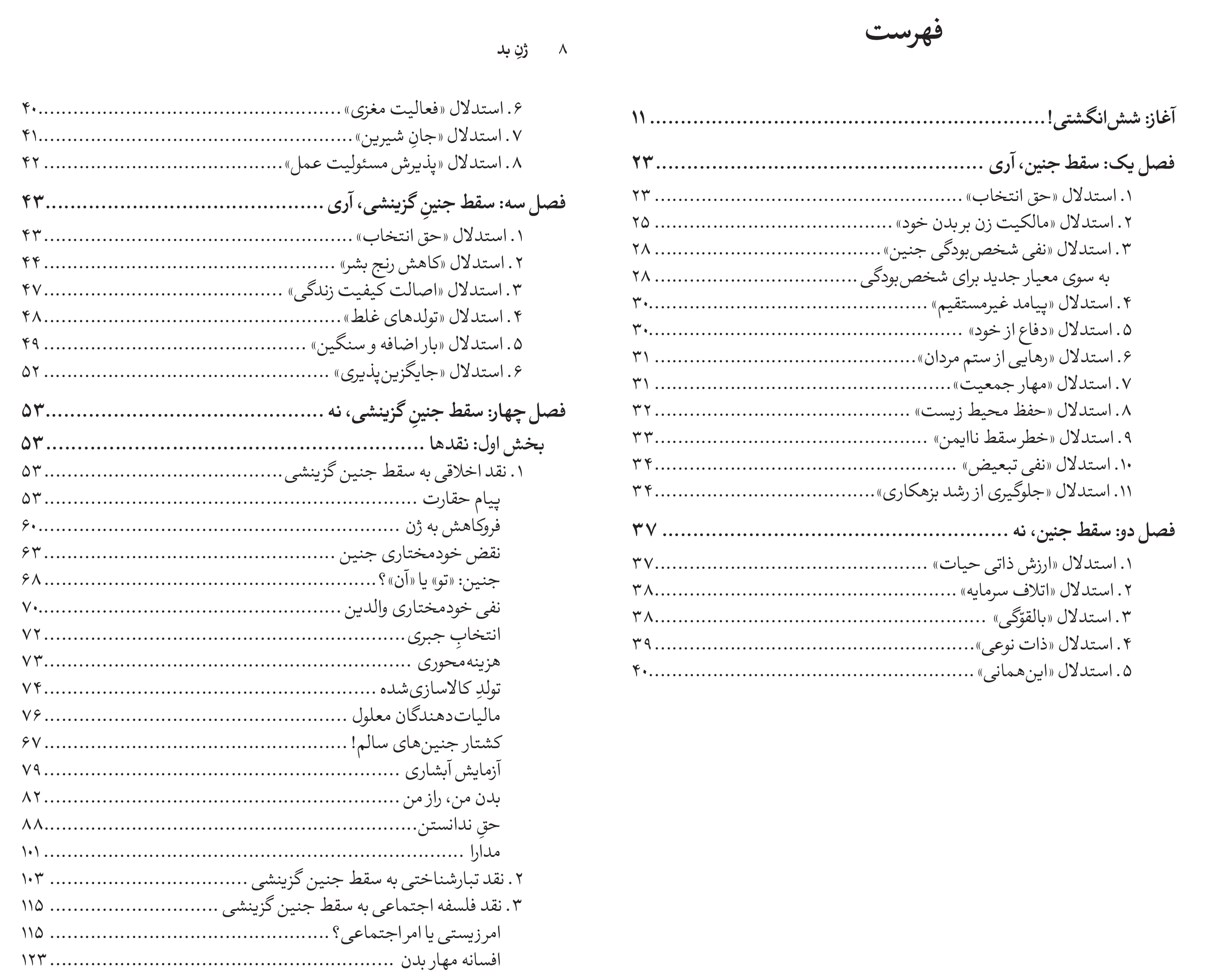
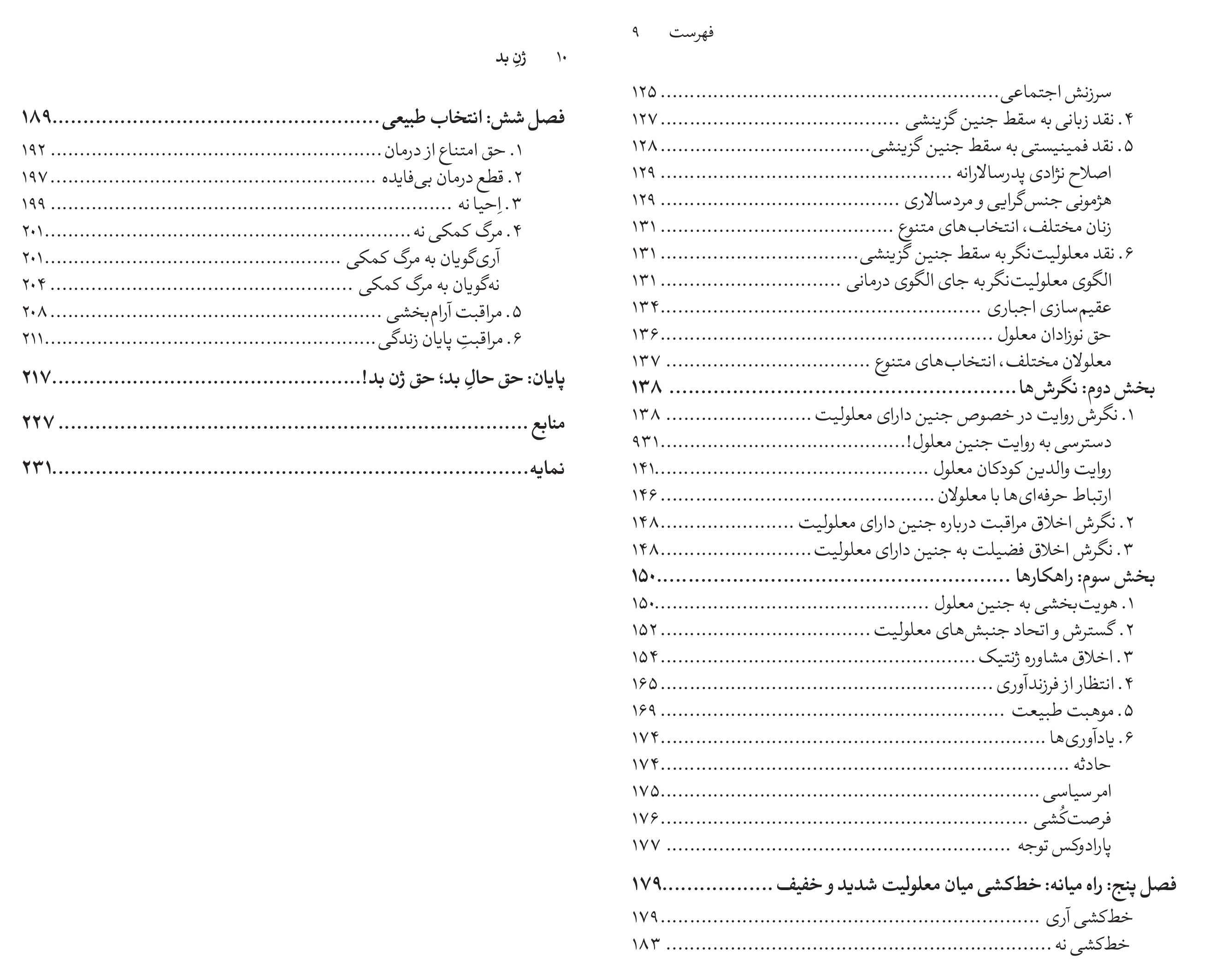
Before entering the specific discussion of abortion of disabled fetuses, I speak about abortion in general terms. In this part of the book, I review eleven arguments from those who say yes to abortion and eight arguments from those who say no to abortion. I have gathered these arguments mainly from available Persian sources. Proponents mainly emphasize the woman's right to choose,[27] and opponents largely emphasize the fetus's right to life.[28] In fact, it is these two rights that compete in the matter of abortion. The eleven arguments of those who say yes to abortion are: the "right to choose" argument, the "woman's ownership of her own body" argument, the "denial of fetal personhood" argument, the "indirect consequence" argument, the "self-defense" argument, the "liberation from male oppression" argument, the "population control" argument, the "environmental protection" argument, the "danger of unsafe abortion" argument, the "rejection of discrimination" argument, and the "prevention of the growth of criminality" argument. The eight arguments of those who say no to abortion are: the "intrinsic value of human life" argument, the "waste of capital" argument, the "potentiality" argument, the "species essence" argument, the "identity" argument, the "brain activity" argument, the "sweetness of life" argument, and the "acceptance of responsibility for one's actions" argument.
When I enter my main discussion, namely selective abortion in the case of fetal abnormality, I will present all the arguments of both proponents and opponents. In this section I have read several primary sources, and all of the structure, order and system, titling and formulation, whether in the proponents' arguments or in the opponents' reactions, is my own effort. Previously, there has been no precedent for such discussions in Persian. Proponents argue through six avenues: "the right to choose," "reducing human suffering," "the primacy of quality of life," "wrongful births," "the extra and heavy burden," and "replaceability." Opponents call these arguments into question from various ethical, genealogical, social-philosophical, linguistic, feminist, and disability-studies angles. Opponents then try to reform our attitude toward selective abortion with the help of three ethical approaches: narrative, care, and virtue. Finally, opponents propose practical solutions: from identity-giving to disability movements and the ethics of genetic counseling, and an invitation to reflect on the philosophy of childbearing and the gift of nature.
The book does not end with the views of proponents and opponents of selective abortion; rather, there is a middle way that draws a line between severe and mild disabilities and permits abortion only in the case of severe abnormalities. The line-drawing approach itself has its own advantages and shortcomings.
In the end, I also speak my own mind: "natural selection." In short, what I want to defend is that perhaps the difficult task of decision-making and line-drawing can be left to nature itself. Nature, without medical and technological intervention, with its intelligent and precise mechanism, chooses far better and more calculatedly than we do "who should live in this world and who should not!" In its completely untouched form, nature's work is such that if an abnormality exceeds the level that nature recognizes, it ends in death during the embryonic period or at birth; that is, natural selection. Natural selection has a very simple and tried-and-tested test in which error is impossible: "adaptation to the environment." If the fetal abnormality is severe and disrupts its adaptation to the environment of the womb or outside it, nature will not hesitate and will show no mercy. In the process of the "struggle for survival," it selects the "fittest" organism and will naturally eliminate the organism incompatible with the environment. It is better to return nature's ruler, which we have forcibly usurped for some time now with the advancement of medical science, back to nature itself. The ruler in the hands of a living, intelligent, harmonious, and orderly organism leaves little room for error. To further explain my desired answer, I have employed principles from medical ethics: "the right to refuse treatment," "withholding futile treatment," "do not resuscitate," "no assisted dying," "palliative sedation," and "end-of-life care."
In the concluding remarks of my book, I defend the "right to feel bad." People also have the right to feel bad. People have the right to become sad, the right to become ill, the right to suffer, the right to become depressed, and the right to experience feeling bad; rights that medical technology, especially screening and selective abortion, wants to take all away from human beings and create humans who, under the pretext of having a healthy body and avoiding illness, are deprived of each and every diverse experience, colorful state, and the abundant and rich emotions they could undergo. The bottom line of modern sciences, especially medicine, is that everyone must be happy, even if by force. No one has the right to misery, the right to failure, the right to endure suffering, and the right to experience tragedy. Medical technology, by preventing the birth of sick and unwell children, has promised to build us a Brave New World. Oblivious to the fact that the perception of tragedy is the pinnacle of life. Anyone who does not grasp this pinnacle in life cannot claim to have truly lived. My point, in a word, is that I have the right to feel bad, and my child has the right to a bad gene!
I thank my friends in the religious studies reading group at the University of Religions and Denominations, who, from the very beginning of my research in disability studies, always listened eagerly to the various parts of my readings and writings that I presented in their presence, and shared their perspectives with me. I previously presented the outcome of this book at a gathering at the House of Young Ethicists on the occasion of the International Day of Persons with Disabilities, in the Applied Ethics Group at the University of Quran and Hadith in the form of a scientific-promotional chair, and at the library of the Faculty of Theology at the University of Tehran. I also presented most of the content of this book to the students of the Philosophy of Ethics Department at the University of Religions and Denominations under the course title of Bioethics. I am also deeply grateful to Dr. Alireza Alebouyeh and Dr. Seyyed Hassan Eslami Ardakani, who are pioneers in the ethics of abortion in Iran and who, with kindness and humility, participated in my lectures, and I benefited greatly from their writings and words in my work. I am also most appreciative of Dr. Alireza Salehi Sadati and other dear colleagues at Taha Publications.
And as for giving thanks for the birth of Amir Ali, it is my daily and nightly remembrance. I have always said that with his birth, he pushed the darkness away from before my eyes. My eyes were illuminated.
Naeimeh Pourmohammadi
Assistant Professor of Philosophy of Religion, University of Religions and Denominations, Qom
Spring 2020
.
.
[1]. hydronephrosis
[2]. Bardet–Biedl syndrome
[3]. abortion
[4]. Mirshams Shahshahani and Aghaeinia, "Developments in Therapeutic Abortion Regulations in Iran and an Examination of the Shortcomings of the Single Article," p. 129.
[5]. Madani and Jahangiri, "Types of Abortion and Medical Considerations," p. 41.
[6]. Asef Agah and Rezania Moallem, "Necessity as a Rule and Its Impact on Therapeutic Abortion," pp. 119-120.
[7]. Mohammadi Vahidi, "Legal Aspects of Abortion," pp. 492-494.
[8]. Alpha thalassemia
[9]. Down syndrome
[10]. Anencephaly
[11]. Encephalocele
[12]. Spina bifida
[13]. Schizencephaly
[14]. Exencephaly
[15]. Holoprosencephaly
[16]. Cranioschisis
[17]. Meningoencephalocele
[18]. cerebral palsy
[19]. Syringomyelia
[20]. Hydrops fetalis
[21]. Ichthyosis
[22]. Ma’dani and Jahangiri, “Types of Abortion and Medical Considerations,” pp. 45-49; Saeidi Borujeni and Bahrami, “Abortion as a Method of Preventing Severe Congenital Anomalies,” pp. 66-68.
[23]. Shiva and Arabipour, “Selective Reduction of Fetuses in Multiple Pregnancies,” pp. 274-276.
[24]. Habermas, Genetic Engineering and the Future of Human Nature, pp. 30-38.
[25]. Sandel, The Perfect Human Being, pp. 120-124.
[26]. Selective Abortion
[27]. Prochoice
[28]. Prolife
.
.
Year of Publication: 2020 Author: Naeimeh Pourmohammadi Publisher: Ketab-e Taha Edition: 1st Number of Pages: 232 Language: Persian
.
Online Purchase from Taha Publishing Website
PDF File of the Preliminary Pages and Introduction of the Book The Bad Gene
.
.


Discussion24 comments
نظرات ب شدت مبتلا ب نیت خوانی نویسنده است. «خود برتر بین»، «ترسو»، «محتاج قهرمان شدن»، «دارای مشکلات روانشناختی» و...بخشی از اتهاماتی است ک از سوی خوانندگان این متن کوتاه ب نویسنده نسبت داده شده است. متنی ک صرفاً مقدمه کتاب است و نه متن حاوی اصل ادعاها و استدلالات. آیا قضاوتها و اتهاماتی اینچنین سنگین، با خواندن متنی اینچنین کوتاه اخلاقی است؟ و اگر نیست -ک نیست- آیا کسانی ک اینچنین ب راحتی و بی مهابا دست ب قضاوت دیگران میزنند، صلاحیت آن را دارند ک وقتی با نوآوری در حوزه علم مواجه می شوند -مانند وارد کردن بحث از انتخاب طبیعی در حوزه اخلاق پزشکی- ک نیازمند تاملات و تحقیقات فراوان است، در آن حوزه اظهار نظر کنند؟ مواجهه مشابه کلیسای قرون وسطا با مسائل علمی، بیشتر از آن ک وابسته ب انتساب دین محرّف باشد، وابسته ب محصوربودن در گزاره های علمی غالب است.
شما كه توقع نداريد بعد از مطالعه بسيار دقيق كل كتاب به نتيجه اى غير از آنچه كه خودشان توى همين متن "كوتاه" رسيده اند برسيم! ضمنا فراموش نكنيم كه هنرى به نام طول و تفصيل دادن و مقدمه چينى و امثالهم وجود دارد كه در كشور ما به خوبى توسط " دانشگاهيان براى كسب مراتب و امتيازات استفاده مى شود، نويسنده بر مبناى تجربه و انتخاب شخصى فكر مى كند درد و رنج ناشى از بيمارى و "ژن بد" باعث تعالى است ...
نويسنده حتى به ما نمى گويد كه اگر پيشرفتهاى علمى به شما گفت كه قرار است فرزند بسيار بيمارى به دنيا آوريد اولين انتخابتان حفظ جنين باشد ، حتى چنين توصيه ساده اى هم نمى كند، پا را فراتر مى گذارد كه آهاى علم پزشكى حتى به من نگو! علم پزشكى بزار من در اميد يك فرزند سالم باشم ، وقتى به دنيا آمد بزار از رنج و تراژدى استفاده كنم تا به مرحله والاى انسانى برسم....فقط جاى تاسف داره ... شاهد مدعايش هم خودش است و دخترش
انسان حق هر انتخابى را دارد، شما انتخاب ميكنيد كه فردندتان را با وجود بيمارى شديد به دنيا آوريد، از او مراقبت كنيد، و لذت ببريد و اگر رنج و هزينه اى هم بود متقبل شويد... من به اين انتخاب شما احترام ميگذارم، ولى ولى اين كار شما فضيلت نيست، چيزى نيست كه بخواهيد توجيه اخلاقى بكنيد و در آخر هم علم را كه همين الان نفس كشيدنمون را بهش مديونيم زير سوال ببريد( البته كه ميدانم و معتقدم عمر و هر احظه دست خداست لطفا مرا متهم به بى اعتقادى نكنيد) شما فقط انتخاب كرديد، همين و بس و نتايج خوب و بدش را ميبينيد، لطفا لطفا تبليغ وخود برتر بينى را كنار بگذاريد. اميدوارم كتابتون شما را در مسير اترقاء دانشگاهى كمك وافر نماياد!
سلام و عرض ادب . خانم دکتر برداشت من از متن این است که شما یا بخاطر عقاید و ایدهئولوژی خود کودک این کودک بیگناه را بدنیا اورده اید یا بخاطر ترس شدیدتان در از دست دادن و رها کردن یا نیاز شدیدتان به خوب بود و قهرمان شدن حتی میتواند مجموعه ای از عوامل فوق را به عنوان آش شوربا به خورد مغز خود داده باشید،قضاوت کار ما نیست و من نمیدانم کدام بوده است اما مشخص است که شما برای منفعت شخصی خود کودک معصومی را به این دنیا اوردید و مجبورش کردید برای همه عمر در جایی زندگی کند که حتی برای یک کودک بدون اختلال هم جای سختی برای جنگیدن تلاش کردن و موفق بودن است . ان قسمت که مربوط به درمان پزشکی کودکتان هست را انجام دادید اما قسمتی از طب که برای پیشگیری از همه این دردهاست نادیده گرفتید . بنده در اطرافم به یمن ازدواج فامیلی چندین کودک سندرم داون دیده ام . خیلی از انها اکنون جوان و حتی بزرگسال هستند با پدر مادری که دیگر درین دنیا نیستند و حتی خواهر برادری که دنیا را ترک کرده اند،انها مانده اند تا بدون حامی و با کمک خیرین فقط زنده بمانند . کودکان خردسالی را دیده ام که رنج بسیاری میکشند که برای قامت نحیف انها قابل وصف نیست و من با هر درد انها در خود دردی مضاعف میکشم .مادران و پدران انها بی سواد و کم اطلاع بودند حتی گاها فقیر بودند و توان پیشگیری از همه این درد و رنج را نداشتند اما شما میتوانستید کودک خود را از اینهمه درد و رنج و مصیبت و سختی و تنهایی نجات دهید و نکردید گناه شما هزاران هزاربار بزرگتر است . خودتان شما را میبخشد؟ شما می روید و همه این قهرمان و مقدس بودنتان هم میرود اما کودکتان باز هم خواهد ماند و فدای این منفعت طلبی شما خواهد بود . اشتباه کردید و اگاهانه اشتباه کردید که کودکتان را زجر دادید از بهشت برین پر ارامش به اینهمه درد کشاندید ...
صد رحمت و صد آفرین بر دست و بر بازوی تو!
با شما صد درصد مخالفم جنین موجود مستقلی نیست که بتواند برای زندگی خودش تصمیم بگیره. قبل از خروج از بدن مادر، جنین درواقع بخشی از بدن مادر هست. شما بالکل حق مادر رو برای اینکه چیزی در بدن خودش زو تحمل کنه یا نکنه نادیده میگیرید. با توگه اینکه خودم مادر هستم، میدونم که جنین درد و رنج زیادی برای بدن مادر به همراه داره. کسی حق نداره من رو مجبور کنه موجودی رو داخل شکمم نگه دارم که نمیخوامش. نکته بعدی حرف خنده داری است که درباره انتخاب طبیعی میزنید! انگار نمیدونید که خیلی از ناهنجاریهای شدید هم منجر به سقط نمیشن! سری به بیمارستانهای کودکان استثنایی برید و درد و رنج واقعی این بچه ها رو ببینید. چه کسی ب شما حق داده چنین درد و رنج مادام العمری رو به یک بچه تحمیل کنید؟ چون دلتون میخواد از لذت مادری! بهره ببرید، دکترها نباید واقعیت رو بهتون بگند؟ خب چرا نمیرید تو غار زندگی کنید تا واقعیت رو درباره پزشکی، مهندسی و هیچ علم دیگری نشنوید. بچه ای رو بدنیا اوردید، بار روانی شدیدی به جامعه و اون بچه تحمیل کردید.یک زندگی پر از درد و رنج رو بهش دادید و تازه طلبکارید؟؟؟ بنظرم همه این کتاب روبرای این نوشتید تا بی اخلاقی خودتون در ندیده گرفتن جواب سونوگرافی رو توجیه کنید. متاسفم شاید فقط این توجیه روان خودتون رو و یکسری فقهای عشق افزای جمعیت رو خرسند کند. اما با عقل و اخلاق کاملا ناسازگاره. حرفتون درباره اینکه پزشکان نباید واقعیت روبهتون میگفتن هم فقط نیاز روانی شخصی شماست. درسته که حفظ جنین صد درصد وابسته به خواست مادر هست(از دید من) اما همون مادر هم حق نداره رنج و عذاب دائمی ب بچه تحمیل کنه.اون هم خواسته
اگر بارداری ناخواسته (در اثر تجاوز، یا علی رغم اقدام برای پیشگیری) بوده شاید حرف شما درست باشه. اما اگر شما به صورت خودخواسته اقدام مؤثری برای پیشگیری نکردید، یعنی تصمیم گرفتید که یک لقاح صورت بگیره و از لحظۀ لقاح، یک انسان جدید شکل گرفته. شما دیگه دربارۀ شکم خودتون صحبت نمیکنید. دربارۀ یک انسان دیگر صحبت میکنید. شما در زمان سکس تصمیم خودتون رو گرفتید. اگر اقدام مؤثری برای پیشگیری گرفتید، یعنی پذیرفتهاید که احتمال بارداری هست، و این یعنی شما مسئولیت مراقبت از اون انسان جدید رو تا زمان بلوغش قبول کردید. نمیشه هر لحظه دلمون خواست و عشقمون کشید یهو تصمیمون رو عوض کنیم و دربارۀ جان انسانهای دیگر تصمیم بگیریم. اون محتویات شکم شما، از لحظۀ لقاح، یک انسان دیگره، با ژنتیک متفاوت از شما.
البته با نقد شما به حرف خانم دکتر موافقم و خودم هم کامنت جداگونه نوشتم. البته در مورد ایشون قضاوت اخلاقی نمیکنم ولی به نظرم استدلالشون غلطه. و معتقدم که سقط درمانی در صورتی که کودک زندگی پر از رنج گزاف در اثر بیماری داشته باشه یا باعث خطر جانی برای مادر بشه، واقعاً از نظر اخلاقی لازمه. گرچه از مجموع مطلب خانم دکتر و کامنتای دخترشون متوجه شدم که گویا در این مورد، شانس آوردهن و رنج کودک هم رنج گزافی نبوده؛ ولی باز هم استدلالشون که مدعی هستند باید کار رو به طبیعت سپرد، با رفتارشون که خودشون تسلیم طبیعت نشدند و از تکنولوژی پزشکی کمک گرفتند، متناقضه. با این حال استدلال شما رو هم که هر نوع سقط رو به صورت بی ضابطه مجاز میدونید، خلاف اخلاق میدونم. در کل به نظرم سقط هم یک نوع قتله. گاهی برای دفاع از جان خودمون مجبوریم قتل هم بکنیم. یک شر ناگزیره، که صرفاً در شرایط خاصی مجازه و فرض عقلی و اخلاقی بر انجام نشدنشه، در صورتی که بخوایم انجام بدیم باید دلایل اخلاقی کافی برای هر مورد مشخص داشته باشیم. نه میشه بدون ضابطه هر نوع قتلی رو جایز دونست، و نه میشه با تکیه بر احساسات سانتیمانتال و توجیهات غیرمنطقی، هر قتلی رو ناروا دونست.
با سلام چه تناقض های عمیقی و آشکاری در کتاب وجود داره (انتخاب طبیعی به همراه استفاده از علم و کمک پزشکی). متاسفانه بیشتر از یک تناقض منطقی است و در واقع یک مشکل روانشناختی جدی در این دیدگاه نویسنده دیده میشه با احترام
انتخاب طبیعی! اگر عدم مداخله در انتخاب طبیعی را بپذیریم باید اینها را هم بپذیریم: به چه حقی اصلا هر نوع درمان و مداخله پزشکی وجود دارد و اجازه نمی دهند،انتخاب طبیعی خودش مردم را غربال کند؟؟ در همین دوران کرونا آیا ماسک و قرنطینه و واکسن و بستری کردن بیماران و... دخالت در مکانیسم دقیق انتخاب طبیعی نیست؟؟
ُScience (secular science, scientism) is the superstition of the present time. این موضع را که در مورد ساینس متبختر و نشسته بر تخت پادشاهی حوزه معرفت طبیعی گفته شده. تکامل که touchstone اعتبار در زیست شناسی و در فلسفه علم تکیه گاه (one time critic of evolution)مخالفین خود مانند کارل پاپر شده را که اگر در موردش سخن بگویید کفر گفته اید.موضع original پاپر این بود که تکامل علم نیست اما وقتی سمبه پر زور آن را دید عطای واقعیات منطقی و تجربی و فلسفه علمی در پس تکامل را به لقایشان بخشید و joined the club به بقیه فلاسفه ای که اعتبار را به درد سرهای بیان اشکالات و oversimplifications و نادیده گرفتن کمبودهای حاضر در مبنای ارائه شده برای نسخه رسمی تکامل پیوست. گاهی این ظّن به ذهن خطور می کند که اگر اسکندر مقدونی ، امپراطوری روم، و Age of Discovery دوران به اصطلاح اکتشاف پس از قرون وسطی و colonialization استعمار و سرکوب جهان بوسیله علم رخ نداده بود و کشتی های چینی به غارت آمریکایی جنوبی و برده داری آفریقاییِ ها موفق شده بود اکنون فلسفه زنZen Philosophy در دانشگاه ها اعتبار ساینس را داشت.
(ژن های متفاوت). نه ژن های بد و نه ژن های خوب . ژن های بد به ژن های خوب می تازند و متقابلاً . در این جنگ چه کسی پیروز می شود . به گمانم ، هیچ کدام . تقسیم بندی خوبی و بدی موجب" دفاع و حمله " می شود . اما تفاوت ها، نه دفاع می خواهد و نه حمله . بلکه لازمه تفاوت ها ، (پذیرش) است . بپذیریم که متفاوت هستیم . حتی در تنازع بقا ، نهایتاً در خودآگاهی طبیعت یک پذیرش نهایی ایجاد می شود . (پذیرش تفاوت ها) . و چه سر خوش اند، آن کسانی که با چوب خطِ خودآگاهیِ امام فخر رازی که در دست گرفته اند و در گزاره هایشان برای تامل دیگران ، مدام گناه و ثواب می نویسند . خوش باشند در قصرها و کاخ های بهشتی هایشان . عیب رندان مکن ، ای زاهد پاکیزه سرشت که گناه دگران ، بر تو نخواهند نوشت ...
سلام خانم دکتر. به این بخش از نوشته و استدلال خودتون دقت کنید: «طبیعت بدون مداخله پزشکی و فناوری، با ساز و کار هوشمند و دقیقی که دارد، خیلی بهتر و حسابشدهتر از ما انتخاب میکند که «چه کسی باید در این جهان زندگی کند و چه کسی نباید!». کار طبیعت به شکل کاملاً دستنخوردهاش چنین است که ناهنجاری اگر از سطحی که طبیعت آن را میشناسد بیشتر باشد، در دوره جنینی یا در بدو تولد به مرگ ختم میشود؛ یعنی همان انتخاب طبیعی». عبارت کلیدی که من بهش تأکید میکنم این عبارته « کار طبیعت به شکل کاملاً دستنخوردهاش». بله. اگر طبیعت بدون دستکاری علم پزشکی بود، شاید استدلال شما صحیح بود. یعنی یک بچه که یک بیماری سخت داره، اگر طبیعت بدون دستکاری بود، اون بچه به دست طبیعت حذف میشد و سالها رنج رو تحمل نمیکرد. اما آیا واقعا دیگه چیزی به اسم طبیعت دست نخورده وجود داره؟ (ببخشید. قصد شخصی کردن و آزردن شما رو ندارم. صرفا توی متن شما از فرزند عزیزتون مثال زدید و به نظر من هم مثال خوبیه. اگر مایۀ رنجش شما میشه پیشاپیش عذرخواهی میکنم). وقتی پزشکان برای فرزند عزیز شما درمانی تدارک دیدند و راه خروج ادرار برای فرزندتون باز کردند، یعنی در طبیعت دستکاری کردهن. شاید اگر این دستکاری در طبیعت نبود شما مجبور بودید ببینید که فرزند دلبندتون دور از جونش در مقابل چشمتون پر پر بزنه. اما در اون صورت، یک بار رنج میکشید و دیگه مجبور نبود یک عمر رنج رو تحمل کنه. این یک عمر رنج، رنجیه که والدین به کمک تکنولوژی پزشکی به فرزندشون تحمیل میکنند، نه رنجی که طبیعت تحمیل کنه. طبیعت دست نخورده این رنج رو تحمیل نمیکرد و اگر واقعا طبیعت دست نخورده وجود خارجی داشت، شاید میشد کار رو به طبیعت واگذار کنیم. اما حالا که ما در مقابل تصمیم واکنش دخالت میکنیم و طول عمر فرزندمون رو با مداخلۀ پزشکی افزایش میدیم، دیگه نمیتونیم بار مسئولیت رو از دوش خودمون برداریم و بندازیم گردن طبیعت دست نخورده! چون اساساً طبیعت دست نخورده در این دوران وجود خارجی نداره (مگر این که توی یه جزیره متروکه باردار بشید!).
نویسنده محترم مادری داغدار است که احساسات خودش را در ورطه انکار مشکلات ژنتیکی جنین نتوانسته بپذیره، بنابراین لازم بود از روانشناسان، کمک حرفه ای بگیرد، اما نوشتن چنین کتابی اگر درصدی نقش در طرح جدید مجلس برای حذف غربالگری داشته باشد، مسولیت تولد 70هزار کودک معلول و نارس در سال و زیان مادی و معنوی چنین وضعیتی بر فرد، خانواده و کشور بر گردن نویسنده و نمایندگان دنبال کننده طرح خواهد بود.
خانم عزیز اگر شما به انتخاب طبیعی معتقد بودید نباید پس از تولد کودکتان را به پزشکان و جراحان می سپردید زیرا طبیعت برای کودکانی که بیمار به دنیا می آیند و قادر به سازگاری نیستند برنامه دارد و آنها را حذف می کند چرا شما بعد از تولد کودکتان به انتخاب طبیعت احترام نگذاشتید و او را به پزشکان و جراحان سپردید تا برای او مجرای ادرار باز کنند؟ باید اجازه می دادید تا رنج بکشد و از این رنج بمیرد باید به او حق داشتن حال بد و رنج کشیدن می دادید.
من شناختی از خانم نویسنده ندارم اما می دانم که افراد گاهی برای مقابله با یک درد یا اشتباه بزرگ به جای پذیرش سعی می کنند از آن حماسه بسازند! آدمها معمولا بعد از اینکه به فرزند معلولشان وابسته می شوند حتی نزد خود هم اعتراف نمی کنند که کاش به دنیا نیامده بود؛ خیلی ساده چون عاطفه شان اجازه نمی دهد و چون احساس گناه می کنند و حس بد بودن به آنها می دهد. اما نکته اینجاست که شخص با چه حقی اجازه می دهد شخصی با این میزان درد و رنج متولد شود؟ من برای دلخوشی خودم چنین رنجی را ایجاد کنم و بعد برای کاری که انجام داده ام احساس یک قهرمان را داشته باشم؟! جنین در مراحل ابتدایی فقط تعدادی سلول است، هرچند حذف آن برای فرد می تواند بسیار دردناک و سنگین باشد اما انصاف این است که وقتی می توان چنین دردی را بر انسانی در آینده تحمیل نکرد از آن جلوگیری کنیم. فرض یک جنین چند هفته ای به عنوان یک انسان کامل و فرض حق انتخاب برای وی به نظرم فقط توجیه خودخواهی مادری است که نتوانسته تصمیم درستی بگیرد! این انتخاب بین حق حیات و مرگ یک انسان نیست، انتخاب بین میل یک مادر به عدم تحمل تبعات سقط جنین و تحمیل درد و رنج بی پایان بر انسانی در آینده است! آدمها پی توانند برای توجیه خودخواهی ها و انتخابهای اشتباهشان کتاب بنویسند و این شاید باعث آرامش خودشان شود اما نه واقعیت را تغییر می دهد و نه غلط را درست می کند! هرچند به نظرم همین نفس نوشتن کتاب خود نشان می دهد که شخص در اعماق ناخودآگاهش به اشتباه خود واقف است اما دارد توجیهاتش را بلند فریاد می زند تا شاید اول خودش باورش شود! شاید ادای دینی است به فرزندی که چنین رنجی را بر وی تحمیل کرده است!
اکنون که کار از کار گذشته شاید ملامت شما چندان نیکو نیست. خصوصا که عاطفۀ مادریِ قوی، میزان اختیار و آزادی عمل شما را هم محدود کرده بود. اما به نظر میرسد به فرضِ تشخیص معلولیت، عقلانیت و اخلاق مقتضی سقط جنین است.به احتمال زیاد اکثر قریب به اتفاق افرادی که با معلولیتِ جدی متولد میشوند، اگر از خودشان بپرسیم خواهند گفت که ای کاش والدینم تصمیم به سقط جنین میگرفتند. در خصوص کارکردِ منفیِ اطلاعات پزشکی ، برخی جامعه شناسان هم گفتند که پزشکی جدید آنقدر که قدرت پیشبینی و تشخیص بیماری را دارد، قدرت درمان ندارد و به همین جهت در خیلی از موارد کارکرد اطلاعات پزشکی فقط این است که حال ما را بد کند. اما در مورد تشخیص بیماری و معلولیت در مورد نوزاد، این نقد بر پزشکی وارد نیست؛ چرا که در اینجا کارکرد روشن این اطلاعات این است که ما آگاهانه و با وجدان آسوده مانع از به دنیا آمدن و رنج کشیدن کودک شویم.
مخلص کلام ایشون اینه که اگر جنین مشکلی داره به مادر نگین چون انشاءالله خدا همه چیز رو درست میکنه. خیلی تعجب میکنم که یه استاد دانشگاه همچین حرف عوامانهای میزنه. الان خیلی خوبه که بچه شما اینهمه مشکل داره و اینهمه سختی تو زندگیش میکشه؟ شما با خودتون فکر نکردین که اگه بچتون بفهمه میتونستین سقطش کنین ولی نکردین ممکنه ازتون شاکی بشه و آرزو کنه که کاش سقط میشد؟ الان خوشحالین که ذره ذره آب شدنش رو جلوتون میبینین؟ واسه اینکه خودتون رو راحت کنین و مسئولیت نپذیرین دائما میگین که پزشکی نباید حقایق تلخ رو به ما بگه و فلان. واقعا احساس تاسف میکنم که همچین افرادی وجود دارن و از سقط نکردن جنینی که میدونی بیماره و به قول شما ژن بد داره دفاع میکنن.
خانم دکتر بسیار متعجب شدم از این استدلال های شما ! چطور برای بچه دار شدن نمی گوییم روش طبیعی و روش های بارداری و دارو به وفور استفاده می شود ... از سوی دیگر بچه ها ای که به دنیا می آید ممکن است بیشتر از شما عمر کند، می دانید بعد از شما چه به سر او خواهد آمد ؟ ممکن است راضی به این نباشد که شما به وسیله او به کمال برسید!! چقدر این حرف ها خودخواهانه بود ...
معمولا دختربچه ها از همان دوران کودکی، مادر بودن و مادرشدن را با عروسک بازی تمرین می کنند و به نوعی تمرین عاشقی می کنند . لذت مادر بودن ، لذتی است بس زیبا ..ولی نه به قیمت رنج کشیدن کودکی در این جهان . خانم دکتر پور محمدی عزیز . ولی اگر من جای شما بودم بی شک نوزاد خودم را در همان ماههای ابتدایی سقط می کردم . خلاصه چیزی که شما میخواهید از آن دفاع کنید : این است که شاید بتوان کار سخت تصمیمگیری و خطکشی را به خود طبیعت سپرد. طبیعت بدون مداخله پزشکی و فناوری، با ساز و کار هوشمند و دقیقی که دارد، خیلی بهتر و حسابشدهتر از ما انتخاب میکند که «چه کسی باید در این جهان زندگی کند و چه کسی نباید!». کار طبیعت به شکل کاملاً دستنخوردهاش چنین است که ناهنجاری اگر از سطحی که طبیعت آن را میشناسد بیشتر باشد، در دوره جنینی یا در بدو تولد به مرگ ختم میشود؛ یعنی همان انتخاب طبیعی. ولی شما و همسر شما با انتخاب و اختیار خودتان ، فرزندتان را به این جهان دعوت کرده اید . علیرغم آگاهی و دانستن در دوران بارداری به اینکه این انتخاب ، موجب رنج شما و فرزند شما می شود. در اینجا اختیار و اراده شما در انتخاب شما دخیل بوده است ، یعنی با اختیار خود انتخاب کرده اید . پس چندان ، انتخاب طبیعی هم نبوده؟ در مورد سایر موجوداتِ غیر از انسان که بر اساس غریزه عمل می کنند ، می توان از (انتخاب طبیعی) سخن گفت ، ولی در مورد انسان خیر . انسان بر اساس عقل و اراده و اختیار تصمیم می گیرد و تصمیم خود را به مرحله اجرا می گذارد . پس انتخاب طبیعی خیلی در فرزندآوری دخالت ندارد . چگونه در ابتدای تشکیل نطفه این کودک می توان از انتخاب طبیعی سخن گفت ؟ در حالیکه پدر و مادر هر دو تصمیم می گیرند که موجودی را به این جهان دعوت کنند ، نه صرفاً بر اساس غریزه ، بلکه بر اساس عقل و آگاهی و اراده و اختیار . در ابتدای دعوت این کودک به این جهان، انتخاب طبیعی چندان دخالتی نداشته ، حال که به وجود آمده باید او را بر اساس انتخاب طبیعی ، به طبیعت سپرد؟! آیا این روش ، روشی عادلانه و منصفانه است؟ در سخن پایانی کتابتان از «حق حالِ بد» دفاع میکنید. بله خانم دکتر عزیز و نازنین آدمها حق حالِ بد هم دارند ولی حق ندارند حالِ دیگری را بد کنند . آدمها حق دارند غمگین شوند، ولی حق ندارند که دیگری را غمگین کنند . حق دارند بیمار شوند، ولی حق ندارند رنج بیماری را بر دیگری تحمیل کنند..
سخن شما متین و قابل احترام، اما نکته فقط در سقط جنین ناقص و سندورم دان نیست. در دنیای کنونی انسان ها بخاطر اینکه براحتی روابط آزاد داشته باشند به سمت توسعه سقط جنین در همه ابعاد آن می روند. در واقع مسئله از سقط جنین بیمار آغاز می شود و گونه های دیگر تسری می یابد. در اینجا جایگاه سرمایه داری را نیز باید در نظر گرفت که چگونه این پروژه را راهبری میکند.
سلام حال امیرعلی خیلی بهتر از من و شماست! طوری که امیرعلی از زندگی در این دنیا لذت میبره، نه من نه شما نه هیچ فرد دارای ژن خوب دیگری لذت نمیبره، طوری که امیرعلی از تکتک لحظات این زندگی استفاده میکنه، من و شما استفاده نمیکنیم. این همه قضاوت نابهجا و ندانسته از کجا اومده؟ چطور وقتی شریک زندگی کسی نیستید، از حال بدش اطمینان دارید؟ نویسنده نوشته ژن بد! میخواد به جامعه پزشک و مردم این رو بفهمونه که فقط شما ژن خوب نیستید!نه اینکه واقعا خودش بگه فرزند من ژن بده! گفته من حق داشتن حال بد دارم، ولی نگفته حال من خوب نیست! نگفته حال فرزندم خوب نیست! من خواهر امیرعلی هستم، هیچکس از من به اون نزدیکتر نیست، من اگر قضاوت بکنم قضاوتم درسته! هر روز میبینم که امیرعلی چقدر از زندگی لذت میبره، و چقدر هم باعث میشه زندگی برای ما که اطرافیانش هستیم لذتبخشتر بشه! امیرعلی احساساتش رو خیلی روان و بدون پوشش بروز میده، از همون ۱ سالگی تا الان که ۱۱ سالشه، پس راحت میشه فهمید چه حسی به زندگی داره! خندههاش خیلی واقعین، گریههاش هم همینطور وقتی که یک سیب قرمز رو میگیره دستش و گاز میزنه، لذتی براش بالاتر از این نیست! آیا شما که ژن خوب هستید(!) از خوردن سیب تا این حد لذت میبرید؟ آیا شما به وقت اندوه، سرتون رو میذارید روی شونه خواهرتون و زار زار گریه میکنید، تا حالتون «خوب» بشه؟ تک تک لحظات این دنیا برای امیرعلی لذتبخش و واقعیه. ما مانع زندگی امیرعلی نشدیم، نه به خاطر خودخواهی خودمون(!!!) به خاطر خودش که حق حیات داره، اونم چه حیاتی :) حیف نبود؟ حیف نبود اگر برادر عزیز من به این دنیا نیومده بود، و هرروز من رو از محبت بینهایتش سرشار نمیکرد؟ هر لحظه نمیگفت بیا بغلت کنم، دوستت دارم، بیا باهم آواز بخونیم، بیا باهم غذا بخوریم، بیا بوست کنم، بیا باهم بریم سفر، بیا بیا بیا چرا حیف بود... و به نظرم آدمهایی با طرز فکر شما اساسا نباید فرزندآوری کنن، چه ژن خوب چه ژن بد چون اگر فرزند شما مثل شما ژن خوب باشه هم، توی زندگی ممکنه گریهش بگیره،ممکنه بیفته و پاش بشکنه و نیاز به عمل جراحی داشته باشه، ممکنه ناراحت بشه آیا شما حق دارید این حال بد رو برای اون بخواید؟!!
سلام فرموده اید: «علیرغم آگاهی و دانستن در دوران بارداری به اینکه این انتخاب ، موجب رنج شما و فرزند شما می شود.» اولاً از کجا نسبت ب رنج فرزند ایشان مطلعید؟ ثانیاً خیلی از انتخابهای ما با رنج همراهند، بلکه می توان گفت هیچ موفقیتی نیست ک بدون رنج حاصل شود. هیچ دانشمند، ورزشکار، فناور و... موفقی نیست ک بدون رنج ب قله و موفقیت برسد. قضاوتتان در مورد ایشان چیست؟