Sociology
The Celebritization of Intellectuals and Other Matters
The dominance of market logic and the mediatization of the world have destabilized intellectuals and replaced them with artists and athletes. This crisis is rooted in macro-trends such as commodification, a sense of emptiness, and the return of affect, which have left subjects exhausted and helpless.
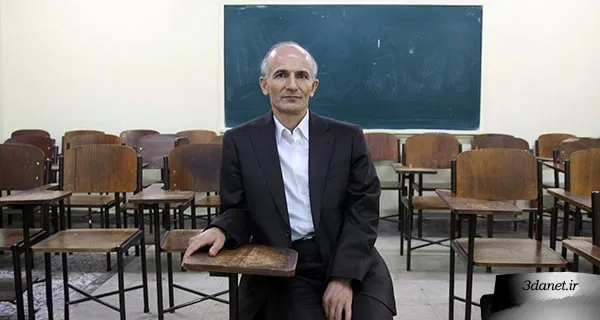
*Given the type of activism among intellectuals, can we say, in assessing their standing, that our society is facing a crisis of intellectual authority? What has happened in society that artists and athletes have taken the place of intellectuals?
In my view, yes, this crisis exists. But why? The crisis of the intellectual stems from certain contexts and megatrends or macro-trends. One is the dominance of market logic and ideology. That is, the subjection of everything to supply and demand. Our social space has fallen under the sway of supply and demand, and our lives are increasingly governed by supply and demand. Second, commodification. Everything has a commodity value. Third, globalization, fourth, information and communication technology (ICT); these are the macro-trends that have set the stage for the crisis. Fifth, mediatization; in the past, there was the world and there were media, but now the world itself has become mediatized. Sixth, social networks, and seventh is the age of acceleration. Eighth, massification, the problem of mass existence. These, in my view, are the macro-trends. Each of these has a long story. After these, we come to the socio-cultural transformations that have become the source of the intellectual crisis; the first is leisure. Life today has become far more leisure-oriented than in the past because the structure of work and the educational system have changed, and transformations have occurred that have made leisure more significant; leisure is a large part of life today. In the past, when children grew up a little, they would start working at home with their father. Now, education is a major opportunity and creates leisure time. Likewise, technology; for instance, sometimes on highways I see people rushing to get home but they have nothing to do, and leisure comes to the fore. Second, the growing importance of lifestyle, "let me live." In fact, this is partly due to the inefficacy of politics. The fact that social groups want to reveal and express themselves (self-expression); lifestyle has overshadowed politics because politics has become ineffective and costly. In a society where politics becomes costly, ineffective, unstable, and also fruitless and unproductive, people often feel that politics yields little for them, and consequently, lifestyle gains importance. Third is cultural capitalism. Fourth is the new consumerism. You even see parents consuming their children's German language classes. That is, they send their children to new classes to acquire those symbolic utilities. Fifth is the culture industry; that high culture and elite culture have been overshadowed by market culture. Sixth is the McDonaldization of everything, and seventh is the dominance of a new utilitarianism. Utility and profit have come to dominate truth, beauty, and virtue, and in general, worldliness, comfort, and entertainment, along with immediate pleasures and sensations, have become very important. Now, consider that today's metropolises, in Simmel's terms, do not have a comfortable mental life and it is fragmented, and it has little patience for listening to the intellectual elite, so this becomes the eighth cultural and social change. Now, from those eight macro-trends and these eight socio-cultural changes, we move on to the transformations occurring in the epistemic sphere of the age. First is the hidden sense of absurdity, which, based on studies I have, has more or less cast a shadow over thoughts. A vague sense of the futility and injustice of the affairs of this world. As a young person, you feel that the affairs of this world are very unjust, futile, and random, and you see inequalities and violence. You see the depth and dimensions of human evil; the events happening at the regional and global level create doubt in the meaningfulness of the world and also in the "crooked timber of humanity." As if this timber of humanity, in Kant's phrase, is crooked, and that happiness and misery are accidental. You see one person accidentally miserable or happy. You and I might give meaning to our existence and our being in this world, but perhaps not everyone can do so easily. The existence of gaps and inequalities and the desperation that social groups have; the sum of these paints a world for many where "it's every man for himself," and as a result, the status of human subjectivity fades, meaning the philosophy of the Enlightenment dims. Once, Descartes said, "I think, therefore I am," meaning subjectivity. Or Kant said, "O human, have the courage to know," because they said if we attain knowledge, rationality, and a new awareness, everything will be solved. Today, however, this has faded to some extent, and the result is a sense of the subject's helplessness, meaning you, as a subject, do not have the sufficient sense that you can set the world right. In my view, the first shock was delivered by Marx, who said it is not the case that we think and then live, but rather we live and then think. He says it is the relations of production that create thought and culture for you, which was a great revolution. One of Marx's important shocks was this: it is not the case that we simply think and then build the world.
I want to get to the point of how a movie or sports star, who also earns an extraordinary income, becomes more important to people than a serious intellectual. Because the subject has become helpless. Human beings have become worn-out and exhausted subjects.
*And at the same time, intellectuals are more exhausted.
Yes, exactly. The intellectuals themselves have also become exhausted subjects, aware of their own despair and ineffectiveness. The difficulty of improving the world and confronting evil has worn them down. Look, one thing is the return of the current of emotion and affect to our world. Weber's sociology of knowledge in the late nineteenth century said the world has entered a current where rationality advances and emotion is marginalized. He says this in the 19th century. Disenchantment occurs. Weber says rationality is the main current of the new world and advances day by day, and the world's progress is the progress of the current of rationality, while emotion and affect are continually marginalized—the same discussion of disenchantment and demystification. But now a situation has arisen that can be called the return of the current of affect. It was thought that reason would come linearly and feelings and emotion would diminish. In our youth, we believed that rationality would come and be the main current, but now, in contrast, we are witnessing an unconscious reaction against the dominance of the rational current, and the affective current is returning. I can call this genre the genre of return. The return of many other things that were thought to be finished. If Weber rose from his grave now, he would be astonished. It was imagined that a wholly rational world would be created; now the world says, I do not want to be this rational, I want to be largely irrational as well.
One of these returns is also the return of myth; we hide our sense of a lack of myth. I think we try to hide that we have a lack of myth, meaning we constantly feign rationality and put on airs of rationality, but people want to be largely irrational, to have myths. It was thought the era of myth was over and the era of rationality and science had arrived, but now it is returning. The return of heroes and charisma. On the other hand, we are witnessing a new narcissism of humanity; that is, systems dominate your individual life to such an extent that, in the face of all this domination, you want to assert yourself, and as a result, new narcissism has become an important part of the era's epistemic sphere. These are transformations in the epistemic sphere of the era, but add to these the discursive and paradigmatic transformations.
For example, consider the discourse of the end of history and the discourse of the end of ideology, the postmodern shift, and also generational changes; all cause discursive transformations that lead to the crisis of the intellectual. Recently, I was researching the new generations that have emerged in Iranian society and realized what strange and peculiar characteristics Generation Y and Generation Z have. On the other hand, society has also become spectacular, in the sense Guy Debord described, where it is no longer "I think, therefore I am" but "I am seen, therefore I am." It is a society that wants to be visualized; being seen is what matters. These four actions—that is, macro-trends, cultural and social changes, transformation in the epistemic sphere, and discursive and paradigmatic transformations—cause a series of functional changes to occur in our social life.
The first of these is newly emerged communicative functions. In the past, we would gather in society, converse, and opportunities for serious dialogue would occur, but now likes, followers, hashtags, trending hashtags, and campaigns have emerged. The very function of our social life has changed; these are reflections of the feeling of a homeless mind. Someone who likes is, in fact, unconsciously experiencing a sense of homelessness and tries to prove themselves through this liking. An individual who feels they have a homeless mind in this world finds the only way to express themselves is through lifestyle, likes, and hashtags. Another functional change in social life is the issue of fashion, the function of showmanship; now the function of showmanship is important, someone who can put on a show and perform. Let me say presentation. Now you say, I want to present the lesson; it is no longer teaching, it is presenting the lesson. Performance is important. Celebrity means precisely this performance instead of conscious action. At one time, serious social action and praxis were important. You would say, I want to engage in conscious action; now you say that is not important, get a sponsor and perform! Perform the lecture.
Today, even in universities, ISI articles are part of this same performance and presentation, not a serious creation of knowledge and meaning. You perform articles using tricks. So that I can arrange my résumé, attach the articles, send them to you, and you can promote me in the review board. So the functions of social life have changed. Avicenna, Zakariya al-Razi, and Pasteur conducted research and practiced science, not the performance of science. Political life is the same way, meaning politics has become carnivalesque.
In this society, propaganda has gained importance and everything has become a spectacle. You can have a spectacle of an election campaign. Also, the function of fun has gained importance, the present moment and "move on" have become important, meaning someone who enters the political sphere now has very little patience to engage with an issue seriously and wants to push something forward quickly and make an impact. All of this has led to consequences and repercussions.
*What are these consequences?
One of these consequences is neo-pragmatism. That is, the contingent has become important. Meaning chance and play. Whatever happens. Foundations have faded. When you say the authority of the intellectual in culture and politics has encountered a problem, the reason is that foundations have encountered a problem. Authority is based on a set of foundations. For example, truth, virtue, justice, happiness—happiness in the sense of a sublime, self-aware, and authentic joy. If these foundations fade, if the contingent gains importance, whatever circumstances dictate, whatever becomes useful and yields results, this is sometimes interpreted as the Americanization of culture, politics, and life, and the Trumpification of politics. The phenomenon of the Trumpification of politics in America is part of this story. Trump's grandfather came to America from Germany, set up a barbershop and cabaret, then they moved into the housing sector, and because of the World War and the changes in the housing sector, and through deals, the Trump empire was created, riding on the American Dream and American nationalism, and it emerged from within elections and democracy, because democracy is also the worst form of government, except for all the others that have been tried, and even if its methods are determined, its results are not.
Among other functional changes in our social life are the domination of brands over our lives and also new forms of populism. New forms of populism cast a shadow over our lives. On the other hand, a kind of alienation exists in today's world. Once, Feuerbach said that human alienation causes people to project the perfections and values they should seek within themselves onto the heavens and worship them. Now, instead of the great cosmic heaven where we project and worship our own perfections, we project them onto a worldly heaven full of stars, and this is our modern idolatry. Stars emerge; wretched people suffering from deep alienation seek all their lost values in these very stars and prove themselves through them. In today's society, in the words of Hervieu-Léger, there is a collective amnesia, meaning humanity has collectively forgotten a set of values. It is as if we have collectively conspired not to think about values, and this collective amnesia has the reaction that we seek small, micro-memories. A star creates a memory for a person, and they live with this memory because they suffer from collective amnesia. The temporary gains importance, and temporary norms. Each of the celebrities who have gained authority in Iran emerge in temporary spaces and do their work in a temporary period, and politics, in the sense of persistent and continuous action, has given way to temporary spaces and norms, and it is from here that faces have replaced actors. Once there were actors who were serious critics; now faces have replaced them. Instead of lofty thoughts, we witness the multitude and clamor. The same discussion I mentioned: multitude and the dominance of pop culture over high culture.
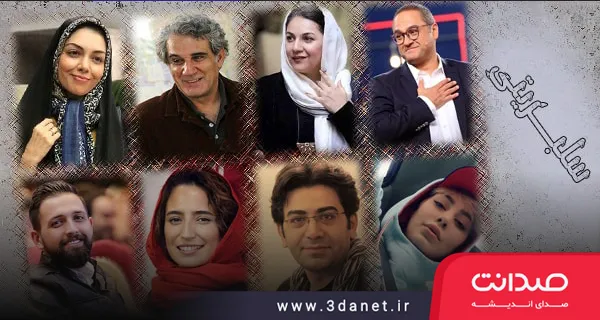
I think the result is that now, instead of witnessing intellectual and deep political actions, we are witnessing the celebritization of politics, culture, the university, and even intellectualism itself. Some of this political and intellectual crowd, incidentally, put on star performances and more or less display the affectations of a celebrity, struggling in newspapers, circles, and networks to impose the vague sense of crisis upon themselves.
*It seems that the isolation of the intellectual or rationality is the result of a series of developments that have occurred in society. Let's read the issue backwards: why have intellectuals ceded their place to celebrities in these problems, or perhaps these problems are the result of the intellectuals' negligence?
That is exactly right. I mentioned the causes to explain the issue, otherwise it does not absolve intellectuals of responsibility. Now you say intellectuals have ceded their place to celebrities, but the calamity is even greater than that, because, as I said, a spectrum of intellectuals have themselves become celebritized.
*Given that we consider intellectuals to be the self-consciousness of society—meaning the point where society becomes so stripped down that it thinks about politics, democracy, and justice—the intellectual is the self-consciousness that constantly reminds us these concepts are valuable. And now that we are in a dead-end of momentary living, where is the place of intellectuals?
It is completely correct; it shows the weakness of the intellectual and the ineffectiveness of intellectualism, although naturally, that too must be analyzed well. The arduousness of the historical journey of Iranian society and the difficulty of changes in Iranian society have meant that intellectuals have been unable to overcome these difficulties. As Parvin says:
A drunkard was asked, why do you walk stumbling and rising?
He said, the fault is not in walking; the path is not smooth.
The path of change in Iran is very rough. If you correctly consider the intellectual as an agent of change, the path is very difficult, and intellectuals have also become desperate, but this does not mean absolving the intellectual of responsibility, because they are expected to be self-conscious and self-directed actors. Of course, in my opinion, we must also, to some extent, return to revising the previous and conventional definitions of the intellectual and the activist. It seems there was some exaggeration about the intellectual, the activist, and the political militant; that is, they had become excessively heroic. It was imagined that intellectuals were omniscient and possessed a universal thought, and consequently had grand solutions and miraculous prescriptions for humanity. Once, people demanded miracles from the prophets of ancient times, and we did the same from our intellectuals. It seems we had fundamentally counted too much on intellectuals, and now the times and social changes show us that our assessments were fanciful and far from reality, and we must have a new definition of the intellectual.
*It seems that in this era, there is an exteriority to intellectual life. If once we saw the intellectual amidst a pile of books and out of reach, now, with the help of media, cyberspace, and the principle of communication, our private lives have been, in a way, externalized, and we have become more familiar with their dimensions, strengths, and weaknesses, leading us to think they were not omniscient.
In fact, society has exposed the weakness of our thoughts and ideologies. Those macro-trends and socio-cultural changes, the transformation in the epistemic sphere, discursive shifts, and functional changes have also done their work, and all have conspired to bring about an era of hardship and estrangement for the intellectual. Now, when one says intellectual, it means a less universal and more local activism. Edward Said offered a definition of the intellectual in which there is an amateur element—that is, a being who is not a professional, an amateur being who, by engaging with issues or creating an issue, in other words, by problematizing life, relations, and culture, becomes an intellectual. In the midst of this, it seems that the lived experiences of this era and the openings and transformations taking place have led us to feel we have a redefinition of the intellectual. The intellectual is someone who wants to engage with a specific problem; for instance, they say, I want to engage with violence, and they engage and work in a more specialized or interdisciplinary way on particulate matter, or they work on the quality of life, a specific social harm, and in that domain, they produce meaning, awareness, action, and connection. They critique power, tradition, and accepted and customary notions. What is happening now, with the paradigm ruptures and macro-trends and transformations I briefly mentioned earlier, is that intellectual and political action is facing a crisis. Thomas Kuhn says that when we are in a period of paradigm shift, scientists wish they could become movie clowns. He means that a paradigm has disintegrated and a new paradigm has not yet formed, and because science happens within a paradigm, when there is no stable paradigm, scientists become so ineffective and unable to solve problems or theorize that they wish they were movie clowns. I think we are now in a period of the despair of intellectuals in the previous sense, and a period of the formation of a new definition of the intellectual and the emergence of a new generation of intellectuals, new versions of intellectuals who, in Foucault's terms, are not the universal, know-it-all intellectual.
*They have become more specialized now.
Yes. And more local, more case-specific, more accessible, and within the texture of social life. They are no longer those universal elites with grand prescriptions. If we have a listening ear and a seeing eye, and set aside rigidity and dogmatism, the transformations constantly signal to us to return to the logic of the very small. Politics is no longer in the big political machines, and intellectualism is no longer in the grand epistemic and ideological systems. Rather, it is dispersed and distributed in the public sphere.
. Politics in neighborhood groups, meaning in your apartment building, practicing self-governance, mutual critique, dialogue, joint planning, and producing public goods with your neighbors. Practicing politics in friendship and family groups, local communities; a neighborhood, a village, or a hamlet pursuing its own problems and thereby exerting pressure on power. We are now in a period of discontinuous change. We are not in a world of continuous change; now is the period of discontinuous change. It is a period of rupture. Consequently, I think the intellectuals, intellectual ideologies, and conventional models of intellectual action of the past no longer suffice. In fact, in one sense, it is the end of the intellectual in the classical sense, and the period of the emergence of new, highly novel, and innovative versions of intellectualism. If once we had Al-e Ahmad and Gholamhossein Sa'edi, or Sartre—Sartre became a novel model of the intellectual and was able to influence his own life and times—now our life is pregnant with new models of intellectualism and political action, and traditional political and intellectual actions cannot be responsive.
*You referred to the discursive and paradigm shifts of the era. In your view, based on these transformations, what prominent characteristic or feature does today's intellectual possess that is specific to their own time?
The characteristic of the intellectual is thinking otherwise, thinking differently, critiquing power and critiquing conventions, critiquing untested existing assumptions, and a kind of sense of compassion for humanity and human issues—this is what makes an intellectual an intellectual, but with a correct understanding of the problems of their own time. We are no longer in a period where we can explain simple problems with simple ideologies. One can be an intellectual when they turn to a portion of the specific social issues of this time, create a problem, and cause a stir. Much more locally, more specifically, and with greater discipline in delving into the problem, finding its roots and solutions.
*It seems the absence of intellectuals in critical situations within local and global society is drawing attention. Over the past week, the issue of Myanmar has been very much in focus. When we point to the compassionate nature of intellectuals, a local and global, that is, universal, intra-group consensus is certainly expected, but the absence of intellectuals here becomes very prominent, given their mission to contemplate the sufferings of humanity.
Because they cannot quickly prescribe solutions and their tongues are tied. Right now, the great solutions are not grand prescriptions. That is, today's epistemology does not permit them the conventional loquacity of intellectualism. This helplessness is a reality.
*In the 1960s, when Engineer Bazargan was in prison, Sartre wrote a letter asking why they were imprisoned. Considering that the world had not yet become interconnected at that time, but now everything can be displayed everywhere in a second...
Very well, today this is done on social networks, and there is no longer a need for the intellectual in that sense. The elitism of the 1960s, which you exemplified with Bazargan and Sartre, was an era of elitism and simple ideologies, and the ruptures had not yet occurred. But now, the era of great intellectual and political elites, and the era of political heroes who could move society and solve everything, has come to an end. Now, the capacity for elitism has been diffused throughout the entire social network.
*In fact, society has become more active than the intellectuals.
Previously, intellectuals pushed the machinery of society, and now society has gotten underway and the intellectuals have fallen behind and cannot catch up with it. Consequently, intellectualism in the sense of that bygone day has reached its end, and now society is in the crisis of nurturing new generations of intellectuals in the manner of today's different world. Back then, too, society itself cultivated Bazargan and Sartre. Now as well, the future activists and socially influential figures are being cultivated within the fabric of society and are beginning to act with new models. In a detailed article, I explained about intellectual journalists; a journalist can engage in intellectual action. In short, you and I have images of intellectualism that are in decline, and we are now experiencing a sense of regret and nostalgia for intellectualism. People who move from the village to the city, after 10 years, still long for the alleyways and mud-brick gardens, but they cannot live there for a single moment.
*What consequences will the transfer of intellectual authority from the intellectual in the classical sense, and the transfer of authority to celebrities, have for society?
I think celebrities do not have authority, because the concept of reference groups has also changed. Now, celebrities are consumed. That is, they are for entertainment. A cinema actor is never a reference.
*For example, Morteza Pashaei...
I think he is not a reference. Now, fundamentally, that previous understanding of reference groups needs rethinking. The authority of tradition has been transformed and problematized in a way. The world of tradition has been shaken and has taken on various cracks. There was a time when people would refer to their source of emulation, but now the situation is different. Now, sometimes a devout youth is not like the old-time youth who would refer to a religious authority. New reference groups, like intellectuals and academics, also no longer possess that former modern authority. These new reference groups, in the old sense of the word, have now themselves become traditional. Now you enter a class; once, a university professor's handout was legendary to you. Sometimes, for 20 or 30 years, a professor would dominate the class with this handout, their mind was a black box, and they held epistemological and moral authority for the student, but now everyone has everything on their mobile phones. If robot professors come and teach in the future, what will professors do? So, a new generation and a new breed of intellectual, political action, scientific action, and professors are on the way, who are themselves constantly learning. Elitism in the old sense of the word is not adequate. The city has gained importance. The neighborhood and local communities have gained importance, and political, intellectual, and critical action, along with informal social learning, flows within them, and autonomous and self-governing social groups are forming.
* Where does the path to reforming this society with these characteristics lie?
I think this very return to the logic of the very small; first, we must slow the world down a little. There is a slow movement in the world now. Their thesis is that the world has become too fast, and we must slow it down a little. I think much more professional, guild-oriented, and specialized work needs to be created. In a way, the effective actions that can cope with today's world involve defining intellectualism in a specific sense and putting intellectual action into practice in very small environments. Intellectuals in an organization problematizing the organization's issues, pursuing changes within the organization, and critiquing power within the organization. Likewise, critiquing power in the home, the classroom, in the structure of journalism, press guild associations, innovation and the production of new models in every local, occupational, professional, and educational setting. All inefficiencies stem from grand models where a few heroes prescribe solutions for everything. On a national scale, too, we cannot expect great intellectuals. It has become the same in science. A single prominent global scientist no longer matters; now science develops with exponential growth. Young scientists, elites, and quasi-elites emerge. Now one can engage in intellectual action on a small, guild, local, and occupational scale, and I think this arises from the development of NGO, local, civic, and urban institutions that can generate new initiatives in various situations, for example, study, student, and urban circles. Suppose in a district there are several residential areas that network with each other, creating social networks.
Of course, I should add that celebrities are this relatively good side of the contemporary world; our contemporary world has another side that I think is more destructive and ruinous. Regarding the entry of a number of actors and sports stars into the political sphere, we shouldn't be too negative. It is also somewhat a release of social capacities, where new social capacities emerge through social networks. I think traditional intellectuals should not feel envy towards a celebrity doing things, for instance, having hashtags and followers, while an intellectual's book circulation doesn't reach two thousand copies. I think this is more a kind of jealousy; instead, they should come and revise their own explanatory models of intellectualism. I also read articles around the world explaining that sometimes celebrities are useful for solving part of social problems. The state of this world is so worrying that one must say celebrities, for all their vacuity, are this side of the world, and we see the other side of the world in the various forms of becoming ISIS-like, Al-Qaeda, and violence, repression, and catastrophe. I think ISIS is also a reflection of vacuity, and it's not that we can say they have deep convictions. In any case, what is important is a return to the logic of the active and strong city, a city that has strong, self-governing neighborhoods. It practices a kind of social autonomy. To expect all-rounder intellectuals to emerge again is to cling to the hands of the clock. Time is changing. Of course, not every change is good; sometimes changes are very costly. One of the very good points of reliance, in my opinion, is urban and local self-governing groups and scaling down politics and political action. You might object, what then becomes of grand national actions? Yes, we need that too, but I think the logic of the network answers these. If you create local, social, guild, professional, NGO, specialized, and interdisciplinary actions, their networking can manage to reduce the sufferings of human life, meaning the very logic of the Simorgh that exists in our literature. This is social hope. We must seek epistemological and ethical hope from within society itself, the neighborhood, the city, activities, 'non-governmental organizations,' and student, guild, and professional circles. We should not expect external authorities, even all-rounder and universal intellectuals, to perform miracles and cure all our pains. Because we have tried this and it did not work. Rather, whatever there is must well up and emerge from the very fabric of the city and local, urban life. The intellectuals of the new generation and the effective activists of the new generation are nurtured and come to the fore in this way, but not in the manner of miraculous universal prescriptions.
.
.
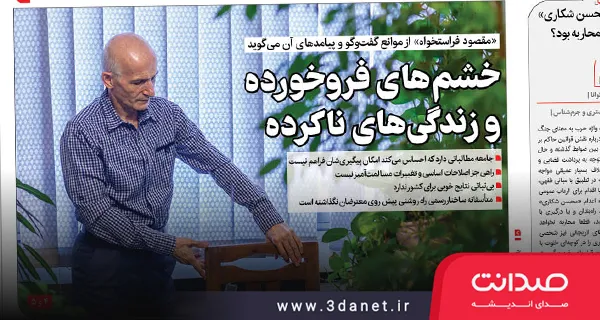
PDF file of The Celebritization of Intellectuals and Other Matters in Seda Analytical News Weekly
Download from Server One - Download from Server Two
.
.
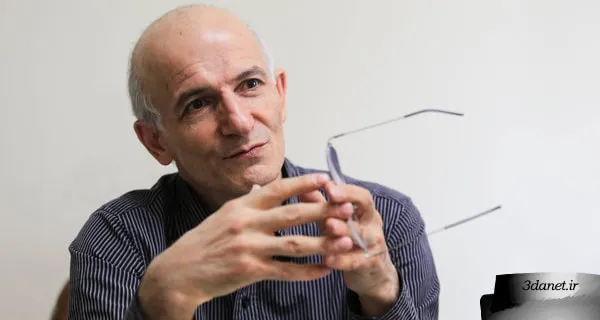
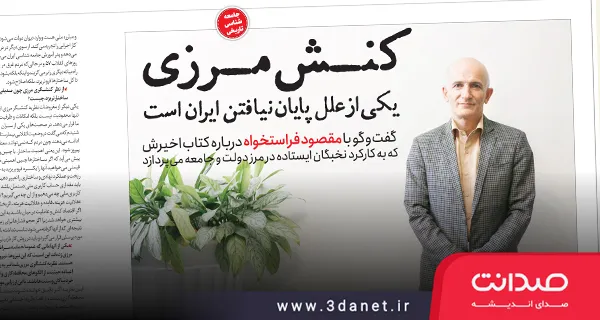
Leila Ebrahimian's Conversation with Maghsoud Farasatkhah
On the Cultural and Political Authority of Intellectuals
Seda Analytical News Weekly, No. 130, 16 September 2017, pp. 10-13
.
.
Discussion1 comments
در دوران با تغییرات زیاد به سر می بریم. حتی پرسش ها و پاسخ ها به نظر پویا نپخته و در حال تولید می باشند. ولی به حال واقعیت دارند و چاره ای جز چالش نداربم.