Religion
The Outlook for Religious Change in Iran
From a sociological perspective and without personal judgment, Mohammad Reza Jalaeipour sketches the most probable future of religion in Iran in the year 2044. These conjectures are based on current trends and research on changes in religious institutions and behaviors.
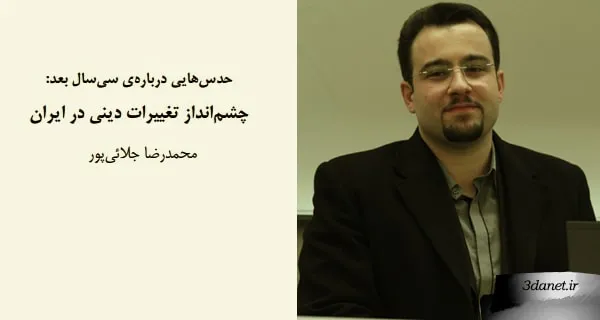
What will the state of religion and religiosity in Iran be like thirty years from now? The complexity and richness of religious realities and their transformations in Iran are so great, and the literature of credible empirical and longitudinal studies in this field is so meager and impoverished, that providing a description and explanation of the current conditions that is as realistic as possible is a difficult task, let alone speculating about a future that is shaped partly by the unintended consequences of unpredictable events and complex social, cultural, political, and economic processes. The current state and trends of change in religious institutions, beliefs, and behaviors at national, transnational, and subnational levels in the contemporary world are also among the most contentious areas of contemporary social/sociological thought and research. Nevertheless, as a humble exercise in the form of a lecture, a number of conjectures about the most important changes in religious institutions and behaviors in the year 1423 (2044 CE) in Iran (and not the world in general or other societies) are mentioned below.
Conjectures About Thirty Years Hence:
The Outlook for Religious Change in Iran
Mohammad Reza Jalaeipour[1]
Introduction:
What will the state of religion and religiosity in Iran be like thirty years from now? The complexity and richness of religious realities and their transformations in Iran are so great, and the literature of credible empirical and longitudinal studies in this field is so meager and impoverished, that providing a description and explanation of the current conditions that is as realistic as possible is a difficult task, let alone speculating about a future that is shaped partly by the unintended consequences of unpredictable events and complex social, cultural, political, and economic processes. The current state and trends of change in religious institutions, beliefs, and behaviors at national, transnational, and subnational levels in the contemporary world are also among the most contentious areas of contemporary social/sociological thought and research. Nevertheless, as a humble exercise in the form of a lecture, a number of conjectures about the most important changes in religious institutions and behaviors in the year 1423 (2044 CE) in Iran (and not the world in general or other societies) are mentioned below.
These conjectures are put forward based on a collection of sociological perceptions, insights, and understanding derived from my limited knowledge of Iranian society and the sociology of religion literature, a meta-analysis of dozens of available studies and theses on the state and changes of religion in recent decades in Iran and societies with more similar social structures, as well as attention to the commonalities of micro/individual and macro/institutional changes in other religious traditions and social contexts. Unfortunately, most existing sociological research on religious change in Iran lacks methodological validity and has used flawed items or has not included a multidimensional measurement of religiosity using multiple scales. However, from the collection of more credible national research in this area conducted by the Islamic Republic of Iran Broadcasting (IRIB), the Academic Center for Education, Culture and Research (ACECR), the Hozeh Honari (Art Center), the Islamic Development Organization, the Supreme Council of the Cultural Revolution, the Research Center of the Islamic Consultative Assembly, the Ministries of Culture and Islamic Guidance and Education, and a number of student theses at the universities of London, Oxford, Princeton, Harvard, Islamic Azad, Alzahra, Tabriz, Tarbiat Modares, Tarbiat Moallem, Tehran, Shahid Beheshti, Shiraz, Allameh Tabataba'i, Ferdowsi, Kerman, and Gilan, and the surveys of Iranians' attitudes and values at the beginning of the 2000s, along with my own sociological observations, I have arrived at a fallible picture of the direction of micro and macro religious changes, a general report of which I will present in this lecture.
Given the constraints of space and the requirements of publication in our "promotional" journal Sokhan-e Ma, I will endeavor here to address solely a "description," as "non-judgmental" as possible, that is concise, simple, and in list form, of my conjectures about the "most probable future of religion in Iran in the year 1423 (2044 CE)." From the perspective of my personal beliefs and values – as a Muslim who wishes for the increasing flourishing of a reason-friendly narrative of Islam within the framework of ethics and spirituality – some of these changes are desirable and others undesirable, but here, regardless of my personal beliefs and judgment regarding the desirability of each of these trends, I will address the "description" of the "most probable future" solely from a sociological perspective and, as far as possible, without bias.
I have reasons and evidence to support each of the changes I will mention, and separate articles could be written to explain each one, as well as the theoretical traditions and research that further our understanding of them. However, in order to provide an overall picture of the various dimensions and levels of religious change in Iran in this lecture, I have no choice but to offer a concise, list-like description of these possible changes, and to finish my talk within the designated limited time, I am compelled to forgo mentioning these pieces of evidence and the causes of each change. Relying on available studies, one can point to some quantitative and qualitative data that indicate the trend of changes in these dimensions over the past four decades, but regarding the "future," no quantitative or qualitative data can be referenced, and in this lecture, without citing figures, we will speak solely about the most probable direction of changes.
As seems evident, in each of these areas, the curve of change will likely have numerous predictable and unpredictable fluctuations, reversals, and temporary shocks. Yet, with the sum of my current sociological information and insight (with all its limitations and unintended distortions), it appears that, in a multi-decade perspective, the overall direction of these changes is probably toward what is being depicted. Furthermore, these conjectures are solely about the trends and changes of the "mainstream" religious current, not the trends and changes of "marginal" religious currents. Based on current trends and from a comparative perspective, one can guess that the processes unfolding in each of these areas will exhibit great diversity and plurality and will not follow a single, uniform trajectory, but it seems the dominant current and the overall resultant of changes will likely be in this direction.
Many of these conjectures will probably not materialize in the next ten or twenty years, and as far as one can guess and speculate based on past and predictable trends, such an outlook is conceivable at least "thirty years" from now (it may come sooner or later, but it is inevitable); however, the roots of all these changes lie in trends that are underway even today, although some have not yet progressed enough to be noticeable. From this perspective, these conjectures speak not only of the "future" but also of the "direction of today's changes," and of course, the accuracy and precision of the conjectures can only be assessed thirty years from now. It will be interesting for me too, if I am alive, to see thirty years from now what imaginings and conjectures I had about the future three decades prior, regardless of my ideals and values. The esteemed audience should place a "probably" at the beginning of all the following sentences; because many of these conjectures may not materialize due to the influence of unpredictable factors, but in my view, the "current" evidence and trends indicate that they are the most probable "future."
"Larger/Institutional Changes"
Thirty years from now, in the year 1423 in Iran:
1) The fates of “organized religion,” “folk religion,” and the “new spiritualities” will not be the same. “Official organized religion” (which is more “text-centered” and is largely promoted by educated clerical elites and seeks to provide a transcultural, transhistorical, and universal vision of existence) will likely become weaker than it is today; “folk religion” (which is based more on “personal experiences” and is largely promoted by family, friendship and local groups, and charismatic figures, emphasizes the collective/emotional/ritual/warming aspects of religion, serves to meet the daily needs of the faithful, and is heavily influenced by indigenous and contextual cultural characteristics) will remain roughly as effective and visible as it is today; and “urban,” “syncretic,” and “commercialized” spiritualities, new religious movements, and emerging spiritual marketplaces (such as various “transreligious and rational spiritualities,” modern mystical orders, Eastern mysticisms, Tibetan Buddhism, Ring/Cosmic mysticism, parapsychological currents, energy healing, yoga, psychological self-help, techno-mysticisms, Native American and Latin American mysticisms) will become more widespread than they are today (especially among single members of the urban middle class). Traditional religion, folk religiosity, reformist religion, and the new spiritualities will engage in more visible rivalry and confrontation. And of course, traditional and folk religion will remain the dominant current of religiosity. The total followers of “liberal religious sects,” “New Age” “selective-syncretic” tendencies, new transreligious spiritualities, religious modernists, and pluralistic urban spiritualities will cover a small percentage of society, but this same small, growing percentage will have a more pluralistic and visible presence and will also influence traditional and folk religion more than before.
2) As was said, the religious mainstream will likely remain “traditional” and “folk” and will become more tolerant, but on its margins, fundamentalist and reformist religious currents and new forms of spirituality will grow, and the gap between traditionalists on one hand and modernist Muslims and non-religious seculars on the other (especially over issues such as compulsory hijab, freedom to propagate other religions, the rights of sexual minorities, criticism of sanctities in the media, and the boundaries of freedom in sexual relations, dress, eating, and drinking) will increase. The currents of “religious fundamentalism,” “non-democratic political Islam,” and “religious reformism,” regardless of the transformations they undergo, will probably not become the “main” religious current with “broad” social backing over the next few decades either.
3) The most important and extensive network for teaching Shiite “jurisprudence” will likely remain that of the male and female clerics emerging from the seminaries. The most extensive network for disseminating Shiite “beliefs” will also likely be the numerous, disciplined, weekly home-based and non-home-based gatherings emerging from the remnants of the Hojjatieh Society (which even today hold more than 2,000 weekly gatherings in the country) and the traditional ideas of “Tafkiki Shiism” focused on the “teachings of the Ahl al-Bayt” and the force of the religious schools associated with it; and after this network, the gatherings and media of traditional Shiism guided by the clergy and traditional non-political media will have the greatest public influence in the field of disseminating Shiite beliefs. The most extensive network for holding “occasional” programs will also likely be the numerous folk congregations (hey’ats) emerging from religious and folk tendencies similar to the current “Basij,” with the continued centrality of the “eulogist (maddah)” and a more prominent role for music and physical movement, and will increasingly distance itself from the taste of the clergy and official religious institutions.
4) The institution of “religion” will likely cede part of its current territory and sphere of influence to other social institutions (the largest of which are the institutions of education and media, economy, transreligious ethics, politics, law, and family). And primary and secondary non-religious or transreligious institutions will fulfill some of the current functions of secondary religious institutions. In other words, among at least four meanings and dimensions of “secularization,” we will probably only witness the realization of the first and second, and the third and fourth will not be realized:
1- Institutional differentiation (the separation of the specific domain of the institution of religion from the institutions of politics, economy, education and media, transreligious ethics, law, and family, and the reduction of the institution of religion’s dominance over other institutions)
2- Internal secularization (whereby the institution of religion itself undergoes internal changes to become more compatible with other institutional and cultural developments).
3- The retreat of religion from the political arena, the public sphere, and civil society
4- The decline of the religious beliefs and behaviors of the majority of individuals in society in their personal lives.
Religion will probably neither retreat completely into the private sphere nor necessarily decline in the minds and behaviors of individuals and society. Organized religion will undergo internal changes and will retreat more into the exclusive domain of the institution of religion. And, of course, it will still have a prominent and effective presence at both micro and macro levels and in the private and public spheres, and will maintain its importance (albeit less than today) in the individual and social life of Iranians.
5) Probably, the religious, without having special rights in politics and with commitment (voluntary or forced) to the rules of the democratic political game, will still have an effective and identifiable presence in the political arena (parties, lobbies, campaigns, political media, and governmental institutions). Muslim politicians, probably after a one/two-decade decline of political Islam, with greater commitment to democratic rules, human rights, and supra-religious political customs and ethics, will represent more than half of Iranian society in the form of several currents. The heads of the three branches of government will still be chosen from among believing Muslims (committed to the institutional separation of religion from politics), the most popular parties in the country (whether left, right, or center) will also have moderate Islamic tendencies within the framework of supra-religious political rules, a fairer law, and the preservation of the basic rights of minorities, and will be in competition with the largest secular parties and a few marginal currents with fundamentalist religious and anti-religious tendencies.
6) The Qom Seminary will remain the main center for higher-level Shiite jurisprudence education and the establishment and competition of Shiite authority (Marja'iyya), and will, of course, face a stronger-than-today rival in Najaf and a more effective current of religious intellectualism. Religious and jurisprudential intellectualism will grow more on the margins of the mainstream of religious thought in the seminaries, universities, and the book market and new media, will be divided into more pluralistic and numerous sub-branches and tendencies, will have more figures, audiences, new media, and educational centers, and will engage more in internal competition with other modernist tendencies and external competition with atheistic and non-religious spiritual intellectual tendencies than in competition with traditional Shiism.
7) The Qom Seminary is in fact a quasi-organization in which at least 9 elements and units have semi-formal relationships with each other, and each of these components will probably undergo different changes:
1. Sources of Emulation (Maraji'): The formal attire of the clergy will probably find more internal distinctions, and for example, the clothing of Grand Ayatollahs will differ more from that of first-level seminarians. The internal plurality of tendencies in the seminary and the number and variety of fully qualified jurists (Mujtahids) and claimants to jurisprudential authority will increase, but the media and the structure of the seminary will turn a few Sources of Emulation into celebrities and stars of Shiite leadership. Probably, new forms of issuing fatwas (Ifta') and emulation (Taqlid) will also flourish alongside the traditional form of "follower-manual-Source of Emulation." People will interact more with their "local" scholars and preachers and a limited number of very famous national and transnational religious authorities, figures, and institutions (through the mediation of new media and religious institutions), and scholars who are situated between these two levels will not play a prominent role in the religious life of the people. Probably, "multiple authority" (instead of a single one) will also continue, because modernity and modernization were both the cradle and the grave of "single authority." Single authority (the following of one Source of Emulation by the majority of Shiites) was made possible and created by modern developments such as the emergence of the printing industry, new communications, and the centralization of the Qom and Najaf seminaries, but subsequent modern developments, including intra-seminary pluralism and the quantitative increase of seminaries and the number of seminarians and scholars, as well as the consolidation of nation-states, brought the era of "single authority" to an end, and probably in 1423, "multiple authority" will also remain in place. The independence of the Sources of Emulation from the Iranian government, which has decreased from 1979 until today, will probably also increase again by 1423. The Sources of Emulation in Iran compete on four main levels: 1. with governmental religious leaders and institutions, 2. with new religious institutions and media, 3. with the Sources of Emulation in Najaf, and 4. with religious intellectuals. It seems that by the year 1423, this competition will probably decrease at the first level and increase at the three subsequent levels.
2. The Bayts of Maraji‘ and Ulama: It is likely that the “virtual bayts” of the maraji‘ and ulama (on online platforms and new media affiliated with the bayts) will be more influential than the “traditional, physical bayts” of the ulama and maraji‘, and the main functions of the traditional bayts (meeting and becoming acquainted with the marja‘, seeking legal opinions, paying religious dues, listening to the marja‘’s sermons, lectures, and admonitions, and ancillary services such as seeking divine guidance) will be performed by virtual bayts, online platforms, and new media on a wider scale.
3. Seminaries: The number of seminaries in Qom (currently around 30) and across the country (currently around 250) will likely decrease.
4. The Body of Seminarians: With the likely cessation of state financial support and the further retreat of religion into its specialized institutional sphere, the number of seminarians in the country’s Islamic seminaries will probably also decrease. However, this more limited number of seminarians – especially in Qom – will learn the seminary sciences in a more specialized and professional manner, with higher educational quality and in fewer years (under 8 years), contrary to the past trend where the number of seminarians in Qom increased 166-fold from 1941 (300 seminarians) to today (over 50,000 seminarians). It is highly likely that women will also constitute a larger fraction of the seminary student body.
5. Seminary Scholars: The number of recognized female seminary scholars will likely increase, and the diversity and plurality of jurisprudential and preaching styles among male and female seminary scholars will grow.
6. New Administrative-Bureaucratic Units: The managerial-bureaucratic organizations of the Qom seminary will likely become smaller and more independent; some of these organizations will merge; the quality and efficiency of education in the seminary will increase; and alongside traditional jurisprudence and its principles, preaching-oriented training and training geared towards providing religious services will increase in the seminaries. Advancement through the seminary hierarchy and religious authority will also likely become subject to more regulations.
7. New Educational-Research Institutes: The number of these centers and state financial support for them will likely decrease, but they will develop more organic connections with academic research institutes inside and outside Iran and with academics, and the standard of their research and education will move closer to transnational academic standards.
8. Political-Religious Associations: The political influence of these bodies on society and their impact on seminary management will likely decrease, but the plurality and diversity of these associations will increase.
9. Political and Security Representatives of the State: The seminaries will likely become less state-affiliated, and the influence of the state’s political and security representatives over the seminary will decrease.
8) Alongside pressures from “outside” the institution of religion to submit to institutional differentiation and retreat to the specialized sphere of religion, the most important pressure from “within” will be exerted by religious women. Tens of thousands of educated Muslim women in women’s seminaries and faculties of theology and religions will likely, over time, play a more prominent and visible role in the “woman-centered,” “trans-gender,” and “non-gender-biased” interpretation and teaching of jurisprudence and doctrines. Concurrent with the increase in women’s power in the private and public spheres – the home, the street, the online arena, the economy, art, media, and politics – religious women will play a more influential role in religious “leadership,” “interpretation,” “teaching,” and “rituals,” and, along with some modernist male jurists, will take effective steps towards making Shi‘i jurisprudence and rituals less patriarchal (though they will still be far from full equality with men in this domain). The number of female scholars, jurists, exegetes, media figures, and religious celebrities, along with their male and female audiences, will also increase. The numerous home-based religious gatherings for women – for mawludi recitations, weekly meetings, or those centered around votive offerings – will likely decrease, while trans-gender religious gatherings in mosques, religious institutions, the online space, and new media will increase, and women’s seminaries and trans-gender religious educational centers will grow.
9) The “mainstream” jurisprudential current will likely move toward a jurisprudence “within an ethical framework,” one that is more just, more lenient, and more purified of the customary, legal, and cultural elements of the society of the Prophet’s era. It will have less of a claim to replace supra-religious ethics, just laws enacted through democratic means, empirical science, and non-religious politics, and will become more compatible with other systems of academic knowledge and new conventional lifestyles. The independence and difference of “religious” explanation (relying on religious experience) from “scientific” (relying on sensory experience), “philosophical,” and “ethical” explanations, the compatibility of these explanations with one another, and their irreducibility to each other will also be more widely accepted. At the same time, a marginal and fundamentalist current will likely gravitate in parallel toward jurisprudential strictness as well as rigid, patriarchal, and identity-distinguishing religious rulings, behaviors, and rituals, and will continue to try to replace ethical, scientific, and philosophical explanations with religious ones.
10) As the Islam of Iranians becomes more open and tolerant, with greater interaction between the religious and the non-religious and followers of other faiths in face-to-face encounters or through media, greater acceptance of the existing plurality among different styles of religiosity within Shia Islam, and the accumulation of several decades of experience in social coexistence with dissidents, important supra-religious ethical values and virtues will gradually be separated from traditional Islam. A pre-religious ethics and a supra-religious, more just law enacted through democratic means will become common for regulating citizens’ relations. In such a context, religion can certainly assist supra-religious ethics but is not its exclusive support. Under the influence of these sociological factors, the independence of ethics from religion, like the independence of the institutions of politics, law, and science from religion, will be more generally accepted, and this supra-religious ethics will become the basis for commerce, politics, and social relations more than it is now.
11) Jurisprudence will also likely yield to compatibility with this supra-religious ethics more than in the past, and jurisprudential consensus on rulings related to women, atheists, and followers of other religions will become more just. Harsh punishments will find more jurisprudential opponents, and the practical grounds for implementing jurisprudential hudud and ta’zirat will be less available.
12) The laws and customs of economy and commerce in Iran will increasingly rely on “supra-religious business ethics” and “laws enacted through democratic means,” and “commercial/transactional jurisprudence” will align itself more closely with the requirements of this supra-religious ethics. Religious institutions and seminaries will likely no longer benefit from extensive state aid (or will receive less), and to attract more financial support from the faithful, the jurisprudence and services of religious institutions will become more attuned to the demands and tastes of modern urban Iranians.
13) The institution of waqf, religious charities, and the financial contributions of the faithful will likely be the most important supporters of religious education and socio-religious services, and the plurality and number of these types of religious institutions and private charities will increase. Many new research and educational “institutions” will play the role of current religious “individuals” and leaders, and essentially many of the present-day functions of maraji‘ and religious scholars will be carried out by “institutions,” media, and networks that utilize the power of a larger number of religious experts and specialists from various fields. “Institutional/collective ifta’,” “collective dissemination of opinions,” and “taking positions in the name of specific religious institutions and groups” (instead of a single religious authority) will also likely become more common. These private religious institutions, without state support, will necessarily accept the requirements of bureaucratic rationality, fundraising from the faithful through new methods, and professional financial and economic management of their resources more than before.
14) The number of official and home-based khāneqāhs and dargāhs belonging to major Shīʿī, Sunnī, and trans-sectarian Sufi orders, along with their members and followers in cities, will likely increase significantly, and some Indian and Turkish Islamic Sufi orders will also establish their own dargāhs, khāneqāhs, and mosques in Iranian cities. Sunnī Islam will probably also become more visible in Shīʿī-majority cities and will develop thriving mosques and Friday prayers. Greater and easier interaction between Sunnīs and Shīʿīs will, on the one hand, make the mainstream of society more tolerant toward the other denomination, and on the other hand, cause marginal yet extremist anti-Sunnī and anti-Shīʿī currents to gain more vigor and encounter one another more intensely.
15) Religious education and the enforcement and imposition of religious appearances will likely decrease significantly in most public and private schools across the country, while the number of private schools offering disciplined religious instruction (of the type found in Catholic schools in Europe and America, or the Alavi, Nikan, and Refah schools before the revolution) will increase. In the absence of effective state religious education, the burden of religious instruction will once again shift more onto society (the family, private schools, new religious media, and regular religious gatherings—probably on holidays, Thursday nights, and on the margins of Friday prayers). Religious believers will also feel a greater sense of responsibility to assist with this education and, in competition with atheists and followers of other religions and ideologies, will act more professionally and effectively in religious instruction. More media, books, educational aids, and non-governmental classes for disseminating religious, ethical, and spiritual teachings will become available, and a major portion of believers' financial contributions to religious institutions will be spent on these educational efforts.
16) Despite the decline of organized religion and its further retreat into its institutional sphere, the "public debate" over religion will likely remain heated, and political and media sensitivity toward religious issues will be high (especially on topics such as rare jurisprudential and theological opinions, the special rights of Muslims and Islamic institutions in law and politics, religious instruction in public schools, compulsory and voluntary hijab, the freedom to propagate other religions, the establishment of modernist seminaries, the rights of sexual minorities, the freedom of media to broadcast content contrary to sharīʿa, and the sharʿī, ethical, and legal boundaries of dressing, drinking, kissing, and eating in public places). Some of the most widely read books, most popular programs, and most viewed lectures and debates will also be related in some way to religion and religiosity.
17) The most important platform for promoting religious teachings will likely become "new media" based on advanced modern technologies, rather than the pulpit and the book. With their vast audiences, these media will turn a number of preachers, scholars, religious programs and institutions, and more famous eulogists into widely followed and popular religious figures and stars.
"Micro/Individual-Level Changes"
18) Religious changes at the micro and macro levels will not necessarily move in the same direction. Just as the decades of society becoming more religious at the institutional and macro level after the 1979 revolution have not necessarily been accompanied by society becoming more religious at the micro and individual level, the process of becoming less religious at the institutional, state, and macro levels over the next thirty years will not necessarily be accompanied by society becoming less religious at the micro and individual level.
19) Islam will likely remain the religion of over 90 percent of Iranians, and believers in God will constitute the overwhelming majority of Iran's citizens.
20) Rather than witnessing a decline or increase in the importance of religion in the lives of Iranians, or in the percentage of believers in God and Islam, we will probably observe a change in the styles and forms of religiosity. The plurality and diversity of these styles and forms will increase, and society will, in practice, become more accepting of this plurality. Despite the plurality of religious styles, in this atmosphere, civic religiosity, religious pluralism, a religion that serves to give meaning to life and make it more ethical, a more individualistic, experiential, and esoteric religiosity, more attractive religious rituals, a lighter and more lenient Sharia, being a Muslim without strict adherence to Sharia, a pacifist and non-violent understanding of religiosity, a tendency toward the voluntariness of religiosity, and religious beliefs, behaviors, and services more oriented toward meeting ethical/spiritual and psychological needs (especially peace of mind, hope, inner joy, and contentment) and solving individuals' life problems will become more common than in the past.
21) Probably more than fifty percent of society (in the entire country) will always or sometimes pray and/or fast, which will, of course, be less than today (more than 75 percent of society). In other words, the percentage of individuals who never pray will increase, but it will likely still be less than 50 percent of society.
22) Perhaps the most visible change in the religious face of cities will be a dramatic increase in non-religious individuals and religious individuals who voluntarily do not observe the "headscarf." The number of Muslim women who will set aside head covering (based on modernist jurisprudential opinions or due to disregard for this ruling) or girls from religious families who, while remaining Muslim, will not wear the "headscarf" will increase. The hijab of a large number of women and families who wear the chador today will likely change to headscarves and manteaus/shirts and trousers/skirts with brighter colors; the "hijab" will become less important in determining an individual's religious identity and inclinations, and the customary costs of not having it will decrease. The religious and customary norms governing relationships with the opposite sex will also become much more open; cross-gender human relationships among friends, acquaintances, and colleagues of the opposite sex will become more similar to relationships with the same sex; the segregation of men and women in private and public spaces, and even in religious places and rituals, will lessen; and premarital relationships of the religiously observant, with adherence to ethical standards, will become more accepted.
23) The rate of religious conversion (to other religions and mysticisms), abandonment of religion, and also the religious conversion of the non-religious will likely be higher than today. Other religions, relying on experience and economic capital from outside Iran, will operate more efficiently in proselytizing and will attract tens of thousands of Shiites. Shiite Islam will also become more adept at religious defense and propagation in an environment of freer competition with other religions and denominations, as well as with agnosticism and atheism. In this more open atmosphere of competition, organized currents defending and propagating Shiite Islam will form to counter other religious currents, prevent the conversion of Shiites, and attract followers of other religions; they will expand and, in the style of the Hojjatieh Society before the 1979 revolution and within the framework of the rules of free and peaceful competition, will have more visible proselytizing and media activities. Increased contact between different religions and denominations will, on the one hand, cause them to borrow more from each other's rituals, teachings, and institutions, and on the other hand, will fuel certain processes of "othering" and identity differentiation among them.
24) Marriage and friendship between the religious and the non-religious, as well as between followers of different faiths, will increase. Religious tolerance and forbearance, and the acceptance that one's child, spouse, or friend may be religious in a different way, to a lesser degree, or not at all, will also increase. The customary costs of being non-religious will also decrease. As a result, parents' inclination and ability to provide religious upbringing for their children within their own faith will diminish, and this will lead to a decline in the importance and influence of official religion and the secularization of segments of society. Fundamentally, the secularization of segments of society is less due to 'individuals losing their faith and becoming non-religious' than it is a result of 'the failure or laxity of religious parents in raising religious children,' which is usually not compensated for by the effective religious education of schools. Because of this parental failure or laxity, the official religiosity of newer generations will likely be weaker than that of previous generations. Even the children of religious fundamentalists usually become more open and moderate than their parents, and fundamentalists, for their continued survival, must constantly recruit new members from outside their families.
25) The sense of belonging among the religious to transnational Shia communities, the global Ummah of Muslims, and the transnational community of theists and believers in spirituality will grow, and their susceptibility to influence from non-Iranian Muslim and religious thinkers, as well as global religious works, figures, and media, will increase. Nevertheless, Iran will likely remain the most influential center for Shia Islamic education and propagation, the hub of developments in Shia thought and jurisprudence, and the place of residence for the majority of traditional and reformist Shia leaders. The coming and going of Shia (both Twelver, Ismaili, and Sufi), Sunni, and other major religions' figures, thinkers, and religious leaders (both traditional and reformist) to Iran will likely increase, turning the country into one of the hotbeds of religious debate in universities and the public sphere with wide audiences.
26) Manifestations of religiosity and religious beliefs and behaviors will likely remain more prevalent among lower socio-economic strata than among upper socio-economic strata. And the 'average' level of adherence to religious obligations and avoidance of prohibitions among city dwellers will have an inverse relationship with the city's level of economic and cultural development. In other words, with economic growth, individualism, egalitarianism, and pluralism, the influence of traditional organized religion will likely decrease.
27) The religious knowledge of the religious and the religious information of a segment of the educated will likely increase, but the average religious knowledge and education of society will decrease.
28) The 'religious authority' of official religious scholars in the minds of believers will likely decrease, and with the rise in the level of public education and people's greater access to translated sources and texts and religious media, the monopoly on interpreting sacred texts held by official religious leaders will be challenged more than ever before.
29) The largest and most thriving congregations, centers, and religious rituals will still belong to traditional Shia Islam and folk religion, and within this framework, the use of music, rhythmic movements, and highly emotional and theatrical elements in mourning ceremonies, celebrations, and other religious programs will see significant growth and changes. On the margins of this mainstream, new religious rituals with entertaining elements and lifestyle displays, as well as the programs and gatherings of religious reformists, will experience further growth.
30) The rate of participation in regular, daily 'devotional' rituals (such as congregational prayers) will likely decrease, while participation in 'occasional' rituals such as Ashura, the Nights of Qadr, the Eid al-Adha and Eid al-Fitr prayers, and perhaps even Friday prayers (which will likely be held independently of the state) will remain thriving. The number of pilgrimage journeys to Mecca and Medina, the Holy Shrines in Iraq, Mashhad, and other pilgrimage sites will also increase due to the facilitation and reduced cost of air and land travel and the collective, recreational, and 'leisure' dimensions of these trips.
31) Religiosity will likely become more “personal,” and individuals will have greater freedom in selecting and combining various elements of beliefs and practices from diverse religious, spiritual, and ethical orientations and traditions. Coherent adherence to a traditional practical treatise (risāla-yi ʿamaliyya) will decline, and new forms of emulation (taqlīd)—for example, “voluntary commitment to a specific part of rulings,” “following the jurisprudence endorsed by a religious institution and groups of jurists,” “adhering to the minimum unanimously agreed-upon obligations,” or “emulating multiple jurists on different subjects” instead of “emulating a single jurist on all subjects”—will flourish more. The reliance of educated strata (regardless of their level of jurisprudential knowledge) on “personal research and opinion based on reasoning” in certain jurisprudential beliefs and subjects, instead of “adherence based on emulating a jurist’s opinion,” will also become more common, and “libertarian” and “non-committal to the prescribed packages of official religious institutions” forms of religiosity will grow further.
32) The declining importance of political Islam and the increasing influence of religious and jurisprudential new thinking will not necessarily be accompanied by a significant decrease in traditional religious beliefs. In popular religiosity, “Imam Zaman” and “Imam Husayn” will likely remain the most important religious figures, strict traditional Sharia will continue to exist, and the market for irrational beliefs and superstitions will remain active. Religious fundamentalism, although weakened in its social base, will probably still maintain a visible presence through new media tools.
33) Art (especially music and cinema), literature, trans-religious ethics, laws enacted through democratic channels, secular education, empirical science, various sports disciplines, support for national and club sports teams, non-religious philosophies, carnivals, large non-religious gatherings at music concerts and political rallies, psychology, psychotherapy, psychoanalysis, online social networks, mobile messengers, new media, and new cultural and collective joys and entertainments will fulfill some of the current functions and roles of religion, and religious teachings and practices will increasingly be directed toward meeting spiritual/inner/otherworldly needs and goals.
34) Non-traditional and more secular marriage, burial, shrouding, and memorial ceremonies will likely become common among certain segments of society.
35) Rather than atheism growing, the importance and impact of God and religious beliefs and behaviors in the daily lives of many God-believing citizens will likely diminish.
36) The religious heritage and traditional mysticism will likely become subjects of “rational reconstruction” more than before, and reason-friendly, spiritual, and ethical narratives of the prophetic tradition and Islamic mysticism will gain more supporters among educated strata and new professions. The rituals, religious institutions, jurisprudence, media, art, literature, and customs commensurate with this more just, more spiritual, and more reason-nurturing Islam will attract more Iranians.
Final Word:
In my view, the changes briefly depicted here are components of the “most probable future” that, in 2014, could be conjectured for Iran in 2044; and much of what else “matters” regarding religion and religiosity will likely remain more or less as it is now. In addition to what is currently unpredictable and could alter this future, the concerted activity of religious and non-religious actors also has the potential to accelerate or slow down some of these developments. In other words, from the perspective of religious and non-religious actors, specific steps can be taken to strengthen each of the “desirable” elements within these fallible conjectures, as well as to prevent the realization of each of their “undesirable” elements. What these “possible steps” are in each direction is not the subject of this lecture and requires a broader forum. But for example, a “rational restatement” of the prophetic tradition and Islamic mysticism and its purification from the non-religious elements of the culture of the Prophet’s society; reducing the epistemological, psychological, economic, political, and social obstacles to “spiritual experience” for believers in spirituality; the independence of seminaries and religious institutions from the state (which aids their greater efficacy in propagating and disseminating religiosity, ethics, and spirituality, responding to contemporary needs, and making Shi‘i jurisprudence more ethical); greater freedom for religious and jurisprudential new-thinkers to develop “sacred spirituality” (in Abolqasem Fanaei’s phrasing) in a contemporary language and within a more coherent and reason-friendly framework; the establishment of efficient, non-governmental religious institutions; reducing the legal and customary “imposition” of religious appearances; better use of literature, art, and new media in disseminating spiritual and religious teachings; reviving the institutions of the mosque and endowment (waqf) and making their management non-governmental; making spiritual Islam more adept in the arena of free competition with other religious and non-religious traditions; liberalizing the scholarly competition among seminary scholars and academic researchers of religion; not substituting jurisprudence for ethics and supra-religious law; reducing unethical, illegal behaviors, discrimination, injustice, and mismanagement in the name of religion; and most importantly, effective and non-imposed spiritual and moral education and training from childhood in schools and religious institutions independent of the state, utilizing the accumulated knowledge and experience of humanity in moral and spiritual education, can bring this outlook somewhat closer to the desirable state for “ethical believers,” and failing to take these steps and moving in the opposite direction will distance this outlook further from their desired state.
[1] . Researcher in Sociology at Harvard University
.
.
Conjectures About Thirty Years Hence
The Outlook for Religious Change in Iran
Author: Mohammad Reza Jalaeipour
Published in the journal “Sokhan-e Ma” – Issue 6 (Text of a lecture at a meeting of the Research and Dialogue Forum at U.C.L. London)
.
.

Discussion7 comments
تافلر در کتاب شوک آینده می گوید با در دست داشتن مفروضاتی می توان تا حدودی آینده را پیش بینی کرد نه پیش گویی مگر آینده از احتمالات شکل نگرفته خوب پس آینده از همین احتمالات تشکیل شده و یک نخ باریکی بنام قانونمندیگذشته را به آینده وصل می کند ما نمتوانیم پیش گویی کنیم پیشگویی کار جادوگران است و اعتباری ندارد اما پیش بینی میشود کرد
با درود مقاله بسیار شلوغ و ناشی از یک ذهن آشفته میباشد ولی مباحثی که به صورت مصداق بیان شده است قابل تامل و بحث میباشد
با سلام ضمن تشکر از مقاله نگاشته شده، و تحسین ترویج نگاه آینده پژوهانه توسط عوامل سایت، توجه به چند نکته ضروری است: الف)هر تحلیلی باید مبتنی بر مبانی صورت پذیرد. ب)نقد هر تحلیل نیز به دو صورت قابل انجام است: 1)نقد مبانی مطرح شده 2)نقد همخوانی مبانی باتحلیل ارائه شده. با توجه به اینکه آینده پژوهی صورت گرفته، بدون ارائه مبانی و اثبات همخوانی تحلیل ارائه شده با مبانی است، ارزش نقد را ندارد و بیشتر حدسیاتی است که ناشی از عوامل محیطی پیرامون است. یا بهتر است بگوییم: آینده پژوهی بر اساس تحلیل جامعه شناختی عوامل محدود پیرامون. بنده در مقام انکار وقوع احتمالات فوق نیستم. فقط معتقدم مطالب ارائه شده، بجهت عدم استناد علمی قابلیت ملاک واقع شدن برای برنامه های آینده را ندارند. هرچند در این زمینه با فقر شدید نظریه مواجه هستیم.
صدانت برای دومین بار است از شما تقاضا کردم دیدگاه هایی که بی دلیل هستند را منتشر نکنید. چه کار فرهنگی ای از این بالاتر؟ نمی دونستم چنین جامعه شناسانی داریم که به راحتی کسی که فارغالتحصیل هاروارد هست رو به بی سر و تهی و روده درازی متهم میکنند. البته نقد به هر کسی صحیح هست از هر کجا که باشد. اما نقد با دلیل. آقای مطلق که در گروه در راه فلسفه شناختمشون در همه عرصه ها صاحب نظر هستند و هر جا چیزی گفته بشه که خوششون نیاد اون شخص بی سواد و نوشته اش هم سخیف هست از نظر ایشون. ایشون دادههای جامعه شناسی در مورد دین رو بررسی کردند و نتایجی گرفتند. چه اشکالی داره؟ برای من جالب بود ولی اگر برای شما جالب نیست چرا روده درازی و بی سر و ته هست؟ اقلا دلیلی میآوردید. آقای خجت هم که گفتند بی سر و ته هست ولی کامنت خودشون رو نگاه کردند؟ خودشون در یک جمله گفتند تغییرات بسیار سریع مهم و اساسی خواهد بود. به به چقدر با سر و ته!
مقاله بي سر و تهي است ولي من فكر ميكنم تغييرات بسيار سريع ، مهم و اساسي خواهد بود
مقاله را خواندم و از روده درازی ملال آور آن به سطوح آمده بودم و از خود میپرسیدم که چی چنین مقاله ای نوشته شده است؟ به چه دردی میخورد و چه دردی را درمان میکند؟ تازه اگر فرض را بر این بگذاریم که حدسیات نویسنده درست هم از آب در بیاید که البته حتی یک دهمش هم درست در نخواهد آمد. این متن فاقد هرگونه بصیرت و بصیرت دهی است و من حتی شگفت زده میشوم از ورود «رمالی» در عرصه ی علوم انسانی. پرسش کمنیست اما میخواهم بدانم مبتنی بر چه نظریه ی بنیادینی این متن نوشته شده است؟
جناب جلائی پور عزیز مطلب بسیار لازم و ضروری رو مورد بحث قرار دادید جسارتاً میخوام یه نکته رو اضافه کنم که پیش بینی میدانی من در باب تنوع باورهای مذهبی در ایران سی سال بعد عمده گرایش به سمت باورهای زرتشتی و اوستائی خواهد بود خیلی ها رو من میشنسام که بعد از گذر از دشتهای دینداری سفت و سخت اسلامی الانه دارن شبها با اهورا مزدا سخن میگن و درد دلشون رو با یزدان پاک در میان میذارن و از تپلیدی های اهریمن به یزدان پاک پناه میبرن و دیدم که نتیجه های شگفتی هم گرفتن لطفاً در این باب هم اگر مطالعه ای دارید قدری با قلم شیوایتان یاریمان کنید