Political Science
The Path Firouhi Paves for Iran
Feyrahi traces the roots of Iran's political and legal problems to the unresolved duality of religion and state and the continuation of the disputes from the Constitutional era. He describes the modern Iranian state as prismatic—an amalgam of incompatible historical mentalities that requires a layer-by-layer examination.
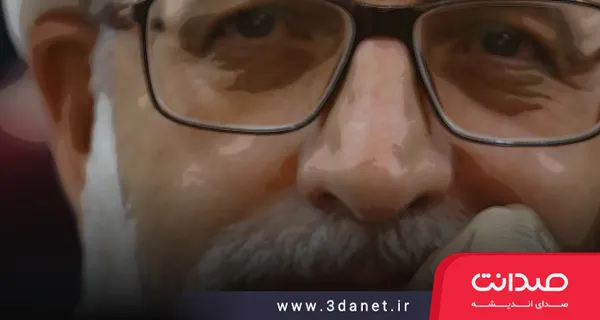
The Path Firouhi Paves for Iran
"With hope for his swift recovery"
Source: Naghd-e Hal Telegram Channel
Attention to Firouhi's thoughts and intellectual project is essential due to their influence and importance for analyzing Iran's political and legal problems, and this note aims to demonstrate this necessity with only a few references to this intellectual path.
It seems that Firouhi has correctly grasped Iran's current fundamental knot, and to untie it, he has defined and advanced his intellectual projects step by step, one after another. He is sketching a picture through which significant gains will be bestowed upon Iran.
To understand the importance of Firouhi's intellectual projects, it is enough to glance at the legislative disputes and negotiations in the Islamic Consultative Assembly, the Guardian Council, and the surrounding debates, and then compare them slightly with the legislative negotiations in the National Consultative Assembly during the Constitutional era; we will undoubtedly be astonished by all these similarities. It is as if there is no historical gap of over a hundred years; the door still turns on the same hinge, the problem is the same, and it is the same dualities that, unresolved, continue to persist.
Firouhi has well understood how short-sighted it would be to relate our problems merely to the last thirty or forty years, while the issue goes far beyond these. The experience of legislation in Iran is a complex matter, and when we seek a solid foundation for legislation, we must clarify exactly what we are talking about. In his thought, more important than a new plan is an effort to dissect the old plan and its argumentative system, because if this system is not well understood, the new plan will also not succeed.
He believes that successful theorists are meticulous explorers of existing theories, who find a path to a new theory from their inadequacies and possibilities, and he himself walks this same path.
In Firouhi's literature, religion and state have a permanent duality in Iran. The issue is not whether it is religion or the state, but rather the debate is over this narrative of religion and state or that narrative. The effort to exit this duality and readjust relations in Iran has a hundred-year history, some possible aspects and vicissitudes of which Firouhi explores in his intellectual projects. He seeks answers to these questions: How have we understood modernity, how have we translated it, and how have we opposed or defended it?
For the contemporary Iranian individual, whose religious backing has never been empty, who has the concern of modernity in Iran and has traversed a path of one hundred and fifty years, what contribution has religion made to Iranian modernity? In general, what path have we built in Iran, and how has this path moved and brought us here? What matters from his perspective is seeing ourselves historically; that is, to return our present-day self to the mirror of history and observe how the Iranian human has been painted.
On this basis, Firouhi addresses the genealogy of the relationship between religion and constitutionalism in Iran, a relationship found nowhere else in the Islamic world and unique to Iran. In his view, the specific religious narrative in contemporary Iran regarding modernity and the relationship of jurisprudence with national law or the nation-state are important issues that still remain unresolved in Iran. For example, he says this dispute persists to this day: Is governance a national trust from the people to the ruler, or a religious trust from the Lawgiver to the ruler? This is why, when party activity begins, it fragments both religious and political forces. A confrontation takes shape, and the game ends in dispute from a single subject. This is a characteristic of Iranian society and requires theoretical discussion.Firouhi believes that in Iran we have faced a crisis of where to place the state, and this debate is the great enigma of Iranian society. He holds that in Iran, different discourses and conceptions of the state have sat side by side, been loaded onto one another, and constructed the public face of the state in our society.
The modern state in Iran has a prismatic character, a combination of historical mentalities such as despotism and empire plus the contradictory add-ons of new modes of governance. This prismatic nature of the state has a historical feature, and from the Constitutional Revolution onward, different mentalities and institutions of governance have not succeeded one another but, in the fullest sense of the word, have been loaded onto and amalgamated with one another. Today's Iranian state is not the result of a logical transition from a pre-modern type of governance to one of the modern types; rather, it has grown more complex by the day, and its internal contradictions have increased in accordance with its numerous and incompatible add-ons.
With these presuppositions, Feirahi seeks to examine these mentalities layer by layer, to set them aside, and thereby not only to make possible an understanding of what has befallen us, but also to light a lamp for what is to be done.
Especially in his research "Fiqh and Politics," he highlights the historical conditions of this new narrative of the fusion of religion and state and examines the encounter of Shiite political jurisprudence with such characteristics of governance in Iran today.
Feirahi focuses heavily on the early texts of the Constitutional period and has found that the content of these texts remains our discussion today, because the serious dispute raised in these writings has not reached its logical conclusion. In these texts, he searches for traces of the birth of ideas that are produced and become the truth of the age; he seeks their emergence and decline, and explores the birth of words and the magnetism that was generated. On this basis, from the first description of constitutionalism in one of Akhund Khorasani's letters to the term "contractual state" in the literature of Sheikh Fazlollah, he examines and shows how the Najaf scholars step by step sought an alternative political system and a change in the model of governance.
His thematic explorations of political jurisprudence and the transformation of the concept of the state indicate that the quest for freedom in Iran acquired a religious narrative, and despite resistance within the religious current, a union was found between religion and constitutionalism. The jurisprudential apparatuses of the Constitutional era tried to tie the individual rights of persons to national rights. He shows well how disagreements arise among religious institutions over constitutionalism, how the endorsement of the new order in Iran is delayed, and how from the Constitutional period until now we have witnessed a paradigm rupture and a crisis of endorsement. Feirahi's emphasis on this point is because, in his belief, the paradigm gap not only judges the present situation but does so throughout the history of a society's life. Paradigmatic propositions appear in history but have transhistorical claims and comment on the whole of history. Feirahi sees our disagreement in Iran not over methods of governance but over the principles of governance. Our political system has historically taken shape like a machine with several different engines or driving forces. But these centers of power are never complementary; rather, it has come to pass that they work against each other, limiting and neutralizing each other's capacity.
It is on this basis that he believes the state in Iran always becomes "two-headed" because there are two currents within the state that neutralize each other. Iranian society has not yet reached a consensus on the principles of governance, and therefore we have a parliament, elections, and separation of powers, but these institutions do not have the function they should.
Ultimately, it must be said that Feirahi has always striven, through his mode of explanation, to open a way for Iran out of this impasse, and it is no exaggeration to say that from within the hard core of the Sharia, he seeks a path to modernity and democratic life. The path Feirahi has taken, besides being an important destination in itself, heralds a step forward toward creating the ground for resolving conflicts and disputes in Iran's political and legal system.
Discussion3 comments
روحی و ارواحنا لتراب مقدمه فداه
سلام لطفا از آقا فیرحی، صوت یا مطلب بیشتری بگذارید.
سلام خدا ایشون رو رحمت کنه و راهشون ادامه داشته باشه