Political Science
The promotion of psychological and cultural trends is a product of political passivity and despair
Abbas Abdi argues that reducing the social to a psychological matter reproduces defective structures and despair, because cultural behaviours are often reactions to the environment. Reforming the individual without changing the structure is a futile exercise.
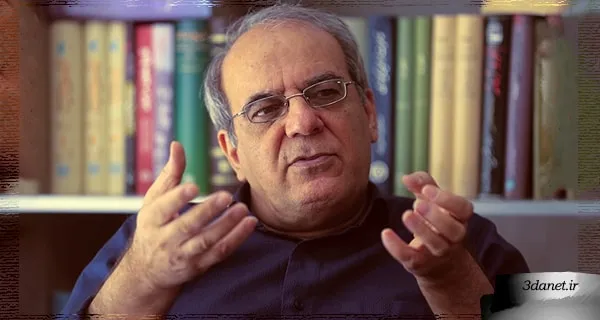
Abbas Abdi: Always, or at least for as long as I have been paying attention, the circulation of psychology books has been relatively higher than that of other social science books. This phenomenon is understandable. Because the field of psychology, especially its clinical and individual branch, is aimed at reforming the individual and, from this perspective, has a more practical role for people. From child psychology to psychology in family relationships to behavioral and communication techniques in the occupational sphere and so on... It is obvious that successful or unsuccessful individuals, when they want to explain the reasons for their success or failure (especially success), emphasize their psychological and personality components, and as a result, anyone who wants to follow in their footsteps inevitably becomes interested in psychology. This knowledge is also important in the realm of personal relationships. When a father wants to raise his child to be a good and useful person for himself and his society, he naturally must emphasize the child's individual characteristics and place his personality above any other factor in order to awaken in him the will for reform and progress. Scholars of ethics, when they take to the pulpits to preach, also emphasize individual upbringing and how to purify the soul and avoid sin and erroneous behavior. So, up to this point, nothing unusual has occurred. We ourselves, if we want to speak with a child, friend, or acquaintance and revive and strengthen good qualities in them, will emphasize these same psychological matters.
But the problem begins when, in macro-level analysis, we substitute the psychological matter for the structures of society, and this becomes a dangerous issue. In fact, reducing the social matter to a psychological and individual issue yields no result other than the reproduction of existing defective structures and norms, as well as despair and passivity. With the spread of virtual networks and the content republished in these networks, we increasingly realize that such an incorrect tendency has a basis and must be critiqued. The existence of this tendency can be seen in two general but interrelated axes. Two axes that various individuals each theorize. The first axis is based on the premise that nothing exists except the individual; all other matters such as the state, structures, norms, and things like identity and nationality are also conventional matters and have no external existence. Therefore, fixing society has no meaning except through reforming individuals, and if the individual is reformed, everything will be fixed, and vice versa. The second axis complements this view and considers the problem of Iranian society to be the existence of cultural traits among the people, enumerating proportionally ten, twenty, or more negative cultural traits for Iranian society and people, and claiming that as long as these traits are not corrected, there will be no news of development and progress.
Although critiquing these views requires a detailed discussion, within the limits of a note, each of the two views can be critiqued so that at least this discussion is sparked. Both views credit the individual and their mentality with more than its capacity. They imagine that humans have sat down and thought to be such and such. Whereas most of the cultural and behavioral traits of society and people, more than being the result of planned thinking, stem from their reaction to the environment and the learning and transmission of this reaction across generations. For example, if, as is said, we face a culture of duplicity in our society, this arises from the fact that a centuries-old despotic political structure has caused the emergence of a culture and behavior of duplicity, where individuals say one thing in public and another in private. This behavior was for self-preservation against the political system. If the political structure is reformed, humans will also learn to abandon duplicity. When duplicity is not rewarded, it is foolish for a person to practice duplicity. Of course, subsequently, the culture of duplicity also reinforces that despotic system, but between these two components, effort must be focused on structural reforms, and reforming individuals does not yield tangible and lasting results. To think that people behave based on an abstract belief is a mistake. A few individuals may be like this, but the overwhelming majority of people behave based on their situation, interests, and expediencies. They determine their interests and expediencies themselves, which, in an all-encompassing game, will usually be short-term.
For example, suppose that the market structure does not govern bank interest and profit rates, and the loan interest rate is far lower than the inflation rate. Naturally, everyone becomes interested in applying for a loan, and the demand for loans will exceed the supply. If this gap is not compensated for by raising the price of loans, corruption, bribery, and trickery in obtaining loans will prevail. This has nothing to do with moral issues and educational teachings, and if it does, the effect is very slight. Most of those who have become steeped in corruption in economic matters were not corrupt from the outset and even used to avoid corrupt behaviors, but under the normative pressures resulting from the defective structure, they either withdrew or succumbed to corruption, gradually stepping onto a path they had never even initially imagined.
When the inflation rate is high and there is no penalty for late payment, a structure takes shape that encourages borrowers to default on their debts. No matter how many ethics lessons we want to give, instead of doing that, it is enough to reform the said structure. Why should we ignore the structure and only emphasize individual commitments? Where in history do we have an example of individuals being reformed and sustainably shaping a healthy society? Even if such a thing exists, without supportive structures, in that good and healthy society, it is impossible for that society to continue its existence in the same way. Moreover, this view leaves some serious questions unanswered: such as, to what extent must individuals be reformed for it to be sufficient for reform? How many people out of, say, 80 million must be reformed for it to be enough to reform society? How can we measure the extent to which individuals have been reformed? How and through what mechanisms does individual reform lead to societal reform? Finally, how can this theory be tested and the social results of individual reform be empirically examined? Whereas in the discussion of structural reform, we do not witness such a problem. One can clearly state what type of structure is synonymous with the occurrence of what type of behavior (in the sociological sense). This does not mean denying the promotion of educational and moral teachings, which are also necessary. However, given structural deficiencies and without striving to reform them, taking refuge in these teachings is like beating water in a mortar.
In sociology, we cannot find a behavior where all humans behave identically; in fact, if that were to happen, that behavior would not be considered a variable. Most behaviors follow a normal distribution: many people are in the middle, and fewer are on the left and right ends of the spectrum. This behavioral diversity occurs due to structural realities and the diversity of individuals' interests and priorities, and one cannot place everyone in a single behavioral mold through moral and individual teachings. If individuals are to possess virtuous qualities, social, political, and economic structures conducive to the emergence of these qualities must be encouraged and established, and such behavior must be rewarded, and vice versa. In a defective structure, adherence to moral teachings will be costly, and few will have the inclination for it. Even those who engage in unethical behavior are distressed by such a situation and call for structural reform.
Culture, in the strict sense of the word, is our reaction to realities and the surrounding environment, and in this respect it is a dependent variable, although it also has reciprocal effects on realities. Some people, when analyzing social issues, point to cultural matters, and by culture they mean subjective and attitudinal aspects of individuals. For example, if we are careless in our water consumption, they attribute it to people's mistaken attitude toward the country's water resources and an incorrect understanding of water scarcity. Or if productivity and efficiency in Iran are low, they see it as the result of our incorrect understanding of the value of "work." Within such a framework, the solution to social problems is to change people's attitudes. In this case, if we make people's attitude toward the value of work and effort positive, then productivity will also increase. This approach to social problems reduces solutions to changing attitudes, and it considers changing attitudes to be the task of cultural programs. If we examine this approach closely, we find that it ultimately amounts to nothing but propaganda. That is, solving social problems is pursued through changing attitudes, and changing attitudes is pursued through propaganda. A costly effort that has been underway for years and has yielded no result other than the waste of financial and psychological resources. Of course, such programs can be effective alongside and as a complement to structural reforms, but on their own they will lack significant effect. Hence, it can be concluded that culture, in its reality, is not the solution to society's problems, but is itself the result of the neglect of the structural dimensions of individuals' actions. On the other hand, if we make the reform of the country contingent upon reforming the culture of the entire society, we will encounter a problem, because such reform will not be possible without the cooperation of the existing structure, and since the custodians of such a defective structure do not believe in the necessity of reforming this structure, or have not yet reached that point, they will not make any effort to reform the culture—indeed, they will even create obstacles.
Moreover, if we refer to history, we perhaps had the best culture and people in the heat of the revolution, but this culture did not necessarily lead to the improvement of society. Also, in the past we thought that the problems stemmed from a lack of literacy and education. Now, compared to 50 years ago, we are dozens of steps ahead in terms of education, without our cultural problems having been solved. The root of the problems is fundamentally structural and social. The structure of a state-run and centralized economy teaches and reinforces one type of culture and behavior, and vice versa.
The aim is not to downplay the importance of culture and moral teachings, but to determine the limits and the possibility of this factor's influence on the development and progress of society. A few days ago, I read a news report that six South Korean citizens in a hotel in Frankfurt, Germany, were attempting to expel a jinn or demon from the body of a 41-year-old woman who was a member of their group. To this end, they tortured her to the brink of death, and ultimately the woman suffocated. Now, suppose a few Iranians had done this; how much of a cultural theory would we have constructed for it? And we would have presented it as the root of society's backwardness.
The problem is that we do not have a correct understanding of the concept of institutional determinism. When we say that humans are prisoners of institutions, this proposition is meant in a social sense and not necessarily a moral or deterministic one. In this way, if the inflation rate far exceeds the penalty rate for late payment, the loan default rate will increase to the extent of this gap, but this does not mean that any of the two or more people who took out the loan are consciously avoiding repayment of the loan they received. Each has free will over their own behavior and must be accountable for their behavior from a moral and social perspective, but in any case and without a doubt, the default rate will increase. The existence of meaningful relationships and correlations between institutional and behavioral characteristics conveys precisely this concept.
What must be noted in the end is that the promotion of psychological and cultural theories (in the aforementioned sense) is a product of hopelessness and despair about change, and it allows the individual to turn inward and direct the entire problem toward themselves, and this, consciously or unconsciously, is the greatest service to the survival of defective structures, because the promotion of social inaction is the clear result of such thinking.
.
.
The promotion of psychological and cultural trends is a product of political passivity and despair
Abbas Abdi, Seda Weekly, No. 65, 26 November 2015
.
.




Discussion0 comments
No comments yet; let yours be the first voice.