Sociology
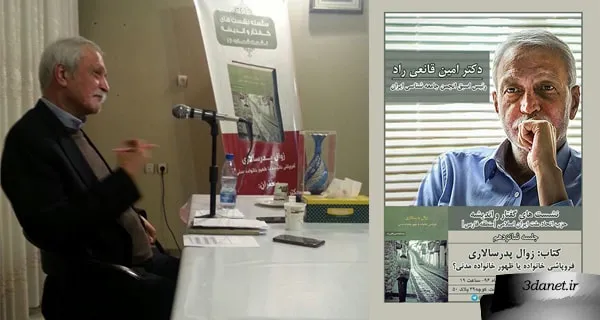
The Sociology of Lying, Dr. Mohammad Amin Ghaneirad
Lying is a consequence of the rift between moral obligations and the pursuit of desirable goals; when legitimate means prove ineffective, falsehood becomes a convention for adaptation. Dr. Mohammad-Amin Ghaneirad on the sociology of lying in Iran.

It is said that “lying” and its prevalence at various levels of society will have unfortunate consequences and effects in all spheres. Indeed, lying at the micro level and deceiving public opinion at the macro level can reinforce and confirm one another. However, research currently conducted in Iranian society indicates a decline in certain moral values from the perspective of the people themselves. For instance, in a study carried out by the country’s Social Council under the title “National Survey of Social Capital,” people’s perceptions regarding matters such as “honesty,” “trustworthiness,” and “integrity” are claimed to have suffered significant decline and erosion between the two surveys of the years ’84 and ’93 [2005 and 2014], having fallen sharply over this 100-year interval. Thus, the decline of certain moralities in Iranian society appears to be serious. In order to depict the current state of Iranian society and provide a more precise picture of the conditions prevailing in society, a series of case-focused essays, titled “Monitoring Ethics and Religion,” is being prepared in various cultural and social domains. The aim of writing these essays is to monitor Iranian society and the world around it from a religious, social, and cultural perspective.
Given the importance of the issue of lying and its pervasiveness in Iranian society, we have dedicated the first dossier on this subject—previously published in the form of the online magazine “Ensan”—to the topic of “lying.” The essay for the twelfth installment is devoted to the article by Dr. Mohammad Amin Ghaneirad, former president of the Iranian Sociological Association, which follows:
The Sociology of Lying
First, we must examine why people lie and what their aim is. Lying certainly has a benefit, an effect, and a positive aspect; it answers a need, which is why individuals lie. Therefore, lying always fulfills a function and usually answers a need. Societies and individuals resort to the method of lying when other available means and tools cannot help them achieve and reach their goal, and they are forced to use another means to reach their goal; the goal, in turn, is that which is considered desirable in society and which individuals also feel a need for.
For example, suppose that for some people, acquiring money, status, or obtaining a set of facilities and matters of this kind is a goal, and a desirable one at that, which human beings pursue. In other words, we must say success—let us take this success in a broader sense and say that people pursue success and want to achieve various dimensions of success. This success may be material and, on the other hand, related to status, meaning that, for instance, I attain a suitable social status in society and at the same time achieve good material success in society; people usually pursue these two: one is reaching material goals and the other is reaching status goals.
Some also propose a third goal, which is attaining power; these three goals differ from one another. Human beings may have good social status in society but lack power, or enjoy high social status but lack power in society, or have good social status but lack a high material and economic position. It is even possible for someone to have a high economic position but not a high status position. If we divide the three goals into two categories, status falls on one side and economic success and power on the other; human beings usually strive to have economic and political success and even power accompanied by status. For example, someone who holds power likes people to say of him how benevolent and devoted to the people he is; this is where lying enters the scene.
Another related arena is when practical imperatives are incompatible with moral imperatives; in other words, the practical imperatives for success are not compatible with the moral imperatives for legitimacy, and the imperatives of success have become detached from the imperatives of legitimacy. For example, if you want to become wealthy or gain power, you are forced to take paths that are not legitimate; because you cannot achieve your social goals or desirable things in society through legitimate means. For this reason, for instance, in the economic sphere, you engage in shady deals, violate the rights of others, or supply goods of poor quality. But because you simultaneously want to maintain your status, wherever you use illegitimate means, you hide it or lie about it, or if it becomes clear that you used illegitimate means, you justify it; here, a kind of gap is created between our action and deed on the one hand, and our speech and language on the other, and we either lie verbally and orally or resort to justification.
When lying becomes widespread
In societies where a clear gap and rift opens up between moral exigencies and ordinary, everyday mechanisms, individuals resort to the strategy of lying more often. However, people are not inherently liars; rather, structural pressures, so to speak, force you into conformity and adaptation, and you feel that if you want to remain steadfast to moral exigencies, including not lying, you cannot live, you cannot maintain your dignity in society, you cannot enjoy a degree of success and fame.
After the emergence of the linguistic anomaly that is lying, individuals may also develop behavioral anomalies. I emphasize again, I believe people lie under conditions where a gap opens up between moral exigencies and the exigencies of life.
It is necessary and essential to help socially to forge a link between ethics and life; for people to feel that if they observe ethical matters and do not lie, they can also have a life. If the gap between moral exigencies and everyday adaptations is not reduced, it can be said that lying will become widespread among all people. In this context, some use the concept of customary adaptation, meaning that custom compels you to use methods to adapt to life's conditions. This is where lying again becomes a custom and becomes so prevalent that it becomes natural, and you feel, why shouldn't you lie! If you don't lie, your affairs won't proceed!
Institutional lies
I must point out this important fact that lying is not merely linguistic; rather, lying means untruthfulness, and being untruthful has various dimensions, such as linguistic and behavioral untruthfulness. For example, on the exterior of the Judiciary buildings, there is an angel holding a scale and a sword, with its eyes closed, saying I will establish justice in society with complete impartiality, but you see that injustice is spreading day by day in society; we have the Anti-Narcotics Headquarters and the headquarters for combating economic corruption, but the situation of narcotics and economic corruption is expanding, or the Islamic Republic of Iran Broadcasting (IRIB), which has named itself the national media, constantly creates rifts and divisions among the nation. We speak of Islamic banking, but we offer people loans with high interest rates. In all these cases, we witness untruthfulness and institutional lies; in many instances, it is these very institutional lies that teach people to lie, not consciously but as a hidden curriculum, and push individuals towards lying.
Our institutions are producing lies and, unfortunately, are not even aware of the dangerous path they have taken. On the other hand, they do not realize the moral consequences of their lies for society and do not know how they are causing a rift in social trust and the spread of lying in society, to the extent that lying becomes an inseparable part of people's daily lives. A situation may one day arise where, ostensibly, no one is lying, but if you look at a deeper layer, you will see that everyone is lying and everyone is happy with this lie and lives alongside it.
Lying in society has a systematic nature and manifests itself in various dimensions and contexts: "cognitive, linguistic, behavioral, emotional, and institutional" lies, and all of these can be discussed. But I want to say that cognitive lying occurs when what people's and officials' minds see is distant from reality. The mind is supposed to reflect reality, but individuals think in a way that is different from and biased toward reality; in this case, we actually have a kind of psychological and mental distance from reality and are, in a sense, delusional. A part of society and officials are involved in this process without thinking that they are lying.
Lying is not only about not telling the truth and saying the opposite of reality; sometimes you may tell the truth, but you exaggerate this truth to such an extent that you fall into lying.
In general, we have all become involved in lying in some way. Sometimes individuals find themselves in a situation of tension between two moral ideals and the ideals related to their personal lives; they lie consciously and want to preserve their legitimacy and position. One can have hope for these people who know they are lying, but if a person reaches the point where they lie and think they are not lying, you must abandon hope of saving such individuals. The worst kind of entanglement with lying is to lie and not know that you are lying.
Religious people who become caught up in lying
It is interesting that in this context, religious people, who are aware of the status of lying in religion, also become caught up in lying. This is because culture does not operate in an abstract package. Culture operates in connection with social structures, and it is in an interactive and dialectical relationship with social realities that religion can function. Therefore, when institutions, structures, and hidden and overt educational methods invite you toward lying, religion cannot do much in these circumstances. It is possible that, so to speak, religion helps some people overcome institutional and social pressures to lie, but those some are limited individuals, and perhaps they can be called the moral elite; people who have moral agency and want to and can overcome the limitations of social pressure and tension.
In most cases, religion may even become a mechanism for justifying lies. This possibility must be considered: while religion can provide grounds for moral individuals to resist social pressures and institutional lies, on the other hand, it may be used by people who violate moral frameworks to justify immoral behavior. A phenomenon we have seen a lot historically and which is referred to as hypocrisy.
Religion gives us the possibility to lie and provides a ground for us to have a comfortable conscience as well. Throughout history, religion has always been used by establishments. For this reason, perhaps we should pay attention to the term used by Dr. Shariati and many others, which is the discussion of religion. We should not just speak of religion in general; rather, we must ask: which religion? The religion of lies or the religion of truth! Perhaps in the current circumstances, these two religions can be distinguished from one another. You see what crimes are committed in the name of Islam by extremist forces.
In the discussions that scholars have had, we see how religion can also give you the capacity, boldness, and audacity to lie. This is because it presents you with certain ideals as absolute ideals, in relation to which everything else becomes a means! A means that you can use any of. Therefore, some believe that for the advancement of religion and truth, and to make people religious, they are permitted to lie. This issue is paradoxical in a sense, because if religion means truthfulness, one cannot use untruthful tools.
Lying as a Tool for Realizing Religion as Power
In this context, some view religion as power and use the tools of lying to realize religion as power. We can have different interpretations of religion. One of the dangers of conceiving religion as power is that to realize that power, we consider lying permissible and licit; a power that is ostensibly said to be the power of religion, but may covertly serve the power and interests of specific individuals.
Some people lie, know they are lying, and also use religion to justify it. But there are times when religion fundamentally compels these individuals to lie—that is when religion is conceived as a power and not as an ethical lifestyle.
If, as a sociologist, I were to propose solutions for expanding truthfulness and honesty in Iranian society, I must say that although advice is useful, telling people phrases like "do not lie" and "be truthful" will yield no results. In the conditions we are living in, we must expect truthfulness and honesty from institutions and strive to expand institutional trust in society.
Lies That Harm Society
We must work to eliminate the gap between ethics and power at the institutional level; after that, these structures will no longer be carriers of a hidden curriculum for lying. The most important lies that harm society, create problems for it, and confront it with crises are those rooted in institutional practices. We must be able to rebuild institutional trust in society and compel our institutions to observe professional and institutional ethics.
Institutional trust means increasing trust in social institutions. Trust in social institutions such as hospitals, courts, schools, universities, banks, and especially the national media and many other institutions must be rebuilt, so that people feel these institutions belong to them, are carriers of truth, and also support the interests, concerns, and views of the people as a whole in society.
Today, information transparency is one of the important mechanisms that eliminates the possibility of institutional lying. It is now clear how much the president, prime minister, or employees of a certain European or North American country earn, and in truth, there is no hidden matter. As long as this type of transparency does not exist in our society, lies will be constantly produced. Through transparency and distancing from administrative, institutional, and organizational corruption, the institutional grounds for lying in society can be reduced.
.
.
The Sociology of Lying
Author: Dr. Mohammad Amin Ghaneirad
Source: Jamaran
.
.


Discussion0 comments
No comments yet; let yours be the first voice.