Philosophy
The Value of Voluntary Simplicity
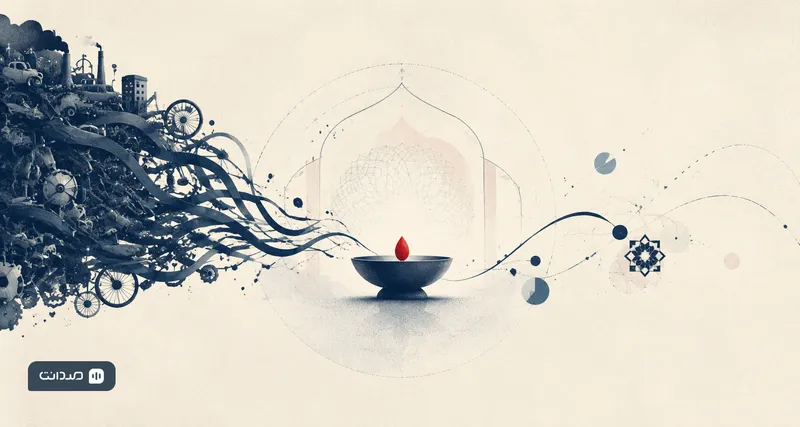
The founders of religions and great leaders have practiced simple living, but the complexities of industrial life have raised doubts. Voluntary simplicity does not mean asceticism, but rather ordering one's life to achieve one's primary goals.
Richard Bartlett Gregg
AuthorThe Value of Voluntary Simplicity1[1]
Richard Gregg
Translation: Ali Kalani Tehrani
The founders of most great religions—Christ, Buddha, Lao Tzu, and Muhammad (PBUH)—as well as many saints and sages such as St. Francis[2], John Woolman[3], the Rishis (Hindu sages) in Hinduism, the prophets of the Israelites, Muslim Sufis; many artists, scientists, and great leaders of the modern world such as Lenin and Gandhi have advocated and practiced voluntary simplicity. Members of military armies and monastic orders have also followed this path—organizations that have had an immense and lasting impact on the world. Simplicity has also been one of the hallmarks of the Mennonites[4] and the Society of Friends.
Therefore, there is, or has been, undoubtedly a very important element in the observance of simplicity. But many things have come to us from mass production and modern commerce, the spread of science, and the complexities of life in industrialized countries, which have created widespread doubts about the principle and practice of simple living. The current climate of our minds is suited neither to a clear understanding of the value of simple living, nor to its practice. Simple living seems to be a kind of weakness for saints and a temporary characteristic, and not something concerning others.
What Can Be Said About Simple Living?
Before proceeding further, let us provide a somewhat clearer conception of what we are discussing. Our understanding of asceticism here does not mean a kind of suppression of instincts. What we intend by simple living is not very rigid and austere. Simple living is a relative matter, depending on climate, traditions, culture, and individual character. For example, in India, with the exception of those who try to resemble Westerners, all wealthy people sit on the ground just like the poor, and there are no chairs. A great many Americans, both rich and poor, think they must own an automobile, and some others consider the telephone an overly important thing. A person of a certain social standing deems it necessary to have various types of shoes, hats, or other garments for purposes other than cleanliness and comfort. Simplicity for an American differs greatly from the simplicity of a Chinese farmer.
Voluntary simplicity has both inner and outer conditions. That is, sincerity of intention, inner integrity and purity, as well as abstaining from external clutter, from many possessions that are not related to the main purpose of life. It means ordering and directing our energy and desires, a kind of relative self-restraint in some aspects of life in order to secure greater benefits of life in other aspects. Simple living entails a kind of deliberate organization of life to achieve a goal. For example, a person who wants to conquer the peak of Everest focuses their thoughts and energy for several years on planning this expedition. And in practical action, they discard the smallest non-essential items for reaching the goal.
Of course, just as different people pursue different goals in life, what is relevant to one person's goal may not be relevant to another's. Nevertheless, it is easy to understand that if everyone brought order, arrangement, and simplicity to their goals, our personal and social life would change greatly, so that one goal could dominate all other goals, and if each person, according to the new arrangement of their goals, reorganized their outer life, they would forgo activities and possessions unrelated to the main goal. The degree of simplicity is a matter that each individual must decide for themselves. Perhaps the meaning of this principle is now clear enough to be discussed, although its applications can vary. Trusting that the forthcoming discussions will further clarify the meaning of this subject, I will not attempt to provide a more precise definition of this concept.
Doubts
Since today, in the view of many people, the emphasis on voluntary simplicity is mistaken, let us pay attention to these doubts before continuing the discussion. First of all, it seems that modern machine products have solved the long-standing problem of the scarcity of material objects necessary for life. Science, invention, the industrial system, commerce, transportation have made possible the distribution and production of clothing, food, household goods, tools and equipment, and means of comfort and luxury better and more abundantly than humanity has ever seen. For an American, walking through a dime store, a chain grocery store, and a department store, while browsing a mail-order catalog, besides what one sees on the streets, is a taken-for-granted matter. Henry Ford's[5] idea that civilization progresses by increasing the number of human desires and their satisfaction seems reasonable. The vast amount of paper and ink devoted to advertising is a further endorsement in favor of this belief. The economic and social stability of industrial countries appears to be built on the hope of further expanding the market for mass production. Russia, like pro-capitalist countries, pursues the same goal. Apparently, the whole world has harmonized with this concept. In such an age, is it not a historical error to speak of voluntary simplicity? Is not mastering and overcoming the growth of life's complexity among our duties? Far from any disrespect, is this (the growth of complexity) not what God has done in the creation and evolution of the world?
Moreover, for most people, returning to voluntary simplicity means taking on again a great deal of hard labor that modern complex equipment has lifted from our shoulders. Nevertheless, does not the complexity of devices protect us against famine, disease, and heat and cold? Have not our tractors, electric lights, gas stoves, water pumps, electric refrigerators, home heating systems, airplanes, motorized and steam transportation systems, telephones, removed exhausting fears from us? Have they not provided a kind of security or at least leisure for us? If civilization is to progress, we must surely have leisure.
Another doubt immediately forms in the mind of every parent. We want our children to have all the advantages, to be healthier and stronger than we were, to learn more than us, to experience fewer mistakes, to have a better character, to see more places in the world, to be able to have a more blessed and richer life, to have more pleasure, beauty, and power. If we (parents) have put our own lives and theirs in a strait by turning to voluntary simplicity, how can our children today learn the necessary teachings and training about these matters? How can they have contact and connection with beautiful and interesting people and things? Does not their body, to be healthy, need various types of food? How can the mind grow if it is not incessantly nourished from diverse and extensive sources? Undoubtedly, beauty is one of the most important components of life for individuals and societies, but with the boring, inflexible, and tedious limitations of voluntary simplicity in color and line and texture and melody, how can beauty be attained?
Many people who doubt the validity of voluntary simplicity will say again that if voluntary simplicity were attainable, it would have introduced itself into lives and individuals and been effective in group affairs. They will naturally say, if most human beings pursue simplicity, who will carry forward the complex and necessary tasks of the world? Governments, industries, organizations, while being very complex, must be administered. Do individuals who have a great inclination toward voluntary simplicity want to shirk participation in the complex duties of society? In some organizations, it is power that governs human beings. Is it right for some human beings to seek to escape from wielding this power? If there are no aware individuals, who will seize such power? Is it not the duty of compassionate individuals to seize power and direct it in the best possible way? Is not this kind of call for voluntary simplicity merely a cover for irresponsibility, lack of courage, or weakness of ability?
These questions present simple living as an idea that could be dangerous for the society in which we live. Today, the existence of a large country or a large city is inherently complex. Insisting on and practicing voluntary simplicity seems to ultimately mean the destruction of large organizations, and in other words, the current state of society and public life. This, too, is among the doubts, at least the important ones, although other doubts may also exist.
Responding to the Doubts
Let us examine the first major doubt. The doubt that the consequence of modern science and inventions makes possible the endless supply of all kinds of food and good things; therefore, the age of scarcity, and all the ideas, assumptions, and ethics based on it, including the idea of the value of voluntary simplicity, belong to the past.
Although from an engineer's perspective, technology has made it easy to meet the material needs of humankind, this possibility is far from reality. Attached to it is a big "if." Despite the wondrous chemical, mechanical, and electrical inventions, there is still a deplorable scarcity of necessities in all countries. A vast portion of the population of the United States lacks water plumbing and heating appliances for winter in their homes or apartments, even though this country is one of the most mechanized and wealthiest in the world. Among other disadvantages of applying technology, one can point to the very large number of unemployed individuals that exist in almost all countries, perhaps more than ever before in world history. It is the financial system and the structure of debts that oversee distribution, production, and the level of consumption. This system leads to the burning of wheat in the United States while millions are starving in China; in California, thousands of kilos of oranges are left to rot while slum-dwelling children in our country are exposed to rickets (soft bones), decayed teeth, and other types of diseases due to the lack of vitamins found in these very oranges; there are numerous examples of this kind. The great advances in science and technology have not solved the moral problems of civilization. These advances have changed the form of some problems, expanded others, and made finding a solution for some of these problems very difficult. The distribution of material goods in this manner is, in the first place, a kind of moral problem and not merely a technical or organizational one. Quantitative measurement and the use of quantitative relations are among the very powerful components of science, technology, and money. For this very reason, the motivations for applying science, technology, and money are often based on the quantitative aspects of life and not its qualitative aspects. The qualitative components are absent, whereas the essence of human social life is situated more in qualitative relations than in quantitative ones, and this is a moral matter, not a technological one.
Arnold J. Toynbee6[6], in the third volume of his book titled A Study of History, discusses the growth of civilization. He devotes about sixty pages to the determinants of civilization's growth. In this book, just as he examines growth in social status, he also addresses growth in wisdom. With immense knowledge, he describes the progress of many civilizations _ Egyptian, Sumerian, Minoan, Hellenic, Assyrian, Indian, Iranian, Chinese, Babylonian, Mayan, Japanese, and so on. After presenting the evidence, he concludes that the formation of civilization's growth lies not in an increased power to command the physical world, nor in an increased power to control the human world (for example, other nations and civilizations), but rather, the growth of civilization resides in the heart of what he calls "etherealization"[7]: a kind of growth in intangible relations. He notes that this process, in addition to involving simplicity in the equipment of life, also transfers our interest and energy from material matters toward a higher realm. Following Bergson, he equates complexity with matter and simplicity with life.
If this is the case, it is time to cease taking pleasure in these devices. It would be better to turn to cultivating qualitative relationships and the ways of life that support such relationships. Our technology has grown excessively. This technology relies on a kind of ethics that was developed in a simpler world and was programmed for simpler conditions. Our civilization is like a great engine resting on very small and weak foundations. Its vibrations will shatter everything. To bear this burden and pressure, we need stronger individual and collective self-restraint and ethics.
To those who say that machinery and the equipment of life are merely tools and devices that have no moral nature in themselves but can be used for good or evil, I will show that we are all influenced by the tools and devices we use. Time and again in the lives of nations and individuals, we see that when certain tools are used enthusiastically, properly, and for a long time, these tools take on the character and effect of an end. Our tools become our preoccupations. The powerful quantitative components in science, machinery, money, and their products tend to mechanize the thoughts and lives of the individuals who use them. The relationships that science, machinery, and money create are more mechanical than organic. Machinery and money appear to empower us but fundamentally damage our inner strength.
We imagine that machinery and technology provide us with more time and leisure, but in reality, they fill life with haste and busyness. By installing a telephone in my house, I imagine that all the time and energy spent daily going to the store, attending to small tasks, and giving minor orders to those I deal with will be saved. True, I use the telephone to achieve these ends, but I also expand the range of contacts, and the leisure time I anticipated is quickly occupied by frequent calls and the commitments I have created for myself using the telephone. The automobile affects our family life in the same way. Although it covers a wider realm of life, achieving the leisure we expect comes in its absence. In fact, where the number of automobiles is high, like on Fifteenth Street in New York, for most of the day, walking takes less time than using a taxi or bus. The hallmark of industrial countries is not their leisure time. Anyone who travels to Eastern countries will testify that the tranquility of life there is far greater than in Western industrial countries. On a smaller scale, there is not as much leisure in the highly industrial cities of the United States as there is in its non-industrial cities.
Moreover, we constantly overlook the fact that an obsessive preoccupation with machinery destroys inner peace and our perception of values. In the absence of a correct perception of values, the extra time left over from necessary tasks is no longer leisure time and becomes meaningless time or time with ominous meaning—time that is "killed" with movies, radio, and watching baseball games or idleness, along with the degeneration it creates in the individual's spirit and character.
Those who think that the complexities in financial, transportation, and communication affairs have saved the world from famine are gravely mistaken. Perhaps their error stems from the fact that they belong to wealthy and affluent groups within the most powerful countries in the world. Even if they have actually studied the statistical indicators and social reports of leading scientists on the extent of malnutrition among the people of their own country or other countries of the world, they have not understood it. They have forgotten the frequent and large-scale famines in China. These individuals have not examined the evidence of the greater extent and frequency of famines in India in modern times compared to past centuries.
Those who shudder at the horrific human toll of the Black Death in medieval Europe have forgotten the tens of millions killed by influenza during the World War. Individuals who pride themselves on the reduced incidence of infectious diseases often overlook the growth in acute organic diseases such as cancer, diabetes, kidney and heart diseases, blood-related disorders, and mental illnesses. The renowned physiologist Alexis Carrel[8], in his recent book, Man the Unknown, has provided ample evidence that our pride in the claim of "conquering disease" is shaky. He has stated that increasing the lifespan of those who are alive merely adds to the number of elderly people whom the young must care for, and this does not necessarily lead to progress. He believes that even if we refrain from mentioning the social evils resulting from the industrial system, modern methods of comfort, by weakening adaptive mechanisms, cause dangerous biological harm to individuals.
Not through greater complexity can the growth of complexity in life be overcome. The way is to turn inward, an inwardness that makes everything uniform—not intellectually but spiritually—and then to design and implement new economic and social modes and forms of life. Modes and forms that will decisively and honestly manifest this spirit. Voluntary simplicity, as an aid to achieving this goal and as a kind of corrective to our emotions toward mechanization, is not an outdated need but a very urgent one.
Let us postpone the connection between voluntary simplicity and the upbringing of children to another time, as this subject is fundamentally related to the next part of our discussion and is best addressed there.
Voluntary Simplicity and Personality
It is often said that possessions are important because they enrich and enhance dignities and personalities. The claim is that through ownership, the inherent forces within personality, the power of self-mastery and self-leadership, are realized. It is often said that stability, security, independence, a real place in social life, a sense of responsibility, and all the things that are components of a healthy personality are provided to us by possessions.
Nevertheless, the greatest personalities, the human beings who have had the most influence on the most people over the longest time, have been people of exceedingly meager possessions. For example, Buddha, Jesus, Moses, Muhammad (PBUH), Kagawa, Socrates, Saint Francis, Confucius, Sun Yat-sen, Lenin, Gandhi, many scientists, inventors, and artists. The higher realms of life, where personality plays its most complete role and has almost the greatest freedom from the compulsion of circumstances, are precisely where there is the least dependence on possessions. The higher we go among human types, and the stronger personalities become, the less the importance of property.
The reason for this is something we usually do not grasp; in other words, the essence of personality does not lie in having a singular personality, separate from other human beings and unique, but its foundation is connection with other persons. A kind of capacity for friendship, companionship, fellowship, and creatively entering the lives of others. Ultimately, a kind of capacity for the existence of love. The ordinary or intense expression of friendship and love does not require the ownership of property. Creativity is not dependent on ownership. Spiritual connections are far more important for the individual and society than possessions. If a person gains the trust of others through love and service, this trust manifests in forms such as increased joy, beauty, and health in life.
It is true that we obtain a certain kind of pleasure and satisfaction from mastering material objects—for example, learning to drive a car—or that by displaying possessions we intend to flaunt our power. But this type of power and this type of satisfaction, compared to other types, possesses less security, permanence, depth, and fewer subjective and moral indicators.
Beyond what is necessary for the life of the body, the most enduring, secure, and satisfying kind of ownership lies in rational, emotional, and spiritual understanding and cognition, not in physical control and the power of possession. This is particularly evident in art. Someone who comprehends and understands a song, a symphony, a painting, a sculpture, or a work of architecture gains greater satisfaction than someone who owns the musical instrument or the artworks. The natural world and museums provide us ample opportunity for such spiritual ownership. This kind of understanding is what some economists call "psychic goods." Entering into the spirit that lies at the heart of things expands and enriches one's personality.
There are two kinds of simplicity: foolish and wise. The foolish person is simple because their mind and will are incapable of dealing with many matters. The wise person is simple not for the reason the fool is, but because they know that in all lives, both individual and collective, a few essential lines or components are determined, and outside these components, there exists a multitude of diverse things. If these essential components are kept passionate and healthy, the remaining details will grow almost automatically, like the branches and leaves of a tree. Therefore, the wise person concentrates their attention on the few essentials of life, and this shapes their simplicity.
We cannot have happiness, satisfaction, and deep, lasting pleasure unless we hold ourselves in respect. There is good reason to believe that self-respect is a foundation for attaining higher morality. One cannot hold oneself in respect unless one's life is a serious effort to manifest the best and most enduring perceivable values. In other words, we will not achieve complete self-respect unless we attain close and right relationships with our fellow human beings, nature, and truth (or God). Or, as Rufus Jones[9] stated, "In the presence of God, we must maintain our self-respect."
As we have seen, living simply is one of the conditions for attaining and sustaining these right relationships. Therefore, simplicity is an important condition for lasting satisfaction in life, and since national self-respect is a necessary condition for the preservation of a nation or a civilization, it seems that the prevalence of simplicity, as a cultural habit of all individuals in a nation, is, in the long run, essential for the sustainability of their civilization. In any case, in the two civilizations that have endured the longest, China and East India, simplicity has been a distinguishing mark. Most wealthy Indian "Rajas," who were often considered prominent figures, did not enjoy much popularity in India. With a few exceptions, they were not moral and wise leaders, and in politics, they were all puppets of some foreign rule. It is true that the simplicity of the vast majority of Indians has largely been a simplicity of poverty. Nevertheless, among India's truly wise and moral leaders, the Brahmins and social reformers like Gandhi, there existed a voluntary simplicity, and it remains a strictly observed and decisive element in their laws and rituals. I believe this is also true of the leaders and scholars of China.
Individuals who regard simplicity as something dreadful because it entails a lack of comfort should perhaps be reminded that certain self-chosen sufferings and discomforts are an inherent and necessary part of all creation. Therefore, avoiding all self-chosen suffering means putting an end to creativity. The denial of creation can lead to a loss of self-respect.
Simplicity is clearly a sign of a pure heart, meaning having a single purpose. Also, because the environment has undeniable effects on personality, simplicity can help inspire and sustain such a single purpose.
Simplicity: A Form of Mental Hygiene
There is another value to voluntary simplicity. It can be regarded as a method of mental hygiene. Just as overeating, assuming the quality of all food is excellent, is harmful to the body, it seems that a certain limitation in the number of objects and the amount of property one acquires is also necessary for maintaining one’s mental health. Abundant wealth and possessions daily present us with numerous possibilities for choice and decision-making; often these choices must be precise, and this imposes a kind of psychological pressure upon us. Pavlov[10], the Russian psychologist, while testing conditioned responses in dogs, placed a dog in a situation requiring many choices that demanded subtle discrimination; the dog suffered a mental disturbance and took six months to return to its normal state. Subsequently, American psychologists, using a similar method, induced neuroses in their sheep, a task that required many repetitions of self-inhibition[11] and action. And since self-inhibition is a component present in all choices, they came to believe that self-inhibition was the very component that caused Pavlov’s dog’s mental disturbance.
Certainly, the organization of human beings is far superior to that of dogs. Humans can examine more possibilities, experience more sustained self-inhibition, and make more choices and better discriminations. Yet, nonetheless, the faculty of “decision-making” is at work and can become overworked.
One of its effects is on the will and, consequently, on success in life, which Confucius masterfully expressed: “Here is a man whose desires are few; concerning some things, he will not be able to maintain his firm resolve, but these things are few. Here is a man whose desires are many; concerning some things, he will be able to maintain his firm resolve, but these things are few.”
If a person lives amidst many possessions, the environment these possessions create will affect him. A person’s feeling for specific human relationships becomes susceptible to diminishment and fading. His imagination regarding the intangible yet important components of personal relationships, or of life in less favorable circumstances, becomes prone to indifference and inefficiency. This is not an invariable consequence, but exceptions to it are rare. This indifference and inefficiency, when extended into intra-group relations, gives rise to misunderstanding and social friction.
An athlete, in order to triumph over his opponent, sheds his unnecessary clothing, watches what he eats, and simplifies his life through various methods. Likewise, the great successes of the mind, imagination, and will require simple disciplines and discriminations.
Observing voluntary simplicity is a kind of recognition of the fact that all human beings are greatly influenced by their surrounding environment and its intangible appurtenances. The force of the environment modifies all living organisms. It would therefore be wise for every person to make calculated choices and selections regarding the means of life, so that his personality is influenced in the direction he deems most important and living in the wisest possible manner is made feasible for him. Voluntary simplicity grants him a kind of clarity and freedom in perspective.
Voluntary Simplicity and Beauty
I think the earlier discussions have been answered. The second strong doubt we mentioned from the very beginning is parents' concern about the harm voluntary simplicity might inflict on the cultural development and minds of their children. From an aesthetic perspective, simplicity need not entail ugliness. The most beautiful and tranquil room I have ever entered was in a guesthouse in Japan, devoid of any furniture, pictures, or decorations. Its beauty lay in its superb proportions, gentle colors, unpainted wooden beams, wallpapers, and straw mats. Harmony in lines, proportion, and color is very important. Simplicity is a significant component in all great works of art, for it means the elimination of all details irrelevant to a given purpose. It is an art within the great art of living. And perhaps the mind is better guided if its activities are always organized in connection with life's most important goals. Mahatma Gandhi believes that young people need the training of the heart more than they need the training of the mind.
Caution
Assuming voluntary simplicity is a valid principle, there is an important caution and condition in applying it. I can best explain this by referring to what Mahatma Gandhi told me. We were talking about voluntary simplicity, and I said that for me, giving up most things is easy, but I have a greedy mind and want to keep my books. Gandhi said, "Then keep them. As long as you inwardly delight in something, you should keep it. If you give it up in a mood of self-sacrifice or without a strong sense of duty, you will start wanting it again, and this unfulfilled desire will trouble you. Only give up something when it no longer holds any attraction for you and you intensely desire a different state of affairs, or when it seems to hinder the attainment of a greater good." It is interesting to note that this advice aligns with modern Western psychology regarding the suppression of desires and wishes. It also confirms what I mentioned earlier in the conversation, namely that benefiting from the principle of voluntary simplicity, for every person and every family, lies in its sincere application.
Cultivating Voluntary Simplicity
Since the essence lies in the inner attitude toward it and not in outward things, let us discuss certain methods that cultivate this attitude. Considering that voluntary simplicity means replacing some desires with others, the best aid to this process is directing the imagination toward new desires. Certainly, one must strive for a rational understanding of the implications of these new desires, but in addition, in your free moments and shortly before sleep and after waking, daydream about them. Read books and articles related to them. Associate with people who share similar thoughts. Benefit from your good judgment regarding the relative values of different ways of living. Apply desirable simplicity not only in large matters but also in small ones. Provide incentives, however small, for pursuing this path of thought and conduct. Since strife and competition, especially the variety we call "keeping up with the Joneses," lead to complexity in life, and since a sense of being different and an exaggerated individualism fuels this type of competition, we help ourselves through voluntary simplicity by continuously and seriously cultivating a sense of human unity. Try to cultivate the ability to work without attachment to the outcome. If you acknowledge that the aim of the advertising industry is to stimulate your desires for material things, then it is wise to avoid reading many advertisements. At the very least, be selective in reading advertisements. These are other character traits that are desirable to cultivate for this purpose: the power to resist group opinions, the ability to stand up against misunderstanding, unfair comment, or ridicule; valuing intangible relationships and values more than opinions, being more sensitive to moral beauties than to beauties related to the physical senses; perseverance, steadfastness, and strength of will. If voluntary simplicity is something valuable, we must pay the price to attain it. The price for something that, according to your belief, is worth obtaining.
Religions that have had a specific and defined body of physical rituals and ceremonies as an essential part of them have endured longer than other religions. I refer to Judaism and Hinduism. Part of their vital force seems to arise from a deep integration of thought and action, the expression of inner belief in the details of everyday life. If this is so, and we desire voluntary simplicity to be a vital and enduring part of our lives, we must manifest simplicity in the very fabric of the details of our physical life. For example, it would be wise to demonstrate our ideal by observing simplicity and moderation in eating. This kind of self-mastery, cultivated by disciplining one's appetite for the quantity and pleasures of food, has great value as a foundation for self-mastery over the desires attached to possessions. As modern psychologists say, intellectual skills may not be transferable from one person to another, so proficiency in Latin does not aid skill in mathematics, but moral qualities cultivated in one domain can be applied in other related domains. Gluttony and other forms of greed are not very far apart from one another.
Knowledge of diet will not only help control the appetite for food, but is essential for the wise selection of food, so that when we practice voluntary simplicity we can remain healthy. This is especially true for mothers with growing children. New discoveries about vitamins, minerals in foods, calories, food combinations, sunlight, and fresh air show that it is entirely possible to live simply and enjoy the best of health.
People in industrialized countries need discernment in choosing machinery for personal or household use. Part of the difficult work of the home and other tasks depends on the type and amount of complexity in life. Indeed, some machines save labor with the fewest harmful side effects. In machine-age America, a successful shift from a complex life to a simple life requires intelligence.
As Ruskin stated: "Three-fourths of the demands existing in the world are romantic: found in attitudes, ideals, hopes, and affections; and the regulation of the purse is, in its essence, the regulation of the heart and imagination... We need examples of people who, leaving Heaven to decide whether they are to rise in the world, decide for themselves that they will be happy in it, and have resolved to seek not more wealth, but simpler pleasure; not higher fortune, but deeper felicity; making the first of possessions, self-possession."
Voluntary Simplicity
Thus far, all our examinations of voluntary simplicity have been about individuals who have sufficient means to live in a more or less complex way. But what can be said about the voluntary simplicity of the poor? Is this kind of simplicity a good thing? Involuntary simplicity breeds in them a sense of inferiority, frustration, disgust, and a tendency toward the things denied to them. Voluntary simplicity, insofar as it leads to empathy with fellow human beings and the accumulation of natural forces beneficial to health, does not seem an entirely bad thing. However, the life of the poor in cities is not a natural thing but is dependent on an artificial and complex environment that deprives them of sunlight, fresh air, and food in a natural state. This environment also often deprives them of natural human activities and connections. The more the wealthy practice voluntary simplicity, the more the advantages of simplicity become available to the destitute, because the implementation of simplicity lessens their discomfort and might perhaps set their poverty on a path to improvement.
Simplicity Alone Is Not Enough
However important voluntary simplicity may be, it alone is not sufficient to ensure a kind of full and sustainable progress in civilization. The relative failure of the Franciscan movement[12] can perhaps serve as evidence in favor of this point. In addition to the changes that widespread voluntary simplicity brings about in the level of consumption, it is also essential that major changes be made in current methods of production. One of these changes could be decentralization in production. The social effects of this kind of decentralization would be far-reaching and profound. Many other vast changes are needed, including a different kind of control over mass production and agriculture, and changes in distribution and in money as a tool and symbol.
For voluntary simplicity to be more effective, it must influence and harmonize with many aspects of life. It needs to become more socialized in purpose and method. It should naturally be linked with a complete, non-violent program as a method of encouraging social change. It must also certainly be part of a practical, beneficial program for the economic security of the masses. This subject is far too broad to be examined here. Whatever changes occur in human affairs, the need for voluntary simplicity will always remain.
This article is a translation of:
The value of voluntary simplicity, Richard B. Gregg
In the Indian journal visva-Bharati Quarterly
Originally published in august, 1936
.
.
Notes
۱_ Henri Bergson, Two Sources of Morals and Religion (New York: H. Holt & Co., 1935).
۲_ Hans Vaihinger, The Philosophy of “As If” (New York: Hardcourt, Brace & Co., 1925), XXX.
۳_ Alexis Carrel, Man the Unknown (New York: Harper & Bros., 1935), 114-16, 154-55, 233, 303-04.
۴_ Vida D. Scudder, The Christian Attitude Toward Private Property (Milwaukee, Wisconsin: Morehouse Publishing Co.).
۵_ Ivan Petrovich Pavlov, Conditioned Reflexes: An Investigation of the Physiological Activity of the Cerebral Cortex (London: Oxford University Press, 1927).
۶_ O.D. Anderson and H.S. Liddell, “Experiments on Experimental Neurosis in Sheep,” Archives of Neurology and Psychiatry 34, no. 2 (Fall 1935): 330.
۷_ John Ruskin, Unto This Last (London: Smith, Elder and Co., 1862). 8. Vida D. Scudder, The Franciscan Adventure (New York: E.P. Dutton Co., 1931).
.
.
[1].Originally published in August, 1936in the Indian Journal Visva-Bharati Quarterly By Richard B. Gregg
[2]St. Francis
[3]John Woolman
[4]Mennonites (A group of Protestant Christians who follow the Anabaptist church tradition. They believe that Luther and Zwingli, out of unjustifiable expediency, refrained from fully committing to the requirements of their own reform ideas.)
[5]Henry Ford
[6]Arnold J. Toynbee
[7]etherealization
[8]Alexis Carrel
[9]Rufus Jones
[10]Ivan Petrovich Pavlov
[11]inhibition
[12]Franciscan
.
.
PDF of this article in English
Source: Ettela'at-e Hekmat va Ma'refat Monthly | Azar 1396 - No. 140 (6 pages - from 8 to 13)
.
.



Discussion0 comments
No comments yet; let yours be the first voice.