Religion
The Wooden Legs of the Rationalists
The publication of an article by Hamid Vahid Dastjerdi criticizing Abdolkarim Soroush's theory of prophetic dreams prompted the author to scrutinize its arguments, correct the misattributions to Soroush, and enumerate its logical flaws.
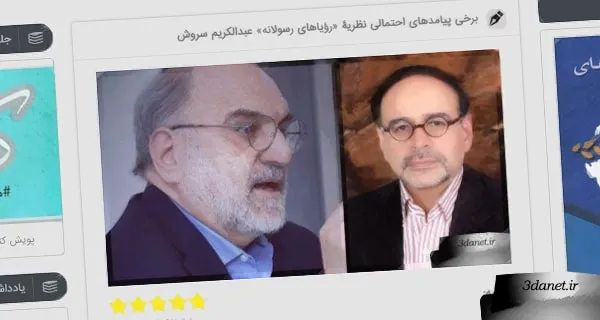
In late July 2016, an article titled “Some Possible Consequences of Dr. Abdolkarim Soroush’s Theory of Prophetic Dreams” was published on the Radio Zamaneh website, whose author was introduced as “A. M. (Professor of Philosophy, Tehran).” Recently, after two years, the Sedanet website has republished the same article under the name of Dr. Hamid Vahid Dastjerdi. Dr. Hamid Vahid was once among Soroush’s disciples, and an article of his in support of Dr. Soroush’s theory of contraction and expansion was even published in the book The Theoretical Contraction and Expansion of the Sharia. However, after a few years, our logician, having studied the matter, confronted Dr. Soroush’s views and even criticized the theory of contraction and expansion, which he himself had once championed, and parted ways with Dr. Soroush. In his article from two years ago, mentioned at the outset, Dr. Vahid critiques Dr. Soroush’s theory regarding revelation. It is a short article in which the author attempts to challenge Dr. Soroush’s theory from the perspective of its possible consequences. The republication of his article on the Sedanet website was a catalyst for me to write a critique of it, so that the discussion surrounding this theory may continue and contribute to its maturation.
It is necessary to point out that the attribution of this article to Dr. Vahid has been made solely by the Sedanet website, and I have found no other source for this attribution. This point is important because some of the references and critiques may surprise the reader, as such arguments are unlikely from a logician of Dr. Vahid’s caliber. With the utmost respect for him and all those who dedicate their lives to the culture of the country, I will proceed to examine his critique.
Generally, a theory or hypothesis can be examined from two perspectives. First, from the perspective of the premises of the argument that lead to the conclusion, and second, from the perspective of the consequences resulting from those premises. As mentioned, Dr. Vahid has critiqued the theory from the perspective of its consequences. But the first issue is that the practical consequences of this theory have not yet come to light. This is why Dr. Vahid, in the title of his article, speaks of examining “possible consequences.” He has, in his own words, tried to “examine the consequences of Soroush’s theory solely from the perspective of the epistemic relationship between the dreamer (the Prophet) and the esoteric interpretation of that dream.”
Apart from this issue, there are other fundamental flaws in Dr. Vahid’s article. In the introduction to his critique, Dr. Vahid writes: “In a different approach to this matter [revelation], Abdolkarim Soroush has claimed that the Prophet is not the transmitter of God’s words, because since God is a formless existence, devoid of mind and will, and indeed, in a sense, identical with the world, He cannot be the source of many of the acts attributed to Him, and among other things, cannot speak.” It is clear to followers of Dr. Soroush’s views that nowhere has Dr. Soroush claimed that the Prophet did not transmit God’s words. His discussion concerns the manner of transmitting these words from God’s essence to the Prophet’s soul; in other words, the discussion is about the mechanism of revelation, not its source. Dr. Vahid further states that according to Dr. Soroush’s theory, “what is in the Quran is merely the expression of the Prophet’s dreams and visions, which (in most cases) should be considered as true dreams.” Attributing this proposition to Dr. Soroush is also incorrect. This statement does not align with Dr. Soroush’s view, because according to the theory of prophetic dreams, God uses an intermediary, like the world of dreams, to inspire revelation to the Prophet. This does not mean that all of the Prophet’s dreams are revelation, nor that the Prophet’s true dreams were revelation. In other words, according to this theory, the dream-space is the only space in which revelation can descend upon the Prophet’s soul, because it is the point of connection between the material and immaterial worlds. Thus, not all of the Prophet’s dreams are revelation; rather, revelation has the possibility of descending within the dream-space.
Dr. Vahid also attributes other claims to Dr. Soroush that do not correspond with reality: “Since he [Dr. Soroush] apparently considers God to be devoid of knowledge, power, and so on, and also deems the Resurrection (in its common spiritual and corporeal sense) impossible, such descriptive statements must therefore be regarded as false in their apparent interpretation; yet these same propositions will be true in their esoteric interpretation (which a dream interpreter must determine), because, in Soroush’s view, the Prophet’s dreams (at least in most cases) are veridical dreams.” There are three major errors in these few lines. First, it is not Dr. Soroush who considers God devoid of knowledge and power; rather, from ancient times, some Islamic philosophers have rightly considered the attribution of human attributes to God to be incorrect. Fundamentally, ascribing attributes such as power and knowledge in their human sense to God is a matter of considerable debate, which I will forgo in this article. Regarding the Resurrection, philosophers such as Avicenna believed that philosophy has nothing to say in proving bodily resurrection, and it is only through traditions that bodily resurrection became part of Muslim beliefs. Dr. Vahid’s second mistake is his view that descriptive statements must be considered false in their apparent interpretation. In the realm of dreams, there is no falsehood. A dream never lies; rather, it speaks in its own language. It is we who, if we wish to understand the meaning of a dream, must also understand its language. It is like someone speaking in an unfamiliar tongue. That we do not understand his words does not mean the speaker’s statements are false; rather, it is the listener who cannot grasp the meaning of his sentences. His third mistake is considering Soroush to believe that most of the Prophet’s dreams are veridical. According to the theory of prophetic dreams, as stated, the mechanism of revelation is like a veridical dream; from this proposition, one cannot infer that most of the Prophet’s dreams are veridical dreams.
To prove his point, Dr. Vahid resorts to the Qur’an and cites two dreams as evidence. Both dreams concern the Prophet Joseph. According to him, “What distinguishes these two types of dreams from one another is the epistemic position of God’s messenger (or chosen servant) toward that dream. In the first type, the messenger has no knowledge of the esoteric interpretation of the dream, but in the second type, he does.” The first dream is the one Joseph sees in childhood—the dream of eleven stars, the moon, and the sun prostrating before him—and the second dream is the dream of the seven lean and fat cows of the ruler of Egypt, whose interpretation Joseph knows. Dr. Vahid argues that “Prophet 1 is not conscious of the esoteric interpretation of his dreams (like Joseph 1), but rather believes in their apparent interpretation; whereas Prophet 2, like Joseph 2, is aware of the esoteric interpretation of his dreams.” Dr. Vahid makes strange mistakes in these sentences. Several points are noteworthy here. First, these dreams attributed to the Prophet Joseph occurred within the mechanism of revelation and are among the revelations sent down to the prophet; considering them real (historical) is debatable and, within the framework of the prophetic dream theory, cannot be asserted with such certainty. Second, Joseph 1 had not yet become a prophet, so he could not be expected to know the interpretation of the dream. Third, the dream of the seven lean and fat cows was, contrary to Dr. Vahid’s claim, not Joseph’s dream at all but the dream of the ruler of Egypt, which Joseph interpreted. All this aside, the main objection is that there is no logical necessity for the messenger to know the interpretation of all his dreams, and not knowing it does not detract from the messenger’s mission. The messenger need only comprehend the meanings of the revelations sent down to him. Dr. Vahid has unfortunately overlooked this and has built the rest of his critique on these weak views. Dr. Vahid goes on to say, “Prophet 1 will believe in a set of false propositions. Although the sentences of the Qur’an are true according to an esoteric interpretation, the prophet is not aware of those meanings. In other words, he has no knowledge of the unseen aspect of these propositions or their esoteric meanings. The unseen here is broader than what is invisible and, contrary to its conventional meaning, certainly cannot be a constituent of faith, because, by hypothesis, Prophet 1 does not even know that these sentences also possess an esoteric meaning.” As stated, there is fundamentally nothing false in a dream for Prophet 1 to believe as false. Second, the example he refers to (Joseph 1) was not yet a prophet at the time he claims. Third, even supposing the esoteric meaning of the revelation is not known, this does not mean that one does not believe in its esoteric meaning. Dr. Vahid’s critique of the prophetic dream interpretation recalls the famous example, “Hasan and Husayn, Mu‘awiya’s daughters, were suckled by a lion atop a minaret”! Up to the end of this part of the critique, Dr. Vahid proceeds on the basis of these premises; since his premises are fundamentally wrong, they have yielded wrong conclusions that, at best, have nothing to do with Dr. Soroush’s theory.
Dr. Vahid then presents his two interpretations of Dr. Soroush’s theory of revelation and considers the consequences of both interpretations to be incorrect. In the first interpretation (the realist interpretation), he states that Dr. Soroush believes in a non-orthodox conception of God that may not overlap with the conventional conception. It should be noted that the main discussion and the basis of the revelatory dream theory is how a non-material entity (God – the angel of revelation) enters the material world. Dr. Vahid then raises this objection to Dr. Soroush’s theory: “God, within the framework of the prophetic dream theory, becomes an unknowable entity.” Dr. Vahid has written this proposition as if, in all other theories, God is a completely knowable entity. God is essentially unknowable in virtually all epistemological theories. That God is not knowable in this theory does not create an advantage for rival theories.
In the second (non-realist) interpretation, Dr. Vahid considers Dr. Soroush’s theory compatible with the non-existence of God because, according to his interpretation, “what matters in his [Dr. Soroush’s] approach is the assumption of correct esoteric interpretations versus false exoteric interpretations of Quranic sentences”; although, as stated, false propositions have no place in dreams, and Dr. Vahid has advanced his critique on this mistaken basis. He goes on to read Dr. Soroush’s theory in line with the theory of certain neuroscientists who “regard it as resulting from the brain disorders of those claiming prophethood”; the reality is that this matter is in no way reconcilable with Dr. Soroush’s theory. In modern psychology, the dream space is not the result of mental disorders but rather the point of connection between the individual’s unconscious and conscious, a space in which the unconscious speaks to the individual. At the end of the article, Dr. Vahid mentions interpretations that could be assumed in such a way “that Quranic propositions are true in them without needing to be committed to the existence of God (in its conventional sense),” and of course, he does not cite even one example of these interpretations, and we do not know what interpretation it is that he speaks of.
Perhaps Dr. Vahid’s main flaw can be seen in his desire to view, from a philosophical-logical perspective, a subject that lies beyond reason and logic and demands mystical taste—the very space in which Rumi deems the legs of the rationalists to be wooden. Moreover, if we wish to look at religion and the world solely from a philosophical perspective, certain religious concepts (such as bodily resurrection and the efficacy of prayer) will be impossible to prove. Another point I must mention at the end is that the theory of prophetic dreams is certainly not yet complete and, at this stage of ideation, has some shortcomings; but what is important is that this theory has more strengths compared to rival theories, and this proposition does not mean that this theory can answer all the problems and ambiguities present in other theories.
.
.
The legs of the rationalists are wooden
A critique of Dr. Hamid Vahid Dastjerdi’s view on Dr. Abdolkarim Soroush’s theory of prophetic dreams
Author: Hamed Farnaghizad
.
.

Discussion12 comments
خواندن این مقاله بسیار عذاب آور بود. سرگیجه گرفتم.. حرفی نزنم بهتره.. :|
در ابتدای متن سعی شده از تعبیر غلو آمیز حواریون که ترجمه غلط از واژه ای انگلیسی است اشکال استبعادی بر وحید گرفته شود که ارزش منطقی و عقلی ندارد . به طور کلی یک نظریه یا فرضیه را میتوان از دو منظر مورد بررسی قرار داد. اول از منظر مقدمات استدلال که منتج به نتیجه میشود و دوم از منظر نتایج حاصل از آن مقدمات. همانطور که اشاره شد، دکتر وحید از منظر نتایج به نقد تئوری پرداخته است. اما نخستین مسئله این است که "نتایج عملی" این تئوری هنوز بر آفتاب افکنده نشده است. !! نویسنده بین نتایج مقدمات استنتاج و نتیجه عملی دچار اشتباه شده! در خط بالا منطق و در خط پایین نتیجه عملی را مراد کرده. نوشته کسی که در دو خط چنین اشتباهی می کندو اینقدر کم حافظه است در چه سطحی است؟
یک متن حاوی تناقض، ابهام و بدفهمی نویسنده از متن وحید. این متن طرفداری می کند نه استدلال. ایشان می گوید، " میخواهد از منظری فلسفی- منطقی به مقوله ای نظر کند که ورای عقل و منطق بوده و ذوق عارفانه را طلب میکند، این فضا همان فضایی است که مولانا پای استدلالیان را در آن چوبین میداند." چرا شما خود حرف خود را با نگاه به متن وحید از نظر منطقی نقض کردید.از نظر عرفانی سخن می گفتید.
اقای حامد لطفا ایراد شما را به این مقاله بطور مشخص ذکر نمایید اینکه مدعی شوید ترکیبی از فجابع مختلف است خوانندگان محترم نمیدانند منظور شما از فجایع چیست ؟شما هیچ اشکال مشخصی وارد نکردید فقط ادعا نمودید مشخصا اشکالتان را طرح نمایید
من یکی از خوانندگان محترم هستم و دقیقا می دونم منظور حامد از فجایع چیه.
ادامه یادداشت از پاراگراف چهارم به بعد ترکیبی از فجایع مختلف است .... آقا/خانم ما اشکالاتمان به نویسنده را پس می گیریم .... از " صدانت " بعید بود نشر چنین نقد سطح پایینی ...
عبارات ناقد محترم عجیب و نارس است!!! در پاراگراف چهارم می خوانیم : " جدای از این مسئله ایرادات اساسی دیگری نیز در مقاله دکتر وحید وجود دارد. " و هر چه پیش از آن جستجو کنیم، ایراد و انتقاد مستدلی نمی بینیم تا نوبت به " ایرادات اساسی دیگر " برسد!!!! بهتر می بود نویسنده محترم ابتدا انتقاداتش را فهرست کند تا در یافتن آنها خواننده را سردرگم نسازد ...
تعابیر آغازین نویسنده که طعنه آلود هم هست نشان از این دارد که نه یادداشت دکتر وحید در مورد " پارادکس تایید " را که در کتاب قبض و بسط دکتر سروش بازنشر شده بود را بخوبی فهمیده و نه از نقد دکتر وحید بر ترجمه انگلیسی قبض و بسط سر در آورده است .... تعابیر نویسنده : " حتی مقاله ای از ایشان در تایید از رای قبض و بسط دکتر سروش در کتاب قبض و بسط تئوریک شریعت منتشر شده است. " و " و حتی بر تئوری قبض و بسط که خود زمانی هوادارش بود خرده گرفت و راه خود را از دکتر سروش جدا کرد. " یادداشت دکتر وحید به طور مشخص به مساله " پارادکس تایید " می پرداخت و چنین نبود که به شکل جامع به تایید قبض و بسط پرداخته باشد و ......... و در ادامه نقد ایشان بر چیزی که تفریبا آن را " نسبی انگاری معناشناختی " بنامیم، در حدود سالهای 82-83 غیر از رد کامل مدعیات قبض و بسط بوده است .... بنظر می رسد، نویسنده، از روی شنیده هایش داوری کرده است!!!!!!
سلام،خیلی خوب بود،فقط خیلی فشرده ومختصر بیان شده بود،برای کسانی که با نظریه رویای رسولانه دکتر سروش اشنایی نداشته باشند احیانا گیج کننده خواهد بود،جا داشت نویسنده ابتدا نظریه دکتر سروش را باختصار بیان می کرد وسپس به نقد نقد می پرداخت، باتشکر
درود بر صدانت؛ اگر لطف کنید اصلِ تقریرِ این نظریه رو هم قرار بدید برای دسترسی به اصل و مقایسه، خیلی خوب خواهد بود.
مقاله ی خوبی بود وبه نکات درستی اشاره شد ولی انچه نگارنده باید به ان توجه نماید اینست که اصولا وحی در منظر دکتر سروش با انچه تلقی عامه از وحی است متفاوت میباشد در نظریه دکتر سروش خدا وحی نمیفرستد خدا رویا نمیفرستد بلکه این مکاشفه محمد وذهن محمد است که با تلاش وکوشش بدین نتایج میرسد ومعاد را اینگونه میبیند و.... همانطور که قبلا در مقاله دکتر وحید نیز اشاره کردم درنظریه دکتر سروش حرکت از بالا محال است خدا وحی نمیفرستد حرکت از پایین بطرف بالاست از ذهن محمد به طرف عالم بالاست این ذهن محمد است که چنین میبیند وگزارش میکند کلا معنای وحی در نظریه دکتر سروش متفاوت با فهم عامیانه از وحی است خدا در نظریه دکتر سروش پیامی نمیفرستد بلکه ذهن محمد در کشف وشهود از عالم بالا به چنین نتایجی میرسد درضمن بنظرم تیتر پای استدلالیان چوبین بود اصلا اینجا کاربرد ندارد اتفاقا دکتر سروش براساس استدلال میگوید که خدا نمیتواند اراده نو به نو کند وایه وسوره بفرستد پای استدلالیان چوبین بود در عرفان کاربرد دارد در عاشقی کردن کاربرد دارد نه در مباحث فلسفی که اتفاقا دکتر سروش مبانی نظریه اش را با استدلال فلسفی پی ریزی میکند در مجموع مقاله ی خوبی بود موفق باشید
نحوهی نوشتار بسیار گنگ و سرگیجهآور بود، متاسفانه نتوانستم تا انتها بخوانم و رها کردم...