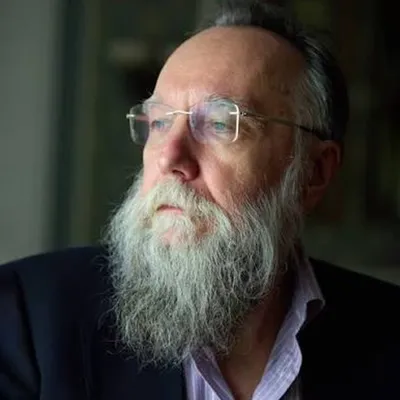
Foreign thinker
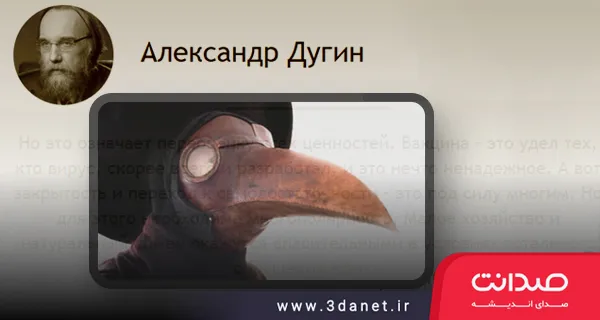
Aleksandr Dugin
Aleksandr DuginPolitical Philosophy and GeopoliticsRussian
Life and Thought
Alexander Dugin, born in 1962 in Moscow, is a political philosopher, geopolitical theorist, and one of the well-known figures of Russian Neo-Eurasianism. Through works such as Foundations of Geopolitics and The Fourth Political Theory, he has critiqued modern liberalism, Western-centric globalization, and the unipolar order.
Alexander Gelyevich Dugin was born in 1962 in Moscow and became known in the intellectual climate of post-Soviet Russia as an author, political theorist, and geopolitical commentator. In recent decades, he has sought to reinterpret various intellectual traditions—such as revolutionary conservatism, Traditionalism, European political philosophy, Heideggerian thought, and geopolitical theories—within a new framework for understanding the place of Russia and Eurasia.
Dugin is best known for the theory of Neo-Eurasianism, a perspective that emphasizes the civilizational distinctiveness of Russia and Eurasia from the Atlantic West. Within this framework, he critiques the unipolar world order and the hegemony of liberalism, advocating for a multipolar world, civilizational identities, and a return to cultural and religious traditions.
His major works include Foundations of Geopolitics, The Fourth Political Theory, The Geopolitics of Russia, Ethnos and Society, and his writings on Martin Heidegger. Dugin's ideas have been highly controversial in political and academic circles; some regard him as a significant Russian geopolitical theorist, while critics have described his views as authoritarian, anti-liberal, and close to far-right currents.