Life and Thought
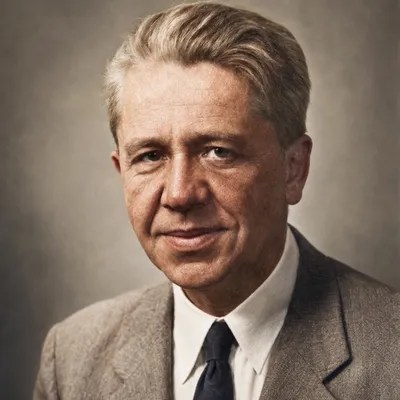
Alfred Schutz was an Austrian-American philosopher and sociologist and one of the founders of social phenomenology. By connecting Edmund Husserl’s phenomenology with Max Weber’s interpretive sociology, he analyzed meaning, social action, and the structures of the everyday lifeworld.
Alfred Schutz was born in Vienna in 1899 and died in New York in 1959. He was formed in the intellectual milieu of Austria and, after emigrating to the United States, continued teaching and research in philosophy and sociology alongside his professional work.
Schutz sought to reconstruct Max Weber’s interpretive sociology on the basis of Edmund Husserl’s phenomenology. His central question was how social actors create meaning in the everyday lifeworld, understand one another, and experience a shared social reality.
His major work is The Phenomenology of the Social World, in which he analyzes concepts such as the lifeworld, stock of knowledge, typification, the meaning of action, intersubjectivity, and understanding the other. His later writings, including his collected papers on the problem of social reality, had a major influence on phenomenological sociology, ethnomethodology, and contemporary social theory.
Schutz’s importance lies in showing that sociology is not only the study of structures and institutions, but must also understand the ways in which the world becomes meaningful for actors. In this sense, his thought forms a bridge between phenomenological philosophy and the sociological analysis of everyday life.