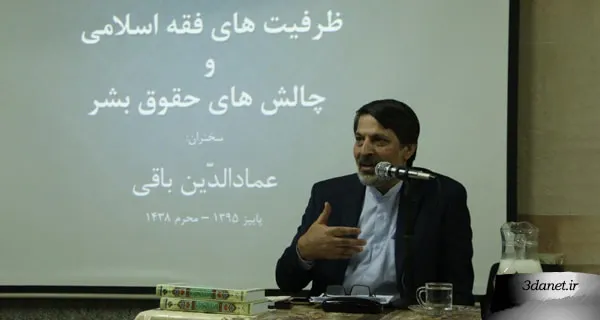
Iranian thinker
Emadeddin Baghi
Emadeddin BaghiHistorical Research, Religion, and Human RightsIranian
Life and Thought
Emadeddin Baghi, born April 25, 1962, is an Iranian writer, historical researcher, journalist, and scholar in the fields of religion and human rights. In his works, he has addressed Iran's contemporary history, social ethics, human dignity, prisoners' rights, and the critique of the death penalty.
Emadeddin Baghi was born in 1962 and pursued part of his education at the Qom Seminary and part in the field of sociology in Tehran. He entered the world of writing and journalism in the 1980s and, alongside his press activities, engaged in historical, religious, and human rights research.
The central focus of Baghi's work is the defense of human dignity and a re-examination of the relationship between religion, justice, and human rights. In his writings, he has sought to explain human rights issues through historical, religious, and sociological language, demonstrating that problems such as imprisonment, execution, violence, and citizenship rights are not merely legal matters but are intertwined with public culture, social ethics, and our understanding of the human being.
His works include "The Tragedy of Democracy in Iran," "Execution and Retribution," "Life," "An Examination of the Iranian Revolution," "The Religious Reform Movement in Iran," and numerous books and articles on contemporary history, the sociology of religion, and human rights. His cultural standing is best understood through his effort to connect historical and religious research with contemporary ethical and human questions.