Foreign thinker
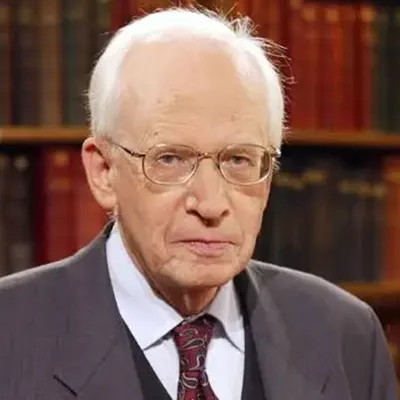
Ernst Nolte
Ernst NolteHistoriography, Philosophy of History, and Totalitarianism StudiesGerman
Life and Thought
Ernst Nolte (1923–2016) was a prominent German historian and philosopher. He is known for his groundbreaking research on fascism and totalitarian ideologies, as well as for sparking the "Historians' Dispute" (Historikerstreit) in the 1980s.
Ernst Nolte was born in 1923 in Witten, Germany. He studied philosophy, German studies, and history at the universities of Freiburg, Cologne, and Berlin, and was a student of Martin Heidegger. He later taught and conducted research as a professor of history at the Free University of Berlin.
Nolte's seminal work, "Fascism in Its Era" (1963), is considered a classic text in the comparative analysis of fascist movements in Europe (particularly Nazism in Germany and Fascism in Italy). In this work, he defined fascism as a phenomenon tied to the modern age and an anti-evolutionary response to Marxism and modernity.
In the 1980s, Nolte ignited the "Historians' Dispute" in Germany by putting forward his controversial views on the roots of National Socialism. He argued that the crimes of the Nazis and the Holocaust should be analyzed as a reaction and response to the crimes of Bolshevism and Stalinist totalitarianism in the Soviet Union. These views were met with sharp criticism from scholars such as Jürgen Habermas, but Nolte remained one of the most influential and controversial historians of the twentieth century until his death in 2016.