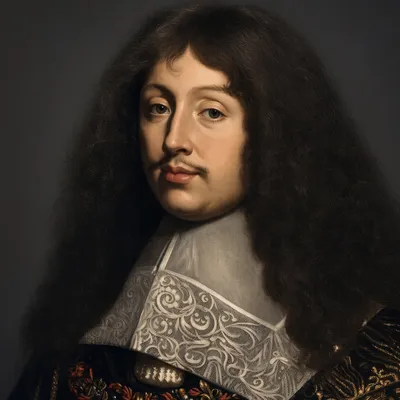
Foreign thinker
François de La Rochefoucauld
François de La RochefoucauldMoral philosophy, writingFrench1613–1680
Our virtues are often nothing more than vices in disguise.


Life and Thought
François de La Rochefoucauld was a seventeenth-century French writer and moralist and one of the foremost representatives of the French moralist tradition. In his celebrated Maxims and Moral Reflections, he used concise, aphoristic prose to examine self-love and the hidden motives behind human virtues and conduct.
François de La Rochefoucauld (1613–1680) was a French aristocrat, writer, and moral thinker. Born in Paris into an aristocratic family, he became involved in military affairs, court life, and politics at an early age. La Rochefoucauld participated in the Fronde, a series of civil conflicts directed against the power of the French monarchy. The failure of these uprisings, along with the physical and political wounds they inflicted upon him, gradually led him away from active political life and toward the literary salons of Paris.
His most important work, Maxims and Moral Reflections, first appeared in an authorized edition in 1665 and was repeatedly revised in subsequent editions. The book is a collection of brief, incisive aphorisms concerning self-love, pride, virtue, love, friendship, envy, and the hidden motives of human conduct. La Rochefoucauld argues that many apparently virtuous actions may originate in the desire for personal advantage, superiority, or admiration.
Rather than constructing a philosophical system, he drew upon social observation and psychological analysis to expose the contradictions of human morality. His outlook has often been described as pessimistic, but his central purpose was not to deny virtue altogether; it was to uncover self-deception and the concealed role of self-love in moral judgment. The brevity, wit, and psychological precision of his writings secured La Rochefoucauld a distinguished place in the French moralist tradition and influenced thinkers such as Adam Smith, Schopenhauer, and Nietzsche, as well as the later aphoristic tradition.