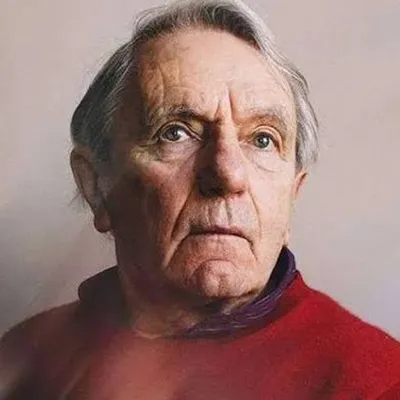
Foreign thinker
Jacques Rancière
Jacques RancièrePolitical philosophy and aestheticsFrenchb. 1940
Politics begins when someone who has no share in power claims to be equal to those who do.


Life and Thought
Jacques Rancière is a French philosopher and a leading figure in contemporary political philosophy, known for reworking the relationship between politics, aesthetics, and democracy through concepts such as the "distribution of the sensible" and the "equality of intelligences." Initially a collaborator of Louis Althusser, he later charted an independent intellectual path through his critique of structuralist Marxism.
Jacques Rancière was born on June 10, 1940, in Algiers, and was educated in France. In the 1960s he studied under Louis Althusser at the École Normale Supérieure in Paris and collaborated on the collective volume Reading Capital (1965). However, following the May 1968 movement in France, Rancière sharply broke from his teacher's structuralist Marxism with the publication of Althusser's Lesson (1974), arguing that it amounted to a form of theoretical elitism that ignored the actual voice of workers and ordinary people.
Rancière spent most of his academic career at the University of Paris VIII (Vincennes–Saint-Denis). His major works include Proletarian Nights (1981), The Ignorant Schoolmaster (1987), Disagreement (1995), The Distribution of the Sensible (2000), and The Politics of Literature (2007). In these works he developed the concept of "the distribution of the sensible" (le partage du sensible) — the systems that determine who has the right to see, hear, and speak, and who is excluded from this sensory-political order.
At the heart of Rancière's thought lies the concept of "the equality of intelligences": the belief that genuine politics is not the privilege of elites or experts but the moment when "the part who have no part" (les sans-part) — those for whom no place has been allotted in the existing order — assert their claim to equality against the established order. He sets politics in this sense against what he calls "the police" (la police), the existing order of distributing places and functions in society. Rancière has also been active in aesthetics and literary and artistic criticism, exploring the relationship between art, politics, and emancipation across numerous works.