Foreign thinker
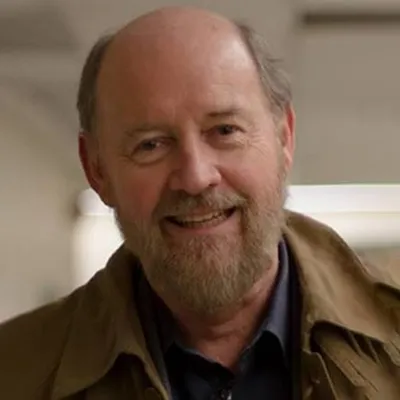
James Robert Brown
James Robert BrownPhilosophy of Science and Philosophy of MathematicsCanadian
Thought experiments are windows onto the world; they allow us, without conducting an empirical experiment, to grasp the structure of reality through the power of pure reason.
Life and Thought
James Brown is a prominent Canadian philosopher of science and professor emeritus at the University of Toronto. He is renowned for his groundbreaking research on the role of "thought experiments" in science and his Platonist view in the philosophy of mathematics.
James Robert Brown taught and conducted research for many years as a professor of philosophy at the University of Toronto and is considered one of the leading contemporary figures in the boundary debates between philosophy, science, and mathematics. The main focus of his research is directed at understanding how scientific cognition works and the nature of mathematical entities.
One of his most important research contributions is his defense of the epistemological role of "thought experiments" in the empirical sciences. Brown believes that certain thought experiments can provide us with intuitive access to truths about the world without relying on new empirical data. Furthermore, in the philosophy of mathematics, he defends a "Platonist realism" stance; a view according to which mathematical objects and truths exist independently of the human mind, and we access them through a kind of rational intuition.
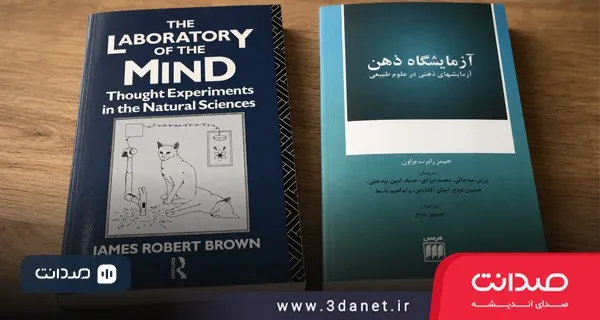
Among his prominent and well-known works are the book "The Laboratory of the Mind: Thought Experiments in the Natural Sciences" and the book "Is Philosophy of Science Useful?" His research continues to be a primary reference in debates concerning the epistemology of science and the epistemology of mathematics.
Bibliography
Writings and transcribed lectures1 title
Mind Lab
Translators: Zarrin Monajati, Mohammad Izadi, Hanif Amin Bidokhti, Hossein Dabbagh, Iman Aghababaei, Ebrahim Baset
.webp)
.webp)