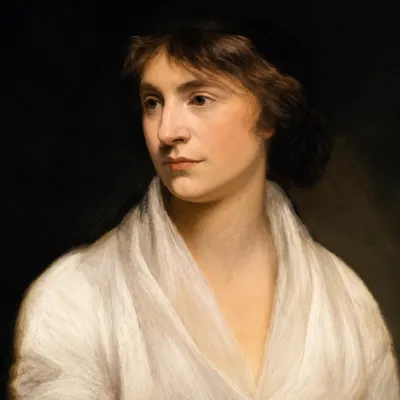
Foreign thinker
Mary Wollstonecraft
Mary WollstonecraftPolitical philosophy, feminism, women's rightsEnglish1759–1797
“I do not wish women to have power over men; but over themselves.”


Life and Thought
Mary Wollstonecraft was an English philosopher, writer, and advocate of women's rights who is regarded as one of the earliest modern thinkers on gender equality. Her famous book, A Vindication of the Rights of Woman (1792), is one of the foundational texts in the history of feminist thought and emphasizes the importance of equal education and women's rational independence.
Mary Wollstonecraft was born on 27 April 1759 in London, England. She grew up in a relatively troubled family environment, and her personal experiences of women's social and economic limitations influenced the development of her ideas. She initially worked as a writer, translator, and educator, gradually becoming one of the important figures of the British Enlightenment.
Her most important work, A Vindication of the Rights of Woman, was published in 1792. In this book, she argued that women are not naturally inferior to men, but that their inequality results from education, upbringing, and social structures. Wollstonecraft believed that women should receive the same rational education as men so that they could participate in society as independent individuals and full citizens.
She also wrote works on education, ethics, politics, and social criticism, including Thoughts on the Education of Daughters (1787) and A Vindication of the Rights of Men (1790). Her ideas were connected with the ideals of the Enlightenment, individual freedom, and criticism of patriarchal systems, and they later had a significant influence on women's rights movements.
Wollstonecraft died on 10 September 1797, shortly after the birth of her daughter Mary Shelley. Today, she is recognized as one of the intellectual founders of modern feminism and one of the most important political writers of the eighteenth century.