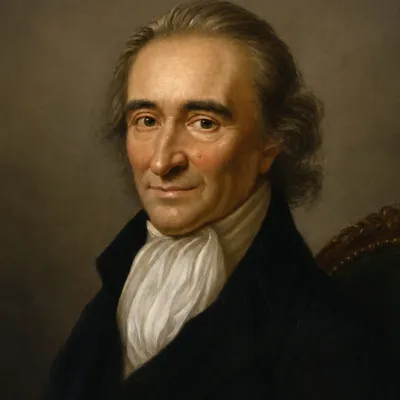
Foreign thinker
Thomas Paine
Thomas PainePolitical philosophy and Enlightenment thoughtEnglish-American1737–1809
“Government, even in its best state, is but a necessary evil; in its worst state, an intolerable one.”


Life and Thought
Thomas Paine was a writer, political philosopher, and a prominent figure of the Enlightenment whose writings in defense of natural rights, political liberty, and republican government had an important influence on the American Revolution and modern political thought. His famous works, such as Common Sense and Rights of Man, are considered influential texts in the history of democracy and the critique of hereditary rule.
Thomas Paine was an eighteenth-century writer, political thinker, and social activist. He was born on 9 February 1737 in Thetford, England. After his early activities in England as a clerk and writer, he emigrated to the American colonies in 1774 with the encouragement of Benjamin Franklin and became one of the most important intellectual figures of the American independence movement.
With the publication of Common Sense in 1776, Paine defended the independence of the American colonies from Britain and presented ideas of republicanism and political self-determination to a broad audience. The work played an important role in shaping public opinion before the American Revolution.
In the 1790s, Paine published Rights of Man, defending the French Revolution and criticizing monarchy and aristocratic privileges. In The Age of Reason, he presented his religious views and defended natural religion while criticizing organized religious institutions.
Paine’s political thought was based on concepts such as natural rights, political equality, freedom of expression, and the legitimacy of government through the consent of the people. He supported social reforms, representative government, and the limitation of hereditary power, and his writings influenced modern liberal and republican traditions.