Foreign thinker
Steven Pinker
Steven PinkerCognitive and evolutionary psychologyCanadian-Americanb. 1954
Humans know how to speak in much the same way that spiders know how to spin webs.


Life and Thought
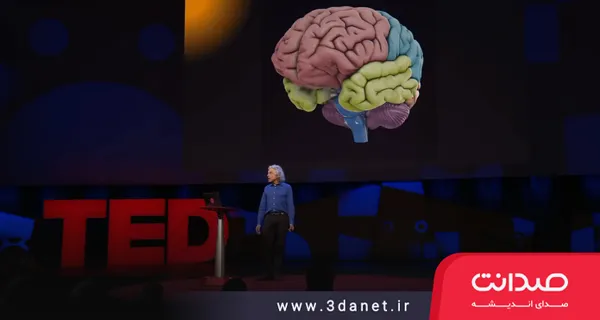
Steven Pinker is a Canadian-American cognitive psychologist and Harvard University professor known for his research on language, the mind, and human nature. He is a prominent advocate of evolutionary psychology and the computational theory of mind, and has gained wide recognition through books such as The Language Instinct and The Blank Slate. Pinker is also known as a public intellectual for his works on the decline of violence and human progress.
Steven Arthur Pinker was born on 18 September 1954 in Montreal, Canada. He studied experimental psychology at McGill University and received his PhD in experimental psychology from Harvard University in 1979 under the supervision of Stephen Kosslyn. After teaching at Harvard and Stanford, he worked at the Massachusetts Institute of Technology from 1982 to 2003 before returning to Harvard, where he serves as a professor of psychology.
Pinker’s early research focused on visual cognition and later on children’s language acquisition. In his technical works, he developed theories about grammatical learning and the distinction between regular and irregular verbs, arguing that language relies on cognitive processes involving memory retrieval and rule-based combination. He is a supporter of the computational theory of mind and evolutionary psychology, maintaining that many human mental capacities, including language, are products of natural selection.
Among his influential popular works, The Language Instinct (1994) presents language as a biological adaptation; How the Mind Works (1997) offers an integrated account of mental functions; and The Blank Slate (2002) argues against views that deny an important role for human nature. In The Better Angels of Our Nature (2011), Pinker used historical data to argue that violence has declined over the long term, while Enlightenment Now (2018) and Rationality (2021) defend reason, science, and humanism as forces behind human progress.
Pinker is a member of the National Academy of Sciences and has been a finalist for the Pulitzer Prize several times. Beyond his academic work, he is known as a public intellectual who writes on topics ranging from language and morality to politics and social trends.