Philosophy
Thursday Question Sessions: Violence
Ehsan Shariati described violence against art and thought as more dangerous than suicide bombers' explosives, while Mostafa Malekian called disregard for rationality and freedom a form of violence. Both, inspired by Simone Weil, defined violence as reification and the reduction of 'who' to 'what'.
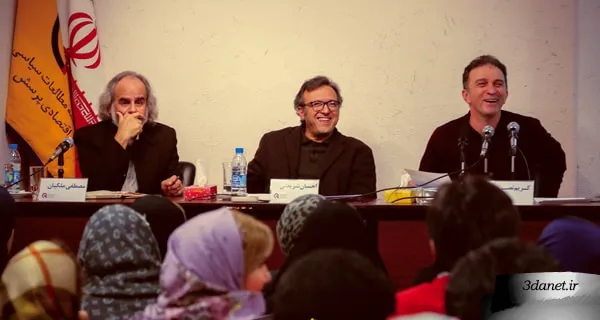
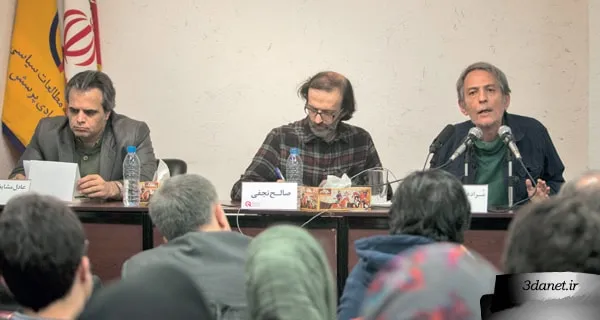
The seminar "On Violence," part of the series of sessions held by the Institute for Political-Economic Studies "Porsesh" (Question), took place on Thursday, the 24th of Dey. In this seminar, Mostafa Malekian and Dr. Ehsan Shariati delivered lectures on the topics "Violence, for What?" and "On the Inconceivability of Thought and Violence."
Ehsan Shariati: Violence Exercised Against Art and Thought Is More Dangerous Than the Bombs of Suicide Attackers
According to a Shafaqna reporter, Dr. Ehsan Shariati, referring to his lecture topic "On the Inconceivability of Thought and Violence," said: Violence, in another interpretation, is thought. To understand the motives of others, one must be able to put oneself in their place and view the world from their perspective, but can a thinking person, in order to understand the other, place themselves in the position of an agent of violence? The act of thinking, in the Platonic sense, is a kind of dialogue with oneself. He continued: What is violence? What types does it have? What is the difference between repression, armed struggle, war and resistance, aggression and assault... and violence in its specific negative sense? Does non-violence mean putting an end to all conflict and tension? This professor of philosophy at the University of Tehran, considering the definition of violence from the perspective of Simone Weil, explained: That which makes a person submit to another like a thing, and if continued to the end, makes a thing of a human being, because it turns them into a corpse; there was a person before, and there is no one anymore. In this sense, the target of violence is the violation of the inherent worth and dignity of the human person and the humiliation of human humanity. Shariati, posing a question, stated: With this description, isn't the word 'khoshunat' (violence) in the Persian language somewhat incapable and deficient in conveying that meaning? 'Khashin' in our language means rough and the opposite of soft. What we want to say refers more to a movement, action, and behavior where force (physical and bodily) is used to cause harm and injury to something or someone. In the meaning of violence in the Greek language, we see that violence has a certain relation to life. Violence relates to human life, not nature; what separates the human sphere from the natural sphere is language. This author, elaborating on the literal and apparent definition of violence, added: Violence is a type of action that leads to the rupture of dialogue and listening, the undertaking of destruction, killing, and the annihilation of negotiation for the purpose of creating intimidation, in order to injure and block the opponent; how can it have an intimate relation, in its essence, with human life and speech.
The translator stated: What we know and call violence can be the law of the struggle for existence and the normal relationship between beings, and it cannot carry any value or moral weight. In this sense, violence is a human phenomenon that has been linked to a logical and ethical way of living with human existence. Masochism, sadism, revenge, torture, and so on are all human events. Shariati explained: The rise of civil governments as the terminator of the state of nature aligns with the Weberian definition of institutionalized or legitimate violence. The university professor, considering political laws, explained: The law of politics, especially in the modern democratic and secular state, is about monopolizing dispersed violence and institutionalizing it for the benefit and common good of human beings. In other words, legitimizing the monopoly on the legal use of violence, as opposed to blind violence and the private bullying of individuals, is modern politics. Referring to peace in Kant's view, he emphasized: Achieving perpetual peace, for Kant, is the ordering ideal and regulative ideal of political reason, constructed step by step. With the republican constitutional system of each state, the federalism of free states serves as the basis for the rights of nations and the cosmopolitan right of societies. The university professor continued: Today, the decline and degeneration of the last empires have arisen from the proxy wars of the Middle East and Islamic lands, which have engulfed all the architects of the current situation. A postmodern violence with ultra-modern methods and tools, masked as an invitation and with a regressive, pseudo-traditional content, has challenged the madness of the micro-surveillance of human rights in the new era by offering a violence blinder than ever and the will and administration of a hardware savagery. Shariati, referring to extremist groups in the Middle East, explained: The illegitimate child of the neo-conservative crusades of the West and the old conservatives of the East under the banner of Salafi Islam; it yearns for a return to the Jahiliyyah of the pre-Islamic caliphates like the Umayyad, Abbasid, Ottoman, and Safavid caliphates. The translator, regarding the impact of art and thought in expressing the ugly face of violence, stated: The task of philosophical thought and art is to fight for the deep eradication of this situation and condition of war, repression, and terror that generates violence, by depicting this very situation. The art of artists' imagination and the creativity of poets are concepts in the general sense; through re-creation and exposing the ugliness, they display the human dimensions of the catastrophe, and with this spotlight, they cry out the depth of the fall and warn. The violence exerted by organized powers in a network-like fashion against art and thought is far more dangerous than the bombs of suicide attackers.
Mostafa Malekian: Disregard for human rationality and freedom is a form of violence
Dr. Mostafa Malekian, in the seminar "On Violence," considering various definitions of violence, stated: What we mean by violence in this session must be clearly clarified for the audience; as Dr. Ehsan Shariati mentioned, violence in the parlance of contemporary social sciences is not used in a single sense. Some meanings of violence are such that if we take violence in that sense or those senses, all violence is negative and indefensible; but some other meanings of violence are such that if we consider violence in that sense or those senses, then violence is divided into two types: defensible violence and indefensible violence. This religious intellectual, referring to the disregard for human rationality and freedom in the definition of violence, explained: What I mean by violence is the definition of Simone Weil with a slight modification. For example, if I do not respect your rationality in the realm of "thought" without reason, and do not heed your freedom in the realm of "action" without right, in both cases I have committed violence against you. Committing violence means precisely that, in the realm of thought, I do not respect your rationality without any reason, and in the realm of action, I deprive you of your freedom without any right. If I commit either or both of these acts against you, then I have committed violence against you.
If an individual's "who-ness" is reduced to "what-ness," violence has been committed against them
He continued: If a person's who-ness is reduced to what-ness, violence has been done to them—that is, I have disregarded your humanity. So I have, as it were, not assumed you to be a human being and have not regarded you as a person; therefore, not regarding you as a person is tantamount to treating a human being as a thing, and if I do not regard individuals as some-one, then I have regarded them as some-thing. In a sense, violence is a process that entails the thing-ification of a person. Any process whose outcome is that you are reduced from being a person and who-ness to what-ness and thing-hood—in that case, I have committed violence against you. This theorist, stating that if a human being is turned into a thing, violence has been done to them, added: In another formulation that has appeared in philosophy and is heavily emphasized, the moment you are turned into a thing, you exit the state of being human; therefore, you become a tool, and instead of looking at the human being as an “end,” they are looked at as a “means”; so we cannot look at them as an end, and this is my definition of violence. Malekian, regarding the causes of committing violence, added: Now we must see what happens and what causes and factors come together so that a person or persons commit violence—of course, these persons can also be generalized to groups and societies. This subject can also be examined from a sociological perspective. We must understand what has arisen within a person that leads them to commit violence, and this examination will help us understand why societies and social groups commit violence against other societies and groups. This author, referring to the belief-desire psychological theory, stated: This theory says it is impossible for a human being to perform an action unless one desire or several desires come together and the seed of several beliefs is also formed within me; this causes me to perform a voluntary action. So violence here is an action that is considered voluntary. This translator said: Within those who commit violence, desires and beliefs have emerged that, by coming together, drive them toward the voluntary action of violence. This religious intellectual, stating that by violence he does not mean violence resulting from psychological disorders and psychoses, emphasized: The subject of my discussion is those who ostensibly have no mental illness or psychological disorders but commit violence consciously and willingly. Now, if we address violence as my disregarding your theoretical rationality and practical freedom without having any right to do so, we want to see in what forms and situations this occurs.
One Who Denies an Obvious Truth Commits Violence
این نظریه پرداز در خصوص آشکارگی حقیقت و خشونت ورزیدن عنوان کرد: اولین صورتی که اگر در من محقق شود و من نسبت به شما دست به خشونت میزنم، نظرگاه معرفت شناختی است. اگر من به لحاظ روانشناختی معتقد به آشکارگی حقیقت باشم و معتقد باشم که حقیقت امر آشکاری است و این زمان است که من دست به خشونت میزنم. او درباره انکار حقیقت از سر آگاهی ادامه داد: اگر من معتقد باشم در باب یک موضوع یا مسأله، حقیقت کاملا واضح است و حقیقت کاملا در باب آن موضوع یا مسأله عریان و آشکار است. آن وقت طبعا کسانی که به آن حقیقت عریان، عقیده ندارند چه تصوری باید داشته باشند؟ تصور کسانی که در مقابل حقیقتی آشکار مقاومت می کنند. ما در مقابل چنین افرادی احساس و عاطفه منفی خواهیم داشت، به این دلیل که آنها با رأی واضح و مبرهنی مخالفت می کنند. بنابراین ما در چنین شرایطی نمی توانیم با این فرد همراهی و همدلی داشته باشیم پس از او به عنوان یک دشمن یاد می کنیم، به این دلیل که او آگاهانه در مقابل حقیقت ایستادگی می کند و کسی که در مقابل حقیقت آشکار ایستادگی کند ما ناگزیر می شویم که نسبت به او خشونت بورزیم، چون معتقد نیستیم که او به سبب جهل در مقابل یک حقیقت آشکاری ایستادگی کرده است، بلکه علی رغم اینکه می داند ما یک حقیقت آشکار و واضحی را ارایه می کنیم اما او در مقابل این حقیقت آشکار ایستادگی می کند. این فیلسوف با توجه به نا آشکارگی حقیقت اظهار کرد: در صورتی که شما به نا آشکارگی حقیقت معتقد باشید یعنی به این عقیده داشته باشید که در برابر هر موضوع، هر مسأله یا مشکلی که قرار بگیرید حق مطلب در باب آن موضوع یا مشکل آشکار و روشن نیست و حق همیشه پیچیده است و هرکسی می تواند نسبت به آن موضوع مناقشه ای داشته باشد؛ اگر به نا آشکارگی حقیقت و پیچیدگی آن حقی قایل باشیم در این صورت دیگر با حقیقت واضحی مخالفت نکردیم. ملکیان تاکید کرد: در واقع در نظر خودمان به چیزی پی برده ایم که آن را حقیقت می انگاریم و در نقطه مقابل هم شخصی به چیزی پی برده که حقیقت می انگارد؛ بنابراین در چنین حالتی احساس خشونت، عداوت و خصومتی پیدا نمی شود. اگر ما در معرفت شناسی به آشکارگی حقیقت معتقد باشیم همیشه اهل مدارای عملی، تکثرگرایی نظری هستیم نه خشونت. مدارای عملی نتیجه این است که ما به آشکارگی حقیقت قایل نیستیم و به نا آشکارگی حقیقت التزام داریم. این نویسنده در خصوص ایدئولوژی عنوان کرد: نظریه اعتقاد به آشکارگی حقیقت یک تعبیر مأنوس تری دارد و آن هم ایدئولوژی اندیشی است. ایدئولوژی اندیشی دقیقا به این معناست که ما حقیقت را انکار می کنیم. ایدئولوژی اندیش کسی است که معتقد است وضع هر مسأله و موضوعی روشن شده است و راه حل هر مسأله ای واضح است و معتقد است که راه حل مسأله، مشکل و راه رفع آن موضوعی است که در نزد خودش قرار دارد. ترکیب آشکارگی حقیقت با اینکه حقیقتی که آشکار است همان است که در نزد من قرار دارد و این موضوع ما را ایدئولوژیک می کند و زندگی هیچ انسان ایدئولوژیکی نمی تواند عاری از خشونت باشد بنابراین هر عقیده ایدئولوژیکی می تواند این کار را انجام دهد و لزوما خشونت زا است و فرقی نمی کند این ایدئولوژی چه چیزی باشد. عدم استدلال در سخن و اندیشه، ما را به سمت واکنشهای خشن سوق می دهد این مترجم بیان کرد: یک علت دوم دیگری هم وجود دارد که می تواند ما را ایدئولوژیک کند، اینکه ما فاقد یک دلیل برای ایدئولوژی و مدعای خودمان باشیم. «دلایل باید قوی و معنوی/ نه رگهای گردن به حجت قوی» اگر کسی مدعای منطقی برای سخن خود نداشته باشد با فریاد حرف خود را منتقل کند و این هم به نوعی خشونتگرایی است که با زبان بدن خود را نشان میدهد. به محض اینکه رگهای گردن قوی شد، نشان میدهد که ما دلیل منطقی ای برای حرف خودمان نداریم و وقتی که ما از جواب منطقی عاجز باشیم، فریاد میکشیم. این روشنفکر دینی سه راه را برای سوق دادن افراد به سمت خواسته خودمان برشمرد و افزود: ابتدا اینکه با استفاده از “الگوهای باوراننده” کسی را مجبور و متقاعد کنیم تا کاری که ما پیشنهاد میکنیم درست است، انجام دهد بنابراین فقط با استفاده از قدرت استدلال و اقناع می توانم بپذیرانم که یک کاری درست است. او “فریب” را راه دیگری برای محقق شدن خواسته مورد نظر افراد دانست و تصریح کرد: اگر چنین قدرتی را نداشته باشم دو راه دیگر باقی می ماند که آن هم فریب است، چون نتوانسته ام با قدرت اقناع فردی را قانع کنم او را فریب می دهم تا به همان راهی که می خواهم کشیده شود، این درحالی است که همه مخاطبان فریب نمی خورند و ممکن است که مخاطب من بیش از آن چیزی که تصور می کنم مطلع و آگاه باشند.
ملکیان عنوان کرد: اگر مخاطب من با توجه به قوت فکر و اندیشه اش فریب نخورد راه سوم باقی می ماند که دلیلی برای مدعای خودشان ندارند و دیگران را با نیروهای باوراننده نمیتوانند متقاعد کنند و اگر هم فریب نخورد، دست به خشونت میزنند. در این زمان ممکن است توده های مردم فریب بخورند اما قشر آگاه جامعه فریب نمیخورند بنابراین حاکمان دست به خشونت میزنند. از این نظر هر کسی که فاقد دلیل است دست به خشونت میزند. احساس ضعف و عقده حقارت منجر به اقدام خشونت آمیز میشود این فیلسوف درباره احساس ضعف در برابر رقبا گفت: اگر من در برابر دشمن و مخالفم احساس ضعف کنم و دست به خشونت بزنم، دلیل بر ضعف من است نه اینکه قدرتمند هستم. کسی که خودش را در مقابل حریف ضعیف می بیند دست به خشونت میزند، اما وقتی که یک شخصی در مقابل حریفی آگاه و مطلع است پس قدرتمند هم است. فرد آگاه یک طمأنینه و آرامشی دارد که فرد ضعیف برای اینکه او را قانع کند مجبور می شود تا او را تهدید کند. بنابراین رژیمهایی که طمأنینه دارند قدرتمند هستند، اما قدرت هایی که مدارا ندارند، ضعیف هستند و در نهایت فاقد اعتماد به نفس هستند. این روشنفکر دینی توضیح داد: در رژیمهای استبدادی دولتمردان تصور میکنند هر فریادی که بلند می شود بر علیه آنها است و به خشونت متصل می شوند و به زبان روانشناختی معنای این موضوع این است که عقده حقارت همیشه خشونت به بار می آورد. ملکیان در پایان سخنان خود با اشاره اقدامات غیر ممکن افزود: مورد دیگر این است که کسی بخواهد جهان غیر ممکن را به صورت ممکن دربیاورد، بنابراین برای انجام یک کار ناممکن دست به خشونت می زند. مورد آخر این است که فردی احساس کند فضای حیاتی خود را از دست داده است و احساس کند که ضروریات زندگی او از بین رفته است و نمی تواند نیازهای اساسی زندگی خودش را برآورده کند و احساس کند که فضای زندگی او از بین رفته است، بنابراین دست به خشونت می زند.Shargh's report on the seminar:
Ehsan Shariati: On the Unthinkability of Violence
The topic of the Porsesh Institute seminar, held on Thursday with a large number of interested attendees, is an issue with which today's world is more engaged than ever, and for someone living in Iran, given their geographical situation, it is a completely tangible matter: "Violence." In this seminar, Karim Nasr, under the title "Design, Meaning, and Violence," addressed the representation of violence in art by showing various images, which was also the subject of an exhibition held concurrently at the Naat Gallery at the Porsesh Institute. Ehsan Shariati spoke under the title "On the Thought and Unthinkability of Violence," and Mostafa Malekian under the title "Violence, For What?" He elaborated on the multiple factors generating violence in the world, highlighting two among them as the most prominent: one, ideological thinking, and the other, the disappearance of living space for many human beings due to poverty. What follows is an excerpt from the talks by Shariati and Malekian:
Violence, in one sense, is the antithesis or the "other" of thought. To "understand" the motives of others, one must be able to put oneself in their place and view the world from that perspective. But can the thinker, in order to understand the other within themselves, assume the position of the agent of violence? The act of thinking, in the Platonic definition, is a kind of dialogue with oneself. A dialogue with the other self or the self as another. What is violence? What kinds does it have? What distinction must be made between types of force? What is the difference between war, repression, resistance, armed struggle, terror, aggression, assault and violation, etc., and violence in its specifically negative sense? The very sense we intend, for example, in the policy of "nonviolence." Does nonviolence mean putting an end to all tensions and every conflict? One definition of violence comes from the French woman philosopher, Simone Weil: "That which makes a person a thing, handed over to someone else"; "and if applied to the limit, it makes of man a thing in the most literal sense, for it makes him a corpse. There was someone, and now there is no one!" In this sense, the aim of violence is the violation of the inherent worth or dignity of the human person, the death of the subject, and the humiliation and reduction of their humanity to the status of a dead thing, like a corpse. With this description, is the word khoshunat (violence) not somewhat incapable and deficient in conveying that meaning in the Persian language? Because khashen in our language mostly means coarse, rough, hard, rude, uneven, anomalous, sharp-and-fierce, and in short, the opposite of soft. What we want to say with this word, the Arabic equivalent 'unf, the Latin vis, the German Gewalt, the French-English violence, refers more to a motion, action, or behavior in which force (again, mostly physical-corporeal) is used for the purpose of obstruction, harm and injury, or the destruction of something or someone (regardless of the issue of its legality or legitimacy or the manner of its use). On the other hand, the Greek equivalent of violence, the specific language of philosophy, bia, is the feminine form of bios meaning life, and conveys both the meaning of vital force and violence together. Although bios evokes human life more, as opposed to zôè, wild and vegetative life. These two spheres, the human and the natural, are distinguished from one another by speech or reason—logos (as the basis for managing political civility—polis). The difference between Greeks and barbarians, in their view, was also the difference between logical, civil speech and the incomprehensible confusion of foreign tongues: "Neither peasant, nor Turk, nor Arab / Speaks words like play!" So, violence, which by its literal and apparent definition is a type of action that leads to the rupture of dialogue and listening and the undertaking of destruction, killing, ... and the annihilation of the possibility of negotiation, for the purpose of creating intimidation and toward silencing and muting the opponent, how can it, in its essence, have an intimate relation with human life and speech? With these considerations, does violence, which in Aristotelian language was defined as a motion contrary to the natural direction and preventing the normal return of things to their spatial origin, come from nature and is it a normal and common matter in the ongoing relations among animals? Or conversely, is what we call the savagery of the law of the jungle and the right of the stronger, in fact, a kind of projection of the human evaluative gaze onto the "pitiless" (amoral) relations and natural laws of the animal life-world? And in that case, violence is a purely human phenomenon linked to the logical and moral mode of human life and existence. Revenge, torture, pleasure from the suffering of others, sadism, masochism, and ... all kinds of violent and forceful psychotic behaviors are altogether highly human, "all-too-human" approaches. The emergence of civil governments, as the ender of the "state of nature" or the "war of all against all" and "man as a wolf to man," in Hobbes's mechanistic and abstract theory, is more consistent with Weber's definition of the state as "institutionalized" or legitimate violence. The emergence of the state of nature in times of civil war, for Hobbes, is of course not a return to real nature or to a pre-civil stage, but the outbreak of a natural crisis within the logical and hierarchical civil and political order. The law of politics, especially in the modern democratic and secular state, is to monopolize the diffused and dispersed violence and institutionalize it for the common benefit and interest of human beings. In other words, to legitimize the monopoly on the rational or legal use of defined and identified violence against blind violence and the private bullying of individuals and minorities. Attaining "perpetual peace," for Kant, is a regulative ideal or an ordering ideal and a necessary command of political reason that is constructed step by step: with the republican constitution and legal system of each state; the federalism of free states, as the basis for the law of nations and cosmopolitan law based on universal hospitality (generosity).
The real secret and reason for the current continued survival of states (raison d’Etat), however, which governs the relations of global diplomacy, is the primacy of the interests of national sovereignties over moral considerations and antagonism over interests. The chasm between formal right and effective reality was such that later thinkers, from Hegel and Marx to Walter Benjamin and others, from Fanon to Arendt and Foucault, assessed force and violence in actual history from within, and critiqued and differentiated its types. It lay in the paradoxical and contradictory aspects of modern rationality and civility, in the continuation of the repression of the barbarism and primitiveness of the world of tradition and myth, the reproduction and regeneration of violence in redoubled and mutated quantitative dimensions with the aid of technology and the machine, from the invention of the guillotine to atomic and hydrogen weapons of mass destruction and slaughter, from modern revolutions and ideologies to the contemporary world-consuming wars. And today, with the onset of the decline and degeneration of the last empires, a demon has arisen from the proxy battlefields of the Middle East and Islamic lands, which has seized the skirts of all the architects of the existing situation; a “postmodern” violence with “ultramodern” methods and tools, in the mask of invitation and with a regressive, tradition-mimicking, and fundamentalist content, which has challenged the madness of the “discipline and punish” of reason and human rights in the modern age by presenting a madness and violence blinder than ever and a will and “administration of savagery” of hardware: the illegitimate child of the crusades of Western neoconservatives and Eastern paleoconservatives, under the banner of “Salafi” Islam, but with a heart longing for a return to “Jahiliyyah,” in the guise of “Islamic” caliphates (whether Umayyad, Abbasid, Ottoman, etc.). The task of (philosophical) thought and art is the struggle to deeply eradicate this situation and these conditions of war and repression, terror and violence-generation, through the conception and depiction of this very matter and phenomenon that is inconceivable and undepictable, or anti-thought and anti-art, by the forceful display and violent revelation of the ugliness of violence and the dominance of force, destruction, and slaughter of the “active nihilism” of perhaps the “last men” (in the Nietzschean sense). Making possible the impossible conception of the inconceivable, before and more than the effort of thought, is the art of the imagination of artists and the creativity and creation of poets, in the general sense of the concept. These, by the revealing re-creation of ugliness, display the human dimensions of the catastrophe, and with this spotlight, they scream the depth of the fall, warn, and turn the bitter truth of reality into the voice of the general conscience. The thinker then arrives to rethink another order from within this chaos, as an antidote and a balm. The danger and paradox lying in ambush for this philosophical and artistic struggle against the violence of the era is that the image and conception of the inconceivable and undepictable itself becomes a luxury commodity for commercial galleries and the subject of the abstract prattle of pseudo-intellectual circles, and plays the role of market-progressive affectations, similar to the images of a harmless Che Guevara on the T-shirts of foppish-dandyish youth in our world. One of the ways to neutralize this danger is to take risks with free and independent thinking, to fuel the struggle for the redefinition of dubious concepts, against the sophistry of culture-building against the true mission of thought, in the era of “incredulity toward metanarratives” of the former ideological kind, the demonstration of moral limits and boundaries, and the exposure of the consequences of trafficking with art, in the age of mass production and the mechanical reproduction of works of art. The violence exerted by organized powers in a networked form against art and thought is far more lethal than the bombs of suicide attackers, which cause damage in this world and the hereafter.* Lecture text presented at the Porsesh Institute ——————————————————–
Mostafa Malekian: Violence and the Inferiority Complex
In the social sciences today, violence is not used in a single sense. Some meanings of violence are such that all violence is negative and indefensible, while other meanings are such that it can be divided into defensible and indefensible types. My intention today is to define violence using Simone Weil's definition, with a slight modification. Simone Weil, the French theologian, mysticologist, mystic, and socio-political activist of the first half of the twentieth century, offered a definition that, with a slight change, forms the basis of my discussion. If a person, without reason, fails to respect another's rationality in the theoretical realm, and in the practical realm, without having the right, fails to respect their freedom, in both cases, they have committed violence against them. Since, in Kant's terms, humanity is the result of theoretical rationality and practical freedom, the individual, in committing violence, has not regarded the other as a human being, has not considered them a person, and has considered them an object. Violence is a process whose product is the objectification of a person. In violence, a 'who' is transformed into a 'thing.' It is frequently emphasized in the philosophy of action that as soon as someone becomes an object, they become a tool. What causes a person, alone or in a group, to commit violence? I will raise the discussion from the perspective of social psychology for an individual, but it also holds true from a sociological perspective for a group that commits violence. The basis of my discussion is a theory in psychology called the belief-desire theory of action: it is impossible for a human being to perform a voluntary action unless a desire and several beliefs have combined within them. Since violence is a voluntary action, desires and beliefs have emerged within those who commit violence, the combination of which has produced the voluntary act of violence. I emphasize that in this discussion, I am excluding violence resulting from brain disorders, neurosis, and psychosis, because that type of violence is involuntary and not conscious. In what forms does violence occur? The first form is the epistemological perspective. If an individual believes in the manifestness of truth and considers it clear, then they will inevitably resort to violence because they see their opponents as people who resist a clear truth. They refer to them as an opponent because they say they are standing against the truth and see no way other than violence, as they do not consider the reason for their not knowing to be ignorance. But if, on the other hand, they believe in the theory of the non-manifestness of truth—that is, they believe that regarding any issue, the truth of the matter is not clear, and truth is always layered, and one can always discuss the truth anew, and one has the right to say this case has been closed prematurely and must be reopened—then the person who opposed them has not opposed a clear truth, and they cannot become angry with them. No one becomes angry with another because the truth is not manifest. If someone believes in the manifestness of truth, sooner or later they will resort to violence. They may resort to violence later due to cultural advancement, or they may do so later because of social etiquette and moral commitments, but they will certainly do it. This is the epistemological theory. If they believe in the non-manifestness of truth, they will always be practitioners of tolerance, not violence, and always proponents of theoretical pluralism, not violence. Practical plurality and theoretical tolerance are the result of not believing in the manifestness of truth. The theory of belief in the manifestness of truth has a more tangible interpretation, and that is ideological thinking. Ideological thinking precisely means belief in the manifestness of truth. If an individual considers the truth to be manifest regarding any subject, they are an ideological thinker on that issue and believe that the answer to every question is clear, and the answer is what they possess. The life of no ideological human being can be outside of violence. Ideology exists in both religious and anti-religious types. There is the ideological laic, the ideological secularist, the ideological socialist, the ideological liberal, the ideological fascist, and the ideological anti-fascist. Ideological thinking is necessarily violence-producing. A second reason can also make us ideological, and that is when we lack reasons for our claim. If someone has no reason for their claim, they will strain the veins of their neck in place of a strong argument, and this is the first step of violence, which manifests itself in body language. Gradually, it also manifests in speech and action. One who is incapable of answering shouts. If there were reasoned speech, shouting would not be necessary. There are three ways to bring a person along. First, I can convince them with the forces of belief and the power of reasoning that the right course of action is what I said. Second is deception. Since not everyone is deceived, and their power of thought and mental experiences are too great to be deceived, the third way is violence. Usually, the masses of people are deceived, and with the elite, hard tools and…
behavior occurs because there is no reasoning involved. The third point, which resembles the second but is independent of it, is that if I feel weak in the face of an enemy, I turn to violence. Those who commit violence do so not as a sign of their strength, but as a sign of their weakness. When a person lacks self-confidence and sees themselves as weak against another, they resort to violence. Power brings tranquility and calm, which are contrary to violence. Those who lack tranquility and tolerance, and perceive every word spoken as against themselves and consider it subversive, are ultimately suffering from a lack of self-confidence. A political current that can see 500,000 of its opponents in the square protesting and speaking is strong; in psychological terms, an inferiority complex is always violent. When you perceive yourself as inferior to me, you commit violence. The next case is when someone tries to square the circle of fortune and wants to reshape the world into an impossible form, leaving no choice but violence. If I want to make a nightingale fly, I do not need violence; it is enough to place it on my palm, but if I wanted to make my donkey fly, I have no choice but to tear it apart. Those who have impossible dreams for society and their children, those who have unrealistic ideals and have expectations of human society that are unrealistic, have no other choice. A clear example is the Soviet Union, which wanted to create a classless human being and destroyed 80 million of its population because it wanted to make something of them that was impossible. In all individual ideals, such as the ideals of some mystics or the ideals of some moral scholars, and in all social ideals, such as the ideals of social reformers and intellectuals, this realism and being grounded in reality is always important. The last case is when a person feels that their vital space has been lost, and in this situation, they resort to violence, which happens in two states: one, when an individual or a society has the perception that, with the continuation of the current situation, they will also be deprived of the necessities of life and their physiological and biological needs are endangered. In the words of Abraham Maslow, if one day in our hierarchy of needs we deem even the basic needs unattainable (essential needs such as food, clothing, shelter, sleep and rest, sexual needs, and recreation), we feel we have lost our vital space, and a person who feels this way resorts to violence because they have nothing to lose and might gain something through violence. This vital space is a major cause of violence in many underdeveloped countries. But if the first-order needs are met and I cannot obtain the higher-order needs (the need for social esteem, love and belonging, membership in social groups, etc.) through peaceful means, I also resort to violence. As long as these factors exist, violence will exist in the world, and those who wish to reduce violence in themselves, their audience, or the global community must confront these six factors, and among them in our world today, what generates the most violence is, on one hand, ideological thinking, and on the other, the fact that the vital space for many human beings is being destroyed due to poverty..
Ehsan Shariati: On the Unthinkability of Thought and Violence Mostafa Malekian: Violence, for What? Karim Nasr: Design, Meaning, and Violence Thursday Question Sessions | On Violence | 14 January 2016

Discussion0 comments
No comments yet; let yours be the first voice.