Philosophy
Types of Thinking as Explained by Mostafa Malekian
Mostafa Malekian introduces six modes of thinking—investigative, argumentative, critical, advocative, negotiative, and creative—each with its own place and method for engaging with theoretical and practical problems.

Types of Thinking as Explained by Mostafa Malekian :
1- The first type of human thinking is "Investigative Thinking." This is the thinking employed in the domain of research, and "research" is correctly applied only where we do not know the solution to a problem or the way to resolve an issue at all, because research begins with "mere not-knowing." 2- The second type of thinking is "Argumentative Thinking." In argumentative thinking, we know the solution to the problem and the resolution of the issue, but my "audience" does not know that this is the solution to the problem and that is the way to resolve the issue. To demonstrate these two to the "audience," we "argue." This process is carried out through argumentative thinking.
3- The third type of thinking is a step beyond the two previous types. Here, we have presented the solution to the problem and the way to resolve the issue, and we have also shown through argument that our solution is truly the solution to the problem or our resolution is truly the way to resolve the issue, but the audience disputes with us about the "argument" or one of its premises, steps, or presuppositions. This is where our audience has, in fact, entered into a "critique" of us, and we must confront the disputed argument "critically" with the third type of thinking, namely "Critical Thinking" or "Evaluative Thinking." However, in this critical thinking, several methodological dos and don'ts must be observed.
4- The fourth type of thinking, which is the exact opposite of the third type, is "Defensive Thinking." When the audience critiques our argument, we must defend the argument and show that the dispute over the steps, premises, or presuppositions can be answered. This defense of the opinion by the proponent of the argument is carried out through "Defensive Thinking." This is thinking that seeks apology or defense.
5- The fifth type of thinking is only applicable in the practical sciences. That is, in technical disciplines (especially) and artistic disciplines. We call this type of thinking "Negotiative Thinking"; how we should negotiate. This is something that has no application in the "theoretical" sciences. (Just as, for example, if in the theoretical sciences one person says the specific gravity of water is 1, the second says it is 0.9, and the third says it is 1.1, we cannot say let us arrive at the "specific gravity" of water through negotiation.) Negotiation is possible when person "A" has an answer to the question, and person "B" also has an answer to the question, but the answer of person "A" does not convince person "B," and the answer of person "B" does not convince person "A," yet, in any case and in practice, something must be done. For instance, we must either build the dam or not build it, or solve Tehran's traffic in this way or that way, and because the argumentative capacity of either side in such cases is not decisive, then, as is also very common in politics or education, each side relinquishes some of its claims to reach a result.
6- But we also have a sixth type of thinking, which we call "Creative Thinking" or innovative thinking. In this type of thinking, it is as if we attain a kind of resemblance to God and, through our thinking, invent or bring something into being. The difference between this innovative thinking and the five previous types of thinking is that there is no doubt that all five previous types of thinking have "known" and "researched" methods, but can methods also be proposed for "Creative Thinking" such that by adhering to those methods we become "creative"? This is where the answer is not a matter of consensus, and most have said that "Creative Thinking" is not a "conscious" thinking. Although today, some in the psychology of invention and creativity believe that methods can gradually be proposed which, if not sufficient conditions, are at least necessary conditions for minds to become creative minds.
.
.
Audio of Types of Thinking as Explained by Mostafa Malekian
.
.
Title: Types of Thinking as Explained by Mostafa Malekian
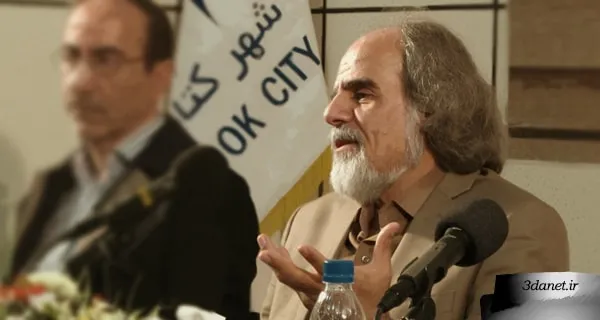
Source: Lecture by Mostafa Malekian at the Review Session of the Book Guide to Critical Thinking
Venue: Shahr-e Ketab | 92/7/30
.
.
Excerpted by Mostafa Malekian Channel
.
.




Discussion0 comments
No comments yet; let yours be the first voice.