Religion
Vahid Hallaj: A Critique and Exploration of Abolfazl Bahrampour's Remarks on the Interpretation of the Muharibah Verse
Abolfazl Bahrampour, citing the verse on waging war against God (muharibah), called for severe punishment of the November 2019 protesters. An examination of the various readings and definitions of muharib shows that his interpretation and its application to the protesters is flawed on several counts.
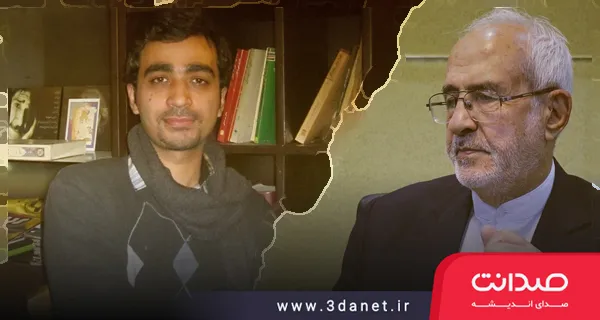
Abolfazl Bahrampour, a Quranic expert for the Islamic Republic of Iran Broadcasting (IRIB), commented on Channel One a few days ago regarding the protest events of Aban 1398 (November 2019), and, citing verse 33 of Surah Al-Ma'idah, called for "putting to death by torture," "hanging," "cutting off the hands and feet of the opposition," or banishment.
Regarding these statements by Bahrampour and the criticisms leveled against them, it seems to me that mentioning a few points will help clarify the matter:
1- Bahrampour has interpreted the word "یُقَتَّلوا" (yuqattalū) as "putting to death by torture" and says that an ordinary killing should not be carried out, but rather the detainees must be tortured to death.
Among the fourteen canonical reciters (Qurrāʾ), seven are accepted by both Shia and Sunni, and three are of lesser authority among both Shia and Sunni. All ten of these reciters read the word in question with a shaddah (gemination), meaning they placed it in the باب تفعیل (second form of the verb), just as the program's expert recited it. However, of the four other reciters, who are called the Shādhdh (non-canonical) reciters, two—namely Ibn Muḥayṣin and Ḥasan al-Baṣrī—read the said word as "یُقْتَلوا" (yuqtalū), which means killing.
On the other hand, Mr. Bahrampour has translated the Quran into Persian, which has also been published. In his own translation, there is no mention of putting to death by torture, and only the word killing is used. Given that there is no consensus and two reciters have read it as "یُقْتَلوا," and considering the orthography of the Quran in early Islam, the possibility that "یُقْتَلوا" is actually correct is not far-fetched. Consequently, the closest to caution is that, in practice, "یُقْتَلوا" be taken into consideration and not "یُقَتَّلوا."
2- Regarding the occasion of revelation (Shaʾn al-Nuzūl) of the above verse, a hadith from Imam Sadiq is cited, which most commentators have transmitted and accepted.
Allameh Tabatabai, in his Tafsir al-Mizan, under verse 33 of Surah Al-Ma'idah, says about the occasion of revelation:
"In the book Al-Kafi, with his chain of transmission from Abu Salih, it is narrated from Imam Sadiq: A group of sick people from the tribe of 'Banu Ḍabba' came to the Prophet. The Prophet said: 'Stay with me, and when you are well, I will send you on a military expedition.' They said: 'Send us out of Medina.' The Prophet sent them to the camels of charity (which had been taken as Zakat) so they could drink the camels' urine and eat their milk. When they recovered and grew fat, they killed three of the people who were at the site of the charity camels. News reached the Prophet, and he sent Ali. He found them wandering in a desert, unable to leave, near Yemen. Ali captured them and brought them to the Prophet, and then this verse was revealed." (Muhammad Husayn, Tabatabai. Tafsir al-Mizan, translated by Muhammad Ali Grami Qomi, Dar al-Ilm Publications, Qom, Volume 10, pp. 193 and 194).
This hadith also appears in Tahdhib by Sheikh Tusi, Tafsir Majma' al-Bayan, Tafsir al-Ayyashi, Tafsir Nemooneh, and other Shia and Sunni commentaries, and the Sihah al-Sittah have also transmitted it with minor differences.
As can be seen, Abolfazl Bahrampour has not erred in this part and has been faithful in transmitting the verse, its occasion of revelation, and the commentaries of the predecessors.
3- In these past few days, many objections have been raised against Bahrampour's statement, and various critiques have been written. Unfortunately, most of these critiques have been fallacious. The critics have typically used the two fallacies of "poisoning the well" and "conflating motive with the motivated." They have either tried to declare his words invalid by labeling these statements as Daesh-like; so that since the audience despises Daesh, they will also despise Bahrampour's statements. Or they have tried to say that because Bahrampour's heart is with the "revolutionary" faction of the establishment, his statements are biased and incorrect. Whereas, even if both claims were true, they have no bearing on the correctness or incorrectness of Bahrampour's speech and are instances of the two aforementioned fallacies I pointed out.
Leaving these matters aside, Bahrampour has erred in at least three instances:
1- The first error concerns the meaning of certain expressions, including the word muharib. In that same program, Bahrampour lists five meanings for muharib: “1) Someone who endangers public security or frightens people in society with a hot weapon, cold weapon, or even a stone. 2) Someone who commits murder and plunder and destroys public property. 3) Someone who supports the muharibun or prevents the implementation of the Quranic ruling concerning the muharibun. 4) A spy. 5) Someone who creates a center of vice, for instance, organizes a party and the like.”
Here, Bahrampour has taken the meaning of muharib very broadly, whereas neither in jurisprudential literature nor in the law of the Islamic Republic does muharib carry this meaning.
On 27 Ordibehesht 1380 (May 17, 2001), Mohsen Kadivar asked the late Ayatollah Montazeri about the meaning of the word muharib. Citing the narrations transmitted on this subject, the late Montazeri states that bearing a weapon is stipulated in the definition of muharabah; and this is not only Montazeri’s view, but the great Shi‘i jurists such as Muhaqqiq al-Hilli, the author of Jawahir, ‘Allamah al-Hilli, the First Martyr, and others also hold this opinion. (See: Kadivar, Mohsen. Islam and Human Rights, cited in: Didgah-ha, Qom, second edition: 1381, pp. 453-498)
Furthermore, Article 279 of the Islamic Penal Code also considers carrying a weapon a necessary condition for the definition of muharabah and emphasizes it.
Regarding the meaning of nafy al-balad or exile, he also mistakenly says, “For example, they send him out to sea in a dilapidated ship. He lives alone until he dies.” Whereas the majority of exegetes have interpreted the meaning of exile mentioned in this verse as banishment from that city to another city.
2- Bahrampour’s second objection lies in identifying the subject. As mentioned, Bahrampour, with a slight error, has quoted God’s ruling as it appears in the Quran, but he errs in considering the said event an instance of the Quranic ruling; for two reasons:
First, the above verse mentions muharabah against God and His Messenger and does not contain a general qualification. Although all exegetes and jurists have taken the verse’s implication as absolute and accepted a general qualification within it, this matter requires proof. When the verse mentions the qualification of God and His Prophet, any generalization to other domains requires evidence. It might be said that the governance of the jurist in a governmental system signifies the continuation of the governance of God and the Messenger. Although this statement has its proponents, not all jurists subscribe to it, and many jurists believe in the suspension of hudud punishments during the Occultation.
Second, in that interview, Mr. Bahrampour tarred all the detainees with the same brush and placed all of them under the definition of muharib. This claim certainly requires proof, and until it is proven that each of those in detention took up arms and, using a weapon, engaged in intimidation, murder, or plunder, Mr. Bahrampour’s claim is extravagant. Moreover, according to the broadcast confessions and external evidence such as protests against high prices, poverty, class divisions, and the like, the significant majority of protesters had no intention of muharabah or even opposition to God and the Prophet, and did not entertain such a notion in their minds.
3- Another mistake of Mr. Bahrampour is loading some of his own opinions onto the interpretation of the verse in question. For example, he says somewhere: “If just one of these is carried out, the next ones, who have been put on notice, will not dare come to the square. Because it must be public; they must be punished or executed at the scene of the crime.”
This recommendation, of course, does not derive from the Quranic verse. In this verse, the Quran says: “That is disgrace for them in this world, and in the Hereafter they will have a great punishment.” But the point Bahrampour makes amidst the Quranic exegesis, and takes for granted—that by carrying out this type of punishment, and publicly at that, a similar incident will not happen again—requires research by specialists in sociology, social psychology, criminology, and the like, and falls outside the competence of Mr. Abolfazl Bahrampour as a teacher of the Quran.
.
.
A Critique and Exploration of Abolfazl Bahrampour’s Remarks on the Interpretation of the Muharabah Verse
Author: Vahid Hallaj
Source: Philosophy and Religion Channel
.
.





Discussion6 comments
دست آقای بهرام پور درد نکنه که نشون داد که برداشتهای داعشانه از اسلام برای ما هم ممکنه.گذشته از اینکه ایشون اشتباهی کرد یا نه، ما باید تکلیف خودمون رو با "داعشیات" تاریخ و اعتقاداتمون روشن کنیم. سوال اصلی اینه: آیا قرائتی از اسلام وجود داره - یا قابل تصوره - که افکار و اعمال داعشانه در اون نگنجه؟ آیا میشه مسلمان رو در برابر داعشیسم واکسینه کرد؟
ضمن تشکر از این نوشته متقن، چند نکته حائز اهمیت است. 1-برداشت آقای حلاج در خصوص احتمال قرائت دیگر بر سر واژه "یقتلوا" چندان محل اتکا نباید باشد. این مسئله یک احتمال است و از این گونه احتمالات فراوان می توان داشت. همچنین برداشت آقای بهرام پور هم با شیوه اخلاقی پیامبر و نفی آزار جانوران و پرهیز از مثله کردن اجساد سازگار نیست. به احتمال زیاد یقتـّلوا (مشدد) صحیح است و به احتمال زیادتر منظور تاکید بر قتل است نه تشدید وضع کیفی آن! 2-آقای حلاج به این نکته اشاره نفرمودند که آیه شریقه اصلا فعل امر ندارد. با توجه به آیات 49 سوره مبارکه شعرا و 124 الاعراف، قطع دست و پا بر خلاف جهت هم، اقدامی فرعونی ست. آیه 33 سوره مائده می فرماید "سزای ایشان چنین است". یعنی خواری و ذلتی از این بیشتر برای ایشان نیست که به دست امثال فرعون دچار شوند. والله اعلم
GT به امید روزی که از انتساب کلام به خالق هستی دست بکشیم
خدا گفته بکشید قبول! اما دیگه چرا با قطع کردن دست و پا و زجرکش کردن؟ من شنیدم دست و پای این بدبختارو بنا به دستور خدا قطع میکنن اینقدر خون ازشون میره تا تلف میشن! آخه خدا چطور چنین حکمی برای مخلوقات بیچاره خودش میکنه؟! به نظر من هر وقت ما به این سوال ها جواب دادیم میتونیم بگیم بهرامپور بیراه گفته
شنیدید؟ باور هم کردید؟
ازآقای بهرام پور باید پرسید:آیا فرزند خودت هم بود اين گونه آیه را تفسير می کردی؟حاضر بودی فرزندت زجرکش شود بعد بمیرد؟