Philosophy
What Use Is Nietzsche to Us?, Mohammad Zaimaran
By challenging the foundations of Western philosophy and grappling with the fate of humankind, Nietzsche offers a guide for diagnosing the crisis of the non-Western individual. His thought extends beyond philosophy into culture and art, and must be examined beyond good and evil.
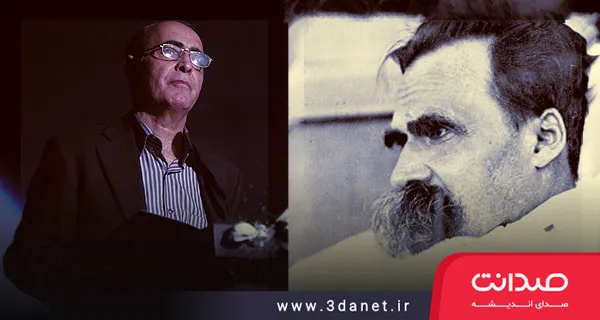
Nietzsche is a thinker who is highly controversial, unsettling, and thought-provoking. No philosopher in the present age or in contemporary history has so radically addressed the long-standing problems of Western philosophy and its dominant values, nor so recklessly assailed the foundations of such an approach. In truth, the influence of Nietzsche's philosophy in challenging the intellectual and philosophical foundations of modernity across all philosophical, social, and cultural domains has left an undeniable mark. On the whole, Nietzsche's challenge to the history of Western philosophy can be regarded as a profoundly novel and subversive perspective. For over a hundred years, he has been a figure of deep reflection in the realm of thought and culture, and his thinking has illuminated the ambiguities within Western philosophical thought. Martin Heidegger claimed that anyone who engages in thought is compelled to do so in the light of Nietzsche's ideas, whether they approach him from a position of agreement or examine his thoughts with a critical eye. Nietzsche is, above all, a philosopher of life, and he should not be considered a rigid, dry, and crude systematic philosopher. Nietzsche's writings have assessed and probed the most important and pressing issues of today with a sidelong glance at the history of Western philosophy from the pre-Socratic era to the present. Hence, in his view, existential questioning about human identity cannot be abstracted from an understanding of history, ethics, politics, and culture. In the present age, Nietzsche's philosophy has, in most cases, stirred up a strange turmoil and confusion in all fields, and over the past five decades, until quite recently, the belief of most thinkers was that Nietzsche could not be considered a serious philosopher, but at most should be regarded as a reason-eschewing, mysticism-inclined poet. This view has been fostered by a large number of scholars of his thought.
However, research over the past two decades has helped to clear away the dust of misunderstanding and misinterpretation from Nietzsche's ideas and to seriously pursue his approaches with a fresh perspective. Nietzsche is a thinker whose concern is the destiny of humanity in the contemporary world. It suffices to cast even a cursory glance at his main preoccupations, from his earliest reflections on the Greek agon to his efforts to explicate the genealogy of morals and to understand nihilism as the distinguishing feature of modern man's moral sickness, to realize that he is, more than anything, a thinker deeply passionate and serious about the fate of humankind.
Therefore, for the thinkers and intellectuals of this land of Iran, studying and understanding Nietzsche's central concerns guides us toward diagnosing the current crisis of the non-Western human in relation to Western civilization. Nietzsche's ideas are often disregarded because he could not show himself to be sympathetic to today's democratic sentiments; thus, a value-oriented approach in engaging with contemporary thought illuminates for us the importance and depth of his perspective and insight. Hence, not only Nietzsche's philosophy but also his style of dealing with intellectual problems can itself be considered an effective strategy in discovering and understanding a different approach to current events. Nietzsche's ideas have effective application not only in the field of philosophy but also in domains such as sociology, psychology, history, and theories concerning culture. Throughout his writings, Nietzsche takes a stance and engages in a constant struggle against nihilistic culture and, especially, against superficial and crude politicization. He rejects any form of one-sided and one-dimensional politicization, and therefore seeks, instead of occupying himself with superficial interpretations of the issues of the day, to dissect the deepest layers of Western historical culture and to introduce its crisis-prone grounds.
Nietzsche believes that human greatness and magnificence require society to be built upon a coherent cultural structure. In his view, a kind of slavery is inevitable in the creation of culture. In Beyond Good and Evil, he explicitly declares that the creation of superior human beings does not depend solely on a healthy social structure and economic relations; rather, the will to power must be aroused in the direction of human magnificence and transcendence, thereby freeing itself from the grip of dualistic nihilism, and this is only possible under the shadow of the pervasive expansion of art in society and culture. The art that Nietzsche esteems is an art that summons the individuals of society to coherence and solidarity and reveals the truth of their existence to them. Thus, it can be said that the experience art provides us is an existential experience. Therefore, Nietzsche's view of the whole of existence is by no means trapped in the shackles of Western metaphysics; rather, he seeks the legitimacy of existence in the phenomenology of beauty and art, and thus considers the spirit of the age purifiable only under the shadow of art.
By proposing his concept of the Overman, Nietzsche strives to place before us a situation that abandons any form of narrow-minded selfishness and materialism and places humanity on the passageway of the noblest human passions. This point is emphasized throughout his writings, and especially in the book Thus Spoke Zarathustra.
It can be said that Nietzsche presents a radical and subversive thought about human nature with a new style and a fresh perspective. His most profound thoughts indicate that he asks his audience to evaluate him and his thought beyond good and evil, and this does not mean that we cannot subject his thoughts to critique and value judgment, but rather that we must consider the reception of his thoughts as something beyond a simple yes or no. We must engage with his approaches and confront them with challenge, for nothing less than challenge and struggle is worthy of thought.

Discussion2 comments
سپاسگذارم برای به اشتراک گذاشتن این مطلب .
در سطر سوم به "ارزشهای حاکم بر غرب" اشاره شده است. ای کاش قبل از ادامه بحثتون توضبح میدادبد که ابن ارزشهای حاکم بر غرب به طور تیتروار چیست؟