Psychology
You Have No Social Life?
Many successful people see the absence of a social life as the secret to progress. By cutting out social engagements for a month, the author gained greater focus and creativity, but warns that prolonged isolation damages professional relationships and that integrating the two is a better approach.
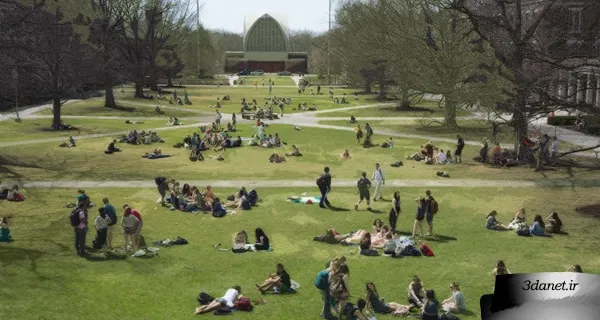
To be honest, the path to success might be simple. I have conducted numerous interviews with highly successful artists, writers, and creative entrepreneurs, and I have asked all of them about the secret of their success. One of the most repeated answers to this question was, "Why lie? I have no social life at all."
The Time Sink
While my housemates leave the house every day for work, I work from home on a contract basis. For this reason, I always devoted a lot of time to socializing with others and justified this as a basic human need. But when it became clear to me how much time I was spending socializing, I began to wonder if I was overdoing it.
I sat down and calculated, and saw that on average I was spending 22 hours a week on social activities. So I decided to see what effect the complete elimination of a social life would have on my work output, health, and well-being.
I knew that I participated in some events simply so as not to fall behind others, and for that reason I never said no to any invitation. But that wasn't the whole story. Sometimes it was also an excuse to postpone my work and clear my mind.
So for one month, I said no to all invitations and made no plans with my friends: I went to no bars with anyone and made no coffee dates; dinners, parties, and non-work events were all canceled to see what effect it would have on my focus and output, and whether it would lead to career advancement.
Thirty-One Days Later
On the first day of this experiment, I wrestled with a deep anxiety that I might be missing out on an exciting event. What creates this feeling in me is the tyranny of choice—when you can spend your weekend doing several appealing things, how can you be sure your choice is the right one?
But this anxiety lessened as the days passed, and I felt increasingly comfortable. When the weekend arrived, I had only one choice—to stay home—and this limitation made me more satisfied with my decision. Before, I would always blame myself for staying home on a Friday night or leaving a party early. But the feeling I had during this experiment was that getting things done, reading books, and watching films was satisfying, and I had no desire to think about the other things I could be doing.
On the other hand, the absence of entertainment in my daily schedule allowed me to work more deeply. Since thinking about others' fun or the other things I could be doing wasn't taking up my time, I could focus intensely on my work at various times during the week that were previously spent socializing—for example, I would dedicate Friday nights to administrative tasks and go to a café on Saturday mornings to write.
Boredom is Beautiful
While my time for work had increased, I also noticed changes in my health and well-being. I saw that I was cooking at home more, exercising during the day, going to bed earlier at night, reading books, and enjoying moments of fatigue and rest throughout the day.
Even though I enjoyed cooking and attending exercise classes, the lack of a social life meant I had more free time than I expected, and I felt the loneliness and boredom that comes from "doing nothing."
Ultimately, I learned to enjoy doing nothing and to have a good time in moments of solitude. Since I no longer had to fill my time by any means necessary, I would walk winding paths, sit in cafés without any purpose, and daydream for myself more than ever.
This kind of time-wasting is important for creativity, and it has actually been shown that a wandering mind helps find creative solutions to problems. Amy Fries, author of the book Daydreaming at Work and editor of Psychology Today magazine, says that when you let your mind go, it connects with memories, feelings, and small bits of stored information.
During this experiment, exciting ideas and projects constantly came to my mind.
Pedro Diaz, director of the Workplace Mental Health Institute in Sydney, Australia, says that idleness is as energizing as socializing with friends, and is an essential need for recharging the mind.
Recent research confirms this claim: a 2016 study conducted on 48 people, examining their mental state, fatigue, and anxiety over a 12-day period, showed that social activities boosted people's mood and energy—but this behavior also led to greater fatigue, which manifested itself with a three-hour delay. Although the sample size of this study is small, it supports the idea that activities requiring mental focus—socializing, work, or study—cause fatigue.
The result of this study raised an important question—perhaps what causes fatigue is not the amount of work or socializing people do, but the lack of sufficient breaks from both.
Mr. Diaz says, "We do not value solitude enough, and most people do not even know what activities are good for resting the brain and nervous system."
In a society where busyness is considered a badge of honor, it is not easy to understand whether having no social life is an inevitable consequence of work life or a way to show others our importance.
Silvia Bellezza is one of the authors of a study recently published by Harvard Business School. The authors of this research claim that today, people's desired status is symbolized by a busy life rather than a life full of leisure. She says, "When you show that you are busy, you are effectively telling others that you are important and your status is very high. But not because you are wearing expensive clothes, but because the demand for you is high and you are desirable to others."
The Friendlessness Trap
The positive effects of solitude—like greater mental clarity and a feeling of vitality—would become a cause for concern if I remained alone in my seclusion for too long.
For many who work in office environments, socializing is considered an important element of work life, and individuals who have a "very good friend" at work are seven times more likely to be engaged in their jobs. Workplace friendships also create shared goals and a social support network that can lead to promotions and career advice.
There is no doubt that socializing outside of working hours is also important for building work relationships. Although a month away from social life did not affect my relationships with existing employers, continuing that situation could have reduced my ability to form new relationships.
Work and Leisure
Perhaps the right thing to do is to integrate our social life into our work, rather than trying to create a balance between work and leisure. What occurred to me was that the secret to career success is the integration of work and social life, not the reduction of the latter.
Ellen Galinsky, one of the founders of the Families and Work Institute, has found that people who can place more than one thing as their top priority are more satisfied with their lives than others.
He says, "We have found that these kinds of people have healthier lives, are more successful in their work, and have better family lives. If your entire life is focused on one thing and something bad suddenly happens, it can certainly be devastating. If other things also matter to you—it could be an artistic pursuit, or a sport, or neighborhood affairs, or even a circle of friends—you could say that overall you will be in a better situation."
During this experiment, I did not fill the extra time I had gained simply with more work, but rather added to my interests. Certainly, this new situation allowed me to focus more on my work at specific times when it was previously impossible, but at the same time, I was drawn to activities I had previously neglected—sports, piano practice, and meditation.
The lesson I learned was that I cannot delicately excise one part of my life to achieve success in another—relationships with others are an undeniable part of working life and help us navigate the inevitable ups and downs of life safely.
Now that this experiment has ended, I have changed my definition of success for myself—it is no longer just work, or just leisure, or just balance, but a combination of various activities throughout the day, separated from one another by successive periods of rest.
.
.
You Have No Social Life? Madeline Dore BBC
.
.




Discussion0 comments
No comments yet; let yours be the first voice.