Philosophy
A Conversation with Gholamreza Aavani: Civilization-Building and the Absence of Wisdom
The revival of Islamic civilisation depends on recovering the wisdom that has been lost in modern philosophy; the inner meaning of revelation is wisdom. Gholamreza Aavani identifies the absence of wisdom as the main obstacle, saying: 'Wisdom is, in truth, the passage from phenomena and phenomenal knowledge to the reality of things.'
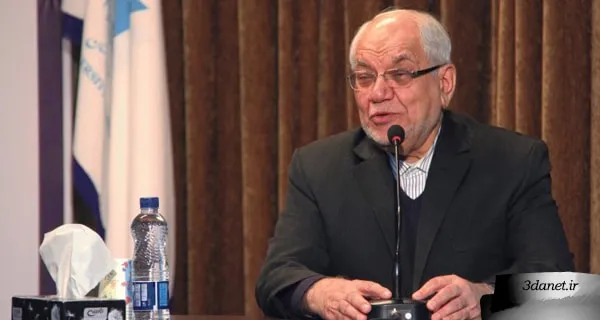
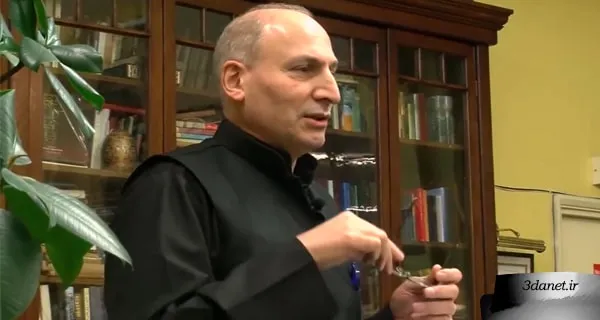
Deliberation on how to revive Islamic civilization and an examination of the place of Islamic philosophy in this process led us to seek out Dr. Gholamreza Aavani, retired professor of philosophy at Shahid Beheshti University and head of the Iranian Society of Wisdom and Philosophy. Selected in 2001 at the first conference of Enduring Figures in the fields of Culture and Science, he is a distinguished professor of philosophy with considerable written works on the subject. In this conversation, going beyond philosophy, he addresses the necessity of the formation of wisdom in the process of reviving Islamic civilization and identifies the absence of wisdom as the problem in the process of reviving Islamic civilization. In defining wisdom and the lost truth of today's conditions, he speaks in this conversation as follows: "Wisdom is, in fact, the passage from phenomena and phenomenal science to the truth of things. This truth has been lost in modern science and philosophy."
*We intend to draw upon your views on the feasibility of founding a civilization based on philosophy, especially Islamic philosophy. It seems that we can validate this subject both based on past historical experience, namely the third and fourth centuries of Islamic civilization (or the civilization of Muslims), and based on current and future conditions. In this context, from your perspective, can we found a civilization based on Islamic philosophy, or (in accordance with the conditions of today's Muslim society) do we need a new philosophy?
We are speaking of Islamic civilization. We must first see what Islamic civilization is. In order to define the place of philosophy in Islamic civilization, we must know both the meaning of philosophy and its connection to Islamic civilization, and we must also explain what makes a civilization Islamic in the first place. In this way, the relationship between these will become clear to us.
Islamic civilization is based on Islamic revelation. If we did not have Islamic revelation, the Quran, and the Holy Prophet, there would be no civilization at all; rather, the previous civilization would persist. Therefore, if we want to state the matter simply, we must say that Islamic civilization is a civilization based on Islamic revelation, which consists of the Book (the entire Book), its interpretation, revelation, the Sunnah of the Holy Prophet, and his inheritors. Revelation has various interpretations, and it is important on the basis of which interpretation we should rebuild this civilization.
This is a very important issue: can all interpretations be civilization-building? Which understanding of revelation is close to the prophetic understanding? These issues must be clarified. So, in summary, Islamic civilization is based on Islamic revelation, in the very form that the Prophet brought and as intended by him and God, since the Prophet's intention is God's intention. "Nor does he speak from [his own] inclination. It is not but a revelation revealed" (Quran 53:3-4), or in the words of the Masnavi, "Ask the meaning of the Quran from the Quran alone, or from one who has set fire to vain desire."
"Nor does he speak from [his own] inclination" is a condition. Not just anyone should consider themselves an interpreter. This is the work of the Infallible, who has transcended vain desire. The Quran and all divine books are books of wisdom. We must pay very close attention to this point. In our discussion, this issue is truly key. Divine books are pure wisdom, just as the prophets brought them. We do not give the prophets the title of sage (hakim), but they are sages in the true sense, and the Quran emphasizes this issue: "He will teach him the Book and wisdom" (Quran 3:48). This verse was revealed about the Prophet of Islam and all the prophets.
There is another verse in the Quran according to which all revealed books are based on wisdom: "And [recall] when God took the covenant of the prophets, [saying], 'Whatever I give you of the Scripture and wisdom'" (Quran 3:81). God took a covenant from all the prophets that I have given all of you the Book and wisdom; in return for it, do this. Therefore, the inner reality of the Book is wisdom. This point is key in the Quran. "How can the essence, not endowed by the Bestower of Being, itself become the bestower of being?" If the Prophet is not a sage, how can he teach wisdom? God is "the All-Wise" (al-Hakim), and the Prophet is the complete manifestation of divine wisdom. So this wisdom has a place in religion and (especially from an Islamic perspective) is not alien to it.
Islam has two characteristics that make the promotion of wisdom very easy and necessary, and we must pay attention to them. The first is the universality of Islam. Islam is a global religion and its address is to all of mankind. In other words, it is not the desire of a particular people in a specific historical period. The second characteristic is that Islam is based on rationality. In the Quran, there is great emphasis on the words intellect, understanding, contemplation, and the like. The foundation of wisdom is knowledge, and wisdom (which is the highest knowledge) has been given attention in the Quran. In contrast, ignorance is the opposite of intellect and is strongly condemned.
What is the relationship between philosophy and wisdom? Is wisdom broader than philosophy?
In ancient times, wisdom and philosophy were one. It is true that in Greece, wisdom became philosophy, but it was never distant or severed from wisdom. "Philosophia" means the love of wisdom, and in contrast, "misosophia" means hatred of wisdom. Philosophia, meaning the love of wisdom or wisdom itself, has always had a place in Islamic civilization, and this is very important. In fact, in Islamic civilization, the two terms philosophy and wisdom were synonymous, and Islamic philosophy and Islamic wisdom are completely synonymous. This point is very important.
Therefore, if philosophy distances itself from sapiential and divine principles, it is not accepted in the Islamic world. In the West, there was a period (for example, with Plato) when wisdom and philosophy were one. It is true that at one point, sophia became philosophia, but it still maintained a connection to wisdom. However, in the modern Western period, a gap has emerged between the two. Many books could be written on this subject, and every modern Western philosopher could be discussed and examined from this perspective. Despite the importance of this issue, such work has not been done to this day.
We could conduct such research on Descartes, Hume, Bacon, Locke, Hegel, Heidegger, and especially Kant. Some people imagine that these figures are sages, but this is not the case. Not only have they distanced themselves from the foundations of wisdom, but they sometimes conflict with it.
Now let us define wisdom. The very definition of wisdom will make these issues clearer to us. We have many definitions of wisdom. Mulla Sadra mentions two definitions at the beginning of his noble book "Al-Asfar" that are accepted by philosophers. The first is "knowledge of the realities of things as they are," and the second is "becoming God-like." If we look closely, the first is very beautiful and precise. According to this definition, firstly, philosophy is knowledge, and therefore, issues that conflict with knowledge also conflict with wisdom.
If we refer to the history of modern philosophy from Descartes to the contemporary period, numerous problems appear precisely on this issue. Is Descartes' cogito knowledge? Does Hume's philosophy lead to knowledge, or does it remain in skepticism? It is certain that for Kant, knowledge and ignorance are no different, and theoretical knowledge is simply not possible. So how can it have any path to wisdom? Consequently, knowledge must be possible. But how?
Knowledge has a specific epistemology, which many have discussed, along with the levels of knowledge and intellect. Knowledge does not have a single degree; rather, it has levels: lower knowledge, intermediate knowledge, higher knowledge, and so on. The second point in Mulla Sadra's definition is that knowledge pertains to the realities of things. We have sciences, but all sciences are phenomenal. For example, medical science is not concerned with what the existence of the human being is, where it came from, or where it is going. This science assumes the body and solves its problems, and it is very useful. Similarly, science is not concerned with what the nature of mathematics is or how it relates to the order of existence. It solves problems, has applications, and proves useful. Whereas knowing the reality of mathematics is the work of philosophy; that is, the passage from the phenomenon to the reality. This is very important. The work of religion is the same. For this reason, wisdom and religion become connected.
Wisdom is, in fact, the passage from the phenomenon and phenomenal knowledge to the reality of things. This reality has been lost in modern science and philosophy. We have reached a point where we say philosophy is a phenomenal science and assists it; it has no path to reality at all, and the question of reality is fundamentally not raised.
What conveys us from phenomenon to truth? Wisdom, not modern philosophy. In contrast, this philosophy drowns us in phenomena. Many philosophical schools believe that the phenomenon is the truth itself. Religion is connected to wisdom and guides us to the truth. Wisdom is also connected to truth and directs us toward the truth.
Apparently, this issue has not been an obstacle in the West, and indeed this type of philosophy (which has a problem with knowledge and the cognition of truth, such as the philosophies of Descartes and Kant) has had a remarkable impact on the founding of modern Western civilization; though not in an organized manner.
On the contrary, it has been very organized. This occurred over centuries, and as you know, the period of modernism lasted several centuries. This matter has been transmitted to us as well, and we too repeat their words. Therefore, for the founding of an Islamic civilization, Islamic wisdom is necessary; for the discussion is about truth. How can we connect the sciences to truth? This is precisely the work of revelation. If you refer to the Quran, you will see that from the "B" of Bismillah, and the Rahman and Rahim, and Alhamdulillahi Rabbil Alamin, it guides us verse by verse. It wants to say that truth lies beyond these. In other words, it compels you to reflect and contemplate so that you may reach the truth of the Real.
God does not abandon you. Step by step and verse by verse, He takes your hand and brings you to the truth. Wisdom provides a scientific explanation of this matter. Therefore, the founding of an Islamic civilization is impossible without understanding, the perfection of understanding (i.e., intellect), the perfection of intellect (i.e., divine intellect), and the perfection of divine intellect (i.e., divine wisdom). Whatever path we take is a wrong path. Many modern thinkers have tried along this way, but they went astray and did not reach the destination. This is the work of divine wisdom; the inner essence of religion is divine wisdom, and religion without divine wisdom is neither acceptable nor capable of building a civilization.
So, wisdom is the knowledge pertaining to the realities of things. Other sciences also have such a path, provided that phenomena reach the realities of things. Another characteristic of this knowledge is that it is "as things are" (ala ma hiya alayhi), meaning as they are, not however your heart desires. God created man in such a way that he is the only being capable of grasping divine knowledge. "He taught Adam all the names" (Allama Adama al-asma'a kullaha), and since God taught him, there is no error in him. Here, the names are the very reality of the existence of things. Every name and attribute of perfection we mention belongs to the attributes of God. With the qualifier "all of them" (kullaha), meaning all of them, and not just some.
This potential ability exists in all of us, but wisdom actualizes it. God is not a deceiver and does not deceive us. From His existence and His bounty, He has given us all these names, the understanding of things, divine intellect, and free will, and has said: investigate, but only to the extent of "human capacity" (taqat al-bashariyya). Can we interpret this verse in a Kantian way? No. You see, these very attributes that we possess, God also possesses; with the difference that we possess them vicariously (istikhlafan) and God possesses them essentially. Yet we can still grasp them. Contrary to what the Ash'arites wrongly said, which was truly misleading, these names are not merely homonyms (mushtarak lafzi), but are univocal in meaning (mushtarak ma'nawi).
Knowledge is the unveiling of truth. God has designed all truths through knowledge, and God's knowledge is a seal that has been stamped upon everything. We can see God's knowledge in everything. We acquire this knowledge from things; but God's knowledge precedes things. Moreover, this knowledge is to the extent of human capacity; that is, it is finite, not that it is not knowledge.
The second definition of wisdom is assimilation to God (tashabbuh bi-Allah). "He taught Adam all the names" is the basis for assimilation to God and assuming the divine character traits (takhalluq bi akhlaq Allah). This is Plato's definition. In reality, the human being is a deified existence (muta'allih), and no being other than him possesses the state of deification (ta'alluh). The human being has the potential, and has been given the free will, to become deified. If he becomes deified and assumes the divine character traits, then he will become a sage (hakim).
Therefore, this is the definition of philosophy in the West and in the ancient period. They adopted wisdom because this definition is entirely compatible with revelation. The world is the manifestation of this truth, and God has granted us the possibility of knowledge. If we pay close attention, we have no choice but to arrive at divine knowledge. In fact, we did not create it; how has the possibility of knowledge been given to us? We study various sciences in universities, such as the science of the afterlife, the science of theology, the science of physics, and the science of chemistry. Man himself does not possess these attributes; rather, they have a divine origin. The sum of these is compatible with revelation and Islamic civilization.
So, in summary, wisdom is the science that takes us from phenomena to reality. All sciences deal with phenomena, not with reality. Nowadays, the discussion of Islamic humanities is very prominent, and everyone has used Western methods to resolve it; that is, they try to Islamize the sciences through Kant or another thinker. This is a wrong path.
Please elaborate on this. Has this been happening in Iran in recent years, or is it also occurring in the Islamic world?
Everywhere, especially in the Islamic world, it is occurring. They have seen the West's advances in the natural sciences.
Do you mean Mohammed al-Jabri and others?
Most of these are included in my statement. When I read their writings, it is clear to me at first glance that they have such a deficiency. They were not like Allameh Tabatabai, Ali Modarres, Imam Khomeini, and Motahhari, and they had no understanding of wisdom. Wisdom has been rejected and had no precedent among non-Iranians. It must be noted that wisdom has had a very important and continuous place in Iran.
Iran holds an elevated position in wisdom: Ibn Sina, Farabi, Suhrawardi, Mir Damad, Mulla Sadra, Sabzevari, and even Ibn Arabi (who found a place when he came to Iran). A tradition existed that was transmitted from master to student. In the West, however, anti-intellectual tendencies, especially Ash'arism and Salafism, which are contrary to the sayings of the Quran, have been prevalent.
Why wisdom has been in Iran is a separate discussion. In other Islamic countries, the current of wisdom did not exist; rather, anti-intellectualism like Ash'arism became widespread. In our view, the Sharia is rational, and the Sharia does not take precedence over reason. "The first thing God created was the intellect" is the beginning of the book "Usul al-Kafi," the book of "Intellect and Ignorance." If we interpret it, religion truly takes on another meaning.
But in my opinion, the book of intellect has no place among the books of the Sunnis. Does faith have any standing without reason? I do not wish to delve into the shattering verses of the Quran. Even the people of Hell say: "Had we but listened or used our intelligence"—if only we had listened to the words. Listening is the beginning of wisdom. We have underestimated the station of hearing. Today, Muslims lack hearing, while it holds great importance in the Quran.
"Or used our intelligence, we would not be among the companions of the Blaze." If we had listened and had reason, we would not be in Hell. So reason has an aspect of salvation and deliverance. In fact, through divine guidance, it shows the path to man. My question is, given the Quran's great emphasis on reason, why have so many anti-intellectual tendencies emerged in the Islamic world? This is a historical question. We must correct this question and observe the anti-intellectual tendencies that are today an extraordinary cause of misery for Islam. The reason for many of the current killings in the world is precisely these anti-intellectual tendencies.
These people are not listeners at all. They say anyone who holds a belief different from mine is an infidel. Is this Islam and the word of the Prophet? Can we build a civilization with these beliefs and the sublime message of Islam? No. Therefore, the issue of wisdom in civilization-building (with the definition I provided) must be resolved, and all sciences must connect with revelation. As I explained, the inner dimension of revelation is wisdom. "He teaches him the Book and Wisdom." The Prophet was a sage and possessed understanding, not the understanding of others.
Therefore, most of those who have prescribed formulas for civilization-building in the non-Islamic world and in Iran (especially in recent centuries) have been influenced by the West; while wisdom has no place there. Only Ash‘arite and anti-rational views prevail, because they have not studied Islamic philosophy and have gone to the Sorbonne and other Western universities. These are unacceptable, and we must rebuild it.
Let me give an example. We had a teacher who could not pronounce the letter ‘sh’. When he wanted to teach the children ‘sh’, he would say: “I say ‘s’, but you should not say ‘s’, say ‘s’.” The children would say: ‘s’. He would say, “No, that is wrong.” He truly understood what ‘sh’ was, but he could not articulate it. Now, these people do not even know that they are mispronouncing ‘s’ and ‘sh’. They want to find an Islamic method, but they prescribe a Western formula. This is because they have not proceeded through the channels of Islamic philosophy and Quranic wisdom. These channels are of divine wisdom and understanding, and the Quran is also based on reason. Furthermore, according to Suhrawardi’s definition, mysticism is divine wisdom. The reason Mulla Sadra draws so heavily on Ibn ‘Arabi is that he has a path to divine wisdom. This is a separate discussion, of course. In any case, their methods are Western, they go astray, and this contradicts divine guidance.
Are such flaws also evident in the readings of contemporary Iran?
Yes, abundantly. Of course, I will not name names. The Quran and revelation are for guiding the intellect and reaching divine horizons. It is not anti-reason. The eye, the ear, the intellect, and all the organs of the body are divine. The intellect guides them. The intellect is our highest possession for understanding the truth. Knowledge and intellect are one, but the senses are not like this. Many are sensualists, but it is not feasible.
In other words, the addressee of revelation and intellect is not the eye, except accidentally. Its real addressee is understanding. If there is no understanding, there is no intellect either. The intellect is the perfection of understanding. The intellect guides it to move on the right path: “I fear you will not reach the Kaaba, O desert Arab / This road you are taking leads to Turkestan.”
God has given us intellect and eyes, and it is not the case that revelation is meant to create the eye. Does revelation create the intellect? No. God has given it to us existentially and guides it; for guidance is God’s work. Pharaoh asked Moses, “Tell me who God is.” Moses defined two functions for God and said: “Our Lord is He who gave everything its creation, then guided it.” Our Lord has given every phenomenon its creation. He has given the creation of man, and in the creation of man, existentially, there is also intellect, eyes, and ears.
If God did not guide understanding, intellect, and knowledge, creation would be incomplete, because the method and direction might differ. The difference between the divine intellect and the secular intellect lies in their orientation.
Dr. Aavani, considering your remarks on the divine and revelatory view of knowledge, some raise the objection that after the emergence of Western civilization, a revelatory and divine view of the world’s phenomena has become, if not impossible, very difficult for modern humanity. That is, a new human has been born, regardless of which geography they exist in. Considering this objection, if we want to take a practical view of this matter—that Muslims today want to revive their civilization or reconstruct it—does this problem exist, or can we maintain these same readings without regard for the new conditions?
This is a very important question. In ancient times, God sent many prophets, and the Quran greatly emphasizes this matter. “We sent Our messengers in succession”—We sent prophets one after another, because man forgets.
Prophets are the teachers of humanity; they came one after another, each speaking in "the language of his people." The principle of prophethood is strongly emphasized in the Quran and is a universal principle. Prophets were sent to every people, in the language of their people and in every era, so that this world might become divinized. "And peace be upon the messengers"—God's peace be upon all the prophets. They all said the same thing, and the Quran confirms this matter. The Quran is a confirmer (musaddiq) and has confirmed all the books. Divine guidance (contrary to what is said today) is not abrogated. "And follow the creed of Abraham, a hanif"—O Prophet, follow the creed of Abraham, for it was a hanif religion. The Quran also criticizes many who deviated from that hanif religion.
"Indeed, the closest of people to Abraham are those who followed him and this Prophet and those who believe." The closest people to Abraham are the followers of Abraham, this Prophet of ours, and the believers (meaning us). Thus, Abraham is not abrogated. True Islam is the Islam of all the prophets, and all have a place within it. "The Messenger has believed in what was revealed to him from his Lord, and [so have] the believers. All of them have believed in God and His angels and His books and His messengers, [saying], 'We make no distinction between any of His messengers.'" Therefore, guidance is not subject to abrogation. These were guides, sent by God, and God's word undergoes no change. Of course, some matters of religious law and rulings are like this, but divine ordinances are not.
The discussion was that all the prophets came, paved the way, and guided humanity. God willed that His conclusive proof be established for all generations. "For God has the conclusive proof." The meaning of the conclusive proof is that God's proof has reached everyone through the prophets, and absolutely no one has any argument against God.
But in the modern period, profound work has been done over several centuries to try to separate this. Whereas this has not happened in the East. Islamic civilization means guiding the intellect to the divine principle. Wisdom plays a prominent role here, and you cannot do the work without wisdom. Moreover, wisdom is not an equivocal term; it has degrees that have been specified in the Islamic world.
The current of wisdom in the Islamic world is a separate discussion; but in summary, two completely different currents prevail in the Islamic world and the West. In the Islamic world, they first critiqued ancient Greece, India, and Persia, drew closer to divine wisdom, and consequently recognized degrees of wisdom, such as discursive wisdom, sapiential/tasted wisdom, divinely-given wisdom, and so on. The principle of tawhid (divine unity) necessitates that the sciences be diverse, yet possess degrees. The origin of knowledge is God.
But in the West, something else happened, which they attributed to Ibn Rushd (Averroes). Of course, they used Ibn Rushd as a pretext; perhaps there is a root for it in his works, but he does not explicitly state it. That is the "double truth." We have two truths: one is the truth of religion, and the other is philosophy. These two are parallel and have no connection to each other. You can set one aside and take the other path. They said we are taking the path of philosophy, and there is no need for the path of religion at all. This contradicts the essence of wisdom.
They set revelation aside absolutely, and this caused the path of philosophy to become separate. In Christianity, too, revelation had become mixed with theology (kalam). The method of theology and the method of wisdom are different. Many Westerners unknowingly say that we have no wisdom at all, because God is discussed within it. This is completely wrong. In Islam, the method of theology and the method of wisdom are two separate matters. Only the subjects of these two are shared. Aristotle and Plato also discussed God, but are they considered theologians? No.
Wisdom reaches its goal through knowledge, not through argumentation and disputation. Its goal was not to confound an opponent, nor philosophical wrestling or tug-of-war; rather, its goal was the understanding of truths. Of course, in the West, the issue of the Trinity and other things also entered, which brings it closer to theological matters.
In any case, in the West, from the beginning of the modern period, they tried to separate revelation, and they did so. For example, Descartes begins with doubt and the cogito proposition. Some, like Hume, said that it must be experience. In the same way, each person independently proposed a path, founded an "ism," and tried to establish philosophy within that ism: rationalism, empiricism, materialism, historicism, biologism, scientism, positivism, and so on. In all this, revelation has no place, and if it does, they try to examine it from the perspective of an ism. All of them lead to the negation of revelation.
Therefore, the West has taken the path of absolutely separating revelation, and this is precisely contrary to our goal. Thus, we cannot build an Islamic civilization on their basis, because it is anti-revelation. We said that Islamic civilization is based on revelation, and revelation is based on reason, and nothing else. It is the guidance of reason. To open the divine horizons before reason, reason itself must see where it has come from and what its knowledge is. Ultimately, we must arrive at the question of where our knowledge comes from.
In your view, do we need to revive Islamic civilization based on the model of the Prophetic and Alavid Medina and the civilization of the third and fourth centuries and the early second century, or should we establish a civilization based on Islamic teachings?
Establishing a civilization has various methods. We must see which method is more revelatory, more correct, and more rational. Some have a method of imitation. Let me give an example. We have a traditional architecture. Some imitate it and say, let's build a structure like this one. Should we do this in civilization-building as well? No. In reality, one must investigate, not imitate. Rumi says: "Between the investigator and the imitator are great differences / For this one is like David, and that other is but an echo." This is like David, and that one is like the echo of David, not David himself. "Imitation has cast the people to the wind." Of course, imitation is sometimes good, and in the absence of something, one must imitate.
But should we imitate? Let me give another example. We have been facing the West for centuries and have taken science from it. What has been our approach to the West? Our predecessors also faced the West and did a tremendous work. Many today do not realize what they did, and for this reason, they criticize. In truth, their work was in line with the revelatory mission.
At what point in history?
In the period when they went and learned the Greek, Indian, and Persian sciences. The Prophet said: "Seek knowledge, even in China." The universal religion of Islam says to go to China to learn and discover the truth. It does not mean the country of China specifically, but rather the farthest place they knew of was China.
Incidentally, we have done the opposite; we have confined ourselves within a very, very limited mold and cannot find a way out at all. That is, we have not opened our own path. We have closed ourselves off in limited ways, whereas the Prophet said that wherever wisdom may be, seek it out: "Wisdom is the lost property of the believer." Knowledge and wisdom are the lost property of the believer.
A camel driver who loves his camel very much, if he loses it, will search everywhere to find it. Wisdom is the same for the believer. We need these wisdoms, but currently, we have closed our path to all wisdoms. Now we know nothing of China and India. We have merely taken some things from Wittgenstein and say that this is the West. A deep look at other civilizations is a revealer of truth. A very skilled goldsmith does not say that gold is only what I possess; rather, wherever gold is, he recognizes it immediately.
Your question was whether we should move towards establishment or revival? We must not imitate. The Westerners went forth manfully and took knowledge from Muslim and Christian translators. They spent vast sums of money and acquired all the works of the Greeks. It was a very great undertaking. All the works and commentaries were translated in the House of Wisdom or elsewhere. Now, many of these works have been lost in the original Greek, and only their Arabic translation remains. The commentators used them and engaged in critique and examination. In fact, they gave it another elevation and caused its exaltation. In the modern era, with all these facilities, we have not been able to do such a thing at all.
Avicenna, in his book "The Cure," elevated the status of Aristotle very highly. This is not true of Averroes. They were commentators and exegetes, but Avicenna was a sage. It is necessary to read Aristotle carefully. Nevertheless, logic gave order to Aristotle, and by axiomatizing it, he axiomatized all the sciences. Today, the discussion is about the axiomatization of the sciences, and they cannot manage it. Avicenna did this with ease.
I have written an article on the principle of thematizing the sciences. These matters are scattered throughout Aristotle. Ibn Sina, despite having elevated his status greatly, says at the beginning of the Book of Healing that he has founded another wisdom. That wisdom is mine, and those who wish to read it should refer to my book "al-Hikma al-Mashriqiyya" (Oriental Wisdom).
In the introduction to the book, he says that some superficial people imagine that Aristotle has spoken all of the truth; but this is not so, and we have found the truth through other, better and more comprehensive ways. They did not sign a document stating that only Aristotle and Plato have spoken the truth.
Suhrawardi is also very great. Mulla Sadra, Khwaja Nasir, and others each took steps and brought it closer to revealed wisdom; so much so that in his Transcendent Wisdom, Mulla Sadra begins with discursive wisdom and proceeds all the way to revealed wisdom. Ultimately, the degrees of wisdom become one.
We must see what the ancients did in confronting the West. At that time, the West was Greece. To be fair, they did a tremendous job, bringing wisdom closer to revelation and making our task easier. In contrast, we have done nothing; we have not even attempted to critique or translate them. No one has yet emerged in the Islamic world (or even in the West) to properly critique Kant. If Islamic sages like Mulla Sadra or Mudarris had read him, they would have critiqued him one hundred percent. But this did not happen, and we accepted it as it was.
Therefore, we have not been successful in this endeavor. What should we do now? We must take up our own heritage and understand it. This has not been done to this day. Ultimately, we must digest this heritage, without accepting it wholesale. In fact, we must grasp its principles. We cannot disregard Mulla Sadra, Ibn Arabi, and others. We must also know the principles and foundations of Western wisdom, otherwise it leads to Westoxication.
Some also propose a translation movement for the new era.
Many approaches have been proposed, but this has not happened. If one does not know the West, one will fall into its trap. I apologize for saying this, but the journals published in Qom are very Westoxicated. One is Wittgensteinian, another Popperian, and they have not delved into the depths of the West at all. Mulla Sadra went much deeper into the West than Plato. With the sources available to him, he confirmed, critiqued, and delved deeply into Plato's words. Now we have abundant sources, but there is no depth. Our thinkers have gone to the West, picked up knowledge there like a commodity, and repeated it here in an incomplete form.
Popper is deeper than he has been introduced in Iran, and many objections apply to him. When I was reviewing the summary of articles from one of the Popper congresses in five hundred pages, I saw that he raised many issues that we are not familiar with.
Today, there is no one like Allameh Tabatabai to listen and see what the correct principles of wisdom are. Allameh Tabatabai had one foot firmly planted in wisdom and moved cautiously with the other. Mutahhari also held numerous sessions, gathered professors, read books, tried to understand them, and critique them as much as he could: "Those who listen to the word"
Unfortunately, such conditions do not exist in the university or the seminary today. In my opinion, many articles are not useful at all and resemble the example of the letter "Sin." They repeat the same words from Schleiermacher, Kant, and others. According to a count we made, 100 to 120 master's or doctoral theses have been written on Kant, yet we still do not have a single critique of Kant.
Kant says that theoretical knowledge is impossible. No one has yet answered him as to why. The West itself is a deep sea, and not everyone is the same. We repeat Heidegger and say that there was no wisdom at all. This is not the case. His foundation must be critiqued, but instead, they magnify him excessively. Heidegger considered death to be the end and regarded human existence as finite; without knowing why the human being has existence.
Positivism also tries to establish all phenomena on the basis of the sciences. This method is wrong. Philosophy is not on the same level as the sciences; rather, it is on a vertical axis. In philosophy, the path to truth, from phenomenon to truth, is vertical. Therefore, the method and subject of philosophy are also vertical. In fact, it discusses existence itself, not its accidents. Its question is why there is existence at all and how existence is possible. Its possibility must be examined. The work of philosophy is not the work of the sciences.
Today's journals are also not based on wisdom and merely repeat their words. Only sages like Allameh Tabatabai have not fallen into this trap. They studied their lessons with very skilled masters and possess the criterion. Such sages are very rare.
So, Allameh knew the West well enough not to fall into the trap of the West?
He knew Islam, the Quran, and Islamic civilization well and was a commentator. We must know our own civilization and be familiar with the hadiths. One of our feet must be firmly planted in our own civilization, and we should not cut it off untested. We mistakenly try to engage with the West without having any footing at all. One foot must be steadfast. Allameh Tabatabai is one example, and there were many like him before, such as Modarresi and Haji Sabzevari. They trained students who were sages.
Therefore, whatever issue was presented to them, they would think about it on the basis of wisdom. The Qajar prince Badi' al-Molk Mirza went to Germany for two or three years and became acquainted with Kant. When he told Aqa Ali, "A philosopher like Kant," Aqa Ali said: "Kant is a theologian, not a philosopher." My point is that he immediately discerned that Kant's basis was theological. He had not read Kant's works, but he possessed the criterion and diagnosed it correctly.
Kant was close to the Ash'arites in many respects. Yet many who have studied Kant cannot make this statement, because they do not know the basis of Islamic wisdom. Islam has an epistemology and an ontology, and one cannot deviate from them. The slightest deviation means it is no longer wisdom.
Our current problems are many. Let me state this problem correctly so we can get to the other problems. We have no footing in our own tradition. Previously, we had many such sages. As a result, Fath-Ali Shah invited Aqa Mulla Ali Nuri to come to Tehran to establish the Tehran School. He apologized and said, "I have four hundred students who are studying wisdom. They will become orphans." One of his students was Mulla Ismail, who was a prominent sage. He had students like Haji Sabzevari. In just one period, he had four hundred students. He lived seventy years and taught wisdom.
Therefore, a heritage was being transmitted that does not exist now. We want to Islamize civilization and the university with a few books that have no place for wisdom at all, bypassing all our predecessors. If Islam has not been able to educate anyone in fourteen centuries, it has done nothing at all. This is a kind of Salafism, to ignore the entire past and go back to the beginning. Great individuals have understood this point.
Secondly, we have possibilities that they did not have. In these conditions, the Quran shines with another light. For example, the principle of globalization, alongside its disadvantages, has many advantages that greatly help in understanding the Quran and revelation. If the Prophet said: "Seek knowledge, even in China," we no longer need to go to China; China has come to us, but we are unaware.
At present, the Islamic world is considered the weakest civilization in terms of understanding other cultures. For instance, we have no Indology. We had one course before the revolution, which we eliminated. Regarding Sinology, we have no books or journals. We also have no sources about other countries. Now there are over one or two hundred good English books about India. In New York, there is a ten-story bookstore that has books on India. My professor had told me to go there and buy two books. The salesperson searched for an hour and then said, "I'm sorry, we don't have them." There were so many books that it took a long time.
But here only incomplete translations from the ancients remain. Abu Rayhan al-Biruni had learned Sanskrit, read it, and translated it. He gathered all the sages of India; four centuries ago, all the scientific books were translated into Persian, and he took great pains. They did their work, but we have done nothing. The reason was that our scholars said these people are infidels and reading their works is negative. Yet this statement is completely false and contrary to the Quran.
The Quran says: “And thus We have made you a middle nation that you may be witnesses over mankind, and the Messenger may be a witness over you.” We placed you as a center to bear witness to other nations. “So how will it be when We bring from every nation a witness,” on the Last Day We will bring a witness from every nation, and “We bring you as a witness against these.” Bearing witness to other nations requires knowledge, not ignorance. We must bear true witness, that is, witness to truthfulness, justice, and equity.
The West has gotten a thousand steps ahead of us and is doing what our great figures did in the past. Believe me, all the books on Indology that come into my hands belong to them. This is the strength of a civilization, not a weakness. That is why we see many people converting to Islam through study. We fundamentally have problems within ourselves. All the sects excommunicate one another. We have still not been able to resolve the issue of takfir. Takfir is truly a terrible weapon.
The Prophet said: “I have been commanded to fight the people until they say there is no god but God.” Some people pray towards the Kaaba and recite the Quran, reciting it better than us; yet we say they are infidels. What kind of Islam is this? The scholars encourage it and issue fatwas that these people are infidels. What kind of scholar is this?
If you want to build a civilization, you must resolve these elementary issues. A scholar issues a fatwa that someone who does not share his opinion is an infidel and must be killed. This existed in the past as well, and our scholars must also be examined. This is contrary to Islam. The Prophet said to Imam Ali: “If God guides through you a single man,” O Ali, if God guides one person through you, “it is better for you than the world and the Hereafter.” Yet now we label Muslims as infidels. We must engage in dialogue and ask this scholar: Is the Prophet's hadith not in Bihar al-Anwar? How have you issued such a ruling?
After these are resolved, the ideological obstacles are many and rampant. The great figures of the past were involved. I do not want to name names; they were respectable people, but they wrongly practiced takfir. The Prophet says: “If two Muslims excommunicate each other, one of them is an infidel.” It is possible that he himself is the infidel. In the subsequent stages, we must know the Quran and the Sunnah better. The Quran has an outer and an inner meaning: “The Quran has expressions, allusions, subtleties, and realities.” “Indeed, the Quran has an outer aspect and an inner aspect.” The exoteric scholars say the outer aspect is what matters and excommunicate people. The Prophet said: “Indeed, the Quran has an outer aspect and an inner aspect and a limit and an ascent.”
We must find the obstacles. We must analyze the Islamic sources that have reached us from the past. In Arabia and Egypt, they follow schools of thought that belong to a thousand years ago and are now being revived. Should this Islam be revived? This must be discussed. Now we have many issues and possibilities. For example, if we want to read Aristotle, many books about Aristotle have been written in Greek that were not available to Avicenna, and the texts themselves have been critically edited.
The ancients simplified our work and studied other civilizations. We cannot study these at all. For instance, Lao Tzu is truly pure wisdom. It is a hundred-page book of pure monotheism. We can understand these better. Similarly, we understand the meaning of “the One” (Ahad) and “the one” (Wahid) better with Plato. He understood the meaning of the One better than many of our theologians. It is a light that is the One, and the one comes from the One. In my opinion, Plato was accompanied by divine light and was among the sages.
Some say, for example, that Ghazali was an infidel. In his autobiography, Ibn Sina says he answered questions from midnight until dawn and then performed the prayer. Ghazali performed the prayer, so how can we say he was an infidel? We must pay more attention. In the Islamic world, there are many obstacles, and the religious scholars played a prominent role in them. One must ask: what do you mean by the founding of an Islamic civilization? Do you mean building it anew from scratch?
That is, a civilization different from that of the third and fourth centuries.
Do you mean reviving the exact same thing?
Yes, the exact same thing. For instance, having another Ibn Sina and another Farabi.
And repeating their words. This is not desirable; at the same time, we must articulate the principles. The true architect sees the principles. He contemplates what the predecessors did and whether their principles were correct or not. In fact, imitation is another mistake.
The discussion is about the influence of Islamic philosophy on civilization. The Islamic philosophy we know today is the legacy of Farabi and even earlier, from Kindi to Ibn Rushd and the later figures of the Qajar period, Mulla Hadi Sabzavari, and others. Should civilization-building based on Islamic philosophy occur on the basis of these past philosophies, or should a generative Islamic philosophy help our society today?
The answer that comes to my mind now is: did Mulla Sadra repeat the exact words of Ibn Sina? No. He benefited greatly from him and criticized him. Mir Damad also had innovations at the level of wisdom. In fact, they reflected on these matters. Founding is not at all like the West; in the West, it is like this.
The difference between ancient and modern wisdom is that the ancient sages did not wipe the slate clean of all previous material; rather, they found fault and improved upon the matter. But in the modern period, Descartes wiped the slate clean and said he did not want to know Greek to understand what the ancients had said. Everyone must start for themselves. Hume did the same thing.
Founding and revival are not compatible with the foundation of Islamic philosophy. We do not want to found a civilization outside of revelation and divine wisdom. Existence is based on knowledge. No one knows where knowledge came from, but the sage makes use of it. God is Wise and All-Knowing: "Does He who created not know?" Did He who created not have knowledge? You have it and He did not? "Does He who created not know, while He is the Subtle, the All-Aware?"
We must know our own heritage. We had great figures toward whom the West is now turning. We have abandoned our heritage, and they are working on it. Now is the age of Islamic studies, and contrary to what they say, it is not political, but rather understanding. A book like the Masnavi sells a million copies; because it has a very profound understanding of existence. We are indifferent to it, but they understand and are seeking to understand it.
Mulla Sadra and even Mulla Hadi did not repeat the words of their predecessors. Understanding itself is wisdom. If you understand mathematics, you are a mathematician, though it is better if you can also add something. They understood the principles of the Quran and revelation, they criticized, and they observed fairness. We must do the same. The ancients have very new things to say, and moderns say many of their words. Likewise, Ibn Sina pointed to extensive logical issues. Because we have not studied it, they are discovering it. We should not be content with that.
The world of the past was a closed world, and everyone lived in a closed world. There were Jews and Christians, and they were unaware of each other. All worlds were vertical. Today, all of these have become connected to one another horizontally, not vertically. All the sacred books of China have been translated into all languages, except Persian and Arabic. They toiled for three or four centuries and translated from the originals. "You have spoken of all its faults, now speak of its art as well." We should not always blame the West. They have done tremendous works, which have, incidentally, sometimes been in the direction of Islam, and we should have done those works.
Westerners read all the books in very large universities, but they do not know the sapiential commentaries. These texts must fall into the hands of a sage like Mulla Sadra or Allameh Tabatabai. In some sessions, Allameh Tabatabai would say that this is divine wisdom and many of these people are adherents of tawhid. His students have written that after reading the Upanishads, he said: "This is divine wisdom and religion." The reason was that he had a criterion and saw things vertically.
Therefore, a great deal of horizontal work has been done, and by using these sources, these horizontal aspects should have been made vertical. If our sages and mystics were alive, they would do this work, but we do not do it and we say these are invalid. In the world, matters are moving in a direction whose solution is only in the Quran. The Quran has a key, and in this form, it is perhaps less found in other religions. Other religions are also vertical like Islam; fundamentally, religion is vertical. But Islam and the Quran possess comprehensiveness and give us the key easily. This is the solution to the problems.
For example, contrary to what has been interpreted, we have many verses that have received no one's attention. In these verses, the principle of the prophethood of all prophets is emphasized by God. The principle is the scriptures and religions: "لِكُلٍّ جَعَلْنَا مِنْكُمْ شِرْعَةً وَ مِنْهَاجًا" For each of you We have appointed a law and a way. For every people, We sent a messenger in the language of his people. A Chinese messenger must be Chinese, and an Indian messenger must be Indian. "وَ مِنْهُمْ مَنْ قَصَصْنَا عَلَيْكَ وَ مِنْهُمْ مَنْ لَمْ نَقْصُصْ عَلَيْكَ" We have related to you the stories of many prophets, and many We have not related to you. This makes a great difference: "وَ مَا كَانَ لِرَسُولٍ أَنْ يَأْتِيَ بِآيَةٍ إِلا بِإِذْنِ اللَّهِ" It was not for any messenger to bring a sign except by God's permission. If they were messengers and brought a sign, it was by God's permission. These powerful verses show that these people were also guided.
God is not miserly, but rather Generous. Do not belittle God to magnify yourself. Guidance has a conclusive proof, and the Quran accepts this principle. Therefore, we must make a correct divine, sapiential, and vertical interpretation, not a horizontal one. Now, many people have studied, but their interpretations are horizontal. Wisdom is needed for a vertical interpretation.
Religion is vertical, not horizontal. As I said, wisdom transforms phenomena into truth and the horizontal into the vertical. Not only Islam, but all religions do this. Therefore, the religious pluralism that tries to solve problems from a secular perspective is deviant. The correct path is divine wisdom and the Quran. If the Quran is understood, it immediately provides the key. It accepts the plurality of religions, but not in the way everyone says, rather vertically and supra-historically. The prophets also invite people to the divine principle of religions (I hope this statement of mine is not misinterpreted).
The Quran never negates the Torah and other scriptures: "الا ان اهل الكتاب اقام التورات و انجيل" It does not negate the Torah and the Gospel, but rather says why do you not uphold them? It addresses all the People of the Book. "يَا أَهْلَ الْكِتَابِ لَسْتُمْ عَلَى شَيْءٍ حَتَّى تُقِيمُوا التَّوْرَاةَ وَالْإِنْجِيلَ" Your religion is nothing unless you uphold the Torah and the Gospel.
The Quran tells us the same point. If we do not uphold the Quran, we are like them. This is the message of the Quran that has been neglected. It says that if a religion is divine, uphold it. It would not be bad to examine this point in the verses. As I read in the verse, the very upholding of religion and law is wisdom. If you express the law sapientially, it is wisdom. The law has politics and is divine. The law has household management, which is very important. Father, son, mother, brother, and family virtues are of great importance in the law. Likewise, individual, social, and political ethics are extraordinarily important.
The Quran seeks to revive Islam and other religions. The Quran uses "O mankind" (yā ayyuhā al-nās); that is, its call is universal. In no other religion is it like this, and I have not seen it. This characteristic is exclusive to the religion of the Quran and the Seal of the Prophets. This religion revives religions and says: return to your own religion. If other religions were established as the prophets established them, they would, in a sense, be the very same Islam. In fact, the Quran calls all the prophets Muslim: "Abraham was neither a Jew nor a Christian, but he was a ḥanīf." It calls Jesus, Joseph, and Jacob to Islam. Therefore, Islam also has a trans-historical meaning, and that is the religion of the prophets. It calls us to that religion as well, and our Islam is the revival of the religion of the prophets. This aspect of religion has been very neglected. Now, unfortunately, they act in the opposite way and say not only are other religions infidels, but some Muslims are also infidels.
.
.
A Conversation with Gholamreza Aavani: Civilization-Building and the Absence of Wisdom "Islamic Civilization"
Islamic Humanities Quarterly, Nos. 11 & 12, Fall & Winter 2014
.
.

Discussion0 comments
No comments yet; let yours be the first voice.