Philosophy
Traditionalism – A Survey of Scholars: Avani, Bina Motlagh, Malekian
Understanding the Traditionalist school is impossible without theoretical reflection. Gholamreza Aavani, Mahmoud Bina Motlagh, and Mostafa Malekian respond to questions about the school's core claims, its distinction from mere imitation, and its ontological and epistemological foundations.
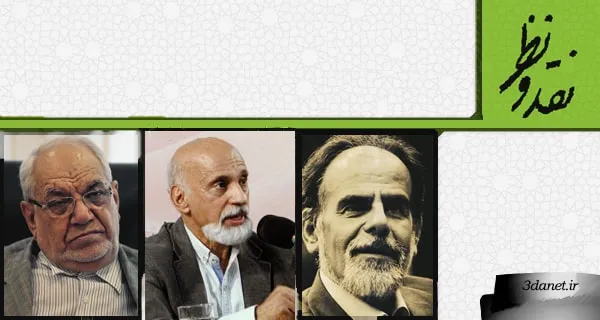
Understanding and evaluating contemporary cultural currents, although a concern of our generation today, is an impossible wish to pursue without theoretical reflection and effort in comprehending them. Among the cultural currents of our time, Traditionalism is worthy of attention and reflection. Therefore, Naqd va Nazar posed questions regarding one of the currents of Traditionalism and spread the feast of discourse, and what follows are the responses of three scholars: Gholamreza Avani (University Professor); Mahmoud Bina Motlagh (University Professor); Mostafa Malekian (Seminary and University Professor).
.
Traditionalism, in a Survey of Scholars
Gholamreza Avani Saeed Bina Motlagh Mostafa Malekian
Understanding and evaluating contemporary cultural currents, although a concern of our generation today, is an impossible wish to pursue without theoretical reflection and effort in comprehending them. Among the cultural currents of our time, Traditionalism is worthy of attention and reflection. Therefore, Naqd va Nazar posed questions regarding one of the currents of Traditionalism and spread the feast of discourse, and what follows are the responses of three scholars: Gholamreza Avani (University Professor); Mahmoud Bina Motlagh (University Professor); Mostafa Malekian (Seminary and University Professor).
1 Critique and Review: What is the main claim or claims of Traditionalism? Do traditionalists accept their main claim or claims as axioms, or do they justify or prove them with the aid of reason or argument? Avani: Before beginning the discussion, I need to give an explanation about tradition and traditionalism from the perspective intended here. Usually in the Persian language, tradition is used to mean mere, and in fact 'irrational,' adherence to certain customs and practices, etc., which is not the meaning intended here. We must distinguish between what I consider the reprehensible meaning and the praiseworthy meaning of tradition; a distinction that is made in the Quran between these two meanings. In the noble verse, it says: 'They said, Nay, we follow what we found our fathers upon. Even if their fathers did not understand anything and were not guided?' (Al-Baqarah 2:170). They said they follow the tradition of their fathers. God reproached them and said: even if their fathers did not reason and were not people of guidance and were not guided... This is the reprehensible meaning of tradition. The tradition we are concerned with here is the opposite of this imitation. In the Quran, a praiseworthy meaning is also used for tradition, such as: 'The established way of Allah which has occurred before. And never will you find in the way of Allah any change' (Al-Fath 48:23) and 'Never will you find in the established way of Allah any alteration' (Fatir 35:43). Tradition means a divine, eternal, and everlasting, imperishable sunnah. Whether in terms of existence, or in terms of legislation, or in terms of decree. That is, the unchangeable and absolute divine laws and principles that flow and permeate all of existence, and a dimension of religion, indeed the most fundamental dimension of religion, also pertains to it, and tradition mostly refers to this meaning. When they want to write tradition in their books in English or other languages, they usually write it with a capital T, (Tradition), but ordinary tradition they write with a small letter. This capital T is because of the specific meaning they intend by it, and that specific meaning is the aspect of existence, beliefs, and wisdom that is 'with the Real.' This 'with the Real,' which in an expression is 'that which is with God endures,' is eternal and everlasting and endures and does not suffer annihilation and decay. All religions have an aspect that is divine and, in this respect, is not subject to abrogation, and that is the absolute aspect of religion which has been transmitted in the tradition of the prophets and sages in that same form, and in fact, they consider themselves revivers of tradition in this sense, and this has nothing to do with that tradition in the sense of imitation and, in fact, stands in opposition to it. Critique and Review: In fact, the main claim of traditionalists is the revival of that divine aspect of thought, religions, and wisdom. Avani: Yes, that is correct. This aspect has always existed and is not temporal or historical. But this dimension 'with the Real' in religion and thought is very important; in an expression, it has an epistemological aspect. There is an expression that the Hindus have and is discussed in Islam and all religions, which is the distinction between 'the Real' and 'creation'; in the Hindu expression, 'Atma' means absolute existence, which is 'the Real,' and 'Maya,' which is existence other than the Real; in fact, they are not on the same plane. Whatever reality there is in 'Maya' is from 'Atma'; whatever reality there is in creation is from the Real; that is, it takes its origin and authenticity from the Real. Therefore, firstly, there is a fundamental difference between the absolute and the relative, and between Atma and Maya, and secondly, there is a method for reaching the truth. God has provided a method for attaining the absolute truth for human beings, and humans can choose it or not. But when they choose and become religious, they have chosen the Real, and this depends on the degree of their proximity to the absolute truth. Usually, Tradition, if it is the path to attaining the absolute truth and its realization, is not merely a theory. Religion and the entire divine tradition show this path to attaining the absolute truth and its realization. Therefore, in answer to this question of whether traditionalists consider their claims as axioms or not, I must say that fundamentally all their claims are axiomatic, because in truth there is an existential and epistemological foundation, and tradition in the sense mentioned is the origin, foundation, and center of all divine religions. Bina Motlagh: Traditionalism means taking tradition seriously. A doctrine is impossible without axioms. In geometry, too, we presuppose a series of principles. The logical theories we teach also cannot avoid assuming a series of axioms. So, in this way, we must ask what the primary axioms of the traditionalists are. Malekian: Before addressing your question, I find it necessary to give a very brief explanation about the word 'tradition' and what traditionalists mean by this word. 'Tradition' has many, many different meanings and is often used as if it is equivalent to custom, convention, habit, or equivalent to style, manner, mode, method. Traditionalists do not intend any of these meanings by this word.
Traditionalists believe that we humans, by virtue of being human, inherently possess and enjoy certain gifts, that is, characteristics which: first, all of us human beings, without exception, possess; and second, no other kind of being in the natural world possesses them. And, therefore, the claim of a group of existentialists that man has no nature, essence, or quiddity and that, in the case of man, existence precedes essence or quiddity, is an extreme, unjustified, and unacceptable claim. In the natural world, only man has the power of thought and reasoning, is endowed with intellect (and, of course, intellect is different from thought and reasoning), is free, and has dominion and mastery over other beings in the natural world. Since intellect is one of the gifts exclusive to us humans and common among all of us, it is entirely natural that the rational reflections of human beings, at any time, place, and in any circumstances, should lead them to a single set of truths. In other words, if we expect that human beings, who share common perceptual and rational characteristics, when confronted with the universe, which is a single universe, will arrive at common and identical results and attain the same truths, we have not had an unreasonable or illogical expectation; and, in fact, human beings have, from the very first days of their appearance on earth, attained such a set of truths, truths which, because they are true, do not take on the color of a particular time, place, or circumstances, are neither new nor old, neither Eastern nor Western, and since they are homeless, the world is their home and they are strangers nowhere, but rather are familiar and resident everywhere. Traditionalists call the totality of these "universal and perennial truths" (Universal Truths) Sophia Perennis, and when they speak of Traditionalism, they mean that they have a theoretical and practical attachment and commitment to this set of universal and perennial truths. With this introduction, I can now better answer your main question. In fact, your question, "What is the main claim or claims of Traditionalism?", considering the very concise explanation I have given, transforms into this question: "What is the set of universal and perennial truths that Traditionalists speak of?" And my answer to this question is that the first claim of Traditionalists is the very existence of such revealed, comprehensive, and universal truths. But apart from this, it must be said that Traditionalists have not precisely enumerated these truths so that we can provide a complete list of them; however, if we content ourselves with the most important of these truths and, following Aldous Huxley, the English novelist and critic (1894-1963), in the "Introduction" to his book The Perennial Philosophy, divide these more important truths into three categories: metaphysical (or philosophical), psychological (or anthropological), and ethical truths, we might be able to say that the main claims of Traditionalists are as follows: a) Metaphysical Claims Existence itself or reality is hierarchical, and, therefore, beings, in comparison with one another, possess less, more, or equal existence, and the universe has a hierarchical order. This claim that existence itself or reality is hierarchical is, of course, a claim contrary to common sense. Common sense dictates that: "A is whiter than B" or "X is larger than Y" or "Hassan is more beautiful than Hossein," but it never dictates that: "A human being is more existent than a stone," meaning it does not consider the attribute "existent" or "real" to have comparative or superlative states. But if we note, or accept, that "being more existent" or "being more real" or "having more existence" or "having more reality" means "having a greater share of the properties of existence as such," then, one can accept that one thing is more existent than another, provided, of course, that we recognize the properties of existence as such or existence qua existence. And it has been claimed that existence qua existence has properties, the most important of which are: 1) power, 2) temporal duration or, to put it better, presence in times, 3) spatial extension or, again to put it better, presence in places, 4) unity, 5) importance, and 6) value or goodness. It is clear that if we accept that these are the properties of existence, qua existence, and also accept that these properties themselves are hierarchical and graded, it can be said that such-and-such a thing is more existent or more real than another thing, if it has a greater share of these properties. If beings, compared to one another, possess lesser, equal, or greater existence, the universe will have a hierarchical order, at the apex of which is a being that is: 1) omnipotent, meaning its power is infinite, 2) eternal, meaning its presence in time knows no cessation, 3) omnipresent, meaning its presence in space admits no limitation or restriction, 4) simple, meaning its unity is inviolable and admits no division whatsoever, 5) absolute, meaning its significance is to the utmost degree of perfection, and 6) perfect, meaning its value is without qualification or condition. This being, which possesses each of the six properties of existence, existence qua existence, to the greatest conceivable degree, stands, as we have said, at the apex of the pyramid of being. The distance from the apex of this pyramid to its base is filled by all possible beings (note: all possible beings), meaning that anything whose existence entails no impossibility or inconceivability necessarily exists and is realized and situated somewhere on this ladder or stairway of being. The hierarchical order of the universe can be considered to have at least four principal levels or domains: 1) The station of the Divine Essence, or, in the terms used by various sages and mystics, the unmanifest God, the Infinite, the God beyond God (Tillich's term), the Godhead (Gottheit, Eckhart's term), the Deepest Mystery, the unground (Ungrund, Jakob Böhme's term). This refers to aspects of the Divine station that are beyond the scope and manner of our perception and understanding and, one might say, are the subject of apophatic or negative theology. 2) The manifest God or the angelic realm, meaning aspects of the Divine station that our minds have the power to comprehend and, one might say, are the subject of cataphatic theology. 3) Aspects of all-that-is-other-than-God or the created world that are not perceptible to the external senses, namely the psyche, the principle of life, life, consciousness, self-consciousness, thoughts, emotions, feelings and excitations, imaginations, dreams, sleep and fantasies, and hallucinations. 4) Aspects of all-that-is-other-than-God or the created world that are in principle perceptible, namely matter (body) and its properties, mass and energy, time, and space. There is no insistence or emphasis on the universe's hierarchical order having four levels. The number of these levels may be infinite. The number four is the minimum number of levels. What is seriously insisted upon and emphasized is the principle of the universe being hierarchical. In the picture presented of the order of being, as we saw, firstly: a distinction was made between God and other-than-God, and secondly: regarding God, a distinction was made between His unknowable and knowable aspects, and regarding all-that-is-other-than-God, between its non-sensible and sensible aspects. Of course, when speaking of the higher levels of the order of being and saying that these levels possess more reality compared to the lower levels, this does not mean that the lower levels are unreal or illusory, but only that they possess less reality. The shadow of an object or its image in water or a mirror possesses reality and is not an illusory matter, but, of course, its reality is less than the reality of the object itself. It can be said that this picture of the order of being has two important characteristics: one is that, in this picture, there is a place for everything, and the other is that everything is only in its own place. Now, in order to tunnel from the metaphysical claims of the Traditionalists to their anthropological claims, and, as a preliminary step for entering into the anthropological claims, we cannot avoid drawing attention to one point, which is that we humans do not occupy the highest level in this hierarchy of the universe. There are beings that are beyond, and far beyond, ourselves and the beings of which our external senses inform us, meaning they possess more existence and reality and have a power, significance, and value greater than our power, significance, and value, and this is a claim that the philosophy and anthropology of the modern age does not tolerate. B) Anthropological Claims The microcosm is the mirror of the macrocosm, meaning the human being reflects the universe. If the universe has four principal levels, four levels are also distinguishable in the human "self," which are: the body, the mind, the soul, and the spirit, and they correspond respectively to the four levels of the universe, namely: the sensible aspects of all-that-is-other-than-God, the non-sensible aspects of all-that-is-other-than-God, the knowable aspects of God, and the unknowable aspects of God. Before I give a very brief explanation of each of the levels of the human "self," allow me to remind you of something you already know, which is that the words "mind," "soul," and "spirit" each have several meanings and usages and in some of their meanings and usages are equivalent and synonymous with one another; but, here, by each of these words we intend precisely and only the meaning that we will specify. The first level of the “self” is the body and its apex, the brain, which requires no explanation. The second level is the mind, that is, the stream of consciousness which can neither be referred nor reduced to the brain, nor, ultimately, does it depend entirely upon it; we experience and feel it in three states: waking, daydreaming, and dreaming. The third level is the soul, that is, the source of the stream of consciousness which itself never appears within this stream, meaning it is neither witnessed nor observable. The soul lies not only beneath the flow of the mind, but beneath all the transformations to which the human individual is subject and exposed. What enables me to attribute all the transformations that occur within me to myself and consider them my own transformations is precisely this “soul” of mine. The soul is the ultimate locus of human individuation and personhood. At this level, the human being enters into an “I-Thou” relationship (in Martin Buber’s phrase) with the knowable God. The final level is the spirit, in which there is no longer any trace of individuation or personhood. If the soul is a structure that relates to the knowable God, the spirit is a realm that is unified and identical with the supra-personal and unknowable God. The soul and the knowable God are two distinct entities, but the spirit and the unknowable God are not distinct from one another. The spirit, in the Hindu expression, is Atman, which is Brahman; it is that realm of the human being which, in the Buddhist expression, is Buddha-nature; it is that level which, because it transcends all the adornments and impurities of the soul, is (in Eckhart’s phrase) that very thing within the human being which is neither created nor creatable, and it is that to which Hallaj refers when he says: Ana al-Haqq (I am the Truth). All these four levels are present in everyone, but they are actualized to varying degrees. Each of these levels, when considered in itself, appears to be a harmonious, uniform, and complete whole, but, in reality, it is encompassed by the higher level. C) Ethical Claims Ethics is a set of instructions that cause the transformation and change of the human “self,” and this transformation and change of the “self,” in turn, causes the world to be felt and experienced in a new way. Therefore, ethics has a close and firm connection with anthropology, epistemology, and ontology; in such a way that revised and reformed conduct and behavior (ethics) leads to the emergence of a new state and condition in the human “self” (anthropology), and this new state and condition enables the human being to acquire the power to see and know (epistemology) the world in a manner more correspondent to reality (ontology). As for the content of ethics, it must be said that ethics is summarized in three virtues: humility, charity, and truthfulness. Humility does not mean forfeiting our self-esteem, but rather looking at ourselves as if we were another person; just as charity means looking at another person as if they were ourselves; truthfulness (which, in my view, can also be interpreted as the pursuit of truth) is the effort to perceive and regard things and matters as they actually, precisely, and really are. The two virtues of humility and charity cause us to consider ourselves and the other person as interchangeable and, in a sense, as one; that is, they release and free us from our personal and individual “self” and, in fact, make us empty and void of “self” and ready to receive things and matters as they are; in other words, they provide the possibility of not imposing our own color onto things and matters, but rather perceiving them as they are. Thus, humility and charity are the necessary conditions for the realization of truthfulness, the third virtue. Knowledge and action, or wisdom and method, are only effective alongside one another. They are concurrent and inseparable. From the beginning, they are close to each other, and this closeness increases the further we go, to the point where they become so close that they seem to adhere to one another, and distinguishing the two from each other becomes very difficult. In ethics, the inner and personal motives of the human being are not reliable and cannot serve as a guide for desirable action and life. The most beneficial service these motives can render to the human being is to guide him toward “tradition” and place his hand in the hand of “tradition.” This claim is exactly contrary to the prevailing modern trend. Today, human beings admire and magnify inner motives. Modern man attributes a kind of sanctity to himself and, more precisely, to one aspect or realm of his aspects and realms, such that he seems to consider nothing as wondrous and worthy of regard as himself, whereas he ought to prefer tradition over personal judgments and be subordinate to it. What we have said was a very concise and possibly incomplete picture of the most important claims of the Traditionalists in three sections: metaphysics, anthropology, and ethics.To elaborate and complete this picture, one must refer to the numerous books, treatises, and articles that Traditionalists have written and published. In particular, I refer those interested to The Perennial Philosophy by Aldous Huxley, Forgotten Truth and Beyond the Post-Modern Mind by Huston Smith, Religion in the Modern World by Lord Northbourne, and A Sense of the Cosmos by Jacob Needleman. And as for your question of whether Traditionalists accept their main claim or claims as axioms or justify or prove them by means of reason or demonstration, I must say I have no clear answer. On the one hand, Traditionalists believe that their claims are a set of truths that all human beings have attained, and, therefore, they presumably see no need to provide reason and demonstration, and consider their work, ultimately, to be of the type of reminder and awakening, that is, drawing attention again to something the person already knew. But, on the other hand, in their writings we encounter abundant material that, regardless of its truth or falsehood and strength or weakness, can be considered as a kind of reason and demonstration. 2 Critique and Opinion: What is the historical background of Traditionalism, in this specific sense, in the world generally and in Western culture particularly? What is the position and status of this tendency or movement or school in the struggle between tradition and modernity? Bina Motlagh: The historical background of Traditionalism goes back to René Guénon. He was the initiator of this path, and Frithjof Schuon is its completer. Avani: Of course, all religions emphasize tradition in this sense. If we examine past religions, such as the Eastern and Abrahamic religions, we see that this aspect is greatly emphasized, and in the period they call the Golden Age, when all the primordial religions existed, this meaning was given much attention. In any case, in our era, due to being distant from tradition, this period is called the age of myth and superstition, but if we look from a divine perspective, the matter is otherwise. Essentially, every prophet and every religion is a reviver of tradition in this sense. That is, because human beings distance themselves from the Truth, they distance themselves from tradition and religion in its true sense, and therefore prophets come to remove these differences and distortions that have occurred in religion and tradition. In my opinion, the Quran also emphasizes this matter; where it says: "Mankind was one community, then they differed, so God sent the prophets as bearers of good tidings and warners, and sent down with them the Book with the Truth, to judge between people concerning that wherein they differed" (Al-Baqarah 2:213). God says: They were one community, their religion was divine, but due to the dominance of the human or carnal aspect, which is inherent to human nature, difference arose. God again sent prophets to judge among them and to remove these distortions and deviations that had occurred in the religions and in the divine tradition, and to guide them; and the meaning of guidance is precisely this return to the primordial tradition of God, which guides human beings to the Absolute Truth. When God addresses Prophet Abraham in the Quran: "So set your face toward the religion as a hanif," setting one's face toward the hanif religion is the same as tradition. In other words, tradition is the same as the hanif religion: "The primordial nature of God upon which He originated mankind..."; it is that same primordial nature upon which God has created all things, the same upright and primordial religion that the prophets proclaimed, but about which they fell into difference. So tradition, in the sense that was mentioned, is the primordial essence of all religions. In Western philosophy too, there were those who proclaimed this tradition, among whom I can name Plato as an example. Plato's thought is an expression of this tradition, that is, the Sophia Perennis and eternal wisdom. In his definition of wisdom, Plato considers it to be assimilation to God. That is, he defines philosophy as assimilation to God to the extent of human capacity; assimilation to God means returning to the origin and finding that divine vision and separating "Maya" from "Atma." Unlike modern philosophy, which sees "Atma" from the perspective of "Maya"; that is, it sees the Truth more from the perspective of creation, without seeing the Truth as Truth and examining things, so to speak, in relation to it. Plato stipulates that the philosopher must see things, as far as possible, as God sees them; the philosopher, according to Plato, is one who must make a journey to the Absolute and come from the Absolute to the conditioned, not remain in the Absolute. In a phrase, he says, "God is the measure of all things"; in contrast to Protagoras, who said, "Man is the measure of all things." The philosopher must journey and observe existence from the divine realm. Other great figures, such as Meister Eckhart, in the West, have also inclined toward this perennial wisdom. اما در دوره جدید بعد از رنسانس غربیها از این تفکر سخت دور شده اند; یعنی از سنت به این معنی که گفته شد و از حکمت خالده و خمیره ازلی دور شده اند. با وجود این، در دوره جدید افرادی پیدا شده اند سنت را به معنایی که گفتیم دور از ابهام و اغلاق فلسفی و با یک بیان فطری احیا کرده اند. در ظرف پنجاه سال پیش حکیمی به نام کوماراسوامی، این معنای سنت را در قالب ادیان شرقی احیا و سعی کرد که در دین هندی و آئین بودایی و دیگر ادیان شرقی را در قالب سنت به معنایی که گفته شد تفسیر بکند. و یکی دیگر از بزرگان، که مسلمان نیز بوده به نام رنه گنون، یا شیخ یحیی عبدالواحد، تمام عمر خود را در مطالعه ادیان البته نه به معنای آکادمیک کلمه گذرانده است. یعنی متون اصیل و آثار متفکران و سخنگویان همه ادیان الهی را به دقت و با کمال حوصله مطالعه کرده است و به نظر می رسد که به حاق و لب مطلب آنان رسیده است و این معنای سنت را احیا کرده است. رنه گنون سی سال آخر عمر خود را در مصر گذراند و به منابع و مطلب بسیار عظیمی دست یافت. مثلا بعضی از شاگردان او اصلا «ازهری » بوده اند و حتی یک از آنان شیخ جامعة الازهر بوده است. و باز می توان از فریتیوف شووان نام برد که به تازگی به رحمت ایزدی پیوسته است. ایشان بیش از 25 کتاب در این باره تالیف کرده و آثار اینها معمولا از 150 جلد تجاوز کرده است. که خیلی عمیق و دقیق به معنای احیای دین و سنت پرداخته است. نقد و نظر: در بین متفکران جدید بعد از دکارت، غیر از این افراد فیلسوفی هست که بگوییم دست کم به این تفکر نزدیک شده است؟ مثلا آیا شما لایب نیتس و اسپینوزا را می توانید در شمار سنت گرایان بیاورید; یعنی در شمار کسانی که نسبت به امثال دکارت، لاک، بارکلی و هیوم به سنت نزدیکترند؟ مخصوصا این را به این لحاظ می گوییم که اصطلاح «حکمت خالده » اولین بار توسط لایب نیتس مطرح شده است. اعوانی: بلی، کاملا درست است. البته ما می دانیم که پیش از لایب نیتس در فلسفه ما نیز این مساله بوده است. ما به آن «جاویدان خرد» می گوییم و آن کتاب معروف «حکمت خالده » ابن مسکویه مؤید همین معناست. ایرانیان ما در قدیم به آن جاویدان خرد می گفتند و همین که این لفظ در بین ایرانیان وجود داشته است، خیلی معنی دار است. اما در دوره جدید همان طور که فرمودید، اولین کسی که سعی کرده اند که حکمت جاویدان یا به تعبیر او، (Philosephia Perrennis) را احیا و مبانی فلسفی اش را تنظیم کند، لایب نیتس است. فلسفه لایب نیتس عناصر کم رنگی از حکمت خالده را دارد و علت آن این است که او بعضی از آثار فلسفه قرون وسطی، همچون مایستر اکهارت و دیگران را خوانده بود و از آنها تاثیر پذیرفته بود. به هر حال، لایب نیتس اگرچه دلبسته جاویدان خرد بوده است، اما باید توجه داشت که دکارتی است و بعضی از عناصر دکارتی در تفکر او هست. بنابراین مسلما او را نمی توان با افلاطون مقایسه کرد; ولی عناصری از سنت گرایی در اندیشه او وجود دارد. اما در مورد اسپینوزا بستگی به تفسیری دارد که از اسپینوزا می کنیم. بنده فکر می کنم ما نمی توانیم اسپینوزا را در این نحله قرار دهیم. زیرا خطاهای فاحش متافیزیکی ای در نظریه جوهر او وجود دارد، چون سنت به این معنا، مبتنی بر معرفت دقیق و حقیقی اشیاء است، به طوری که خطاهای فاحش متافیزیکی نباید در آن وجود داشته باشد. با همه عظمت فلسفی، اسپینوزا خطاهای فاحش متافیزیک دارد. مثلا جوهر او دو صفت دارد که یکی بعد است; بعد را بدون این که قائل به نظریه ظهور و تجلی و تنزل باشد، صفت حقیقی جوهر(خداوند) دانسته است و این سخن چنان که ولفسون هم بدان تصریح کرده است بدین معناست که خداوند جسم دارد. به هر حال، در اندیشه او از این دیدگاه سنتی خطاهایی وجود دارد که کم هم نیست و این مانعی است برای این که او را جزء فیلسوفان سنتی به این معنا بدانیم; با این که فلسفه او ارزشهای خاص خودش را دارد. به نظر من هر فیلسوفی که به هر شکل، بین خلق و حق و مطلق و مقید خلط کند، حالا هر فلسفه ای باشد، فلسفه جدید باشد یا فلسفه قدیم، در اینجا متوقف می شود. در فلسفه و حکمت گذشته ما چنین خلطهایی بسیار کم اتفاق افتاده است. ادیان و حکمت هر دو اصرار دارند که مرز بین این دو (مطلق و مقید) خلط نشود; چیزی را که در حد «مایا» است «آتما» نکند. اگر مطلق را نسبی و نسبی را مطلق بکند این بزرگترین خطای متافیزیکی و به زبان دینی این شرک است. اما در فلسفه و علم جدید این خطا کم و بیش صورت گرفته است; گاهی اوقات علم طبیعت را به درجه ای برده اند که جنبه اطلاق به آن داده اند; این درست نیست. ایسم های امروز همه همین اشتباه را مرتکب شده اند، امور مقیدی مثل تاریخ و علم و اقتصاد را مطلق می کنند. ملکیان: به یک معنا، سابقه تاریخی سنتگرایی به سابقه تاریخ بشری است، چون، بر طبق ادعای خود سنتگرایان، مدعیات اصلی سنتگرایی مجموعه حقایقی است که شمول تاریخی و جغرافیایی همه گیر دارد، یعنی همه انسانها در همه مقاطع تاریخی و همه مناطق جغرافیایی بدانها باور داشته اند، دارند، و خواهند داشت. سنتگرایی را می توان در علوم و معارف سنتی اقوام بدوی نیز، در هر ناحیه از جهان، یافت و اشکال و صور متکاملتر آن را در هر یک از ادیان بزرگ جهانی می توان سراغ کرد. اما، به معنایی دیگر، یعنی اگر مراد از سسنتگراییز گرایش آگاهانه ای باشد به پاره ای از آراء و عقاید که درست در برابر آراء و عقاید انسان متجدد قرار می گیرد، باید گفت که این مسلک فکری و معنوی به دست رنه گنون، (Rene Guenon) ،عالم، حکیم، و عارف فرانسوی (19511886)، که پس از مسلمان شدنش عبدالواحد یحیی نام گرفت، احیاء شد و، بنابراین، سابقه اش از یک قرن کمتر است. این مسلک با مساعی رنه گنون و آننده کنتیش کومار اسوامی، (Ananda Kentish Coomaraswamy) ،عالم، هنرشناس، و حکیم سیلانی (1877-1947)، که ضمنا بزرگترین تاریخنگار هنر هندی است، هویت و موجودیت مستقلی یافت و اندیشمندان بسیاری را به خود متوجه ساخت. شک نیست که این گرایش یا نهضت یا مکتب در کشاکش میان سنت و تجدد و، به تعبیر دقیقتر، در کشمکش میان سنت و تجدد و پساتجدد جانب سنت را می گیرد و از آن در برابر مناقشات و تحدیهای تجدد و پساتجدد دفاع می کند. البته، دفاع سنتگرایانی مانند گنون، کوماراسوامی، فریتیوف شووان، (Frithjof Schuon) ،تیتوس بورکهارت، ( Burckhardt Titus) ،هیوستون اسمیت، (Smith Huston) ،مارتین لینگز، (Lings Martin) ، مارکوپالیس، (Pallis Marco) ،آلدوس هاکسلی، لرد نرث بورن، (Northbourne Lord) ،و جیکوب نیدلمن، (Needleman Jacob) را از سنت و حکمت خالده و دین نباید چیزی نظیر دفاعهایی که در محیط ما از سنت و دین می شود تصور کرد. دفاعیه هایی که ما در محیط خودمان با آنها مواجهیم دفاعیه هایی است بسیار سطحی، شتابزده، و غفلت آمیز که نه سنت را چنانکه باید و شاید می شناسد و نه تجدد را، و، به همین جهت در حق هر دو ظلم می کند و جانب انصاف و تحقیق را در هیچ مورد رعایت نمی کند و، از این رو، نه سنتگرای عمیق النظر را راضی می دارد و نه تجددگرای ژرفنگر را قانع می کند. 3 نقدونظر:حکمت خالده، (Sophia Perennia) یا فلسفه جاودانه، (Perennial Philosophy) ای که سنت گرایان از آن دم می زنند چیست؟ نوعی فلسفه است یا نوعی مابعدالطبیعه، ( metaphysics) یا هیچ کدام؟ و چه ربط و نسبتی با فلسفه جدید غرب دارد؟ را، که معادل اصطلاح انگلیسی ز Perennial Philosophy س و تقریبا معادل اصطلاح عربی سحکمت خالدهز و اصطلاح فارسی سجاودان خردز است، نخستین بار لایب نیتز، حکیم آلمانی، به کار برد. می توانیم، همداستان با هاکسلی، مدعی شویم که مراد لایب نیتز و سنتگرایانی که این اصطلاح را به کار می برند، از این تعبیر، مجموعه ای است مرکب از سمابعدالطبیعه ای که به حقیقتی الاهی تصدیق دارد که برای تحقق عالم جمادات، نباتات، و حیوانات ضرورت دارد; روانشناسی ای که در نفس انسانی چیزی می یابد شبیه به حقیقت الاهی، یا حتی عین حقیقت الاهی; و اخلاقی که غایت قصوای بشر را علم به مبدء کل موجودات، که هم داخل موجودات است و هم خارج از موجودات، می داند.ز پاسخ این پرسش که سآیا حکمت خالده یا فلسفه جاودانه نوعی فلسفه است یا نوعی مابعدالطبیعه یا هیچکدام؟ز بستگی تام و تمامی دارد به اینکه از دو اصطلاح سفلسفهز و سمابعدالطبیعهز چه مراد می کنید. اگر مراد از سفلسفهز سسعی نظری در جهت ارائه نگرشی منظومه وار و جامع و کامل سبت به کل عالم واقعز یا سکوشش برای توصیف کنه و حقیقت عالم واقعز یا سعلمی که می کوشد تا به شما کمک کند تا آنچه را می گویید ببینید و آنچه را می بینید بگوییدز باشد، در آن صورت، حکمت خالده نوعی فلسفه است، و اگر مراد از سفلسفهز سسعی در جهت تعیین قلمرو علم بشر، و منابع و ماهیت و اعتبار و ارزش آنز باشد، یعنی تقریبا همان چیزی که سمعرفتشناسیز هم نامیده می شود، باید گفت که حکمت خالده فلسفه نیست، اگرچه در مسائل معرفتشناختی نیز کمابیش سخنی دارد، و اگر مراد از سفلسفهز ستحقیق انتقادی در باب پیشفرضها و دعاوی حوزه های گوناگون معرفت بشریز باشد، یعنی تقریبا همان چیزی که سفلسفه علومز هم خوانده می شود، باز باید گفت که حکمت خالده فلسفه نیست، اگرچه از بعضی از مواضع انتقادی نسبت به پاره ای از پیشفرضها و دعاوی علوم و معارف جدید و متجددانه نیز خالی نیست.And if by “metaphysics” is meant “the endeavor to present a comprehensive, coherent, and consistent interpretation, picture, or view of the whole of reality, existence, or the world,” or “the study of ultimate reality or the Truth of truths,” or “the study of the origin, direction, source, or cause of the existence of all existents, or the study of the self-subsisting and completely independent existent upon which all existents depend for their existence,” or “the study of the transcendent reality that is the cause or source of all existence,” or “the study of anything that is supernatural or immaterial and cannot be explained by the explanatory methods of the natural sciences,” or “the study of an existent that is essentially necessary in its existence and cannot be other than it is,” then the perennial philosophy is a kind of metaphysics; and if by “metaphysics” is meant “the study of being qua being,” that is, something equivalent to “ontology” or “first philosophy,” it must be said that the perennial philosophy contains metaphysics but is not confined to it; and if by “metaphysics” is meant “the study of the most general, most enduring, and most pervasive characteristics of the universe,” again it must be said that metaphysics is a part of the perennial philosophy; and if by “metaphysics” is meant “the critical examination of the fundamental assumptions, presuppositions, or beliefs of our epistemic systems in the claims they make about reality,” that is, roughly what is called “epistemology” and sometimes also “philosophy,” we must say that the perennial philosophy is not metaphysics, although it does have epistemological claims.
As for the connection and relation of the perennial philosophy to modern Western philosophy, which is roughly four hundred years old, this is, of course, a very important issue. The perennial philosophy, in various respects, differs from, diverges from, and is in conflict with modern Western philosophy.
Firstly: modern Western philosophy recognizes only one condition for philosophizing, and that is rational and mental capacities (and, of course, modern Western philosophy means by “reason” something entirely different from what the perennial philosophy intends, a point I will explain later); but the perennial philosophy, in addition to rational and mental capacities, considers many other things as necessary conditions for engaging in wisdom, including the training of the will and desires, feelings and emotions, and even the training of the body.
Secondly: in modern Western philosophy, the purpose envisioned in philosophizing is the accumulation of new theoretical knowledge about the world and humanity, whereas in the perennial philosophy, the sage’s sole concern and endeavor is to undergo an existential transformation through engagement with wisdom and to step into a new existential realm. Here, it is not amiss to draw upon one of Marx’s sayings. Marx, in one of his famous statements, says: The philosophers have only interpreted the world, in various ways; the point, however, is to change it. The unspoken language of the perennial philosophy is this: Modern philosophers seek to interpret the world, whereas the point is to change oneself. The perennial philosophy seeks to place at humanity’s disposal the way and method of self-transformation and the map of that path and course.
Thirdly: the touchstone and criterion of modern Western philosophy are the common and universal findings and experiences of human beings. This philosophy resorts to things such as sensory perceptions, linguistic usages, and moral choices and decisions that are familiar and customary to all of us human beings, and by resorting to this very sort of thing, it proceeds to deny and affirm, reject and accept. According to Ernest Gellner, the English philosopher and sociologist, today, if a belief is to be considered a correct and acceptable belief, it must be judged on the basis of something close to our ordinary and conventional experiences. And this is precisely contrary to the aim of the perennial philosophy, which seeks to reconstruct the human being so that they can experience and feel the world in an unconventional way and in a manner contrary to habit. From the perspective of the perennial philosophy, our conventional experiences are not cleansed and purified of the impurities of ignorance, caprice, and desire, and can even be said to be abnormal and psychotic.
Fourth: from the perspective of the perennial philosophy, the new philosophical schools, despite their many and sometimes profound differences with one another, share two very important commonalities at their foundation: one is that, epistemologically, they are empiricist, and the other is that, ontologically, they are materialist, whereas the perennial philosophy itself is, epistemologically, intellectualist (and the intellectualism of the perennial philosophy differs from the rationalism to which some modern philosophers, such as Descartes, subscribe) and, ontologically, holds to the existence of immaterial and separate entities and considers the origin of all existents to be a non-material reality (Spiritualism). For these reasons and other reasons I will refrain from mentioning, the traditionalists of our time adopt a critical and oppositional stance toward all the philosophical schools and orientations that have been nurtured and grown within the bosom of modern Western philosophical culture, including existentialism, linguistic analysis philosophy, phenomenology, and pragmatism. Binamotlagh: The perennial philosophy's relation and connection to modern Western philosophy is that it rejects it entirely. Philosophical systems are individual constructs, whereas tradition is supra-individual or non-individual; tradition has a divine origin. In the words of Frithjof Schuon in his book "Understanding Islam", the perennial philosophy consists of the absoluteness of God and that which emanates from the Absolute Infinite. The perennial philosophy is the inner truth of religions. Avani: In our current circumstances, we must distinguish between philosophy, wisdom (hikmat), and metaphysics. We cannot call today's analytical philosophy wisdom, even though we can call it philosophy. Because wisdom has its own method, foundation, and definition. On the other hand, currents have emerged that are philosophy in the modern sense of the word but are not wisdom according to the definition of the ancients. Naqd-o-Nazar: Is it philosophy, in the sense that it possesses a demonstrative method? Only in that sense? Avani: In any case, it is a kind of reasoning and theorizing. Therefore, if we lived in an era when our philosophers were Plato, Avicenna, Mulla Sadra, Meister Eckhart, and Suhrawardi, we could no longer draw much of a distinction between philosophy and wisdom. Hence, our philosophers, if they wanted to speak of Greek philosophy, would sometimes say Greek philosophy and sometimes Greek wisdom. That is, because the ultimate goal of philosophy and wisdom was one, they did not differentiate between the two. But in the modern period, because differences in method and goal have arisen, we must distinguish between the two. When a philosopher says that all metaphysical propositions are meaningless because they cannot be empirically verified, if we call him a philosopher, we must separate the account of wisdom. But in the past, this distinction did not exist. Regarding metaphysics, we must also see how we interpret it; do we interpret it in an Aristotelian way? In Western thought, metaphysics has often been interpreted in the Aristotelian sense, and they themselves and Aristotle did not apply this term to philosophers such as Heraclitus and Parmenides. Aristotle has a specific meaning in mind for metaphysics, which differs from the understanding of today's philosophers. But according to the followers of this tradition (the traditionalists), metaphysics must be seen in a general sense that includes the authentic metaphysics of the West as well and also encompasses religion. The authentic Abrahamic and non-Abrahamic religions are based on an authentic metaphysics and are considered examples of that metaphysics and divine wisdom. For example, Guénon, in an article entitled "Oriental Metaphysics", re-signifies metaphysics and reminds us that we should not take metaphysics in the same Aristotelian sense of the word. The interpretation Aristotle had of metaphysics is a partial interpretation; although it is metaphysics and we should not withhold this title from him. But we have no reason to interpret metaphysics in a way that only includes Aristotle. Whereas metaphysics is more than Aristotle, and in Plato, and especially in religions, and Plato also represents a very profound aspect of it. Metaphysics is, in reality, that which has appeared in a very profound sense in Buddhism and Hinduism and in the Abrahamic religions, and precisely this tradition under discussion is also based on that same metaphysics. That is, the precise and profound meaning of reality of which religions have been the heralds and spokespersons. The distinction between the Real and creation, and the knowledge of the Real and the path to attaining the Real, the knowledge of the Essence and the truths of things, has also existed in religions, and religion cannot be devoid of this aspect, and if we suppose that a religion is devoid of this knowledge, it is not a religion; whether it be Islam, Christianity, Judaism, or Buddhism, religion is based on a profound and precise metaphysics. The prophets, the Logos, meaning they were sent to bring this authentic, eternal, pristine, and absolute knowledge, which is not bound, to humanity.Therefore, in their view, metaphysics is not at all limited to its Western meaning; rather, they have in mind a broad meaning that comes closer to Eastern metaphysics, which they interpret as philosophia perennis, a wisdom not exclusive to the West. In their opinion, the greatest spokesmen for this metaphysics have been in the East, among Eastern religions and theologians; in the modern West, such spokesmen do not exist apart from those we have mentioned. Incidentally, the Westerners who possessed this type of thinking were the revivers of authentic Eastern thought. Critique and Opinion: In your view, is the relation and connection of this perennial wisdom to modern Western philosophy a kind of opposition? Avani: If we take tradition in this sense, then there is a kind of opposition between tradition, as we have described it, and modern Western philosophy. The principle of tradition is based on distinguishing between the Real and creation, Atma and Maya, and the path to reaching the Real, following the primordial religion (dīn ḥanīf) and the divine innate nature (fiṭra), and fulfilling the right of vicegerency. God has placed this immense divine gift in the human being and has considered the human being His vicegerent. Through the ascending journey, this human being becomes perfected; the human being who completes the circle is the perfect gnostic and the realized sage. When the ascending, upward journey in the human being reaches its end, the circle of connection is completed in their being. The greatest capital of the human being is attaining absolute knowledge through walāya (sainthood/initiatic path) or reaching the Absolute Real through walāya and the esoteric path. They believe that in modern Western philosophy, a kind of confusion has, in fact, occurred. This confusion in modern philosophy begins with Descartes. The axis of Descartes' philosophy is the Cogito, and he tries to prove God based on the Cogito. Descartes has made the Cogito the pivot of the absolute subject and, as a result, has afflicted modern Western philosophy with subjectivism. Philosophy began a new era with Descartes; although Descartes was not a deist, there are deistic roots in his philosophy. When he takes the world with a model like Galileo's, he constructs a world that works like a machine, and God becomes a clockmaker God. The explanation he has given of the world is correct on its own level, but it is not the explanation of a divine sage. It is enough to compare this issue in Descartes' treatise with Plato's Timaeus, where mathematics also plays a role, but the world in Plato has a direct connection with God at every moment. Their opposition to the modernistic perspective, from this divine viewpoint, is due to what they interpret as epistemological errors (from the divine perspective). One cannot say that modern philosophers have not discussed issues from a philosophical perspective, which is, of course, important on its own level. If we take philosophia perennis or divine wisdom, in the sense we have described, as the criterion, there has been a kind of error in the view of modern philosophers that has ultimately led to the negation of divine wisdom and, finally, to materialism. Critique and Opinion: Did the worldview of modern science not dictate such a thought? One who looks at the world with a scientific view is compelled to adhere to its method, which is materialistic. The worldview of science seeks material causes. Avani: The ancients interpreted science in such a way that they considered Science, or particular science, as a degree of absolute knowledge or a lower level of wisdom. From the perspective of the ancients, knowledge is a graded, multi-level category; particular science, or science, was not at all separate from universal or absolute knowledge. Avicenna was both a divine sage and a scientist. For him, science was not separate from wisdom; the same is true for Aristotle and Plato. But modern science has made Science, or particular science, into absolute knowledge, whereas Science is limited knowledge. Modern science is inherently a limited knowledge, and the subject that modern science deals with is a limited subject. But the mistake that has occurred in modern science is that it has made something that is limited in its own existence into something absolute, and on the other hand, it has made the knowledge obtained from this limited thing absolute. Thirdly, it has distanced science from the divine aspect. In any case, knowledge is a vertical, multi-level reality, and one cannot separate a part of it, treat it as absolute, and negate all other sciences. Particular science is important when it is connected to universal knowledge. In any case, it must have a connection with its own principle. Although modern science is being moderated in this aspect today, the way modern science was founded by Galileo and others, they were unable to create a firm link between modern science and its divine principles; the link that existed in Plato, Aristotle, and Mulla Sadra. The world in which Plato journeys is not separated from its divine principles even for a moment. On the other hand, the world for our ancients is meaningful to the utmost degree (the meaningfulness of existence). The theory of matter, form, and final cause in the likes of Aristotle expresses the meaningfulness of the world.Existence is profoundly meaningful, and modern science, by presenting a new mechanistic theory, has failed to take that meaningfulness of existence into account. Seeing things from a divine perspective—that is, seeing things with regard to their divine principles—is highly meaningful for our past philosophers and for our sages; that seeing this world as meaningful and interpreting it according to its own principles and foundations indicates intelligence and knowledge. In modern science, this "intelligence" is very weak. Modern science claims absoluteness, pays no attention to the divine principles of existence, and tries to present itself as a kind of materialist as well. That is, by using a kind of reductionism, it expresses the world from a materialist viewpoint; whereas it cannot be separated from its principles. In any case, those who promoted modern science, by severing it from its principles, in a way secularized it; that is, they promoted the non-sacred aspect within it. It is natural that science takes on a worldly state, and on the other hand, because modern science claims absoluteness, it does not consider other sciences to be science. Whereas one must ask, where did modern science derive its own status as science in the first place? Modern science must justify its being science. In any case, these are tendencies that are strongly prevalent in the modern world, and these so-called traditionalist thinkers oppose this aspect. Ultimately, this leads to the negation of the divine perspective. 4 Critique and Opinion: Traditionalists distinguish between two intellects, the Universal Intellect or the essence of Intellect or the First Intellect (Intellect), and the particular intellect or discursive reason (reason), and consider themselves proponents of intellectual intuition, not discursive reason; please explain this distinction. Bina Motlagh: Today, rationalists deny the distinction between the two intellects and, instead of solving the problem, dissolve it. If we return to the worlds of existence, as Guénon says, "the worlds of existence are multiple." In all languages, we had two other things besides the body, but today, besides the body, if they consider anything else, it is no more than one, and they make no distinction between the soul and the spirit. Those who coined these two terms "soul" and "spirit" and spoke about them, what conception did they have of these two titles (soul and psyche)? "Nafs" or "soul," which means "Soul" and is called "anima" in Greek, is one thing, and "Ruh" or "spirit," which is the English "Spirit" and the Greek "Pneuma," is another. In the same way, in ancient languages, there were two words for intellect; one must see what they conceived of these two. If they had no conception, they would not have coined two words for intellect and would not have spoken of the Universal Intellect and the particular intellect; even if we go back to the Greek language, we see that the words considered for intellect were two: Intellectus (Universal Intellect) and Ratio (particular intellect), and Nous, which is the root of intellect. The particular intellect belongs to the soul, whose functions are the cogitative faculty, the estimative faculty, memory, and intuition, which we know is Nous, that is, the Universal Intellect. These two can be considered like the sun and the moon. Guénon speaks of symbolism, which is one of the fundamental tools of traditional metaphysical thought that is forgotten today. Because when speaking of other worlds, the subject of speech must first be imaged in this world in order to be expressed in language. The this-worldly image of any matter is a symbol for that thing itself; this image and symbol has a science and is not without reckoning. That God, the Knower of the world, says "and His Throne was upon the water" surely intends a meaning. Materialists have said about Thales that because he lived by the sea, he called water the origin and source of everything; but if that were so, the question would arise as to why our Prophet, who found water with difficulty, says "and His Throne was upon the water." The reality is that the water in this world is an image of a truth. They have forgotten this symbolism. Regarding this intellect, which in ancient times there was consensus was twofold, one must see what its function is. Just as the moon takes its light from the sun, the particular intellect also benefits and draws from the Universal Intellect. To explain these two words (Universal Intellect and particular intellect), we take help from Plato's two worlds and say: Plato believed that there are two realms in reality; the realm of sensibles and the realm of intelligibles. In the realm of sensibles, we have the original and the reflection and image. For example, the tree is the original, and its reflection and image in water or a mirror is the branch; and of course, both, in their very simplicity, possess reality, albeit they partake of different realities. In the realm of intelligibles too, we have the original and the reflection and image. Intellect is the original, and Reason is its reflection and image. The language of tradition is symbolic.این که گفته اند اول ماخلق الله العقل و پیامبر اکرم(ص) عقل کل است و وقتی در حدیث گفته شده که خداوند چیزی عزیزتر از عقل نیافرید، زبان سنت را باید فهمید که در عین سادگی، چقدر دقیق حرف می زند. خداوند عقل را آفرید و گفت: اقبل، فاقبل; گفت: ادبر، فادبر; بنشین، نشست; بلند شو، بلند شد. این بیان ساده بیانگر چیست؟ بیانگر این است که عقل در ارتباط مستقیم با خداوند است. این عقل است که صوت خداوند را می شنود و از این راه به او دستور داده می شود. عرفا وقتی می گویند پای استدلالیان چوبین بود، نه این که می خواهند بگویند با این عصای عقل جزئی نمی توان راه رفت; بلکه می خواهند بگویند از این عقل جزئی پرواز درنمی آید. باید در مقاله ای توضیح داد که چرا زبان متافیزیک، سمبولیک است و غیر از این نمی تواند باشد و نباید سبمولیسم را با قیاس شاعرانه یکی گرفت تا بعدا منطقیون بگویند این تمثیل است و تمثیل، منتج نیست. زبان سمبولیک ظاهرش به قیاس شبیه است، ولی وقتی درباره مسائل متافیزیک حرف می زنیم مجبور به اتخاذ این روش هستیم به عبارت خلاصه شده افلاطون، تصویر اشیاء که عدم نیست، بالاخره وجودی دارد. ولی نوع وجود تصویر درخت نسبت به خود آن ضعیف است. سایه ها آن چیزی است که ما به آن دسترسی داریم. اینها تصویر اشیاء در آینه ذهن هستند. ما به کمک پیش فرضها پیش می رویم. ضمانت صدق خود قواعد منطق نیز یک نوع شهود عقلانی است. اصلا خود منطق را از کجا فهمیده ایم؟ با شهود عقلانی. وقتی عقل کل انسان عادی به خواب رفته است (به سبب هبوط و یا هر چیز دیگر) در انسان الهی آن عقل کل بیدار است. لذا به بودا می گویند بودا، چون بیدار شده است. حضرت پیامبر(ص) عقل کل است، چرا که در او عقل فعال بیدار است; عقل کل بیدار است و او با آن می بیند. وقتی که دید، به ما هم می گوید. وقتی ما ایمان می آوریم پاسخگو به آن چیزی هستیم که او به تصویر کشیده و بر زبان آورده است. بالاخره ما هم باید یک چیزی داشته باشیم که به آن ایمان بیاوریم. هیچ پیامبری هم نیامده است بگوید: من هرچه می گویم، بیایید گوش بدهید و بپذیرید. از ما می خواهند که بفهمیم و پیروی کنیم. تحدیهایی که قرآن می کند و می گوید اگر این قرآن بشری است، یک سوره مانند آن بیاورید، از همین باب است. معجزه یک نوع جزم گرایی دارد; آن کسی که عقلش فعال است مقداری وحشت هم ایجاد می کند. این که حکومتهای استبدادی که به نام دین حکومت می کنند از دین استفاده می کنند، به دلیل ارزش دین است. چرا کسی ادعای حمالی نمی کند و حمال دروغین پیدا نمی شود، ولی پزشک دروغین پیدا می شود؟ این به دلیل ارزش پزشکی است. از قدیم گفته اند گرگ در لباس میش می آید; در لباس خرس که نمی آید. این خاصیت بشری است که استبداد دینی درست می کند. البته مارکس و هیتلر به ما نشان دادند که استبداد غیردینی هم وجود دارد. سنت گرایی این است که آدمی راه سنت را بگیرد و برود و سختیها را هم تحمل بکند. اگر برای شهود عقلانی بخواهیم مثالی بزنیم، می توانیم بگوییم که پیامبر اکرم در معراج، خدا را دید. من نباید بیایم معراج را تصور بکنم، بلکه باید آن را قبول کنم; چرا؟ چون منطقی است. وقتی پذیرفتیم که عقلی هست عقل کل و عقل جزئی خدا هست و رابط هست، به کمک آن باید بفهمیم که این یعنی چه. برداشت ما صرفا بشری است. برای این که برای این مساله از قرآن مثال آورده باشم، مساله حضرت داوود یا سلیمان را عرض می کنم. حضرت داوود حکم می کند، ولی در آن طرف علم تنها نبود; امکان الهام الهی بود. درباره عقل کل باید گفت که نظارت می کند. عقل کل انعکاسش در قوای عقلانی نفس است که فکر از آن ناشی می شود و برای درک آن، غار افلاطون را می توان مثال زد. عقل کل اختصاص به انبیا هم ندارد و اولیا هم می توانند آن را داشته باشند. یعنی intellectus در واقع، چیزی نیست که اختصاصی باشد. مثل تعبیری که ما از وحی داریم که ذومراتب است و مراتب رقیق ترش را غیر انبیا هم دارند. انسان حتی می تواند به مرتبه عقل کل برسد. از عبادت می توان الله شد نی توان موسی کلیم الله شد می توان الله شد یعنی به مقام قرب الهی رسید، ولی رسالت کسب شدنی نیست; رسالت مشیت الهی است. مایستر اکهارت آلمانی می گفت: چیزی در درون انسان است که خلق نشده است. خلق ناشدنی است و آن همین عقل است. در حدیث هم داریم: «العلماء ورثة الانبیاء.» سنت گرایان منکر عقل استدلالی و عقل جزئی نیستند. وقتی در این عالم صحبت می کنند باید با عقل استدلالی صحبت بکنند. عقل استدلالی ابزار است. عقل استدلالی هم ابزار است و هم می تواند ذهن را پذیرای واقعیت بکند. در این عالم هیچ چیزی نمی تواند خلاف منطق باشد; منتها با منطق صرف نمی توان به همه جا رسید. اعوانی: ابعاد وجودی انسان در طول هم هستند نه در عرض هم. Reason and science are longitudinal, not latitudinal; they complement each other, they are not opposites. That is, contrary to the Western conception which considers them opposites, they are necessary and concomitant to one another. The ancients distinguished between particular reason and universal reason. As they said, particular reason was called Ratio, which comes from a Latin root meaning to calculate, and in English (reason raison) Ration means a ration. This is why in French they append the calculator after it and say raison calculatrice or calculating reason; calculation is inherent in its meaning. Universal reason inclines toward unity and particular reason toward multiplicity; universal reason sees the Truth and particular reason sees creation; particular reason analyzes and universal reason synthesizes—both are necessary; seeing the Truth in creation and creation in the Truth, both are necessary. In Plato, too, particular reason and universal reason exist longitudinally, but the criterion of reason is not merely particular reason. In the book *Republic*, one who possesses only particular reason is not considered a philosopher. Particular reason pertains to the particular sciences. Philosophy is not at all compatible with mere particular reason. The philosopher begins a dialectical journey and/or brings that journey of particular reason to universal reason. The perfection of particular reason in Plato is also the science of geometry. When philosophy arrives, it must reach perfection through the dialectical journey; Rumi has expressed this meaning very well: Reason is of two kinds: the acquired reason which you learn in school like a boy; The other reason is the gift of God, its fountain is in the midst of the soul. Again, elsewhere he says: Particular reason has given reason a bad name... (Rumi has 200,300 verses on this subject.) Particular reason has brought reason to ruin Other than the understanding and soul that is in ox and donkey, Man has another reason and soul. Again, other than the reason and soul of man, There is a reason in the saint of that moment. It is true that man possesses reason. But the reason of a prophet cannot be compared with human reason. Just as in modern philosophy they interpreted science as Science and denied other sciences, so too they denied universal reason, unitive reason, and divine reason, and made this the mortar and foundation of the sciences. This runs into difficulty. The purpose of religions is the guidance of reason; it guides particular reason to universal reason. Plato also does not deny particular reason, but he does not consider it sufficient for attaining the universal Truth. The sciences are nothing other than particular reason, whereas particular reason does not suffice for reaching universal truths. The basis of revelation is comprehensible with both. The fact that people like Kant negated reason, in reality they negated particular reason along with reason itself. Truly, the Rationalism or principiality of particular reason of Descartes yielded its logical conclusion in Kant. This is a completely logical trajectory. The criticism of the traditionalists is that with this particular reason, one cannot attain those universal truths. Malekian: The distinction between universal reason or the essence of reason or the first reason, (Intellect), and particular reason or discursive reason, (reason), has a long history. In Hinduism, they distinguished between manas, (manas), and buddhi, (buddhi), which is the same distinction that, in the culture of the Western Middle Ages, was made respectively between ratio, (ratio), which is the English reason, and intellectus, (intellectus), whose English equivalent is intellect. Intellect, or intellectual intuition or insight, is almost the same thing that Plato called the "eye of the soul" and Muslim mystics call the "eye of the heart." I have said in another interview (in issue 13 of the journal *Rah-e No*) that I still have not fully understood the nature and reality of intellectual intuition or insight, (intellect); nevertheless, I will try to recount briefly what I have understood. Thomas Aquinas says: "Intellectual insight, (and discursive reason, (reason), are not two faculties, but their difference is one of perfection and deficiency. The former means penetrating to the core of the truth; and the latter means investigation, disputation, discussion, and inquiry." In one of the Buddha's sayings, it is also stated: "With the lamp of words and understanding, one must go beyond words and understanding and step onto the path of finding truths." It can be said that Aquinas's "penetrating to the core of the truth" is the same as the Buddha's "finding truths," and Aquinas's "investigation, disputation, discussion, and inquiry" is the same as the Buddha's "words and understanding." Jalal al-Din Rumi also says: Sell your cleverness and buy bewilderment; Cleverness is opinion, bewilderment is vision. Reason is like the sheriff; when the Sultan arrives, The poor sheriff creeps into a corner. Reason is the shadow of the Truth, God is the sun; What power has the shadow against the sun? It can be said that, in the opinion of the traditionalists, man must use his particular and discursive reason, only for the purpose of transcending it and reaching the intellectual intuition of the Truth, that is, immediate knowledge of the Truth. Discursive reason, despite all its efficacies, is not and cannot be the nearest means of attaining the Truth. The nearest means is intellectual intuition.In the final analysis, the utility and purpose of discursive reason is to create inner and outer circumstances that bring about the transformation and transmutation of discursive reason itself into intellectual intuition. Discursive reason is the very lamp that, in the Buddha’s phrase, lights its own way to transcend itself. Thus, reasoning and acquired knowledge are a means that bring us to intellectual intuition, and this intellectual intuition, in turn, is the nearest means of reaching the goal. In this respect, discursive reason is of immense value, but if we regard it as the nearest means of reaching the goal (i.e., attribute to it the status of intellectual intuition) or if we deny the existence of the goal and consider discursive reason merely as a means of progress, then this reason and cleverness becomes our enemy and brings about spiritual blindness, moral evil, and social catastrophe. On the other hand, the fact that traditionalists consider themselves proponents of intellectual intuition or insight, not advocates of discursive reason, should not be taken to mean that they deny the worth and value of discursive reason. Their objection and criticism is directed at modern man and modern philosophy for having elevated discursive reason beyond its proper station and having exaggerated its status. In the view of traditionalists, discursive reason is one of the great Divine gifts and possesses undeniable power and utility. Nevertheless, it is nothing more than a tool, and because it is a tool, it can be used well or used badly; there is the possibility of its proper use as well as the possibility of its misuse. Moreover, however good a tool may be and however skillfully it is employed, it cannot produce a fine product from insufficient and unsuitable raw materials. Discursive reason must have sufficient and suitable raw materials, in the form of information and data, upon which to work and operate. It goes without saying that one cannot reason logically about nothing, nor can one make useful logical arguments about trivial and insignificant matters, nor can one extract valid conclusions from incomplete information and data. In short, if our real problem is a deficiency in the raw materials available to discursive reason, then the full-fledged use of the reasoning faculty and the sharpening of the blade of discursive reason bears no fruit and merely wastes time and energy. Therefore, we must devote all our effort and concern to acquiring sufficient, suitable, and complete raw materials, and these raw materials are obtained through intellectual insight or intuition, and nothing else. Perhaps the saying of Solomon the Prophet (in the Book of Proverbs, chapter twenty-nine, verse 18)—Where there is no vision, the people perish—carries this very meaning, and, in that case, one must add to his words: however much that people may have trained and developed their discursive faculties. The upshot of what I have said is that, in the view of traditionalists, intellectual intuition or insight, in relation to discursive reason, has the aspect of both a beginning and an end; it is both the starting point and the destination. On the one hand, without intellectual insight, sufficient and adequate raw materials are not available for discursive reason to work upon and, through their combination and division, connection and separation, to arrive at new knowledge; and, on the other hand, the new knowledge that discursive reason places at our disposal must be transformed into things intuited and seen (in the broader sense of vision), otherwise it is of no use and does not secure our purpose—that is, the ultimate end that traditionalists have depicted for us human beings. To be content with “things known” and not to strive to transform “things known” into “things seen” is nothing but loss and ruin. And what, precisely, is this intellectual insight or intuition itself? One can say: it is a kind of immediate, non-discursive, and non-inferential perception or knowledge; one can also say: it is the power or ability to have immediate and direct knowledge of a thing without the use of discursive reason; and one can further say: it is innate and instinctive knowledge or insight into a thing, without the use of sensory organs, ordinary and conventional experiences, and discursive reason. My own inference is that such expressions bring us to a summary and vague conception of intellectual insight or intuition, but they do not yield a clear and precise conception of it. 5 Critique and Inquiry: What are the main criticisms leveled by traditionalists against modern science? And can it be said that traditionalists are proponents of religious science or sacred science? What precisely do they mean by “religious science” or “sacred science”? Avani: As for divine science, which you, sir, have referred to as sacred science—sacred science in the sense of that very perennial wisdom, or, in the phrase used by Saint Thomas, Doctorina Sacra or sacred teaching. That is, it is the essence of divine science and is, in fact, the eternal, everlasting, and immutable truths of religion, which cannot be changed with the passage of time.Religions are in one sense abrogable and in another sense not; if the entirety of a religion were abrogated, the knowledge of Divine Unity, which has been the teaching of all prophets, would have to be eliminated. Thus, that original truth and eternal fruit of which all prophets have been the heralds is not abrogable. In their view, Islam is the herald of that eternal truth. Islam has a historical meaning, but it also has a supra-historical meaning. Supra-historical in the sense that God has called other prophets who came before the Holy Prophet "Muslims." In the Quran, it is said in the words of Joseph: "Cause me to die a Muslim," and Jacob's counsel to his sons was: "Do not die except as Muslims." Thus, Islam in one sense is the religion of the prophets of history. Muhammad (PBUH) is the reviver of a religion of which all the prophets of history were the first individuals. Prophets and saints have each revived these teachings in a certain way, and Islam has introduced it in its perfection and completeness. Islam is the religion of all prophets, and the Quran commands us to have faith in the [previous] Books and Messengers; in other words, the Quran confirms all prophets. The eternal and everlasting teaching of religion is that aspect of religion which is not abrogable, and the revival of religion is, in reality, the revival of that. The closer a person is to the religion of the prophets, the truer that Islam is, and if they distance themselves, they have distanced themselves from divine guidance. God says to the Prophet: "Those are the ones whom God has guided, so follow their guidance." These are individuals whom God has guided all of them, and you are to follow their guidance; meaning we have been commanded to follow their guidance. It can be said that this divine knowledge or sacred knowledge is the guidance that existed in all prophets, and our religiosity depends on reviving that same guidance and sacred teaching. Now, it is possible that someone like Nazzam the Mu'tazilite or Abu al-Hasan al-Ash'ari exists within historical Islam. Can it be said that Nazzam the Mu'tazilite or Abu al-Hasan al-Ash'ari, who came after Islam, hold a higher station than Abraham, who came before Islam? In my opinion, the logic of the Quran does not accept this. Abraham, Jesus, and all the prophets are in one sense connected to the supra-historical religion of Islam, and the religion of Islam, as we said, is the religion of the guidance of all prophets, and in one sense it can be said to be the absolute divine guidance. Critique: In the sense you described, this divine knowledge has been the common denominator of all religions, not their distinguishing feature. Avani: It can be said to be the "genus" common to all religions. True religion is that which has divine guidance in its core; otherwise, it is not religion. The sacred doctrine, or in one sense "Walayah" (sainthood), and in Western terms esoterism, is also referred to as spiritual teachings. The esoteric (i.e., inner) aspect and the exoteric (i.e., outward and external) aspect must both be preserved. In reality, both are necessary and inseparable from one another. For religion to be religion and not decay from within, the aspect of inner Walayah or its inner and esoteric aspect, which is the divine aspect of religion, must always be preserved. In some religions, the divine aspect of religion has become very weak; with the weakening of the divine aspect, religion is put at risk. Both the outward and inward aspects of religion must be preserved; if religion is a circle, its circularity depends on both the circumference and the center. Bina Motlagh: If we define everything by knowledge, with what do we define knowledge itself? In the Quran, God introduces Himself as the Teacher, Joseph as the student, and the interpretation of dreams as the subject of teaching. One external manifestation of this knowledge is that it regulated the country's economy for fifteen years. "A servant of Ours whom We had taught knowledge from Our own Presence," or "One who had knowledge of the Book said: I will bring it to you in the twinkling of an eye." God calls these things knowledge. Or He says of the language of the birds: "We were taught the language of the birds." We must see what the Quran says about knowledge; if someone does not understand, it is their own fault. Some have come and interpreted the Quran based on modern sciences. One day they compared the Quran with Darwin's theory and extracted a confirmation of Darwin's theory. Should we discard the Quranic verses the day that theory loses its validity? Of course, when this theory lost its validity, they did not make much noise about it; but when it was proposed, they proposed it with great pomp. From the perspective of Traditionalists, modern science is the most superficial and least valuable layer of knowledge. When the Quran mentions "knowledge" so many times, you know that God uses knowledge in a neutral sense; when He speaks of the knowledge of sorcery, He does not consider it to have positive value: "They know an outward aspect of the life of this world, but of the Hereafter they are heedless." Traditionalists say that knowledge has degrees, and the empirical sciences are its lowest degree. And when they speak of sacred knowledge and religious knowledge, jurisprudence and its principles are not what is meant; of course, this is also a part, but it is not the highest part of religious knowledge. When sacred knowledge is mentioned, again, knowledge of the Divine Essence and Attributes is not what is meant.Traditional sciences are, in fact, the application of metaphysical truths at various levels. In the past, they had traditional medicine; the Chinese had acupuncture, and the Hindus had herbal medicine. Shamans also have a form of medicine that is prayer-based; the Native American who is their leader heals. Modern people say it is superstition; because their intellect cannot grasp it. Even architecture and construction in the past were of a different order. The late Guénon, in his book *The Reign of Quantity and the Signs of the Times*, which Mr. Kardan has translated well, has discussed these matters thoroughly. Modern science, from the traditional perspective, is neutral, unless it deforms man by preoccupying him excessively. Knowing, in itself, is not a fault. This hadith of the Holy Prophet (PBUH) perfectly expresses what is meant: 'Indeed, God detests every scholar of this world who is ignorant of the Hereafter...'; merely being a scholar of the world is not a fault, but if it comes at the price of ignorance of the Hereafter, then it is a fault. Knowing how electrons and neutrons are is not a fault, but if it preoccupies a person, it is a fault. From the traditionalist perspective, we do not have scientific progress; we have spiritual regress. Mr. Schuon has raised an interesting point. He says: Modern science has made astonishing technical progress; this is what has dazzled the eyes of mankind. When the Holy Prophet saw the advanced agricultural machinery of that time, he forbade his companions from using such things. Islam, in principle, does not permit Muslims to spend time on it. Perhaps it is not good for us to say this, since we teach in the mathematics faculty; Nizami says: Scholars who are entangled with work Do not bow their heads to the surd root And in the next line, it is worse: The possessor of wealth is far-sighted When capital is low, it is thus What they have said, that this science is the foundation of the stable, is this very thing. You see that in past centuries, there was Rumi and Qunawi, and Iraqi and so on. Over there (in Egypt), there was Sheikh Shadhili, Muhyiddin Ibn Arabi, and Ibn al-Farid. Now, it seems that in this age, a Saadi would not come into existence at all. In exchange, you have today's Nobel Prize winners, and if you look, they are all scientists in physics and other empirical sciences, but among them you cannot find even half a Rumi. If you look at India, you will see that no nation has been able to preserve its tradition like the Indian nation. So, sacred science, as Guénon wrote in his book *The Crisis of the Modern World*, is the knowledge of that which is sacred. However, this sacred also has degrees. Traditional medicine also has a kind of sanctity. However, sacred science is not like the Holy Divine Essence, which is the highest type of sacred science. Traditional sciences have applications at various levels. So, the main critique of the traditionalists against modern science is that they consider it the lowest type of science. The object of this science is the outermost layer of existence. Traditionalists do not object to modern science on the grounds that it is not science; they say it is science, but its value is no more than this. Secondly, the exclusivist claim of modern science is also invalid. As I mentioned, explaining sacred science is somewhat difficult. From the lowest traditional sciences to the highest, which is the science of Tawhid and pure mysticism. Malekian: As far as I understand, traditionalists do not object to modern science itself, meaning, for example, to modern physics, chemistry, biology, psychology, and sociology itself. Their major objection is to scientism, and what is meant by scientism is to demand a worldview from science or, in other words, to turn science into a worldview, that is, to want to construct a general and comprehensive picture of the universe with the help of science. Where does the problem with this lie? To clarify the problem, I will give a brief explanation. Modern science, by virtue of its empirical nature, is theoretically and practically limited to things that are observable, describable, and measurable. This science has two main goals: one is to arrive at a description of the sensible world, in the hope that the truth of this world becomes increasingly apparent; and the other is to use the knowledge gained to exercise ever greater dominion over the human living environment; and this taking control and mastery of the living environment is, in turn, so that we can do things more economically and efficiently and make or obtain more numerous things. These two main goals are achieved through scientific and empirical research, that is, direct observation and observation of experimental results; and through this path, both a picture of the sensible world is provided and a great stream of inventions and innovations enters our daily human lives. There is no doubt that modern science has both offered a vast amount of information about the sensible world and the effects and results of its innovations in our daily lives are very striking.اما آنچه درخور توجه است این است که: اولا: تصویری که علم جدید ارائه می کند فقط شامل قلمرو محسوسات می شود و اگر جهان یا جهانهای دیگری غیر از جهان محسوسات وجود داشته باشد (که، به ادعای سنتگرایان، وجود دارد) این تصویر علمی آن جهان یا جهانها را نشان نمی دهد و نمی تواند بدهد، و ثانیا: این تصویر علمی، حتی نسبت به جهان محسوسات هم، جنبه موقتی دارد، یعنی همواره امکان پدید آمدن تغییراتی کوچک یا بزرگ در این تصویر هست. کسی که از علم جدید جهانبینی می سازد از این دو نکته غفلت می ورزد و گمان می کند که علم جدید هم تصویر کل جهان هستی است (نه فقط تصویر بخشی از آن، که همان عالم طبیعت است) و هم تصویری است پایدار و ماندگار. و غفلت از همین دو نکته است که اعتراض جدی سنتگرایان را برمی انگیزد. والا اگر این دو قسم محدودیت علم جدا در مد نظر باشد و، بنابراین، از علم توقع ارائه جهانبینی نرود به حقانیت نظری و افاده عملی علم اعتراضی نیست. اما ظاهرا تجددگرایی به این دو نوع محدودیت علم جدید وقوف ندارد یا از این محدودیتها تغافل می ورزد، و بدین ترتیب، از علم جدید جهانبینی ای ساخته و پرداخته است که اهم ویژگیهای آن عبارتند از اینکه: 1) مشاهده گروانه، (observationalistic) و آزمایشگروانه، (experimentalistic) و تجربه گروانه، (empiricistic) است، یعنی، از لحاظ معرفتشناختی، یگانه راه وصول به معرفت حقیقی را مشاهده، آزمایش، و تجربه حسی ظاهری می داند. 2) فقط به عقل ابزاری، جزئی، و استدلالگر قائل است، (rationalism) که یگانه شانی که دارد استدلال بر وفق قواعد منطق صوری است. این عقل تنها هنری که دارد این است که گزاره هایی را که حاصل مشاهده، آزمایش، و تجربه حسی ظاهری اند در قوالب استدلالهای منتج منطقی بریزد و نتایج جدیدی ارائه کند. 3) مادیگروانه، (materialistic) است، یعنی، از لحاظ وجودشناختی، به عوالمی غیر از عالم ماده و مادیات قائل نیست. این موضع وجودشناختی، البته، نتیجه گریزناپذیر دو ویژگی قبلی است، چون اگر بنابراین باشد که فقط از راه مشاهده، آزمایش، و تجربه حسی ظاهری بتوان به معرفت حقیقی دست یافت و عقل نیز کاری جز سر و سامان دادن به مواد خامی که از آن راه به دست آمده است نداشته باشد، طبعا، بتدریج آنچه قابل مشاهده، آزمایش، و تجربه است با سواقعیز و سموجودز یکسان و معادل گرفته می شود و لازمه این معادله هم چیزی نیست جز این عقیده که آنچه قابل مشاهده، آزمایش، و تجربه نیست موجود نیست. 4) در باب وجود خدا، موضع انکار، (atheism) یا، لااقل، لاادریگری، (agnosticism) دارد. انکار خدا موضعی است (به نظر سنتگرایان) آتشین و پرجوش و خروش، احمقانه، و لجوجانه و متعصبانه، و حال آنکه لاادریگری، برخلاف آن، خونسردانه، زیرکانه، و اهل تظاهر به شرح صدر و بی تعصبی است، اما آنچه مهم است این است که این دو موضع، در مقام عمل، یکی اند. 5) انسانگروانه، (humanistic) است، یعنی خدمت به انسان نخستین و یگانه هدف آن است و، به عبارت دیگر، انسانیت را در جایگاهی می نشاند که گویی همه چیز و همه کار باید در خدمت آن باشد. (و این جایگاهی است که، چنانکه بعدا خواهم گفت، به نظر سنتگرایان اختصاص به خدا دارد.) 6) فردگروانه، (individualistic) است، یعنی همه هم و غمش حفظ حقوق، تضمین استقلال، و افزایش رشد فرد انسانی است. 7) برابری طلبانه، (egalitarianistic) است، یعنی معتقد است که همه انسانها برابرند و باید، از حیث آزادیها، حقوق، حرمت، مقبولیت، فرصتها و مجالها، و...، با آنان معامله واحدی کرد، فارغ از اینکه چه نژاد، جنسیت، دین و مذهب، و تواناییهای بدنی، ذهنی، روحی، و معنوی ای دارند. 8) آزاداندیشانه، (free-thinking) است، یعنی مخالف هر گونه تعبد نسبت به هر شخصی است، هیچ کس را فوق سؤال و چون و چرا نمی داند، و از همه مطالبه دلیل و برهان می کند. 9) شدیدا عاطفه گرو، (sentimentalistic) است، یعنی احساسات و عواطف را خاستگاه همه افعال اخلاقی و یگانه داور خوبی و بدی و درستی و نادرستی اخلاقی می داند. 10) قائل به پیشرفت، (progressionistic) است، یعنی به پیشرفت مستمر و بیوقفه جامعه و نوع بشری معتقد است. 11) و سنت ستیز، (anti-traditional) است، یعنی با سنت، به معنایی که در پاسخ پرسش اولتان گفتم، سرناسازگاری دارد. سنتگرایان با همه این یازده ویژگی تجددگرایی، یا، به تعبیر دیگر، یازده ویژگی جهانبینی ای که تجددگرایی بغلط از علم جدید استخراج کرده است، مخالفند و خود به جهانبینی دیگری قائلند که ناشی از علم دیگری است که از آن به سعلم سنتیز، سعلم قدسیز، سعلم مابعدالطبیعیز، یا سعلم دینیز تعبیر می کنند. به نظر آنان، این علم، به حکم ویژگیهایی که دارد، می تواند منشاء یک جهانبینی معتبر باشد و، اصلا به تعبیر بهتر بگوییم، خود یک جهانبینی معتبر است. Modern man today has neglected and abandoned this traditional science, considering it either imprecise and full of ambiguity, or unrelated to our real and practical human life, or indeed and truly unscientific, whereas, in reality, it is a very precise science that is entirely applicable to our real and practical life. The precise meaning of "sacred science" or "religious science" for traditionalists is the knowledge of the Infinite, or knowledge of the Truth, or knowledge of the Being that is the origin and foundation of the relative reality that other beings possess. The epistemological basis of this science is not observation, experimentation, and experience, but rather intuition, that is, a kind of direct, immediate, and non-analytical insight, about which I gave a brief explanation in answer to your previous question. This intuition, in itself, is self-sufficient and needs no explanation, interpretation, exposition, or elucidation; but, of course, those who have attained it to the degree of perfection are very few, and among those who enjoy this supreme gift, in its various degrees, only some naturally possess theoretical inclinations, and it is only this latter group who also have the power to explain, interpret, expound, and elucidate that intuition, and, to use a precise expression, it can be said that they possess metaphysical science in its intellectual and theoretical form. And those who, without a doubt, belong to this latter group are: Chuang Tzu, the Chinese sage of the Taoist disposition (369–286 BC), Shankara, one of the greatest Hindu saints and sages (788–820 AD), Plotinus, the Roman Neoplatonic sage of Egyptian origin (205–270 AD), Ibn Arabi, the Andalusian Muslim mystic (560–638 AH or 1165–1240 AD), and Meister Eckhart, the German Christian mystic (1260–1327 AD). Sacred science also includes modern science as a part of itself and encompasses it within itself. Note that I said: "modern science," not "the scientific worldview." Of course, sacred science never deals with the natural world and material phenomena with the same length and detail that modern science deals with them, and only concerns itself with the general and summary outline of the natural world, but it has no objection to asking modern science for the details and particulars of material phenomena. But what is more important than this point is that sacred science is also fully aware of the limitations of modern science, and for this reason, it does not deem it permissible for modern science to construct and elaborate a worldview. Sacred science well understands that since modern science is ultimately based on external sensory observation, and since not everything is accessible to observation or induction, and there are abundant matters that are beyond being observable, we have no right to demand our general and comprehensive viewpoint, that is, our worldview, from modern science. Traditionalists have generally set out to enumerate these matters beyond the reach of observation, and, among them, especially Huston Smith, in numerous places in his works, has enumerated these matters and considered them to be: intrinsic and normative values, the existential and ultimate meanings of things, final causes, qualities, invisible and immaterial matters (including the human soul itself), and beings superior to us (including God). Another point that is affirmed and emphasized by traditionalists is that since, at the time of death, the human soul is separated from all its worldly possessions, if, so to speak, it has not prepared an abode and homeland for itself, its plight is grievous, and it must not be forgotten that the worldly possessions that, as a result of death, pass out of human reach and control, include, among other things, all sensory perceptions, all achievements of the discursive intellect, all acquired sciences, all conceptual and hearsay knowledge, and the entirety of modern empirical science and its this-worldly results and effects. We must all die, and death leaves nothing within our reach, except one thing, and this is important, and that is our intuitive insights upon which traditional science is based. All those other perceptions, sciences, and knowledges are like our body and form, in that, while they are instruments and tools for action, they are veils that temporarily obscure and darken those intuitive insights which are the only things we take with us. In closing, I draw your attention to a point that you have probably discerned, with the explanations I have given, and that is that the religious science that traditionalists speak of is different from that which, in the last two or three decades, has found claimants in our country and some other Islamic countries who invite us to, for example, produce Islamic psychology, Islamic sociology, Islamic economics (and perhaps even Islamic physics, chemistry, and biology). This claim and invitation, whether it is correct and appropriate or not, is, in any case, not the claim of the traditionalists we are currently discussing. 6 Critique and Dialogue: Do traditionalists believe in religious pluralism or not? What is meant by the "transcendent unity of religions" that appears in their books and articles? Bina Motlagh: If we use Plato's idea, we can say that the idea of a phenomenon is that of which that phenomenon and other phenomena of the same kind are different images. Religion, when it is with God, is one, and that is the very idea of religion, but that same single idea manifests on earth in different forms. Of course, we acknowledge this plurality; that is, plurality exists, but what is meant by this plurality? Divine religions, and religion in principle, are sacred. The inner dimension of religions is one, and their outer dimension, which is the sacred law, is different. The more exoteric we are, that is, the more we remain in the realm of outward sacred law, the further we are from the unity of religions, and the more esoteric we are, that is, the more we enter the realm of the inward spiritual path, the closer we are to the unity of religions. A traditionalist does not invite anyone to abandon their own religion and enter another; rather, they say, be more steadfast in your own religion. Both Guénon and Schuon have commented on this matter. For example, Guénon himself is a Muslim, but when he writes a book about Hinduism, he says we present this so that its teachings, which are expressed in the most beautiful way, may help you—by which he mostly means Catholics—to better perceive and understand the truth within yourselves. The issue with exoterism is that it suffices for a human being to be human. In esoterism, which is the inner dimension of religion, one can also claim whether it is false or true. Evidence for this is verse 31 of Surah Al-Imran, which says, "If you love God, follow me, and God will love you," and also "Obey God and obey the Messenger." So, obedience is general and must be accepted; whoever does not accept it is an unbeliever. Religion shows the way for living according to the sacred law. For someone who looks from a higher perspective, it makes no sense to move from one religion to another, unless there is a spiritual master in a religion. For example, I, who have been and am a Muslim, perform the rituals. If you reduce the rituals, what difference is there between me and a Christian or a Buddhist? In Germany, there are 600 sects. Guénon, Schuon, and Martin Lings are Muslims. If a European wants to follow the path of religion, it is like this; because they have an Abrahamic heritage. If Christianity has problems, Islam has a structure that does not have the problems of Christianity. Because the structure of the religion of Islam is such that it does not need a priest or clergyman, and the individual can communicate directly with God. Congregational prayer has merit, but it is not obligatory; whereas the Eucharist cannot be performed at home; a priest must consecrate the bread. Before modernity arose in Christianity, a Christian had to travel from city to city to perform the Eucharist in the correct manner; but if they were a Muslim, they could pray in their home. Schuon had Christian disciples, Jalal al-Din Rumi had Christian disciples; the reverse has also been true: Kabir was a Muslim, but his master was a Hindu. Avani: The transcendent unity of religions is one of the great achievements of the knowledge and the great theologian of the contemporary era, Frithjof Schuon, who first expressed this theory in his two books, "The Transcendent Unity of Religions" and "Form and Substance in the Religions." Schuon considers religion to be the single divine truth that has manifested in all divine religions. In other words, in truth and meaning, religions, while having various and multiple forms and shapes, speak of one divine truth. Schuon discusses the transcendent unity of religions. That is, this unity is not in the outward appearance and form of religions, but in their origin and truth and at a transcendent level. The transcendent unity of religions means that a person, while having complete faith in their own religion, also acknowledges the truth of other divine and heavenly religions. What is important is the upholding of religion, and the upholding of one religion, in its meaning and truth, is an affirmation of all religions. The transcendent unity of religions is another expression of the principle of prophethood in Islam, which affirms the prophethood of all divine prophets. Critique and Dialogue: That is, in reality, the core messages of religions are common and do not differ. Avani: They have unity in their essential spirit, but they differ in form and shape, and this difference is a natural matter. The intensity of the difference stems from this area of form, shape, and outward appearance. If divine religions move toward the center, they draw closer to the truth of religion. In every religion, there are at least some individuals who can move toward the center of religion; this is the first point. Secondly, religions are very close at that center.If we recognize the principles and truths that make religion religion, and look at the truth of religion—which has descended from the Truth—as intended by the bringer of the religion, we see that we are very close to the spirit of religion. The differences among religions also stem from divine wisdom. If the divine prophets were to gather in one assembly, they would not differ. In my view, the transcendent unity of religions is a message that aligns not with theological exegesis but with a profound Quranic interpretation.
Naqd-o-Nazar: On this basis, what is the core message of religion?
Avani: The message of religion must be understood from within. The matter of religion is not merely an academic issue to be extracted through study and writing books. Religion is what the saints of religion have understood of it; the path the saints of religion have walked within religion. One must look at religion from that perspective. For instance, the core message of Hinduism must be understood through the words of its spokespersons like Shankara, Ramanuja, and others. These were the true interpreters of the Hindu madhab. Or the religion of Islam must be understood from the sayings of the Infallibles; the absolute interpretation of religion that is close to the inner dimension and truth of religion.
Naqd-o-Nazar: The mystical interpretation of religion?
Avani: Yes, perhaps one could say it is closer to the mystical interpretation of religion.
Naqd-o-Nazar: According to this view, what do we consider the essence of religion? That thing about which, if all the prophets were gathered, they would not differ—what is that essence? In what did the prophets have unity? If we remove the sacred laws from religions, what remains as their common ground?
Avani: Religion is founded upon wilayah (sainthood/initiatic path). If we wish to speak in our own terms, true metaphysics and mysticism are the same. Mysticism is metaphysics in its true sense, upon which the name ma'rifah (gnosis) has been bestowed. Mysticism is founded upon wilayah. Mysticism is founded upon the gnostic sciences obtained through wilayah. Whoever has penetrated more deeply into the wilayah of religion is more of a gnostic and closer to the gnostic sciences and truths. This path is not necessarily theological either; that is, it is not necessary for a Muslim to have approached religion through theology and theological theorizing, but it is possible through wilayah. Religion is impossible without wilayah. This wilayah is referred to in religions as esoterism, which is common to all religions. Wilayah is proximity to Being and the Origin of Being, and religious knowledge is also attained through a kind of spiritual wayfaring and inner wilayah.
Naqd-o-Nazar: That is, a kind of Sufism!
Avani: I do not wish to say a kind of Sufism. In any case, one must see through what means this wilayah is attainable. If, hypothetically, it is through theology, call it theology; "there is no dispute over terminology." If proximity is attained, you may call him a theologian, a gnostic, a sage, and so on. That is, that which brings you close to It (the Truth), we provisionally refer to as wilayah. If mysticism causes proximity to the Truth, then all is well. If it does not, it is not mysticism. Wilayah, lexically, is proximity, and in meaning and truth, it is proximity to God and the Origin of Being, which is the common aspect of all religions.
Malekian: All traditionalists, without exception, subscribe to religious pluralism. But you know that religious pluralism has numerous versions, and naturally, anyone who believes in religious pluralism believes, in fact, in one of its versions, readings, and interpretations. The interpretation of religious pluralism accepted by traditionalists is a specific interpretation that, especially after the publication of Schuon's very important and successful book The Transcendent Unity of Religions (whose French original was published in 1948 and its English translation in 1975), is called the theory of the "transcendent unity of religions." The gist of this theory is that within the framework of every religion and denomination, one must distinguish between two matters: one is the outward Law, the exoterism of the masses of believers and religious adherents of that religion and denomination, which can also be termed exoteric religion. The other is the inward Path, the esoterism of the gnostics of that religion and denomination, of which esoteric religion is another term. The outward Law is a collection composed of conceptions, concepts, deductions, rulings, teachings, lifestyle, and devotional acts, all of which are under the influence of the cultural circumstances of the society in which the believers and religious adherents live, whereas the inward Path is the experience—that is, the immediate knowledge—that the gnostic has of the Ultimate Reality and the Truth of truths. If we compare the outward Laws of different religions and denominations with one another, we see that they never have unity, and their disparities, and indeed their numerous contradictions and conflicts, are evident. But, on the other hand, if we consider the inward Path of religions and denominations, we find ourselves faced with a single matter; that is, the core of esoteric religion is one from one end of the world of religions and denominations to the other. By way of analogy, it is as if the Truth is a mountain and the followers of religions and denominations are mountaineers who have begun to climb it from its foothills.
این کوهنوران تا بر سطح زمین و در پای کوهند ممکن است از هم دور باشند و این دوری چه بسا فراوان هم باشد. اما اگر همگی براستی قصد رسیدن به قله را داشته باشند و رو به سوی آن حرکت کنند، بیشک، هرچه ارتفاعشان از سطح زمین بیشتر می شود و به قله نزدیکتر می شوند فاصله شان از یکدیگر کمتر می شود و چون به قله برسند خود را در کنار یکدیگر می یابند. توده های مؤمنان و متدینان به ادیان و مذاهب مختلف، در ارتفاعهای مختلفی از سطح زمین واقعند و چون هنوز تا رسیدن به قله راهی کمابیش طولانی در پیش دارند نسبت به یکدیگر نیز بعد و فاصله ای کمابیش دارند. عارفان ادیان و مذاهب به قله، یعنی به مقام علم بیواسطه و شهودی به مبدء المبادی و حقیقة الحقایق، رسیده اند و از این رو در کنار یکدیگرند. به تعبیر دیگر، در خدا ادیان همگرایی می یابند و در کمتر از خدا کمابیش واگرایی. وحدت ادیان در ساحت و سطح امر متعالی، یعنی خدا، صورت می پذیرد و، از این رو، این نظریه به سوحدت متعالی ادیانز نامیده شده است. دو تعبیر ستوده های مؤمنان و متدینانز و سعارفانز، که در این نظریه از الفاظ کلیدی محسوب می شوند، باید اندکی توضیح داده شوند، چون معانی ای که در اینجا دارند با معانی ای که در استعمالات دیگر دارند تا حدی متفاوت است. مراد از سعارفانز اهل باطن یا باطن گرایان است، یعنی اقلیتی کوچک از انسانها که به فهم این معنا نائل آمده اند که در امر مطلق، یعنی در خدا، ریشه دارند. اینان یا هوهویت و وحدتشان را با خدا مستقیما و بیواسطه تجربه کرده اند یا، اگر موفق به این تجربه عرفانی نشده اند، چیزی در درونشان می گوید که این ادعای هوهویت و وحدت انسان با خدا ادعایی است صادق، اگرچه برای خودشان اثبات نشده است. و مراد از ستوده های مؤمنان و متدینانز سایر انسانهاست که اکثریت عظیم انسانها را تشکیل می دهند و اهل ظاهر یا ظاهرگرایند. بنابراین، می توان گفت که اهل باطن و اهل ظاهر دو سنخ، (type) انسانند که البته همتراز یکدیگر نیستند بلکه در دو مرتبه مختلف واقعند، کما اینکه خود اهل باطن هم در میان خودشان مراتب مختلف دارند و این سخن در مورد اهل ظاهر هم صدق می کند. در واقع، سنتگرایان همانطور که وجود و علم را اموری ذومراتب می دانند انسان را نیز به مراتب مختلف تقسیم می کنند. به تعبیر دیگر، هم به سلسله مراتب وجودشناختی، ( ontological) و معرفتشناختی، (epistemological) قائلند و هم به سلسله مراتب انسانشناختی، .(anthropological) البته، از آنجا که، به نظر سنتگرایان، انسانیت انسان به علم و معرفت است و به تعبیر شووان (در آخرین فصل کتاب وحدت متعالی ادیان) انسان بودن همان دانستن است (که شاید مراد مولانا از سای برادر تو همین اندیشه ایز نیز همین باشد)، سلسله مراتب انسانشناختی ناشی است از سلسله مراتب معرفشناختی، ولی این مساله مرا بیش از حد از سؤال شما دور می کند. 7 نقدونظر: از نظر سنت گرایان عرفان حقیقی و اصیل، در برابر رازآموزیهای دروغین و معکوس، چه ویژگی یا ویژگیهایی دارد؟ اعوانی: اینها سخت مخالف عرفان دروغین هستند که مخصوصا در غرب به وجود آمده است. یکی از اینها نوشته است که مکتبهای دروغین پاسخ به استعمار غرب است; غربیها شرق را استثمار کردند و شرق با ارسال عرفان دروغین ضربه سختی بر آنها وارد کرد. معمولا هر چیزی که الهی باشد شیطانی آن هم پیدا می شود. تعبیری در انجیل هست که شیطان بوزینه خداست. بوزینه تقلید و محاکات می کند; هر کاری که انسان می کند، بوزینه هم می کند. اما انسان کجا و بوزینه کجا؟ شیطان دقیقا همان کار را می کند، منتها مسخ و معکوس می کند. همان ادا و اطوار را درمی آورد; ولی آن کجا و این کجا؟ امروزه بازار ادیان مختلف گرم است این معرفت با ادعا حاصل نمی شود. کسی که طالب راه ولایت است باید چیزهایی را بر خود فرض بکند، در حالی که مستحب است نه واجب. عالم دین باید دین را اقامه کند; هم از لحاظ معرفتی، هم به لحاظ احکام شریعت و هم از جهت تحقق به فضایل و تقوا و مکارم اخلاقی. او باید اینها را بر خود فرض کند. عرفان دروغین، بدون «تعلیم مقدس »، «بدون راه ولایت » و «بدون راه فضیلت » ممکن نیست، اگر تحقق به فضایل نباشد یک نوع بازار گرمی و انحطاط است. در جایی گفته اند دین مثل تخم مرغ است; تخم مرغ سالم را می توان خورد، ولی تخم مرغ فاسد را نمی توان خورد. انسان معمولی بنا به فطرتش که فطرت سالم است، مثل همان تخم مرغ سالم است. حالا این یا باید مرغ بشود و یا باید همان تخم مرغ بماند، اگر بیاید و فاسد بشود خیلی خطرناک می شود. البته اینها چیزهایی است که در غرب محقق می شود و مردم از روی سلامت نفس به اینها اعتماد می کنند; ولی اینها شیطنت است. دین یک چیز الهی است و آن وجه الهی آن اصلا نباید دست بخورد. Anything that threatens that divine aspect, whether it be modernism or within the framework of religion itself, is condemned. Bina Motlagh: Let me note that every truth also has its falsehood. I mentioned that no one falsely claims to be a porter. This is where the criterion of traditional orthodoxy comes into play. Traditional orthodoxy is the orthodoxy common to all religions. If we take orthodoxy as the exoteric law of each religion, the religions are different; but if we express the esoteric truth of religions, all religions attain unity. Every claim, whether true or false, has its own particular doctrine and method, and its doctrine must be in harmony with the traditional doctrine, its method must be compatible, and there must be a chain and continuity among those who have transmitted it to us. For example, if someone opens a shop in Europe and says that you do not need to believe in God, but you must say "Subhan Allah" or "La hawla wa la quwwata illa billah" a hundred times a day, his words are false. Because these are divine names and one cannot play with them. In Hinduism, likewise, there are sacred names. Neither the teachings and doctrines of these, their monotheism, prophethood, and eschatology, are compatible, nor are their methods compatible. In order to create safety against these counterfeits, recognition must become clearer. Another point is syncretism and rites, which must be well explained. Rites have a sultan from God; in such a way that a blessing has been breathed into this particular manner of performing ablution. The sultan is harmonious. I can perform ablution for purification, but I cannot perform baptism. Because baptism does not belong to Muslims, but rather is compatible with the Eucharist. Rites have a spirit; sacred symbols and signs bring about a holy presence. This is why one cannot touch the divine verses without ablution. That is, an essence is created, and the rite is its dynamic. In this way, it possesses a divine spirit. For it to have a divine spirit, it must be established by God so that it has a sultan, so that it has a spirit. This is why rites cannot be invented, and the rites of different religions cannot be mixed together. I can explain, expound, and interpret the Eucharist, but I have no right to mix it with Islamic rites. The ritual prayer must be recited in Arabic. As Schuon says, the teachings and doctrine of traditional metaphysics are universal. So there is doctrine and method, and they must be completed so that blessing is found. That continuity creates the work of blessing. In the chains of transmission of hadiths where they say "from so-and-so, from so-and-so," it is for the sake of creating a blessing; the divine blessing is the Sakina. Method cannot be invented. For example, in Buddhism, the method is Zen. Malekian: This question, in my view, has a close connection with your previous question, and its answer, in one respect, is also a completion and perfection of the answer to the previous question. In order for both this connection and relation to become clear and for the answer to your current question to become clearer, I will first digress a little and then address the core of the answer. It is true that belief in the transcendent unity of religions necessitates that esoteric Traditionalists do not consider any sacred text or any saintly life to be the sole mode of expression of God Almighty, or the best mode of expression of God Almighty, but rather believe that God Almighty has, to the same degree, revealed His intentions and purposes in the sacred texts of other religions and denominations or in the lives of other holy figures. Nevertheless, belief in the transcendent unity of religions does not necessitate that Traditionalists view all phenomena that have been and are presented under the name of religion with the same eye and see all of them as possessing the same truth and authenticity. Traditionalists do not consider the use of the word religion to mean "whatever an individual or group considers true or upon which they base their behavior and conduct," which is also a common usage, to be a correct usage, because according to this usage, even communism and liberalism could be considered religions, whereas, in the view of Traditionalists, such schools and orientations cannot, in the true sense of the word, be called religion. Rather, the most that can be said about them is that they have become substitutes for religion. What Traditionalists mean by the word religion is something that is not a product of the human mind and intellect, but, on the contrary, has a divine origin, so that it can be said to be something supernatural, revelatory, or mysterious, and its goal is to create an effective and profound bond between God and all that is other than Him. According to Traditionalists, Islam, Christianity, Judaism, Hinduism, Buddhism, and Taoism are clear instances of this concept of religion. Each of these religions, despite the differences and even the contradictions and conflicts they have with one another in their exoteric laws, has had, has, and will have validity for a specific group of human beings. آنچه اهمیت دارد تبعیت از یک دین است که در اغلب موارد هم دین همان سرزمینی است که شخص در آن به دنیا می آید. از دیدگاه پیروان هر دین آن دین بر هر دین دیگری رجحان دارد; و پای فشردن بر این رجحان نیز، برای حفظ خلوص دین و سازگاری درونی اجزای آن، اشکالی ندارد. همه ادیان راههایی اند که به مقصد واحدی می رسند و می رسانند. اگر چنین نمی بود، خدا باب نجات را به روی اکثریت عظیم خاکیان، در گذشته، حال، و آینده، بسته بود. همه اینها درست است، اما به شرط اینکه دین مورد نظر اولا: از یک وحی معتبر سرچشمه گرفته باشد، و ثانیا: با رشته ناگسسته ای به سرچشمه خود متصل باشد; به بیان دیگر، نه بدعت آمیز باشد و نه انشعاب گرایانه. اگر واجد این هر دو وصف باشد متصف به صفت سراست کیشیز، (Orthodoxy) می شود، و اگر حتی یکی از این دو وصف را از کف بدهد دیگر با چیزی سر و کار خواهیم داشت که گنون از آن به سشبه دینز یا سدین دروغینز یا، به تعبیری از همه بهتر، سدیننماز (ش pseudo-religion ص) تعبیر می کند. جنبشها، فرقه ها، و آیینهایی که مدعی ارائه چیز یا چیزهایی اند که ارائه آن چیز یا چیزها حق انحصاری دین است و از راه این ادعا جزئا یا کلا جانشین دین می شوند و حال آنکه فاقد یک یا هر دو وصف پیشگفته اند دیننمایند، نه دین راست کیشانه. همه پیروان این دیننماها و اکثر پدیدآورندگان آنها صادقانه بر این باورند که راهیافته اند و آنچه می کنند خوب است (به تعبیر قرآن: یحسبون انهم مهتدون و یحسبون انهم یحسنون صنعا); و این بدین معناست که فریب خورده اند، و این فریبخوردگی حاکی از دو چیز است: یکی خصیصه شیطانی، یعنی فریب دهندگی، این دیننماها، و دیگری اینکه این دیننماها با دین حقیقی و راست کیشانه مشابهت و قرابت فراوان دارند و، از این رو، بازشناسی آنها از ادیان حقیقی بسیار مشکل است. فرق فارق میان عرفان حقیقی و اصیل و رازآموزیهای دروغین و معکوس (سرازآموزی دروغینز و سرازآموزی معکوسز دو اصطلاحی است که گنون آنها را برای دو پدیده متفاوت اما بیکسان غیر قابل قبول وضع کرده است) نیز وجود همان دو وصف در عرفان حقیقی و عدم وجود آنها در این رازآموزیهای غیر قابل قبول است. سنتگرایان عرفان حقیقی را عرفانی می دانند که رشته ای ناگسسته آن را به یک وحی معتبر پیوند داده باشد، و هرچه را جز این باشد عرفان جعلی و ساختگی تلقی می کنند. این عرفانهای جعلی و ساختگی، به عقیده سنتگرایان، ویژگیهایی دارند که من فقط به اهم آنها اشاره می کنم. 1) این عرفانها احکام عبادی دین را دست و پاگیر و مایه دردسر می دانند. درست است که دین ممکن است به وضعی دچار شود که در آن هم و غم متدینان همه معطوف به قالبها و صورتها شود و محتواها و معناها یکسره مغفول واقع شوند و باید پذیرفت که صورت خالی از معنا، به هیچ روی، غرض دین را برآورده نمی کند; اما این نیز واقعیتی است که اگر به جای اینکه محتوا و معنا را در قالب و صورت بجوییم آن را در ترک قالب و صورت جست وجو کنیم به بیراهه رفته ایم. بنابراین، همانطور که خالی شدن قوالب و صور از محتوا و معنا دین حقیقی را تبدیل به دیننما می کند، ترک گفتن قوالب و صور نیز عرفان حقیقی را به عرفان جعلی مبدل می سازد. 2) این عرفانها برآوردن پاره ای نیازهای اینجهانی را غایت قصوای خود قرار می دهند. این نیازها ممکن است نیاز به کسب نوعی قدرت (و در اغلب موارد قدرت شفابخشی)، نیاز به بهبود بخشیدن به شخصیت و منش، قوا و استعدادات، و حتی تن و اندام خود، نیاز به در زمره صخواصش درآمدن، یا نیاز دیگری باشند و ممکن است به توسط این عرفانها برآورده هم بشوند; اما دو نکته جای تامل دارد: یکی اینکه برآورده شدن این نیازها هیچ چیزی را تضمین یا اثبات نمی کند. هیچیک از این نیازها نیست که نتوان آن را به طریق یا طرق دیگری، مثل مصرف مواد مخدر یا توهم زا یا استفاده از هپینوتیزم یا روانکاوی، هم برآورده کرد و، بنابراین، از این واقعیت که این عرفانها چنین نیازهایی را برآورده می کنند نمی توان بر صحت روش، نظام، یا تعلیمات آنها استدلال کرد. نکته دیگر اینکه برآورده شدن این نیازها، به توسط این عرفانها، نه فقط امر مطلوبی نیست، بلکه در اغلب موارد، اگر نگوییم همه موارد، امر مهلکی است، چرا که توجه سالک را به خود معطوف می دارد و از ادامه طریق مانع می شود. نتایج یا تجاربی که این نوع عرفانها برای پیروان خود فراهم می آورند ممکن است مایه رضا و خوشنودی آنان شود، ولی این رضا و خوشنودی، مانند هر چیز دیگر اینجهانی، ماهیتی گذرا و رفتنی دارد و نه فقط، به معنای دقیق کلمه، معنوی و روحانی نیست، بلکه سد راه می شود و نیل به حالات واقعا روحانی را محال یا مشکل می سازد. 3) These mysticisms mix different religious and mystical traditions together and justify this blending by saying: we select the best components and elements from every religious and mystical tradition, and by doing so we create a mystical system that possesses the strengths of all religious and mystical traditions and the weaknesses of none; oblivious to the fact that this very combination and synthesis is the greatest flaw of these mysticisms. It is true that belonging to one religious and mystical tradition does not necessarily prevent understanding another tradition or even empathy with it; but if, by promising a combined and synthetic tradition, we make a person who has an attachment and theoretical and practical commitment to one tradition lukewarm and indifferent toward their own tradition, the result they will obtain will be nothing but bewilderment, driven from one and stranded from the other. Moreover, how can human reason and mind divide the components and elements of a divine tradition into good and bad, better and worse? In short, this synthesis and combination is neither possible nor desirable. These counterfeit and fabricated mysticisms, although they claim spirituality, since they are not connected to any authentic revelation, are not only averse to spirituality, but will inevitably become hostile to it. And now let me say a few words about true and authentic mysticism, from the perspective of the Traditionalists. In true and authentic mysticism, a complete and unquestioning theoretical and practical commitment to the teachings and ordinances that God Almighty has decreed and revealed for the good and well-being of us human beings is unavoidable. This commitment has three dimensions: in the doctrinal dimension, we must understand and/or accept the divine teachings; in the devotional dimension, we must not fall short in any of the devotional ordinances; and in the ethical dimension, we must apply the moral system of the religion to the letter. In addition to that commitment, one must submit to a spiritual master and guide. This submission is the practical or symbolic expression and manifestation of submission to God. In conclusion, let me add that what I have said in response to your seven questions was merely an incomplete exposition, commensurate with my knowledge of Traditionalism; and in my answers, I did not engage in analysis, and especially not in critique. The analysis and critique of the Traditionalists' claims remains for another occasion and for persons more expert than this humble servant. Wassalam 8 Critique and Opinion: Does not Traditionalism, by accepting the cycles and ages of human history and that human beings today live in an age of darkness, subscribe to a kind of "spirit of the age" and "historical determinism"? In what terms? Bina Motlagh: Yes! The matter is one of the intermediate position; there is determinism, meaning the hour of birth and death is not in our hands, but between these, there is also free will. By saying "a kind of" in your question, I think you have already provided the answer. The fact that there are hadiths about the end times does not become a license for sin. These have been mentioned so that we may be prepared. They have said that false prophets will come; be careful that they do not lead you astray. If a scientific theory says humanity is progressing, one should not be deceived. It is true that it does not come in the name of God, but it has so intimidated the God-worshippers that they tucked their religion under their arm and said, for God's sake, come and justify it! The Quran, in Surah Ash-Shu'ara, has a refrain: "They denied him, and We destroyed them." Hud, Shuaib, and so-and-so and so-and-so did such and such, and their peoples did such and such, and We destroyed them. Then it says, "Indeed in that is a sign..." It is true that Traditionalists believe we live in an age of darkness today, but this belief, on the whole, does not make them despair of issuing the call. It can be said that Traditionalists are realists. We know that Plato is divine. In the book Republic, in seven chapters, he begins discussing how to build this republic and then turns to "now let us say how it becomes corrupt." This is the essence of the heavenly books, that "the contingent tends toward decay." Rousseau thought he had redeemed humanity with his social contract, or Marx with his book Capital. We have one duty, and that is not to say that since it is the end times, nothing can be done. We must do our work, but at the same time, be realistic and know that we are not living in the Golden or Silver Age. The true teaching is that we should be realists; Guénon also said this. What are all the stories in the Quran for? So that, while knowing that only a few will accept our call, we do not cease calling..
.
Traditionalism – A Survey of Scholars: Gholamreza Avani, Saeed Bina Motlagh, Mostafa Malekian
Source: Naqd va Nazar – No. 15 & 16, Summer & Autumn 1998
.
.
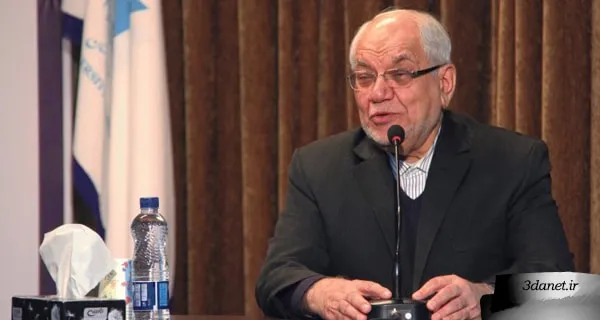
.webp)
Discussion0 comments
No comments yet; let yours be the first voice.