Religion
Blowing the Horn of Civilization-Building for Ash'arism
A debate on civilization-building and religion highlighted the tension between the need for rational foundations and the project-like nature of civilization. Rejecting exclusivism, it posits ethics as rational and independent of scripture, making the realization of civilization contingent on collective reason and organic order.
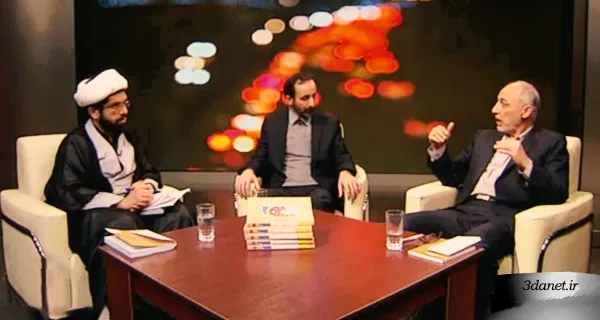
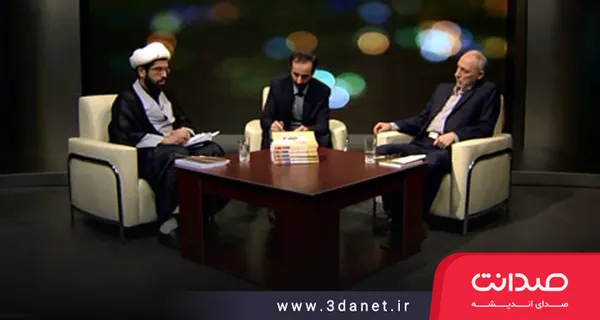
Recently, a debate on civilization-building and religion was broadcast on the Zaviyeh program, some parts of which, more than anything else, evoked polemical disputations and Diogenes' remark about Antisthenes, calling him a trumpet that hears nothing but itself. First, I will present a summary of the views of both sides of the debate, and then I wish to raise some points in critique of both parties.
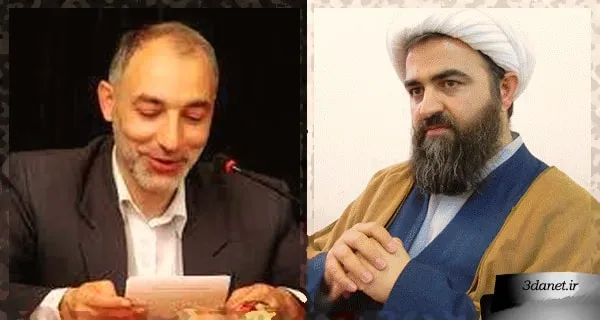
A Summary of the Views of Professor Reza Babaei:
The idea of civilization-building is problematic and is by no means the issue of this land today, and it distances us from priorities. Civilization-building, according to the view of civilization scholars, requires foundations that are not currently available. Our difference lies in the definition of order; the order necessary for civilization-building is organic order, meaning that everyone participates in it and everyone feels self-actualized. This organic order is a prerequisite for the realization of civilization. And we did not achieve order after the formation of the system; otherwise, the minimal and superstructural order resulting from a system also exists in tribes, an example of which was the order in Iraq, where, with the departure of Saddam's dictatorship, society showed that it lacks organic order. We (instead of managing a global and civilizational order) are at the stage where we should not be barefoot, should breathe clean air, and not die of famine.
Three of the necessary prerequisites for the realization of a civilization are:
➖ Tolerance ➖ Dialogue ➖ Philosophical-theoretical foundations With this explanation that: Firstly, a Greek philosophy entered, from which three narratives emerged. Secondly, by the consensus of all experts, the Islamic world is weak in political thought, theory, works, and content.
A Summary of the Views of Dr. Aboutalebi:
Civilization is a project (because humans are beings with free will), therefore we plan for it. The West, like Iraq, also lacks the foundation for civilization-building because, for example, in the West, with the absence of complete surveillance and a power outage, society descends into chaos. I believe the prerequisites for civilization exist, and the main differences between Western and Eastern civilization lie in the God-centered versus human-centered perspective, and in the West, only this world is seen.
In response to the three conditions for the realization of civilization, they stated:
Tolerance must be Islamic tolerance and "severe against the unbelievers."
The ground for dialogue for civilization-building (absolutely throughout the power structure and scientific and cultural institutions) exists because we have welcomed all schools of thought in our calls for and publication of articles. Therefore, we invite you here as well. Islamic civilization-building invites opponents; the civilization-building under discussion has nothing to do with executive work; secondly, its executors must, in practice, meet the conditions of an Islamic state. We believe that tolerance is to the extent that we use the ideas of others, and anyone who does not accept Islamic civilization will naturally have no place in this project. We must move from an Islamic state to an Islamic society, and from an Islamic society to an Islamic civilization, and its condition is having a civilizational perspective.
Some Points on Civilization-Building
In the author's view, there are observations on the views of both parties:
Ethics is a rational matter, independent of transmitted texts. And religion deals with giving meaning, educating, and refining human beings based on their innate understanding of ethics. Therefore, if tolerance is an ethical principle, the concepts of liberal and non-liberal, or religious and non-religious, do not apply to it.
Attributing a soft fundamentalism to the Prophet (that opponents must be eliminated, which today is considered a moral vice in the ethical intuitions of the world's rational people) under the pretext of "severe against the unbelievers," besides being a defamation of religion and disrespecting the Prophet of Islam, is logically flawed because the spirit of the Muhammadan Sharia, peace and blessings be upon him and his family, is other than its historical accidents in the tribal society of the Hijaz.
Having or not having a God-centered perspective relates to the meaningfulness of existence and belongs to the category of faith, not action; righteous action remains righteous even without faith. Therefore, one cannot say that the actions of Western civilization are corrupt merely because it supposedly holds a materialistic view. Regarding the ethical role of religion, it can be said that religion can be both a justification for being ethical and a result of being ethical. However, ethics itself is a completely rational and innate matter, and thus civilizations, in terms of their ethical approach (ethics meaning all managerial and normative approaches), can be common among all human beings and based on collective reason, even though each domain, with its own specificities, arrives at a kind of indigenous version of collective reason in practice. Therefore, a divine perspective is logically not a precondition for building a civilization, and fundamentally cannot be, because civilization-building, in its embryonic stage and indeed throughout its life, requires collective reason, and faith, while being authentic, is not its rival but is itself in need of reason and collective reason.
As some experts (such as Dr. Abolghasem Fanaei) have also noted, one of the serious differences between the traditional and modern worlds is that in the traditional world, justice was an attribute of the person, and it was believed that if wealth, power, etc., were in the hands of a just person, social justice would also be established; but in the modern view, justice is an attribute of the structure and institution (see: Ethics of Theology); and consequently, without considering whether the worldview of a social institution is divine or materialistic, the just procedure of its regulations and performance is evaluated. In other words, the objective goodness of justice is the goal, not the goodness of the agents' perspective; of course, this separation, which considers justice an attribute of the institution, does not mean that the spirituality of human beings is unimportant, but rather, in addition to guaranteeing justice—which protects it from the aversion or favor of officials—it is a kind of division of labor that does not consider matters that are inherently individual as involved in social behavior.
It is ironic that, in addition to presenting a harsh and exclusionary image of the Prophet of Islam, he claims the utmost tolerance and a free atmosphere for all critics. He takes a completely self-fabricated image of the West as his basis and tries to portray all the people, just like at the beginning of the revolution, as hostile to the new civilization, and instead of responding to the critic's objections that organic order has not been institutionalized in our societies, he resorts to projection and fault-finding with the West. On the one hand, this same claimant of dialogue and freedom closes the door of tolerance to those closest to him, namely the religious intellectuals who have a rational understanding of the Muhammadan Sharia, and until the end of the debate, he repeats his own claims and is busy blowing the horn of his own deafness, insisting that, on behalf of all Muslims, he wants to make historic decisions with his other Ash'arite-minded companions for the fate of all the people—I do not know whether he views the people with contempt and foolishness or not.
.
.
Blowing the Horn of Civilization-Building for Ash'arism
Author: Alef_Azad
Source: New Moon Channel
.
.
Discussion0 comments
No comments yet; let yours be the first voice.