Political Science
Justice Is No Demon!
Justice does not appear merely by being invoked; critics of modern civilisation must offer practical methods and programmes to replace democracy and technology instead of vague slogans. Reza Babaei's response to Mehdi Nasiri's critique.
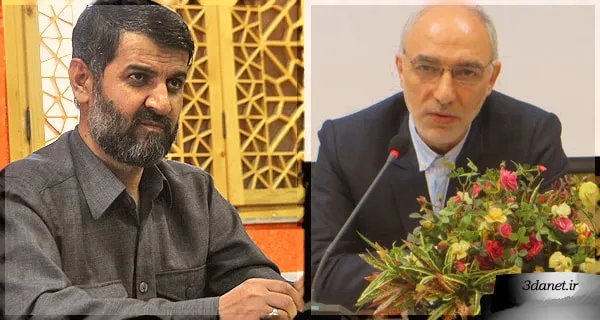
Hello I read Mr. Mehdi Nasiri's critique and I thank him; but I wish he had not brought up the political issues of the day and had not included his analysis of the regional wars. The subject of ISIS and its origins must be discussed independently.
He has considered Western civilization to be the source of anomalies and the cause of humanity's misfortunes. Firstly, I do not consider Western civilization to be the civilization of the Occidentals, but rather I deem the title "modern human civilization" to be more accurate for it; just as its cultural and geographical scope extends far beyond Europe and America; even Russia and the democratic socialists consider themselves part of this civilization. Of course, its origin was the West of the world; just as about a thousand years ago, the origin of human civilization was the East of the world and the Islamic world. Secondly, the most serious critiques of this civilization are found in the works of Westerners themselves, and this itself is a sign of its dynamism and repairability. Thirdly, we can have three positions regarding modern human civilization: absolute submission, reform, overthrow. The first form has rarely been spoken aloud; although it is not without supporters. The second form has more supporters. The third form (overthrow) also has advocates, who mostly live in Islamic countries and North Korea, and a few in Latin America and Africa.
Those who oppose the foundations of modernity and deem this civilization worthy of overthrow must first provide a precise indication of their proposed civilization so that people like me can make a choice. No one is looking for a "name" such that general and vague titles like "Divine Civilization" or "Spiritual Civilization" would suffice and everyone would raise their hands in agreement. They need to explain precisely what they want to replace democracy and technology with; mentioning details, historical evidence, principles, programs, and stages. Any human being who has lived a little in this world knows the harms and afflictions of modern civilization.
When the system of creation itself is not devoid of evil and the devil, how can anyone offer absolute support for technology or democracy? But the discussion is about better alternatives. The alternatives that these gentlemen name are, firstly, mostly nothing more than a "name," and we have no experience of them to set aside critique and pin our hopes on their promissory note; secondly, they are more of the nature of goals than methods and programs. For example, they say we want to build a civilization in which there is justice and morality and so on. These goals are very sacred; but by what methods do they want to approach these goals? What kind of government do they propose? What programs do they have up their sleeves?
No one is opposed to justice; but justice is not a demon either, that you utter its name and it appears, arms folded, ready to serve. Justice is an aspiration, and achieving a minimum of it requires a very complex process in the four domains of politics, education, culture, and social structures. What methods do you propose for erecting the pillars of justice? Now, we don't even need the method, tell us precisely: what are your sources for discovering practical methods and programs? Revelation? Narrative texts? Do you mean by narrative texts books like Bihar al-Anwar, or have you accessed texts that we are unaware of? If you mean those familiar books, tell us, have all the disagreements about their chains of transmission, implications, and scope of applicability been resolved? Why have we not been able, until today, to extract and build systems from these texts that would "astound the disbeliever"?
What definition of civilization do you have that you imagine moral recommendations and some religious beliefs are sufficient for civilization-building? Are we the only ones who love our life in this world and the hereafter, and have the people of the world become so distorted that even if they saw a superior and more responsive system, they would not accept it? Tell me, how is a layperson like me supposed to know which religious scholar is right? Is the right with that religious scholar who considers the mission of religion to be solely the education of humanity, or with that religious scholar who wants to involve religion in every issue in the world? But if by sources you mean reason and revelation, then we will enter a more serious discussion in the field of anthropology and religious studies, which must wait for another time.
?Let me also say this: modern human civilization has a form and a content. Its form in the sphere of politics is democracy, and in the realm of culture, liberalism. The content of this civilization is trust in human maturity. This form and content have more or less come to fruition in some countries, while in others they have mostly been a pretext for abuse. But in any case, modern human civilization can tell you: "This is what I was capable of. If you know a better way, here is the ball and here is the field. So do not spend all your time criticizing me. Show your way in thought and practice so that, little by little, the human world may turn to you. Criticism is easy. If you want to discredit me, reveal your own miracle. If you want to be favored, you must have something more in your bag than a handful of critiques, slogans, and clawing at the faces of this one and that one."
.
.
Justice Is No Demon!
Reza Babaei's response to Mehdi Nasiri's critique
.
.



Discussion0 comments
No comments yet; let yours be the first voice.