Religion
Let Us Not Belittle What We Have
The denigration of one's own heritage stems from accepting the superiority of the modern world. In his critique of Babaei, Mehdi Nasiri argues that the West's crises and phenomena such as Takfiri terrorism are products of this very civilization, and he describes the acceptance of Western presuppositions as the cause of the faithful's passivity in the civilizational struggle.
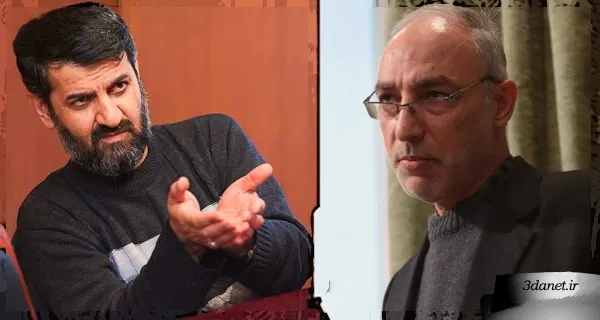
Writing in this manner and speaking in this tone—overlooking oneself and casting a contemptuous gaze upon one’s own possessions—rests on the presupposition that the modern world and the new human being have attained perfection and progress compared to our pre-modern world. All of us, if not entirely then at least to some extent, hold this presupposition, and as long as this is the case, friends like Mr. Babaei can speak in this way. But those who have grasped the destructive and crisis-ridden depths of modern civilization—including its science, technology, philosophy, humanities, and everything about it—and have freed their reason and heart from the evil of the destructive framing of Eastern backwardness and Western progress, know full well that a significant part of our troubles today also stems from the penetration of modernity into our thought, spirit, and life.
What Mr. Babaei touts as the four-century philosophical achievement of the West is nothing but relativism, nihilism, the primacy of pleasure, destructive individualism, and utilitarianism; and the product of modern science and technology is nothing but the emergence of numerous global crises, each of which is sufficient to destroy humanity within the next one or two centuries.
Mr. Babaei and those who think this way these days never point out that one of the ugliest events of our time, which has led to the humiliation of religion, faith, belief, and ideals for some—namely the phenomenon of Islam and Takfiri terrorism and ISIS—is, based on undeniable evidence and confessions, a product of the Westerners themselves and the modern nation-states born of modern philosophies and humanities. Is it not the case that Saudi Arabia, Turkey, Qatar, and the Emirates are all friends and allies of Western governments and finance the enormous cost of the Takfiri Islam terror machine?
Why should these crimes—at least a significant part of them—not be attributed to modern sciences, technology, philosophies, and political systems? Why is speaking of traditions and ideological boundaries, defending political, economic, and cultural independence, and crying out against the global Western empire considered coarse talk, while dropping a bomb every twenty minutes on the innocent people of Iraq, Yemen, Afghanistan, Libya, Syria, and elsewhere by Obama’s eight-year administration is deemed to be based on tolerance, gentleness, science, and all human values?
Of course, as long as our seminaries, our revolutionaries, and our youth have not become fully aware of the destructive and crisis-ridden depths of modern civilization in all its material and spiritual dimensions and have accepted the Moses of the West, articles by Mr. Babaei and some of his like-minded colleagues can have many readers, shake the thoughts and hearts of some, and render certain individuals passive and problematic toward their religion, creed, and traditions.
Of course, my intention is not to defend everything that bears the name of tradition, nor do I wish to attribute all problems to modernity and the West and turn a blind eye to our own numerous flaws. However, I never agree with belittling ourselves and our traditions at the price of exalting the West and the modern world, and I consider it a fallacy and an error.
And now, I mentioned the Moses of the West. What is that story? It is said that one day a Muslim and a Jew decided to debate the truth of Islam or the truth of the Jewish faith and formed a gathering. The Jewish party, who was shrewd and clever, first asked the Muslim: Do you accept Prophet Moses? The Muslim immediately and without hesitation said: Of course, most certainly. The Jew asked: Do you also accept that the divine book of the Jews is the Torah? The Muslim said: Yes, definitely. The Jew said: Well then, we both share in the truth of Moses and the Jewish faith, and there is no doubt about it. Now we must begin the discussion from the truth of Muhammad (PBUH) and the religion of Islam and see whether such a prophet was sent or not, and so on.
In the crowd, a Muslim individual who understood the trick the Jew had played on the Muslim and that he was about to win the debate, shouted at the Muslim: Why did you accept his Moses? Don’t accept his Moses! Strike down his Moses. Yes, and today our situation with the West and the Westernized is the same: in this civilizational and intellectual conflict and dispute, we have accepted the Moses of the West, confessed to the perfection and progress of the West, at least in the material and livelihood sphere, and to our own backwardness, and we always pursue the discussion from this point: What were the reasons for the material perfection of the West, what factors played a role in this perfection, and what were the reasons for our backwardness and misery? And it is here that, naturally, the Westernized are in charge and active, while the traditionalists and the devout are passive and so on.
.
.
Let Us Not Belittle What We Have
Mehdi Nasiri's critique of the note 'Contemporary Ancients' written by Reza Babaei
.
.

Discussion0 comments
No comments yet; let yours be the first voice.