Philosophy
A Dialogue Between Ivan Illich and Majid Rahnema – Be a Candle in the Dark!
Mainstream development reduces human beings to passive consumers; but Majid Rahnema and Ivan Illich, in their critique of this Western model, illuminated the difference between mass misery and a life of contentment and detachment, and proposed a path other than conformity with modernism.
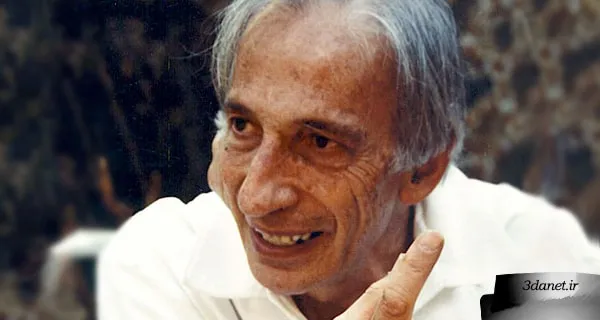
Foreword
How painful and how hard it is for a nation to have remained unaware of its true servants, benefactors, and treasures.
Majid Rahnema is one of those enduring treasures, not like the mute and ruinous petrodollars, nor like the Kayanian crowns, the Koh-i-Noor and Darya-i-Noor diamonds, the black pearls, the colossal towers, and the hills and mountains scarred by the bulldozers of villa-builders and miners—things exposed and condemned to embezzlement, theft, and immediate, eventual, and of course certain destruction;
but rather, a treasure of the kind Ferdowsi spoke of, a treasure that “suffers no harm from wind or rain!”
Majid Rahnema will preserve his presence in the world of thought for as long as humanity exists, whether by name or namelessly!
Rahnema’s words and deeds, like Gandhi’s words and deeds, are “words and deeds” of the present and the future.
His words may well taste bitter to all of us who are enamored with, tainted by, and afflicted with a global alignment and conformity with modernism and Western-style development, but he has so well theorized the difference between universal misery and contentment, detachment, and “poverty is my pride” that, until now, few have been able to offer a fitting response to the doubts and questions raised by him and his friend Ivan Illich. His audiences have mostly tried, and managed, to consign these questions to oblivion, so that being swept away in the torrent of post-development and post-modernity might appear as an inevitable, inescapable, and fate-like course.
His legacy is a new design that he has cast into human thought, whether the morsel-seeking historiography prescribed by the sage wills it or not! Whether the chaotic marketplace of baseness, charlatanism, and the craving for homage demands “a thousand kinds of speech on silent lips and mouths” or leaves free-thinking intellectuals and activists alone!
But what of us?!
We are ashamed that we were and remained unaware of him, and perhaps will remain unaware for many distant years to come.
.
And now, development:
For years we have been hearing about something called development; for years!
In our province, this word is mostly heard in the speech of esteemed officials, high-ranking civil servants, and individuals recognized as official or unofficial experts or researchers in social, economic, and political affairs and sciences—in lectures, administrative writings, and in books and articles. A new adjectival phrase has also been found for it, such as sustainable development and perhaps other types of … development.
But what is its practical meaning?
Its practical and “actually existing” meaning is the very path that all people across the world are currently treading, roughly since the era when technology and goods produced by the mass manufacturing of machines more advanced than scissors, sickles, and hand saws entered their lives and, in the consumers’ own parlance, supposedly made life easier; to the point where its ultimate ideal is realized:
The ideal of “Don’t budge from your spot, no need! Everything comes right to your hand.”
A handy example of the realization of this ideal is the television remote control, which helps you, without needing to get up from your place, to change the channel or adjust the volume while you are cracking your sunflower seeds.
If technology has its way and you have the money for it, they will arrange things for you so that you certainly “don’t budge from your spot.”
Another example is the industry called tourism and its offshoots [as opposed to travel for the sake of encountering human beings, their experiences, and their habitats], which is considered by some communities to be a generator of development and money. An industry that, in practice, produces new human beings within the native society who, as museum and exhibition pieces (here), with a sense of regret and shame or with a sense of businesslike cunning, await the pockets of the “more naive” upon whom they can foist slapdash services and mostly decorative goods; that is, alongside the disruption and disordering of the previously more established culture and the ill-considered cultural contamination of the native society with all sorts of unknown and transient imported cultures; which itself is a long story!
Another example: something called a “cash crop.” That is, defining agricultural production for the farmer as an activity to acquire as much as possible of something called money, so that with it, he can buy a vast variety of things from a market beyond his control. That is, the very reality that has befallen the small-scale producers of “single-crop” commodities like cocoa, coffee, walnuts, wool, bananas, apples, onions, and so on.
Here, the reign of the “uncompensated plunder of the environment” (here , here and here ), the “religion of consumption,” the “production of consumption and demand,” “R&D for demand creation,” “conspicuous consumption,” “conspicuous lifestyle,” the “greed and envy of consumption,” the “consumer market,” the “market mechanism,” the “alienation of the worker,” capitalist greed, and capitalist mass production come into play and build a new world for every single one of us, whether we withdraw or, seeking a share, become entangled in it.
This is the ideal face of development and its “pie in the sky.”
This ideal has probably been unconsciously implanted in the minds and hearts of the majority of the world’s population, and if the reality of the “human condition” of each of us, whether urban or rural, allows it, we would mostly choose this.
But after this goal-setting, we face a reality called developed or underdeveloped people, societies, and communities.
That is, a division between different groups of individuals or populations, based on their distance from or proximity to what Western models determine as the criteria for comparison. In this way, individuals or societies are placed within a spectrum of this label.
The core concept of this social term entered European languages at least 200 years ago and thereafter, through the interactions of cultures, governments, and groups or individuals who sought to transfer that same Western lifestyle as the more correct model of living, was transmitted to the languages of the “other” and the nations of the “other,” to cultures, languages, and nations that were wallowing in the sea of their own primitive ignorance!
Today, we deal with all sorts of people who, in the eyes of Westerners, are underdeveloped, or who consider themselves underdeveloped in relation to Westerners.
In contrast, from the early twentieth century, some people in various places began to doubt, question, and radically critique the results of this kind of human mobilization to acquire “more and more, better and better!”
One of their questions was: who said that the Westerner necessarily has so many things to teach the non-Westerner; and that the non-Western “other,” for the time being until further notice, must necessarily learn the way of life from the developed Westerner.
Two of the most prominent of these individuals are:
Ivan Illich and Majid Rahnema.


Ivan Illich, the radical philosopher of education, is the same person of whom we had heard:
“Mud up the doors of universities and hospitals, and I will deliver to you a healthy and cultured generation.” ( Makhmalbaf and His Creative School , here and here , here and here )
Majid Rahnema, the Iranian jurist and political economist, is the same person who, in protest against the securitization of universities, after a time, resigns from the royal post of Minister of Science and, to serve the people, sets out to build a model of well-being and true prosperity (as he imagined it at the time) in the village of Alashtar. (Rethinking the Selseleh Regional Development Plan of Lorestan)
Let us read a conversation between these two:
Now these two old friends, 26 years after their first meeting in Tehran and years of close association, are once again seated face to face on December 13, 1994, in Bremen, Germany; they speak frankly, yet amicably.
It is best that we review together the radical critique these two have of the pervasive trend of development, and even of sustainable development.
It is hoped that the esteemed and interested reader, with the references provided on the pages following the conversation, will follow the discussion with greater depth, perhaps so that an opening may emerge.
Perhaps the people of this earthly sphere themselves will take steps to reverse the failed two-hundred-year trend of recent times, in the realms of well-being, feelings of contentment and felicity, leisure and fruitful idleness, “justice and freedom,” “peace, joy, and hope”; wholesome food and true health, basic necessities, dignified housing, the abolition of modern slaveries, and, most importantly, steps toward the abolition of the war industry.
We shall see!
To read the original text, please click: A Conversation Between Ivan Illich and Majid Rahnema
Gandhi and Tolstoy are both pioneering critics within this school of thought.


.
.
A Dialogue Between Ivan Illich and Majid Rahnema – Be a Candle in the Dark!
Source: Non-Violence Website
Author: Gholamali Keshani
Contact the author:
– Telegram channel address: @GahFerestGhKeshani
– Facebook address: facebook.com/gholamali.keshani
– Email address: keshanigh@gmail.com
.
.

Discussion0 comments
No comments yet; let yours be the first voice.