Philosophy
A Reflection on Love, Immortality, and the Art of Living in the Present, Masoud Zanjani
Life is besieged by nothingness, and only those who live in the present truly live. Immortality is not a fate but an achievement—one that depends on the art of living in the moment and living with love: a dance with death that embraces suffering, too.
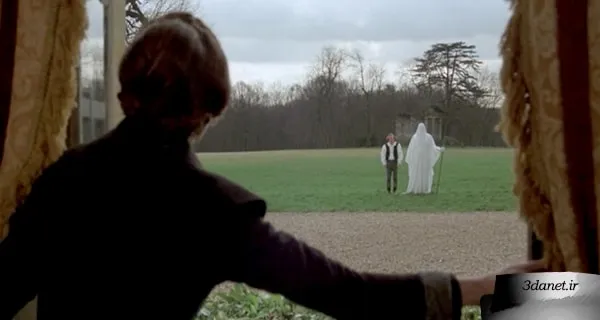
Dedicated to the creator of Taste of Cherry, Abbas Kiarostami
Masoud Zanjani: Life flows only in the “now,” and the now is always in the embrace of two “nothingnesses”: the past, which “is no more,” and the future, which “is not yet.” Being is besieged by nothingness. Therefore, one must learn to “be” in the neighborhood of nothingness and in spite of it. One must live in the embrace of death, and live “alive,” not commit suicide out of fear of death.
Only one who lives in the “present” (now) lives alive. Only one who lives in the present can refrain from counting death against life and realize that death is a gift that gives life value. Only he knows that if there were no death, life would die and become deathly. Only one who lives in the present can refrain from counting suffering against life and realize that suffering is a corridor through which happiness and salvation pass. Only he discovers that if there were no suffering, joy would wither and life would dry up and become more afflicted. Indeed, only one who lives in the present can grasp the depth of Sohrab’s saying that “if there were no death, our hands would search for something.” It seems Wittgenstein expressed all that can be said on this matter in his Notebooks with brevity and beauty: “The man who lives not in time but in the present is happy. For life in the present there is no death… He who lives in the present lives without fear and hope.”¹
Sohrab was right to say “life is a bathing in the pool of now,” but it must be said that this description is not equally true for the lives of all human beings. For not everyone who is alive, lives! More precisely, not everyone who is alive and lives, lives “alive.” It can be said that “being alive” is being immersed in the pool of now, but “living alive” is being immersed, yet not drowning, in it. “Being alive” is living in time and being a slave to time. But “living alive” is living in the present and being the master of time. In this sense, one who possesses time is eternal and never dies.
Life is a destiny, but the quality of life is a choice. Life is an occurrence, but immortality is an achievement. For life, that is, being immersed in time, is the inevitable destiny of all; but death, that is, drowning in time, is a condemned destiny for some human beings. Death is only the destiny of one who has not learned the art of living in the present, the technique of bathing or swimming in the pool of now. Now one can offer a fitting interpretation of Wittgenstein’s profoundly deep thought in the Tractatus Logico-Philosophicus that “the only possible form of immortality is living in the present.”² Within this framework, as stated, immortality is not an “occurrence,” that is, a “prior and given” destiny for all, but an “individual achievement” of humanity, an “existential attainment” of the human being. In this sense, immortality consists of “the ability and art of living in the present”; not as scattered, accidental, and temporary experiences, but as a natural and permanent condition in life. Death, too, within this interpretive framework and horizon of meaning, consists of being devoid of the art of living in the present.
Now, if it is asked what kind of being and living it is to live in the present, the answer must be “being in love” and “living lovingly.”³ Montaigne says: “If someone asks me what the first condition in love is, I will answer that it is knowing how to seize the moment; the second condition is the same, and the third is the same; therein lies the condition for success.”⁴ Love is the art of living in the present, and if we grasp this, we will undoubtedly understand the import of Unamuno’s words that “love is the only antidote to death.”⁵ Just as, for Hafez, true death is the death of love, just as immortality is the art of living lovingly, the art of living alive.⁶ Now, with Hafez and Montaigne, we can better and more deeply grasp the depth of Wittgenstein’s saying that the only possible form of immortality is living in the present.
The prerequisite for living life vividly is reconciliation with the shadows and dark aspects of life, such as death, suffering, sorrow, deprivation, loss, separation, delay, aging, illness, and poverty. To find light, one must return to darkness and believe that darkness is the womb of light, not its prison. To find life, one must reconcile with death and return to it, for death is the mother of life. Life lives off death. Just as light always begins from darkness, life also begins from death. But if one lives in reconciliation with death, their life begins from death but does not end in death. Indeed, not everyone dies. Lovers remain immortal; lovers drive death away and put death to death.
From another perspective, one could say that "living life vividly" is not being blind, and possessing the ability to "see." Just as death, from a philosophical perspective, is not the end of biological life, "blindness," from this perspective, is not the inability to see physiologically. "Blindness" is not not-seeing, but seeing one-sidedly and seeing uniformly. "Blindness" is not seeing the shadows and darknesses. If someone sees only the lights in life, they have, in fact, not seen the light either. In reality, they have "looked at" the light, but have not "seen" it. Seeing is the art of seeing the chiaroscuros.
One who seeks only joys and pleasures pursues the path of suffering; the comfort-seeker ultimately does not attain comfort and does not rest at ease; the pampered one is left behind by pampering and remains stuck with need. One who sows in hope of union and in desire for stability, perpetually reaps separation and restlessness; and one who runs in pursuit of desire will never taste the nectar of desire and will not escape desirelessness. Of course, here, one must be cautioned that just as if someone stares at the sun, they will not see the sun and will also lose their own sight, so too, one who closes their eyes to life and only fixates on suffering and stares at death is already dead and will lose life with even more agony and suffering, letting it slip from their grasp.
Lovers live not in pursuit of suffering and with the ornament of death, but in the light of death and on the foundation of suffering. Indeed, to live life vividly, one must also live sorrow, suffering, and death, and embrace them lovingly. Living lovingly is dancing lovingly with death. Life has no other partner but death! The ultimate lovemaking with death has been beautifully versified by Rumi in these lines:
If death is a man, tell him to come to me / So I may hold him tight in my embrace I shall take from him an eternal life / He shall take from me a colorful cloak
.
.
Endnotes:
1 — Wittgenstein, "Notebooks," translated by Malek Hosseini in "Wittgenstein and Wisdom," Hermes Publications.
2 — "Death is not an event in life. We do not experience death. If by eternity is understood not infinite temporal duration but timelessness, then he lives eternally who lives in the present." (Wittgenstein, "Tractatus Logico-Philosophicus," translated by Malek Hosseini in "Wittgenstein and Wisdom," Hermes Publications)
3 — But if it is asked what kind of being and living love is, it seems that up to this point, language has had the power of expression, but beyond this, there is only silence, and one must practice silence: No matter how much I explain and describe love, When I come to love, I am ashamed of it. Although the commentary of the tongue is illuminating, Yet love without a tongue is more luminous. (Rumi, Masnavi-ye Ma'navi)
Here, one can only say with Rumi, "When you become like me, you will know":
"Someone asked, 'What is being a lover?' I said, 'Do not ask about these meanings. When you become like me, you will see. When He calls you, you will read.'" (Rumi, Ghazaliyat-e Shams-e Tabrizi)
In the words of Wittgenstein in the "Tractatus Logico-Philosophicus": "Whereof one cannot speak [clearly], thereof one must be silent." It is as if this is the very point that Bayazid Bastami spoke of:
"Brighter than silence, I saw no lamp, And a speech, better than speechlessness, I heard none. I became a dweller of the house of silence, And put on the garment of patience. I became a bird; Its eye, from oneness, Its wing, from everlastingness, In the air of qualitylessness, I was flying. I drank a cup from which, never, until eternity, Was I quenched of its thirst."
4 - Montaigne, "Essays," translated by Mahboubeh Mohajer in "Genius (The Image of 50 Geniuses of Speech)," Hermes Publications.
5 — "The saddest thing in the world and in life, my readers and brothers, is love. Love is born of intoxication and gives birth to sobriety; love is the solace of human loneliness; love is the antidote to death, for it is the sister of death. As Leopardi said: Brothers of destiny, born in one womb, Love and Death." (Miguel de Unamuno, The Tragic Sense of Life, translated by Baha'oddin Khorramshahi, Niloufar Publications)
6 — "Never dies he whose heart is quickened by love; Our perpetuity is inscribed on the scroll of the world." and "Whoever in this circle is not alive through love, Pray over him, by my decree, though he has not died." (Divan of Hafez)
.
.
A Reflection on Love, Immortality, and the Art of Living in the Present
Author: Masoud Zanjani
Author's Website
Author's Telegram Channel
.
.

Discussion0 comments
No comments yet; let yours be the first voice.