Philosophy
Abdolkarim Soroush: The Theoretical Foundations of Liberalism (University of Tehran, 1991)
Liberalism means that no person and no thing is sacred, and that we are in the business of analysis, not veneration. The rejection of sacred authorities and the insistence on human fallibility are the foundation of equal rights and political freedom, which holds that the right to govern derives not from God but from the people.
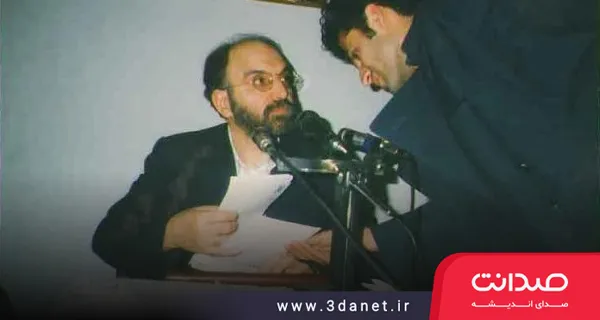
Part of a lecture by Dr. Abdolkarim Soroush titled “The Theoretical Foundations of Liberalism,” delivered at the Faculty of Law, University of Tehran, 1991 – published in the book Razdani va Roshanfekri va Dindari (Secrecy and Intellectualism and Religiosity)
Liberalism means that no one and nothing has ever been or is sacred; liberate us from the evil of sanctities. Do not present any personality or any idea whose sole function is for us to sanctify and glorify it. From now on, we are people of analysis, not people of glorification. This is the precise meaning of liberalism. Rationalism, meaning reason-centeredness, which is the twin of liberalism, arises from this very point. Reason is concerned with analysis, not sanctification. It is emotion that is concerned with sanctification, and it is for this reason that you see, unintentionally, emotion is disparaged in the school of liberalism. Perhaps if you were to ask individual liberal and rationalist philosophers, they would not consent to the disparagement of emotion. But the inevitable logical consequence of liberal thought, which praised reason and negated sanctification, was that it also disparaged emotion. For this reason, later in the Enlightenment school, Romanticism or the Counter-Enlightenment emerged, which demanded the rights of emotion. William Wordsworth said: “Enough of all this science, all this art. Close those barren books. Instead, bring a pure heart that can understand and see.” You have given reason its due; now pay the heart its due as well.
The Fascist movement was, in a sense, the triumph of Romantic thought in the West, which elevated emotion to its highest degree and reduced reason to zero. The emphasis placed on youth in the Fascist school is nothing but the exploitation of their unrefined and immature emotion and the suspension of reason under the pretext of opening the door to emotion.
Liberalism begins where a person strives to free themselves from the evil of sanctities. But it was not only the authority of the Church that was sacred. The authority of kings (monarchy) was also sacred. The authority of past thinkers was also sacred. All of you have heard the phrase that was often repeated in the Middle Ages: Magister Dixit, the master has spoken (meaning Aristotle and Plato). It was enough for a saying from past thinkers to be brought forth to silence mouths and compel everyone to submit. Rebellion against any kind of authority, whether religious authority, monarchical authority, or intellectual authority, is one of the pillars of liberalism. Therefore, when it is said that liberalism wants the role of monarchy, government, and the state in a limited form, it goes back to this very point. It does not approve of any overlord; whoever it may be, whether God, the shadow of God, in the realm of thought, opinion, and religion, or in the realm of rights and material and spiritual privileges. In this way, liberalism was the negation of the sacred powers that had completely subjugated the society of Europe at that time, both in theory and in practice.
In softer and simpler language, with the introduction of liberalism, the fallibility of human beings was taken seriously, sanctified, and emphasized, and this principle replaced all previous sacred principles: that human beings are fallible, both in the realm of politics, in the realm of knowledge, and in the realm of religion. Truth is not up anyone’s sleeve, and therefore no one can speak infallibly or rule infallibly. We are all seated at the same table, and we all dwell in the same lane. No one, by themselves or by God, possesses any privilege over another.
Leaving this epistemological aspect aside, we come to the anthropological aspect of liberalism. The main point of liberal anthropology is that a person’s belief does not interfere with their humanity; in other words, belief is not superior to humanity. Compare this with religious or Marxist schools, which believe that one of the constituents of a person is their belief and count martyrdom for one’s belief as a virtue. But in liberalism, just as we have no sacred human, we also have no profane human. The point of liberalism is that the circle of human humanity is very broad. No one falls from humanity or becomes deserving of death and deprivation of rights because of holding a particular belief, unless people themselves decree his expulsion from the world (execution); and that, too, not because of his belief but because of his deed, and it is clear that this verdict was in explicit contradiction with the verdict of the Church, which condemned many people to death and killing through excommunication and anathema.
This ignorance of the infidels is not confined to Christians; look at Rumi, who for instance says:
A donkey should not be killed for the sake of reform,
Therefore, the blood of infidels became lawful to shed.
When he becomes wild, his blood becomes lawful,
Like a wild beast before arrows and spears.
Their mates and children are all captives,
Because they are wild, devoid of sublime intellect.
Again, an intellect that shies away from the Intellect of intellect
Has been transferred from intellectuality to the animals.
(Masnavi, 1:5/33ff)
The liberals' thought was precisely that if someone leaves religion, they do not leave humanity. The boundary of faith and humanity is not the same, and the circle of humanity is far wider than these; and it was from here that a kind of religious tolerance or gentleness was born in liberalism.
In our society today, when the word liberalism is used, it is this concept of tolerance that is evoked more than any other. This tolerance has both anthropological and epistemological roots. Likewise, the equality of human rights in liberalism, and the freedom to choose one's spouse, belief, homeland, and profession, stand in open conflict with the inequality of rights between the followers of one religion and those of another in prevalent religious thought.
The late Sheikh Fazlollah Nouri writes in one of his works that during the drafting of the Constitutional Constitution, when we were debating the equality of rights between Muslims and infidels, one of the constitutionalist intellectuals told me that this equality of rights is so important that if you keep all the other principles of the constitution but remove this one, we will no longer be recognized as constitutionalists. Sheikh Fazlollah says this by way of condemnation and denial, and his meaning is that the drafters of the constitutional constitution lack Islamic commitment. Yes, that is exactly the case. This thought is the offspring of the school of liberalism. Seeing humans as equal causes everyone to acquire equal rights, and consequently, equality will also emerge in the political and social arenas. The political freedom we spoke of earlier reveals its profound meaning right here. Political freedom precisely means that no one, by their own authority or by God's, has the right to rule. This right must be granted to them by other human beings. The simple meaning of political freedom is, of course, that people choose their desired government by casting votes into a ballot box. But this matter has a deep philosophical backing, of which voting, choosing a government, and having a parliament are all offspring; and that is the possession of natural rights as opposed to divine rights.

Discussion2 comments
اگرلیبرالیسم یعنی ما را از شر مقدسات رها کنید پس چرا خود لیبرالیسم مقدس باشد شاید کسی بگوید ما را از شر لیبرالیسم هم رها کنید، و اگر کسی بگوید ما را از شر لیبرالیسم رها کنید پس چرا نگوید ما را دوباره به مقدسات باز گردانید
خط 1: لیبرالیسم یعنی هیچکس و هیچچیز،هیچگاه مقدس نبوده و نیست، ما را از شرّ مقدسات رها کنید. خط 28: به زبان نرمتر و سادهتر، با طرح لیبرالیسم جایزالخطا بودن آدمی مورد توجه و تقدیس و تأکید جدی قرار گرفت و این اصل به جای همهی اصول مقدس پیشین نشست که آدمی، هم در عرصهی سیاست و هم در عرصهی معرفت و هم در عرصهی دیانت جایزالخطاست. این تناقض در چند خط کوتاه نشان می دهد توی یک متن کوتاه ساده نمی شود تناقض ذاتی لیبرالیسم را پنهان کرد.