Religion
After Twenty Years
A seminarian's twenty-year struggle against usury took a new turn when he entered academia: banks are the product of a flawed process, and the solution lies not in eliminating interest but in economic prosperity and political development.
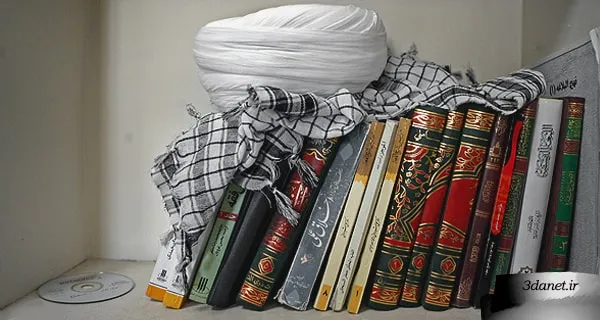
He is a seminary student and carries the pain of faith. He has read in the Quran that usury is war against God. He has also heard from his teacher that usury is the source of all corruption. So he girds his loins and goes to war against usury. The nearest target for him is the banks. He begins his critiques against the banks. Sometimes he writes, sometimes he gives speeches, and sometimes in his mystical solitudes he weeps and asks God to grant him the success to uproot usury, lack of hijab, and the like, root and branch. At times he writhes in shame for having fallen short and fought too little. Twenty years pass, and now our young seminarian has reached middle age. He is still worried and sorrowful, even more than before; but he does not lose hope. He turns to new possibilities. He creates a channel on Telegram, builds a blog, goes to Facebook, and uses all the preaching opportunities in the months of Muharram, Safar, and Ramadan to break this giant's horn. When, with a tired throat and aching chest, he lectures against usury and lack of hijab, a feeling brimming with spirituality and closeness to God comes over him. Sometimes he also murmurs: Whatever effort I have shown in seeking you, This much is certain, that destiny cannot be changed. The sense of duty draws him to further study and even university education. At the university and among books, he gradually notices a strange issue. He does not accept it and passes it by. He enters into tireless debates with university professors and students. He sees a single step of retreat as a great sin whose shadow is slowly creeping toward him. He pushes away fatigue and prepares to write a book about usury in Iran's banking systems. To write the book, he is forced to read several specialized books. He reads and reads. But the more he reads, the more prominent that strange issue becomes in his view. One night, after hearing the television news, while sitting at his desk with a pile of colorful books before him, he says to himself: Truly, why do Iranian banks take and give more usury than non-Islamic countries? Is there a hidden hand at work? He gets up and pours himself some tea. - Banks take interest and give interest, presumably to increase the circulation of capital in their accounts. Well, if this same capital circulation were provided through another way, there would be no reason for usury. Now, we are not saying they should take no interest and give no interest. A country cannot function without banks, and banks cannot function without interest. But not this much! He ponders the "other way." - The other way! He recalls reading in books and hearing from his teachers, and being convinced, that wherever there is no economic prosperity, banks have no choice but to turn money into money, which is the beginning of usury. - That's right! Economic prosperity! I found it! It is at this moment that his mind, after twenty years of relentless and sincere struggle against usury, bids farewell to usury and thinks of economic prosperity. But immediately he remembers that the economy does not prosper by his will. Many factors must come together for a country's economy to flourish. One of them is foreign investment. And foreign investment is not possible except after political development and bringing capital out from under security scrutiny. - So what must be done? He fills the glass again with hot, strong tea. - So is there no way for economic development except through political development? He thinks of China, which managed to achieve economic development without political development. - Now, where would we bring a billion cheap workers from?! He laughs. - Besides, the Chinese have no problem with foreign investment; even if the investor is global imperialism. He sinks into thought. The 27 percent interest rates of Iranian banks are no longer his main issue. His mind is filled with new problems. Now he knows that banks are part of a defective process; indeed, they are its product. He decides, before writing a book about usury, to enter into dialogue with his university and seminary professors. He puts down the pen and picks up the empty glass; he fills the glass with hot tea. Piping hot. This time stronger than before. With the glass of tea, he heads toward his library. But no book catches his eye. He returns. He sits. The tea grows cold and his mind hot. He gathers the books from the table. Stacks them up. He sees the photo of his daughter smiling at him from the corner of the table.
.
.
After Twenty Years
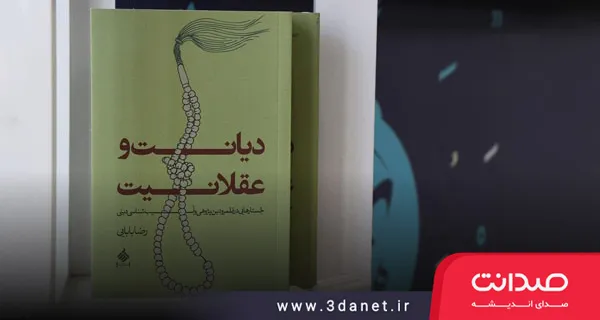
Author: Reza Babaei
.
.

Discussion0 comments
No comments yet; let yours be the first voice.