اندیشهفلسفهخردگفتگوحکمتمعناپرسشفرهنگ
Religion
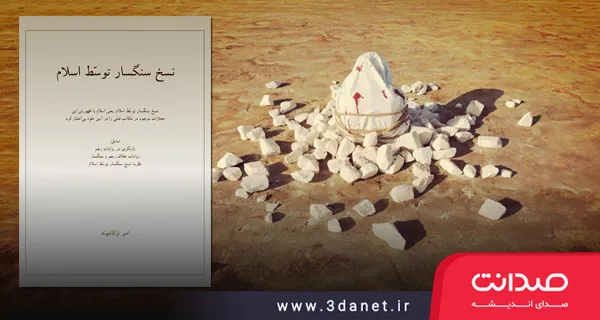
Amir Torkashvand: The Harbi Kafir, the Most Oppressed Defenceless Group
In the rulings of classical jurists, the ḥarbī unbeliever is the most defenceless and wronged group: their status as ḥarbī is defined not by any aggression against Muslims but simply by their refusal to embrace Islam, and offensive jihad against them is deemed obligatory.
We Muslims have encountered many problems in our individual, familial, social, and political lives stemming from the opinions of the early jurists, yet we rarely reflect on the horrific consequences of those opinions for non-Muslims (kuffār). For this reason, taking inspiration from the beautiful saying of Lady Fatima (al-jār thumma al-dār – the neighbour, then the household), whose ascent to the heavenly realm is commemorated these days, I shift the priority from ourselves and Muslims towards those further away, namely non-Muslims.
The Ḥarbī Kāfir, the Most Oppressed Defenceless Group:
If you were to ask which is the most oppressed, defenceless, and undefended group in the jurisprudential texts of the early scholars (a tradition that continues with its ebbs and flows), I would answer: the ḥarbī kuffār! Why? Because: In people's minds, aside from the fact that the word kāfir/kuffār is itself inherently 'repulsive, nauseating, and the aggregate of all evil traits,' when combined with the word ḥarbī (belligerent), it conjures the notion that what is meant is that a bunch of godless, utterly depraved infidels have attacked a Muslim-inhabited area and embarked on killing, looting, occupation, and violation of honour! So why are you sitting around? Rise up and defend the oppressed and downtrodden Muslims against those such-and-such kuffār!
But the explanation of the traditional scholars themselves on this matter is something else. They say: Anyone, at any time or place, in any century or continent, who does not believe in the core tenets of us Muslims 'and specifically in our Prophet' and is not a Muslim, is deemed a kāfir and counted among the kuffār! And their being called ḥarbī is not because they have attacked anywhere, but rather they are called ḥarbī because, by not believing in the last messenger of God, they have officially stood against the Creator, and by this rejection and opposition, they have effectively declared war on God! And since they have gone to war against God's plan, it is incumbent upon Muslims to attack them (in whatever century or continent they may be, at least once a year) and compel them to embrace Islam, so that the earth may be cleansed of the filth of kufr and the kuffār. Therefore, the ruling of initiatory jihād against the ḥarbī kuffār is precisely and solely because of their beliefs; even if they do not have the slightest dealings with us Muslims!
It should be noted that in jurisprudential parlance, the kāfir has various classifications depending on the subject: If viewed from the perspective of the type of their belief: People of the Book and polytheists (non-People of the Book); and if viewed in terms of fighting them: ḥarbī and dhimmī (ḥarbī is a descriptive attribute of all kuffār, except that the People of the Book who have submitted and accepted the regulations of the dhimma are exempted from it and are called dhimmī).
?al-Ḥarbī: One who has no scripture, nor quasi-scripture, among the categories of kuffār. The jizya is not accepted from the ḥarbī, unlike the dhimmī. The meaning of ḥarbī in the terminology of the jurists is not one who has declared war on the Muslims (al-Muṣṭalaḥāt, prepared by the Fiqh Dictionary Centre, p. 961 / Muʿjam Alfāẓ al-Fiqh al-Jaʿfarī, Dr. Aḥmad Fatḥallāh, p. 157). ?al-Ḥarbī and al-Dhimmī: The meaning of ḥarbī in the terminology of the jurists is not one who has declared war on the Muslims, for everyone among the categories of kuffār who has no scripture nor quasi-scripture is ḥarbī according to them, and the jizya is not accepted from him by consensus. As for one who has a scripture, like the Jew and the Christian, or a quasi-scripture, like the Zoroastrian, he is of two types: dhimmī, who is the one who accepts the conditions of the dhimma and adheres to them, and non-dhimmī, who is the one who refrains from accepting these conditions, and his ruling is the ruling of the ḥarbī according to the consensus of the jurists (Fiqh al-Imām Jaʿfar al-Ṣādiq, Muḥammad Jawād Mughniyya, vol. 2, p. 261). ?If the kāfir is not a scriptuary, he is ḥarbī; or if he is a scriptuary but has not entered the dhimma of Islam. As for the dhimmī, he is the scriptuary who has entered the dhimma of Islam and committed to the conditions of the dhimma (al-Rawḍa al-Bahiyya, vol. 8, commentary p. 26, footnote). ?It should be known that what is meant by 'people of war' (ahl al-ḥarb) is not those who have set up combat against the Muslims, as is the apparent meaning of the term; rather, what is meant is those who have departed from obedience to God and His Messenger by persisting in kufr, even if war in the sense of combat has not occurred from them... Hence, there is no difference in that between the dhimmī who does not fulfil the conditions of the dhimma, and other kuffār and polytheists (al-Ḥadāʾiq, al-Baḥrānī, vol. 19, p. 373). ?What is meant by 'people of war' (ahl al-ḥarb) are those whom it is permissible to fight and wage war against until they submit [to Islam], and by 'people of the dhimma' (ahl al-dhimma), the Jews and Christians who fulfil the conditions of the dhimma; if they breach its conditions, they become people of war (Nihāyat al-Marām, Sayyid Muḥammad ʿĀmilī, vol. 2, commentary p. 243). ?Those besides the Jews, Christians, and Zoroastrians are ḥarbī. And likewise these three sects, if they are not obedient to Islam and do not act according to the conditions of the dhimma (Suʾāl wa Jawāb, Ṣāḥib al-ʿUrwa, vol. 1, p. 142). ?And the description of 'war' (al-ḥarb) is applied to him because of his departure from obedience to God Almighty and His Messenger and his persistence in kufr, even if war in the sense of combat has not occurred from him (Masālik al-Afhām, al-Shahīd al-Thānī, vol. 3, commentary p. 374).
.
.
The Harbi Kafir, the Most Oppressed Defenceless Group
The Poor Harbi Kafir
(Dedicated to the poet of “The Neighbour, Then the House”)
Amir Torkashvand, 2017.03.03
.
.


Discussion0 comments
No comments yet; let yours be the first voice.