Philosophy
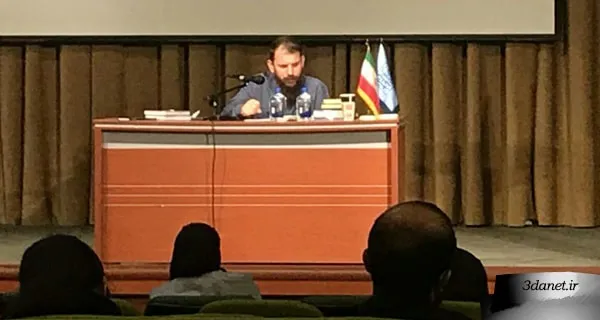
Arash Abazari Lecture: “Hegel and Multiple Modernities”
Modernization theory confines modernity to the West, while postcolonial thought denies its universality. Arash Abazari, reading Hegel, proposes a third path: the norms of modernity are universal, but its economic and political structures can vary.
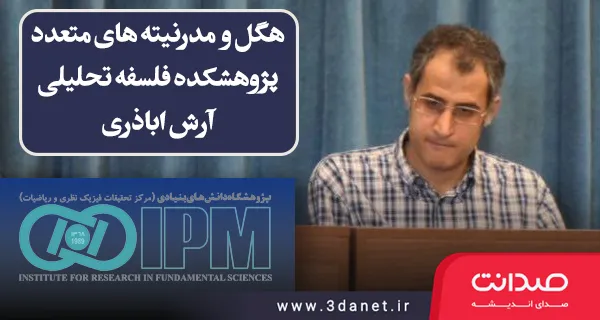
Broadly speaking, theories of modernity can be divided into two categories: the claim of the first category—which can be called modernization theories—is that there is only one form of modern life, and that is what has now been realized in the West; that is, a form of life whose economic system is a capitalist system based on the free market, and whose political system is based on the idea of human rights and representative democracy, in which the major decisions of society are determined through the algebraic sum of the opinions of each individual.
The second category consists of postcolonial theories, which claim that there is fundamentally no such thing as a universal modernity. Rather, the modern form of life, which initially took shape more or less accidentally in the West, is legitimate only in that same West, but this form of life has passed itself off as universal through the West's military or economic dominance over the world. According to postcolonial theories, there is no such thing as universal humanities, or universal philosophy, (and in its extreme form) universal science, and every non-Western culture and country has its own indigenous social sciences, indigenous philosophy, and indigenous science.
My claim in this lecture is that if we read Hegel well and think about him, he offers us a third way of understanding modernity. According to this third way—the details of which I will elaborate in the lecture—although the ideals and norms of modernity are certainly universal, there is not only one possible modern economic and political structure (especially since the current structure of modern societies throughout the world is fraught with contradictions and problems). Therefore, the path is open for a new experience of modernity, that is, a different organization of the modern economic and political sphere, for all the countries of the world.
.
.
Hegel and Multiple Modernities
Institute for Research in Analytic Philosophy
Arash Abazari (Assistant Professor, Department of Philosophy of Science, Sharif University of Technology, Tehran, Iran)
Watch the video on YouTube | Aparat
Listen to the audio on Anchor | Castbox | Spotify
.
.
Discussion0 comments
No comments yet; let yours be the first voice.