Philosophy
Arash Naraghi: What Does the Right to Be Wrong Mean?
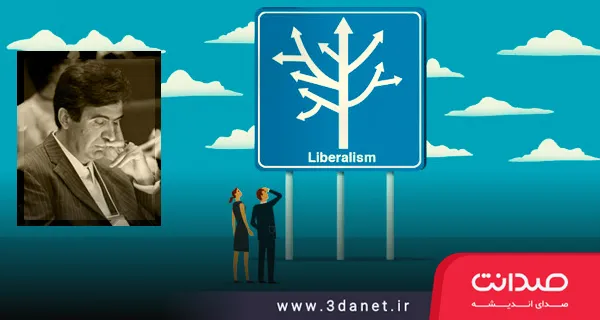
Arash Naraghi sees liberalism as a system that recognizes the 'right to be wrong' and does not make rights contingent on the correctness of beliefs. His view differs from Soroush and Kadivar in the basis for determining the limits of tolerance: shared common reason versus religious reasons.
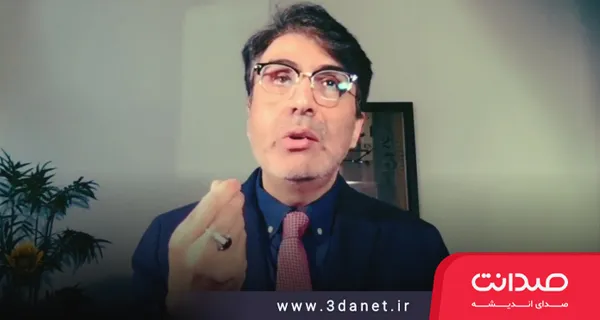
In February 2020, Arash Naraghi published a video on his YouTube channel[2] in response to the "Liberalism and Arash Naraghi dossier"[1], in which he explained the difference between his own ideal government and the ideal government of Abdolkarim Soroush and Mohsen Kadivar, and responded to the criticisms raised. The following text is a transcription of a portion of the video "Critical Considerations on the Theory of Government among Religious New Thinkers"[3], published by Sedanet under the title "What Does the Right to Be Wrong Mean?"
I have a very specific meaning in mind here for liberal and liberalism, and that is a system that recognizes the right to be wrong.
Therefore, you might be a socialist or a capitalist economically, but as long as you recognize the right to be wrong, you are a liberal. This conception of liberalism is not the same as the meaning of economic liberalism or even political liberalism as an ideology.
The point is that the truth or falsehood of our beliefs should not interfere with our political, social, and civil rights. That is, the necessary and sufficient condition for someone to possess political, social, and civil rights is not that their beliefs be true, and citizens, regardless of whatever beliefs they hold, are fundamentally equal in all their rights, both basic and non-basic. Therefore, depriving citizens of a right requires morally justified reasons.
In the theory of ideal government of Soroush and Kadivar, citizens benefit from minimal and basic rights only if they can somehow prove their entitlement. That is, the enjoyment of minimal rights requires proof.
That is, you do not inherently possess these rights; a mechanism must be undertaken to then be able to consider some new rights for you. But in a liberal democracy, depriving individuals of their rights requires proof. This difference is important. Under these conditions, if minorities want to obtain their right to religious propagation, they must strive to convince society and the majority so that when they go to parliament, they vote that those minorities have the right to religious propagation. But if they cannot convince them, then it is not the case that they automatically have the right to religious propagation.
But in my proposed model, everyone possesses these rights from the outset, but if decision-makers can show that if a certain social group propagates certain ideas, it will lead to an imminent and serious harm to a group of people in society, then they find a morally justified reason to say that they are deprived of these specific rights.
The main disagreement lies in the basis for determining the scope of tolerable wrongs. That is, even in a liberal society, it is not the case that every wrong is permitted to spread.
In a liberal democratic government, the scope and instances of wrongs that are not worthy of tolerance are determined by common human reason and conventional science.
The main disagreement is here. Liberal thinkers like Rawls and Habermas and others claim that the criterion by which we determine which wrongs should be tolerated in the public sphere and which should not, is the reasoning of common sense, on the basis of which all citizens (regardless of the grand ideologies they hold and regardless of their comprehensive conception of the good) can engage in dialogue and mutual understanding and judge matters concerning the fate of society.
In fact, Soroush and Kadivar's opposition to liberal democratic government lies here. In their view, the religious majority of society has the right to determine the scope of tolerable wrongs, including on the basis of religious reasons.
That is, you can say that such and such matters are wrong in my view and should not be tolerated in the public sphere. Then we ask why? You say because we have a certain authentic hadith that says such and such an act should not be done.
In that case, how can that Sunni or Jewish individual or non-believer who does not believe in religion at all and does not believe in the authority of the Infallible's word
enter into dialogue with you and say that this basis you are citing has no authority for me.
The discussion here is not about what form the laws should take. For example, should abortion be permitted in society or not? And when I defend liberal democracy, I do not mean that, for instance, pornography must necessarily be legalized in society, or homosexuality must be recognized, or the sale of alcoholic beverages must be freed; my argument is this: what is the basis for decision-making? The question is, whether you legalize pornography in society or ban it, whether you recognize homosexuality or not, whether you free or ban the sale of alcoholic beverages, or whether you permit the propagation of a certain belief or not, what is your basis? Is the basis a scientific argument in which everyone can participate? Or is it based solely on intra-religious reasons?
For example, regarding pornography, which I have mentioned in my writings and which raised questions for some friends, the issue is the basis for deciding on its freedom or prohibition.
Sometimes a group says that narrations state one must not look at the body of a non-mahram, and since these narrations are reliable, pornography must therefore be banned in society. But at other times, they say pornography must be banned because, for example, it degrades women, or it might have a negative psychological impact on the youth of society, or something of that sort. In any case, they are arguing for the legal prohibition of pornography, but my point is that even if your motivation for banning pornography is religious, when you want to enact this ban as a public law, you must make arguments that allow a party who does not share your conception of happiness and the good to enter into dialogue with you, to convince you, or for you to convince them. In other words, individuals, especially in a pluralistic society, when they want to make decisions that affect the destinies of all members of society, must find common grounds for those decisions. Then, within this space of shared assumptions, you may or may not be able to establish your own theory.
.
.
[1] Read the dossier on liberalism and Arash Naraghi here.
[2] Follow Arash Naraghi's YouTube channel at this link.
[3] The full video "Critical Considerations on the Theory of Government According to Religious New Thinkers" is 48 minutes long. You can watch or download this video on YouTube, Aparat, or Telegram; its audio is also available on Telegram.
The edited clip whose transcribed text is presented in this post can be viewed on YouTube, Aparat, or downloaded from Telegram.
.
.



Discussion1 comments
آیا نگاه کردن به عکسهای برهنه، اخلاقی است؟ http://www.dinonline.com/content/15307/%D8%A2%DB%8C%D8%A7-%D9%86%DA%AF%D8%A7%D9%87-%DA%A9%D8%B1%D8%AF%D9%86-%D8%A8%D9%87-%D8%B9%DA%A9%D8%B3%E2%80%8C%D9%87%D8%A7%DB%8C-%D8%A8%D8%B1%D9%87%D9%86%D9%87%D8%8C-%D8%A7%D8%AE%D9%84%D8%A7%D9%82/