Religion
“Complete Hijab”: Islamic or a Matter of Faith?
Is 'full hijab' an Islamic requirement or a matter of faith suitable for legislation? By distinguishing between Islam and faith and examining Quranic verses, hadith, and Shia political thought, the article probes the issue of improper hijab and the question of its legal enforcement.
The present note examines what is known as the “complete hijab” from a Quranic and historical perspective. This writing seeks to answer two fundamental questions: first, is the “complete hijab” an Islamic matter or a matter of faith? And second, should the “complete hijab” be considered in the legislation of an Islamic government? In order to answer these two questions, it is important to consider two premises: firstly, the distinction between Islam and faith, and secondly, legislation in an Islamic government based on the voluntary choices of the people in accordance with Islamic Sharia. The elaboration of these two premises and the answers to the two questions posed are based on the Quran, hadiths, narrations, the thought of Shia scholars, and the utilization of rational arguments and deductions. In the following text, after examining the complete hijab in the Quran and authentic narrations, the distinction between the two categories of faith and Islam and the criterion for legislation in Shia thought are elaborated upon to determine whether what we see today as the phenomenon of dealing with improper hijab in society is a religious and blessed occurrence or not.
Introduction
The “complete hijab” can be explicated based on religious teachings. That is, within the epistemic system of religion, with its presuppositions, hypotheses, and religious theories, it is capable of being examined, described, and explained. If the issue of covering and hijab were examined with a different theoretical apparatus or within another paradigm, different results would certainly be obtained. The extent and nature of the relationship between the results obtained in different paradigms and religion are not the subject of discussion in this writing. Therefore, this text examines hijab solely from a religious standpoint. Although the answer to the question “What is religion?” is important for understanding this text, the discussion on this matter is deferred to the future.
The “complete hijab” is a worthy model for the type of human covering; what is meant by worthy is that with its help, a person can flourish their material and spiritual, as well as individual and social, capacities and benefit from them. A religious person, whether woman or man, based on the individual’s doctrinal position, can have multiple choices, and these choices, despite their differences and multiplicity, will have a hierarchical relationship with one another, meaning that choices are more complete or more deficient relative to each other. In other words, in the epistemic system of religion, not every deficiency means being evil; rather, only some deficient choices are evil compared to a more complete choice, and many deficient choices, despite being deficient relative to a more complete choice in various matters, are still good. For example, although we cannot attain the prophetic knowledge of God, this lower level of our understanding of God and existence compared to the Prophet (PBUH) does not expel us from the circle of monotheism, although the levels of our afterlife existence can be very different from one another; in any case, “God does not burden any soul beyond its capacity” (Quran 2:286). Therefore, in the matter of hijab, we also witness a multiplicity of choices; although the model of Fatima (SA) is the most worthy and complete model of hijab for women, whose merits can be enumerated in detail in its proper place, many other types of women’s hijab do not expel them from the bounds of religion. Of course, it is clear that in the epistemic system of religion, their afterlife status will differ from one another. It is also very important to mention, in more eloquent terms, that within the realm of good, deficiency and perfection are not the concern; rather, what is good and what is best are at issue. This category of issues is not among the topics of this writing and must be addressed in a separate note.
Since in today’s Iranian society, the issue of hijab has become a matter of sensitivity mostly concerning women, in this writing, the meaning of hijab is also limited to the type of covering of women in society. In religious knowledge, since a lofty status is considered for women, and the woman, in the position of “mother” within the family institution, bears one of the main duties of community building, namely forming the “Ummah,” a specific lifestyle and covering is also presented for her. This duty and its difference from the social duties of men is based on the psychological and physiological distinction that exists between men and women, which is attended to in the religious system. Distinctions that in no way confer superiority. Man and woman are merely one of the dualities and pairs of existence who are different from each other and become sociable and complete alongside one another. The issue of the difference between men and women in the religious system can also be discussed in detail, which is not the subject of this writing.
Many of these variations and pluralities in modes of dress become clear and distinct at the different levels of living Islamically and living faithfully (O you who have believed, believe. Verse 136, Surah An-Nisa); of course, the Islamic, faith-based, certainty-based, contentment-based, and other levels are different, and their nature and relationship with one another require a separate discussion. Therefore, in what follows, after examining the verses and narrations concerning “complete hijab,” based on the transmitted hadiths, the difference between the Islamic and faith-based levels of living will be pointed out, so that ultimately, with a brief look at the criterion of legislation in Shia political thought, it becomes clear whether we can present “complete hijab” as a law to the people or not.
- “Complete Hijab” in Verses and Narrations
In Al-Tabaqat al-Kubra (Volume 8, pp. 71 and 72) it is narrated that “Khalid ibn Makhlad informed us from Sulayman ibn Bilal from Alqamah ibn Abi Alqamah from the words of his mother, who said: I saw Hafsah, daughter of Abd al-Rahman ibn Abi Bakr, come to Aisha wearing a thin headscarf, from beneath which part of her neckline was visible. Aisha tore that headscarf on Hafsah’s head and said, ‘Do you not know what God revealed in Surah An-Nur?’ Then she asked for another headscarf and covered her with it.” God Almighty says in verse 31 of Surah An-Nur:
“And tell the believing women to lower their gaze and guard their private parts and not to display their adornment except that which is apparent thereof, and to draw their headscarves over their necklines, and not to display their adornment except to their husbands, or their fathers, or their husbands’ fathers, or their sons, or their husbands’ sons, or their brothers, or their brothers’ sons, or their sisters’ sons, or their women, or those whom their right hands possess, or the male attendants having no physical desire, or children who are not yet aware of the private aspects of women. And let them not stamp their feet to make known what they conceal of their adornment. And turn to God in repentance, all of you, O believers, that you might succeed.”
But the question is, why was this verse revealed? Al-Suyuti writes on page 390 of the book “Lubab al-Nuqul fi Asbab al-Nuzul” that “Ibn Abi Hatim narrated from Muqatil from Jabir ibn Abdullah: Asma, daughter of Marthad, lived in her date-palm garden. Other women would enter that garden half-naked, such that their anklets were visible and their chests and hair were exposed. Asma said: How ugly and unpleasant this situation is. Then God Almighty revealed this verse.” Also, Ibn Kathir wrote in his commentary on the Quran that this verse was a command from God, Blessed and Exalted, to the believing women, and subsequently, regarding the reason for the verse’s revelation, he cites the same narration above from Jabir ibn Abdullah al-Ansari.
Therefore, as can be observed, this is a verse whose audience is believing women, and it is a command that God, Blessed and Exalted, gives to the believing women. Of course, the esteemed scholar Allameh Tabatabai (RA) considers the audience of this verse to be “women,” although it is clear and evident that, as Ibn Kathir stated, the audience of the blessed verse 31 of Surah An-Nur is “believing women.” But in order for the manner of acting upon this verse in early Islam and among believing women to become more apparent, a number of incidents that occurred among the believing men and women are presented below.
- Ibn Kathir (Tafsir, Volume 6, pp. 44 and 45), based on another narration from Umm Salamah, states: She was with the Messenger of God and Maymunah. Then Ibn Umm Maktum, who was blind, entered upon them. The Messenger of God (PBUH) commanded her to observe hijab. So Umm Salamah said, “But, O Messenger of God, he is blind and does not see us or recognize us?” He replied, “He is blind, but are you blind?” Al-Tirmidhi writes that this is a good and authentic hadith. The esteemed Allameh Tabatabai also cited this narration under this same verse.
- In Al-Tabaqat al-Kubra (p. 233) it is narrated that Fadl ibn Dukayn informed us from Sufyan from Abu Ishaq from Mujahid that the Prophet (PBUH) used to say, “O Umm Ayman, cover your headscarf well.”
- The luminous verse 59 of Surah Al-Ahzab also refers to the matter that the wives and daughters of the Prophet and the women of the believers should draw their outer garments (jalabib) over themselves so that they may be recognized and not be harassed.
Therefore, what is evident is that the believing women of the Ansar and the Muhajirun had chosen a specific form of covering to complement their modesty and chastity. This covering is the very one mentioned in verse 31 of Surah al-Nur. The Prophet also constantly enjoined this same type of covering upon those close to him, yet no report in history indicates that this form of covering became a compulsory matter within society. However, it can in no way be denied that living as a believer is accompanied by a maximal covering in the form of the “complete hijab.” The reasons for this matter require detailed examination and explanation, which, of course, demands another occasion.
- Islam and Faith
As will follow, it is clear that both in the noble verses of the Holy Quran and in the transmitted narrations, a distinction exists between Islam and faith. Even based on the verses and narrations, Islam and faith themselves are not of a single, fixed degree; rather, each possesses multiple degrees which the servant traverses on their evolutionary path, provided, of course, that they seek to attain mystical stations in order to achieve nearness.
There is much discussion regarding precisely where, based on the noble verses and narrations, the degree of living Islamically and living faithfully begins and how far it extends, into which the author will not now enter. However, this point is significant: the faith-based injunctions of the texts never took the form of a legal command; rather, they were considered as matters that lead to greater nearness and even rendered social life more orderly, but they were accompanied by free choice and individual volition, not legal and juridical compulsion. Furthermore, why they lead to nearness can be explained, and history testifies that, despite having social consequences, they were not compulsory matters. But what follows will present some verses and narrations concerning the distinction between Islam and faith.
- God Almighty states in verse 14 of Surah al-Hujurat:
قَالَتِ الْأَعْرَابُ آمَنَّا قُل لَّمْ تُؤْمِنُوا وَلَكِن قُولُوا أَسْلَمْنَا وَلَمَّا يَدْخُلِ الْإِيمَانُ فِي قُلُوبِكُمْ وَإِن تُطِيعُوا اللَّهَ وَرَسُولَهُ لَا يَلِتْكُم مِّنْ أَعْمَالِكُمْ شَيْئًا إِنَّ اللَّهَ غَفُورٌ رَّحِيمٌ.
[Some of] the Bedouins say, “We have believed.” Say, “You have not [yet] believed; but say, ‘We have submitted,’ for faith has not yet entered your hearts. And if you obey God and His Messenger, He will not diminish anything from your deeds. Indeed, God is Forgiving and Merciful.”[1]
Faith is a matter that enters the heart, and one can submit (become Muslim) while not having faith. Hence, one can be a Muslim without observing the propositions of faith. Although it is important to state that in the intellectual system of religion, faith holds a lofty status, which is demonstrable through verses and hadiths, and Islam is a prelude to attaining faith, accompanied, of course, by individual will.
- In the noble book Uṣūl al-Kāfī (vol. 3, p. 40) by Shaykh al-Kulaynī (ra), it is narrated that “Sumāʿa said: I said to Imam al-Ṣādiq, peace be upon him: Inform me, are Islām and Īmān two different things? He said: Īmān is a partner to Islām, but Islām is not a partner to Īmān. I said: Describe the two for me. He said: Islām is the testimony to the oneness of God, and the affirmation of the Messenger of God, by which bloods are protected from being shed, and upon which marriage and inheritance are executed, and the mass of people act according to their outward appearance. But Īmān is guidance, and that which becomes firmly established in the hearts from the attribute of Islām, and that which becomes manifest through acting upon it. Thus Īmān is one degree higher than Islām. Īmān outwardly shares with Islām, but Islām does not inwardly share with Īmān, even though both come together in speech and description.” What is clear in this narration is that one can be a Muslim while not being a Muʾmin (believer), and therefore not perform an act that is pure and specific to the elect or specific to the believers, because the believers act based on a heartfelt conviction that has pervaded their entire being.
- It is also narrated from Imam ʿAlī, peace be upon him, in the book Ghurar al-Ḥikam wa Durar al-Kalim (p. 87) that he said: “al-Īmān huwa ikhlāṣ al-ʿamal” (Faith is the sincere devotion of action). Therefore, there are actions that are specific to the believers (their specificity is not merely related to the outward form of the act, but to the intention and convictions upon which the act is founded), and it is attaining the high degrees of the heart and faith that causes the performance of those acts. If someone does not wish to or cannot reach those degrees, they should not be subject to blame or interrogation, for “lā yukallifu Allāhu nafsan illā wusʿahā” (God does not burden any soul beyond its capacity).
- Also in Uṣūl al-Kāfī (vol. 3, p. 43) it is narrated that Imam al-Bāqir, peace be upon him, was asked: “Does the Muʾmin have superiority over the Muslim regarding worldly bounties, rulings, legal punishments, and other matters? He said: No, both are equal regarding these matters, but the superiority of the Muʾmin over the Muslim lies in their actions and the means of nearness they have toward God, the Almighty and Glorious.”
- Again in Uṣūl al-Kāfī (vol. 3, pp. 44-45) it is narrated that Imam al-Ṣādiq, peace be upon him, wrote in response to the letter of ʿAbd al-Raḥīm al-Qaṣīr: “Sometimes a servant is a Muslim before he is a Muʾmin (he is a Muslim and has not yet become a Muʾmin), but he does not become a Muʾmin unless he is a Muslim. Thus Islām precedes Īmān and is a partner to Īmān. And when a servant commits a major or minor sin that God, the Almighty and Glorious, has forbidden, he exits from Īmān, and the name of Īmān is removed from him, and the name of Islām is placed upon him. Then, if he repents and seeks forgiveness, he returns to the abode of Īmān, and nothing drives him toward disbelief except denial and deeming [the forbidden] lawful, and…”
Therefore, it is clear that, given the address of the Ḥijāb verse to the “believing women” (muʾmināt), these recommendations and commands pertain to the believing women and not to Muslim women in general. So, if someone does not act upon the noble intentions of this verse, from an Islamic perspective they should not be subject to interrogation, because only those who have reached a high degree of heart and faith in life, and have soared in the sky of Īmān with the two wings of Islām, have the capacity to implement this verse. But the question that follows is: Can an Islamic government enforce the commands and prohibitions of Īmān, and where, fundamentally, do the limits and boundaries of legislation lie according to Shīʿa scholars?
Another question also arises: What is Islām, where does it begin, how far does it extend, and so on? These questions have clear answers based on the Holy Qurʾān, numerous narrations, and history, which fall outside the framework of the aims and questions of the present article.
- Legislation in Islam
Shaykh al-Mufīd (ra) stated in his book Awāʾil al-Maqālāt fī al-Madhāhib wa al-Mukhtārāt (translated by Sajjād Wāʿiẓī, p. 112): “I believe that the ruling of a land is based on the majority of its inhabitants. Any land where disbelief (kufr) prevails is the Abode of Disbelief (Dār al-Kufr), any land where faith (īmān) prevails is the Abode of Faith (Dār al-Īmān), and any land where Islām prevails over Īmān is the Abode of Islām (Dār al-Islām).” Thus, what is clear is that, according to Shaykh al-Mufīd (ra), the number of people or the majority is the basis and foundation for determining the rulings of a land, and therefore the laws of a society are also formulated on this basis. However, Muslims and believers will also strive towards achieving their desired goal and establishing governance, and through propagation and great perseverance, they will bring the majority of the people along with them to pave the way for a change of government.
Therefore, it is clear that in the land of disbelief, an Islamic ruling is not enforced, and likewise, in an Islamic land, a ruling of faith is not enforced. What emerges from the prophetic tradition is that the solution is to strive and persevere to create the conditions for a Muslim majority, so that Islamic laws are requested through the lens of the majority, the religious ruling becomes a collective demand, and it is implemented as a law and social contract. Of course, what is clear, and has been stated in numerous narrations, is that in an Islamic government, the rights of minorities will not be violated in the name of the majority; rather, the rights of minorities will be preserved, and a dictatorship of the majority will not occur in an Islamic government, to the extent that the People of the Book will be judged according to their own book and their affairs will be settled. Also, as recorded in history, they will even have the right to have their own market (the market being one of the most important social and economic institutions). Furthermore, even deniers can freely attend gatherings and raise their questions, just as was the way of the Imams, peace be upon them.
Regarding hijab, the situation is similar. The ground for accepting Islamic narrations about hijab will be prepared through cultural work and the acceptance of the majority. But the important point is that hijab in Surah An-Nur is a matter of faith, not Islam; can a matter of faith, through the demand of the majority, become law? The answer to this question is provided after examining several verses and narrations.
- In numerous verses, the prophets are addressed, stating that your duty is only clear and evident conveyance (verse 54, Surah An-Nur; verse 48, Surah Ash-Shura). Only those prophets who had many companions or a realized majority undertook the formation of a government. They then proceeded to codify laws in their society. How each prophet acted and how and on what basis they codified law is a detailed and clear discussion that cannot be contained in this space.
- Sheikh Saduq (RA), in the chapter on command and prohibition, promise and warning from the book Al-Tawhid (p. 623), narrates from Imam Sadiq (AS) that: "God has not obligated anyone beyond their capacity, nor has He placed upon them more than they can bear." Therefore, how is it possible that, apart from social contracts and laws formulated to regulate social affairs—in which the individual's opinion must be involved to safeguard the worldly and social rights and interests of the public—propositions that pertain to the human heart, are individual and internal choices, and are not social in the first stage of acceptance (though they will later have countless social consequences) could be imposed upon people as law? God does not obligate beyond capacity, for "God does not burden any soul beyond its capacity" (verse 286, Surah Al-Baqarah).
- Again, Sheikh Saduq (RA) in the book Al-Tawhid (chapter on introducing, explaining, ..., p. 631) narrates: "...I asked Imam Sadiq (AS) about someone who knows nothing, whether anything is obligatory upon him. He said: No." So how is it possible to demand a proposition of faith from someone in the form of laws, while it is narrated from Imam Sadiq (AS) that: "God, the Almighty and Glorious, will argue against people only to the extent that He has given them and made known to them" (Al-Tawhid, p. 630)? We know well that guidance is from God, and He makes known to whomever He wills, to whatever extent He wills. The inner and faith-based knowledges are cast like light and are a kind of presential knowledge. Thus, although they are the highest form of engaging with society and the entire universe, they cannot be imposed on people as social laws and contracts.
- One must examine and see which proposition of faith mentioned in the Holy Quran or in a noble hadith was enacted as law during the governance of the Prophet, Ali, or Hasan. In fact, there were many propositions of faith that were neglected by the Muslims, and the government showed no reaction against them. To clarify this matter, it is necessary to conduct a detailed and deeply analytical discussion about the political life of the Infallibles in the first century after the Hijra, which will be clearly expounded upon in the future.
Therefore, based on what has been presented so far, it must be said that the foundation of Islamic governance is a profound understanding of the proper way of living and engaging with society. In the age of the prophets, this way was less common among the general populace, and the mode of encounter between civilizations was through war and conflict. This thought, as it remains today, was highly progressive and reformist. This understanding of living (Islam), which heralds peace, friendship, and unity, would, when accepted by the majority, lead to governance and a step would be taken from the land of disbelief toward the land of Islam. Laws were formulated so that the rights of minorities would not be trampled, and only those who drew the sword were confronted, and that too was for the protection of the rights of the peace-loving majority (Muslims). This ground of peace and friendship (Islam) was a context for individuals to, by their own choice, step into the higher degrees of a faith-based life. Complete covering is one of these choices; while it can be explained why it is the best choice, by virtue of being a matter of the heart and faith, it must be pointed out that even if it is the view of the majority, it should not be included in laws (laws have a social and objective nature, not an inner and heartfelt one) and should be promoted through intellectual and cultural work, because the historical experience in Islam shows that even in the Prophet's Medina, where the number of believers was considerable and formed the majority, it was not enacted as law.
- Conclusion
Based on the noble verse 31 of Surah An-Nur, a type of covering has been introduced as Islamic hijab. An examination of history shows that the eminent figures of the Prophetic tradition and the Alawite way of life adhered to this type of covering and strongly recommended this covering, modesty, and chastity to others. A careful examination of this verse shows that its addressees are a group of people whom God, Blessed and Exalted, addresses as believing women (mu'minat). Therefore, this type of covering should be called the “covering of faith.”
The verses of the Holy Quran have diverse addressees, and what is clear is that divine wisdom necessitates using words in their proper place, free from any ambiguity. Examining the term mu'minat and the discussion surrounding faith will highlight an important issue: that faith is a matter of the heart, and unlike Islam, which is for solving social issues (Usul al-Kafi, narration of Sama'ah from Imam Sadiq, vol. 3, p. 40), faith is an inner, heartfelt, and human-building category. Therefore, if someone is among the Muslim women but does not act upon this verse, no harm comes to her Islam; however, it cannot be denied that she can elevate herself, grow, and step into the realm of faith.
Thus, the address of verse 31 of Surah An-Nur is to the believing women (mu'minat), those who have wholeheartedly clung to the truth, worship lovingly, carry out divine commands, and refrain from prohibitions. They have become aware of the presence of the spirit over their ego and have elevated the self. But another question was whether matters related to spiritual and faith-based categories can be introduced in the form of social decrees, laws, and collective contracts? For instance, is it appropriate to stipulate in Islamic law that if someone is not among the community of those who seek forgiveness in the early dawn hours, they must be tried? It certainly emerges from both the Quran and numerous narrations that spiritual, heartfelt, and faith-based matters cannot be introduced in the form of laws; rather, Islam, by establishing minimal laws to protect the interests of the people, both minority and majority, provides the ground for human development, inner and individual growth, and for people to attain pure faith freely, willingly, and by choice.
What emerges from these lines is that complete covering is a blessed and auspicious matter, belonging to the categories of a faith-based life. Islam suffices with that minimal condition that the covering not be indecent or repulsive and that it possesses public dignity, and it seeks the realization and preservation of public chastity so that, by adorning themselves with the ornament of individual piety, the people of society provide a ground for the realization of faith in every single member of society freely and with heartfelt desire, and society, without any compulsion and solely based on the voluntary choice of individuals, chooses the complete hijab.
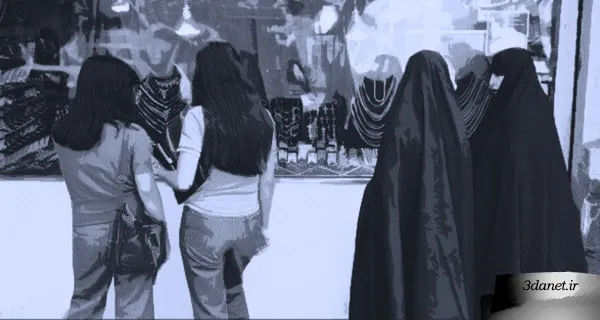
In conclusion, it must be noted that this manner of dealing with forms of dress that differ from the complete hijab, which occurs on our streets, has a consequence that is a matter of aversion to religion, and indeed hostility toward it—something that neither the noble and enlightening verses of the Holy Qur'an, nor the Sunnah of the Prophet (peace be upon him and his family), nor the conduct of Ali (peace be upon him) and Fatima Zahra (peace be upon her) and her descendants (peace be upon them) endorse. Therefore, it is suggested, and it is auspicious, that Islamic laws be enacted in an Islamic manner—one that is in accordance with the dignity and chastity of the public and based on the Prophetic Sunnah and the Alavid conduct in the matter of governance and social affairs, and not based on individuals' faith-based and heartfelt choices.
[1] - Surah Al-Hujurat; Verse 14, Persian translation by Fooladvand
.
.
“Complete Hijab”: Islamic or a Matter of Faith
Author: Reza Dashti
.
.


Discussion2 comments
همه دلایل واسه حجاب اجباری بود اما بجز استدلال منطقی از بعد جامعه شناختی سیاسی و غیره هم موضوع باید بررسی شوداگر این استدلالات برای اول انقلاب بود عالی بود اما در حال حاضر جوابگو نیست چون فرهنگ جامعه تغییر کرده و یورش فرهنگی غرب بسیاری را از فرهنگ دینی خارج نموده و همکنون اگر حجاب اختیاری شود به برداشتن روسری ختم نخواهد شد شما دختران بی روسری را ملاک قرار ندهید انها در زمان حجاب اجباری هستن و پوششان کامل است بجز روسری و قطعا فردا اینگونه نخواهد بود این گام نخست است و بعد از آن شما با هیچ استدلالی نمیتوانید جلوی حرکتهای بعدی را بگیرید مثل آزادی همجنس بازان و یا عریانی بیشتر و یا آزادی مشروبات و قمار و غیره و غیره که اینها با حکومت کنونی جور در نمیاید
عالی بود سپاس ⚘