Philosophy
Conceptual Thought, Concrete Thought, Mohammad-Taqi Chavoshi
Hegel views the history of philosophy as the self-discovery of thought; an essay on the nature of conceptual and concrete thinking, and how the Concept is an authentic cognition that determines itself, rather than something abstract and empty.
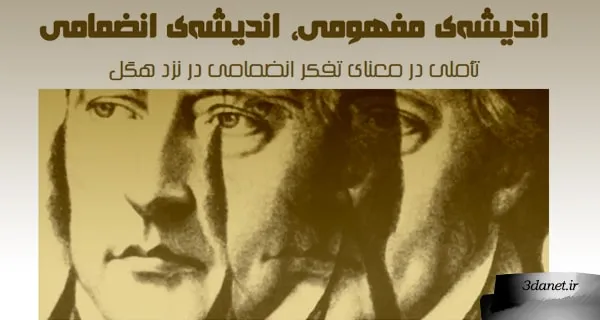
“Who Thinks Abstractly?” is the title of an essay by Hegel, the philosopher whose name, in the history of philosophy, is more closely associated with abstract thought than any other, and this essay provided an occasion to reflect on what, in truth, thought is in Hegel’s philosophy and view; what abstract and concrete mean; and, finally, how concrete thought becomes possible.
1- Hegel believed that the destination of philosophy is truth; an eternal and immutable truth. Thus, the history of philosophy appears to harbor an inner contradiction. For history arises from renewal and passing away; that which once appeared and at another time has elapsed. But truth is not something transient that emerges at one time and vanishes at another. Let us note that the history of philosophy differs from the history of other sciences, sects, and religions.
Of course, philosophy, like the sciences, has a formal history. Philosophy too has a history encompassing its own origin, development, and vicissitudes; a history of its followers, supporters, and also its enemies. But the history of philosophy, in this formal sense, is not summed up or considered. The history of philosophy, from Hegel’s perspective, possesses an inner unity. The history of philosophy is not merely a succession of equivalent opinions, without any connection to one another, nor the disputation and refutation of conflicting statements. History here is the history of thought’s self-discovery.[1] For the history of philosophy is the unfolding of philosophy itself. On this basis, philosophy, meaning the self-evolution of Spirit to the stage of absolute knowing, is the very history of philosophy.
But what is meant by the history of philosophy in its totality? Hegel in some instances speaks of the concept (Begriff) of the history of philosophy and not of the history of philosophy. When speaking of the concept of the history of philosophy, we disregard its parts. The parts are the constituents of the concept, and there is no doubt about this, but when we consider the concept of the history of philosophy, historical periods are not discussed, although one cannot be free of them. Begriff has been translated as intelligible form and concept. The verb begreifen is derived from greifen, whose literal meaning is “to seize” and “to grasp.” begreifen means “to comprehend”; it contains both the notion of encompassing and containing, and of understanding and bringing into a concept. This word has a somewhat more restricted usage than verstehen (to understand) and speaks of an effort to comprehend and to render intelligible.
اما مراد از مفهومِ تاریخ فلسفه چیست؟ مفهوم(=صورتِ معقول) در اینجا، درک کردن به معنی تعریف است. تعریف، تعیینِ حدودِ ذاتیِ امر است. اما تاریخ از قبیلِ مفاهیمِ ماهوی نیست تا بتوانیم ذاتیاتِ آن را بیان کنیم. هگل، در مقدمهی درسگفتارهایی پیرامون تاریخِ فلسفه، مفهوم را در ترادفِ با سرشت یا ماهیت بکار برده است.insicht in den Begriff und die Natur der Sache)) [تاکید از هگل نیست.] تعریف (Bestimmung)، تعیینِ مفهوم (Begriffsbestimmung) است.Bestimmungبه معنای تعیینِ حدود، معیّنترکردنِ یک مفهوم یا یک شئ با بیانِ ویژگیهای آن، و یافتنِ موقعیت و جایگاهِامر است. نیز به معنای مقصد، سرنوشت و رسالت، بکار رفته است. مفهومِتاریخِ فلسفه، یعنی؛ تاریخی که در آن ویژگیهای فینفسه (Bestimmheit) ِ فلسفه، تحقّق مییابد. و چون موضوعِ فلسفه، ایده (عقل یا اندیشهی انضمامی) است، مفهومِ تاریخ فلسفه، تاریخِ اندیشهای است انضمامی که با عبور از ادوارِ انضمامیتِ خود، به خویش باز میگردد. بسطِ روح دقیقاً بر چنین بستری تحقق مییابد. وقتی از تعیینِ مفهوم، سخن میرود در بدو امر چنین تداعی میشود که با تعریف، میکوشیم تا امرِ نامتعینی را، معین نماییم. امّا امرِ متعیّن (تاریخی که تحت عنوان تاریخ فلسفی جهان به روی ما گشوده است) نیازی به تعیین ندارد. بخصوص اگر بدانیم که در تفکرِ هگل، مفاهیم، تمایزی چشمگیر از موضوعاتِ خود ندارند و تباینِ مفهوم و موضوع، خود یک مفهوم یا سازهی مفهومی است. از اینرو منظور از تعیینِ مفهوم، تحقّقِ آن امری است که با مفهوم، متعیّن میشود. امّا آن امری که با مفهوم، متعیّن میشود همانا اندیشه است. تاریخی که پیشِ روی ماست، تاریخِ «اندیشه»ای است که در جستجوی خویش است و خود را مییابد. نگفتیم مفهوم، اندیشه را میسازد یا آن را به وجود میآورد. اندیشه با مفهوم جلوهگر میشود. اندیشه چه در خود، چه در غیرِ خود و یا در غیرِ خود با خویشتنِ خود باشد، اندیشه است. اندیشه، امری تهی و انتزاعی نیست.[2] بلکه فیالواقع، تعیّن مییابد، یعنی؛ خود-معیِّن است. به تعبیری دیگر، اندیشه، اساساً انضمامی[3] است، و باید مفهوم[4] شود. هر اندازه هم که انتزاعی به نظر آید، فینفسه انضمامی است. به تعبیر دیگر همین که اندیشه، فلسفی است، فینفسه انضمامی است.[5] اما آیا فلسفه با امورِ انتزاعی نسبتی دارد؟ انتزاع چه جایگاهی در تفکر فلسفی دارد؟
On the one hand, we are entirely justified in saying that philosophy is preoccupied with abstractions, precisely because it deals with abstract thoughts that have been abstracted from—so to speak—the concrete world (in other words, it must abstract thoughts from the sensory-perceptual concrete world). On the other hand, this claim is completely false; abstractions[6] are specific to the reflection and observation (reflection) of the understanding, and not to philosophy.[7] Precisely those who accuse philosophy of being entangled in abstractions are the ones who are immersed in the categories of reflection, have neglected the subject matter of philosophy, while imagining they are engaged with the most concrete matters. By reflecting upon an object, they acquire thoughts that are merely subjective sensory data, i.e., abstractions[8]. The concept is distinct from raw thought (in ordinary, common language, concept generally means nothing more than a particular thought). As stated in the Sense-Certainty section of the Phenomenology of Spirit, at the beginning of cognition, and indeed its most elementary stage, we have a direct relation to things and are only involved with their being, but we have no conceptual grasp of the matter. The fact that we encounter individuals and objects every day at the level of ordinary consciousness and pass by them indifferently, perceiving only their being, does not mean we have a living, conceptual grasp of them. At the level of sense-certainty, we are immersed in a pure immediacy with and within things. Even at the level of perception, although the object is the thing in general, we only deal with its properties; we have passed from the singular object (at the level of sense-certainty) to the particular object (which is realized by discovering the properties of the thing), but conceptual comprehension has still not occurred. The concept is authentic cognition, not thought as something merely universal; on the contrary, the concept is thought that gives determinacy to itself; it is thought in its vitality and activity, or thought that gives content to itself. For this reason, in the history of philosophy in its totality, or the concept of the history of philosophy, we read the emergence of the path (of the Idea) that reveals itself in the form of concepts. In a sense, the Idea possesses both path and subjecthood. The traversal of the path, with regard to its end, is the passage from the unrealized concept to the realized concept, and ultimately to the absolute Idea. The concept is thought that becomes active, is capable of giving itself determinacy, of forming and constituting itself, and therefore is not merely a form for a content but gives itself form and content and makes itself that form (it is this character of the content being determinate that is actualized and revealed in the history of philosophy). We understand the non-abstractness of the concept and its self-determining nature from the use of the word concrete; it gives itself content content and becomes concrete concrete, that is, where several determinations have unfolded and grown together and cannot be separated from one another. For example, two abstract determinations form a whole that are universal and particular and are inseparable from each other. Everything that is living and true is thus something that is in itself constituted by several determinations. When we say the living activity of spirit is concrete, we mean precisely this. Hence, the abstraction of thought is the universal[9], that is, the concept, self-determining; it is self-particularizing. Let us add here that the Idea is the concept that recognizes itself and discerns its own truth. If a concept is to recognize itself, it must give itself determinacy, and this character of giving determinacy is not something derived from an other; it belongs to the concept itself, its content is nothing other than itself. The in-itself has no knowledge of itself, although it is potentially all knowledge. As long as it does not attain determinacy and does not recognize itself in the guise of its appearances, it does not attain self-knowledge, i.e., a self that knows itself. The Idea is precisely that thought which, as concept, gives itself determinacy; it is therefore reason which, as subjective thought, determines itself. To summarize, the Idea is the concept that realizes itself (the concept that, through itself, actualizes itself, i.e., is filled, replete with what it potentially possesses and has now come into actuality, this actuality and potentiality being identical).
The concept produces its own content. But let us not forget that its product is always unified with the concept itself. It seems that the Idea has numerous and multiple concepts and contents, but in reality this is not the case. If there is a difference between the object and the concept, it is only in respect of its externality. Reality is established and constituted in identity with the concept.[10]The subject matter of philosophy is revealed precisely here. Its subject is the concrete (the Idea or truth). What is important for us and must not be forgotten is that conceptual thought is concrete, and what is concrete is true, and truth is revealed only in the shadow of thinking.
The history of philosophy in its entirety is the medium for the course of a concrete thought that thinks only itself. Let us note that this medium is not separate from thought. History is the history of thought; history is the very activity of thought. In the history of philosophy, our endeavor must be to present the history of the world of thought as it has manifested itself. "The course of this history[11](the history of philosophy) does not show us the becoming of alien[12](external) matters, but rather reveals the becoming of ourselves and our knowledge." (Hegel: 1974, 17) "The becoming of ourselves" is the becoming of thought. What emerges is thought, but the emergence of thought occurs in the mold of concepts and in the course from the unrealized concept to the realized concept. In this course, we are confronted with the activity of free thought, and we must show the history of the world of thought exactly as it has brought itself forth.
2- Truly, why has none of the philosophers believed in the abstractness of philosophy, and although they have regarded other philosophies with doubt based on their own philosophical foundations and deemed the thoughts of others abstract, they have not seen true philosophy as abstract? That a philosopher has deemed a philosophy unworthy of the name philosophy and, for this reason, called it abstract, is one thing; and that they have not considered philosophy, in its precise sense, abstract, is another discussion. The claim is that no philosopher sees philosophical thought as abstract and harbors not a particle of doubt regarding its concreteness. Islamic philosophy is no exception to this rule. For example, Suhrawardi considered Peripatetic thought to be bound and trapped by definitions that do not lead to certainty, and therefore, he opened a chapter on demolishing Peripatetic definitions. And in the discussion of fallacies in the logic of Hikmat al-Ishraq, he endeavored to show the fallacies of Peripatetic philosophy. It is no secret that Suhrawardi considered Peripatetic philosophy to be the philosophy of the learned, which neither fattens nor satisfies hunger, and saw it as belonging to one occupied with the disputations of the school. Suhrawardi attempted, by proposing the Illuminationist relation and placing the soul in the longitudinal chain of pure existents and its presential knowledge even at the level of sensation, in the seventh rule of the logic of Hikmat al-Ishraq, under the name of a true witness, to attain certain definitions of matters. At the same time, there are not a few researchers and commentators who consider Suhrawardi's philosophy to be the same as Peripatetic philosophy.
In any case, it may not be without benefit to mention a point. It is clear that the proposition of philosophy being abstract has nothing to do with the primacy of theory over practice or vice versa. It is possible for a philosopher like Kant to speak of the primacy of theory over practice, and one like Marx of the primacy of work over thought; for Heidegger to give more importance to practice than thought (and for the superficial, this causes the confusion that he is a follower of Marx or pragmatists like Rorty); and for a philosopher like Sadra not to see these two as separate, and when speaking of theoretical wisdom, to end up at practical wisdom, defining philosophy as assimilation to the Divine and the becoming of the human being, and revealing that in his thought, the discussion of the priority and posteriority of theory and practice is negated, and based on substantial motion, the theoretical and practical conduct in reaching the logic of existence are one. This discussion should not even be equated with the primacy of knowledge over will and the dispute of philosophers and theologians. The proponent of the abstractness of the philosopher's thinking pursues the negation of the fruitfulness of philosophy. Of course, in the atmosphere of scientism, where life is synonymous with utility, it is not unexpected to consider philosophy as the servant of science and for the sake of utility, and otherwise to call it fruitless. Just as in the Middle Ages, if there was any news of philosophy, it wore the garb of the servants of the Church, and otherwise, it was blasphemy, heresy, and counted among vanities.
[1]-Self-discovery.
[2]-Of course, not every thought is a conceptual thought or understanding. What is important in the study of science is that the individual strives to attain conceptual (logical) understanding. This requires that attention be paid to the concept as concept, to simple determinations, for example, being-in-and-for-itself, self-identity, and so on. For these are those essential movements which can be called spirit. (This matter will be clarified a little further on.)
[3]-That is, it possesses determinations.
[4]-That is, to become logical.
[5]-Because the subject matter of philosophy is the Idea or concrete thought.
[6]-Hegel did not state this sentence in opposition to abstraction. From his perspective, and especially from the Jena period onward, abstraction is a stage of concreteness. Hegel often, following Kant—and contrary to those who usually consider the abstract to be a universal, a thought or concept that we abstract (withdraw) from real things—emphasized that abstrahieren should be understood not in its transitive, but in its intransitive sense. Hegel agreed with Herder's critique of the Kantian distinctions (the separation of a priori and a posteriori; the form of knowledge and its matter) and opposed the abstractions governing these thoughts, which brought detrimental consequences for theology, science, and history. On the other hand, Hegel considered the derivation of thoughts (the derivation of one thought from another, especially in the Science of Logic) to be a sign of concreteness, because thoughts are not considered merely as isolated matters in separation (abstrahere) from one another; contrary to the conventional procedure of the understanding, which, by distinguishing matters and severing them, fosters the abstractness of thought.
[7]-Philosophy according to Hegel. From his perspective, abstraction and concreteness encompass the entire realm of philosophy. Life confronts death, but it is not annihilated; rather, it continues its life and survival in this very confrontation. This is an idea emphasized by Hegel in the preface to the Phenomenology of Spirit. If he asserts here that abstract matters belong to the thought of the abstract understanding and arise from reflection, he is not in a position to present reflection or contemplation as something exclusive to the understanding. Hegel's words here refer to Kant, and are made in the transition from his thought—and not as a rejection of his thinking. One might say that when Hegel speaks of contemplation or reflection, he has in mind Plato's Phaedo, which speaks of the vision (legozomenai) of thought (in connection with logos). From Hegel's viewpoint, philosophy is concerned with the Idea, which is the basis for the appearance of categories. Or, to put it more precisely, categories are the stages of the Idea's actualization, and the Idea reveals itself in the form of concepts and categories.
[8]-As can be observed, Hegel opposes the view that philosophy is entirely concerned with abstractions, and not abstraction in its entirety.
[9]-Hegel considers any element (whether mental or sensory) that has been separated from its other to be a universal (abstract) matter. For example, refer to the discussion of sense-certainty.
[10]-Let no one object that you previously considered concepts to be manifestations of the Idea, and the apparent meaning of the statement here negates that. Yes, concepts are manifestations of the Idea, but this does not mean that the content of concepts is different.
[11]- der Verlauf der Geschichte.
[12]-das Werden fremder Dinge.
.
.
Download the PDF file Conceptual Thought, Concrete Thought
.
.
Conceptual Thought, Concrete Thought
A Reflection on the Meaning of Concrete Thinking in Hegel
Author: Dr. Seyyed Mohammad-Taqi Chavoshi
Source: Journal: Soureh Andisheh » Mehr and Aban 1393 - Issue 78 and 79 (3 pages - from 109 to 111)
.
.



Discussion0 comments
No comments yet; let yours be the first voice.