Psychology
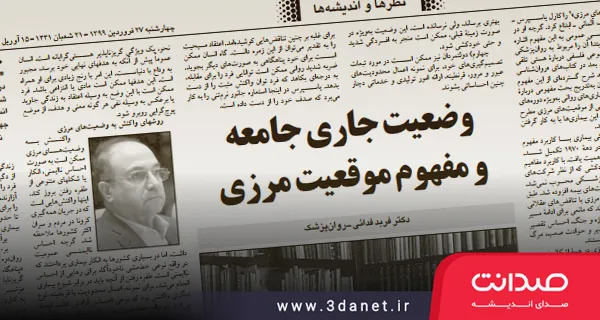
Concrete Manifestations of Narcissism in Society
Collective narcissism in Iran has deep historical roots, manifesting in everything from classical literature to political rhetoric and the belief in the nation's superior intelligence. This grandiosity erects barriers between people and demeans neighboring countries, obstructing dialogue and cooperation.
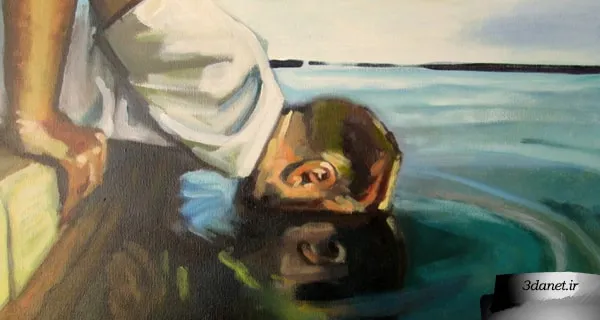
Narcissism and grandiosity in our society are rooted in history, such that by consulting historical texts, literary works, and the speeches and writings of certain politicians, intellectuals, and the virtual space, this social and cultural anomaly can be observed.
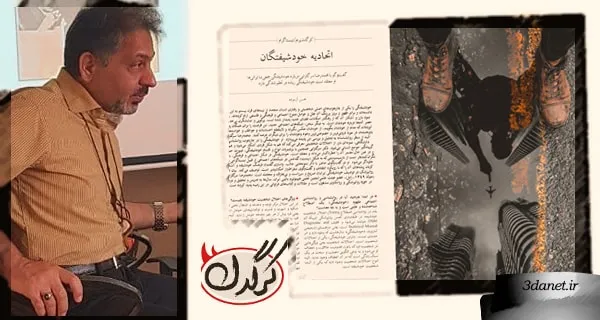
1- Mostafa Malekian, in issue 42 of the Mehrnameh monthly, explains the manifestations of historical narcissism as follows: «Narcissism is not always individual; sometimes it can be collective and intellectual. Ferdowsi, who said, "Art is near the Iranians and that is all," or Nezami Ganjavi, who said, "The whole world is the body and Iran is the soul," possessed a group narcissism. Narcissists build walls around themselves and eliminate the possibility of dialogue.» He also believes, in issue 3347 of the Etemad newspaper, that these statements are very deceptive in appearance, but their inner meaning creates boundaries between human beings, and anything that creates boundaries between human beings is a potential crime against humanity.
2- The majority of our compatriots believe that the Iranian nation is the most intelligent nation in the world. Whereas, according to research by Dr. Mohsen Renani in the book Political Economy and the Atomic Dispute (p. 9), the Iranian nation is ranked among nations with below-average intelligence. And this is while a part of society equates cunning with intelligence. «It is strange that a people whose average IQ is 84 (compared to the normal range of 90 to 109) and who fall into the category of nations with "below-average intelligence" consider themselves the "most intelligent" nation in the world and take pleasure in repeating this deceptive belief, becoming arrogant, and with this continuous self-deception, they cede historical opportunities to rival nations.»
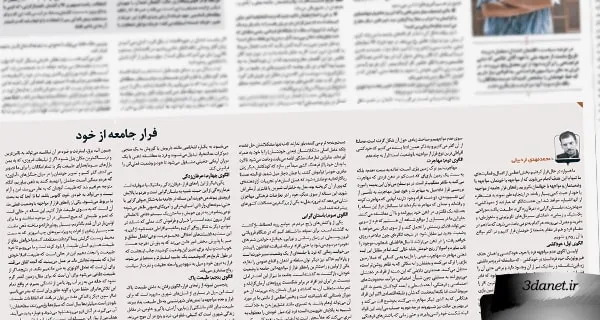
3- We are perhaps one of the rarest nations in the world, where the majority of its politicians, when commenting on political, economic, and social issues, prescribe healing remedies for the world. For example, in the 1970s, with the rise in oil prices, the Shah of Iran, in an interview with foreign journalists, out of narcissism, while speaking of his divine power, gave lessons in democracy to Western countries. Also, between the years 2005 and 2012, with the rise in oil prices and the acquisition of 700 billion dollars in foreign exchange revenue during the ninth and tenth administrations, the esteemed president of the time announced to the world his ambition to change and manage the world.: «The mission to change the management of the world has been entrusted to the Iranian nation.» (Fararu, 29/2/2013) «More than 100 world politicians, in conversation with me, expressed this expectation, meaning the management of the world, and they say Iran has the potential to manage the world.» (Khorasan Razavi, 24/1/2008) These claims were made while, at the end of his term and as a result of his management, the esteemed president of the ninth and tenth administrations imposed an inflation rate of 42 percent, negative economic growth of 6 percent, and an unemployment rate above 24 percent on the country's economy. Truly, why does the Chancellor of Germany, Mrs. Merkel, with a GDP of 3,911 billion dollars, a per capita income of 48,000 dollars, and exports of 1,500 billion dollars, not harbor ambitions to change the world and manage the world?
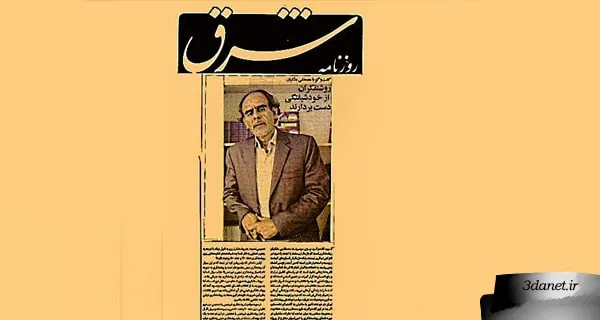
4- Another manifestation of our collective narcissism is that we attribute all human inventions to Iranians, especially those of ancient Iran.! And basically, in our view, everything has Iranian roots. Essentially, there is no phenomenon in the world whose origin or root we have not discovered. The latest discovery is the necktie, the joyful news of which! was announced by Seyyed Sadegh Kharrazi, former Iranian ambassador to France, in issue 2418 of the Shargh newspaper.: «The necktie went to Europe from the desert and arid part of the world, meaning the Iranian plateau. People used to tie a cloth as a necktie to cover their noses during seasonal winds. The people of Iran were the originators of the necktie; the necktie belonged to the Iranians.» The Shah, in an interview with Oriana Fallaci in October 1973, also considered all the achievements of the West to stem from ancient Iran.: «Do not forget that everything you (the West) have today, we taught you three thousand years ago.» We also consider all the literary, artistic, political, and religious luminaries of other nations as part of our own cultural reserves. And then, when neighboring nations claim the great figures of Iran for themselves due to language or religion, we become agitated.
5- Among the factors that cause our lack of cooperation with neighbors and other countries in the region is a narcissistic discourse that deems their history fake and contemptible, and from a position of grandiosity, while belittling others, considers itself the center of the universe.
.
Concrete Manifestations of Narcissism in Society
Borhan Valadbeigi
.

Discussion1 comments
سلام آقای ولدبیگی به منبع آمار و اسناد مورد اشاره شما مراجعه نکردم تا یقین کنم موثق اند لاکن شهود عرفی ام و دریافت و تجارب روزمره ام صحت مدعای شما را تایید میکند. اما از این نگران کننده تر اینکه هموطنانم عموما بعد از مواجهه با این مدعا به عوض تعمق و غور در اسباب و علل این ویژگی جمعی ما ایرانیان امروز، گمان میکنند یک خائن به ملت و مردم و کشور، و از سر عناد و دشمنی چنین مدعایی را آراسته تا ایران و ایرانی دشمن شاد شود. مطلب شجاعانه ای بود. سپاس و درود.