Philosophy
Deepfake: Communications Management Magazine in Conversation with Kaveh Behbahani
Kaveh Behbahani examines the transformations of epistemology in the post-truth era under the light of new technologies. Drawing on the ideas of Baudrillard and Zagzebski, he analyses the role of trust in the good life and the challenges of epistemic dependence on others.
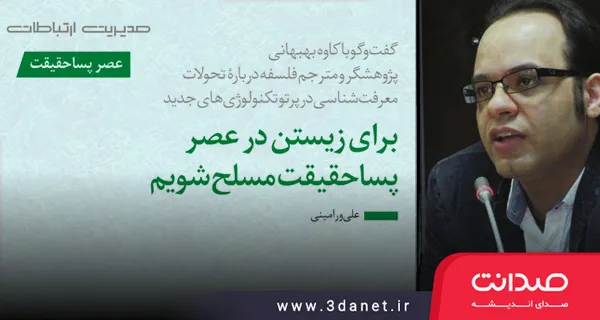
A Conversation with Kaveh Behbahani, Researcher and Translator of Philosophy, on Epistemological Developments in Light of New Technologies
Let Us Arm Ourselves for Living in the Post-Truth Era [1]
Ali Varamini/ Knowledge has always been a concern for humankind. Of course, by "always," I mean from the time when humans began recording their thoughts about existence in some way. Philosophy, too, essentially took shape for this very knowledge. When the Sophists were mixing truth and falsehood, philosophy emerged to distinguish the genuine from the spurious. The discussion of knowledge, or in its philosophical term, epistemology, did not remain this simple, of course. Is knowledge fundamentally possible? If it is possible, what things can be known? If some things can be known, how should they be known? And so on. These are important issues and questions that arose in philosophy and around which fundamental debates continue to be raised after thousands of years. The advancement of technology, and especially mass media, has also had a great impact on philosophical discussions in the general sense and epistemological discussions in particular. We spoke with Kaveh Behbahani in this regard. He points to the views of "Jean Baudrillard" concerning the importance of technological and epistemological developments. In Baudrillard's view, in the postmodern world, which is dominated by advanced computer technologies and where the media is omnipresent, like the God of the traditional theology of Semitic religions, there is no longer any truth, and all that exists are merely images, copies, and signs without referent or signified. Something Baudrillard calls the "simulacrum." A conversation with Kaveh Behbahani is always delightful. He, who has also translated the book Epistemology by the renowned philosopher "Linda Zagzebski," can express a vast amount of information in a problem-oriented and classified manner, and one can always find openings from his words to dozens of other fascinating discussions. We hope this conversation will be the same for you, the readers.
How does having knowledge of the things that matter to us help make our lives desirable? Doesn't the fact that this is heavily dependent on others—"because obtaining information is dependent on others"—itself constitute a major obstacle to a desirable life?
It is probably important for most of us humans to have knowledge about the things that matter to us—that is, to have true beliefs that also possess some other good quality, such as being supported by reasons, having been obtained through reliable channels, or whatever other good your accepted epistemology dictates. Caring itself demands this. My child matters to me, and for that reason it is important for me to know whether their school is good, whether they are doing well in their studies, whether they have good friends, and many other such pieces of knowledge. In short, caring itself logically entails that I be concerned with my concern and want to know things about it. If "the good life" means a life I am willing to live, perhaps we can answer your question by devising a thought experiment. Consider a world in which I have concerns but, by bad luck, cannot know anything about my concerns. For instance, I love my spouse but do not know whether she loves me too; I do not know what her sensitivities are, what her concerns are, whether she is healthy or ill, and matters of this sort—not only do I not know, but I cannot know. Well, it seems a person would rather live in a world where they know these things, for life in a world where we have knowledge about our concerns is probably more desirable. But regarding the second part of your question: of course, much of our knowledge depends on others. If I fall ill, it is not worth my while, nor do I have the time, to study medicine in order to diagnose and treat my illness. Beyond a certain point, the cost of acquiring information becomes so high that it is not worth it for a person to obtain more information in a specific field themselves, and they prefer to somehow obtain that information from someone else who possesses it. This in itself makes life more desirable: I pursue the work I love, and the physician has pursued their interest, which was presumably the science of medicine, and now, when needed, each refers to the other. This is, in fact, an efficient exchange. But the problem arises—that is, this epistemic dependence of mine on others detracts from the desirability of life—when I live in a society where trusting is difficult. In the world, we are constantly involved in situations where one person or group has more information than another person or group; that is, our world is a world of "information asymmetry," and amidst this asymmetry, others need our information and we need the information of others. If we live in a society rife with distrust, then this epistemic dependence, from which there is no escape, will cause the desirability of my life to diminish. For I want and am compelled to acquire knowledge from others about my concerns (for example, my health), yet others are utterly untrustworthy. For a person to flourish, they must live in a society brimming with trust. The contemporary epistemologist Linda Zagzebski has an interesting example in this regard: she draws on the Greek legend of Cassandra. According to this myth, Apollo gifted Cassandra the power of prophecy in order to seduce her. When Cassandra rejected Apollo's love, Apollo did not take back the gift he had bestowed; instead, he punished Cassandra more severely: Apollo permitted Cassandra to still foretell future events but made it so that no one would believe her prophecies. The calamity that befell Cassandra was that no one believed her warnings about the ruse hidden in the Trojan Horse, and this very matter had disastrous consequences for the people of Troy. This event also had a horrific effect on Cassandra herself: she was no longer able to express her views and beliefs. Aeschylus (the ancient Greek playwright) recounts that this very thing drove Cassandra to madness. Cassandra's pain was merely that no one believed her prophecies about the future, but imagine what a state would ensue if no one believed anything you said at all. In such circumstances, you would probably become isolated in every respect. It is then that any exchange of views or conversation would be futile, and consequently, speaking with others about any subject would be a vain and pointless act. When trust is absent, you cannot plan and make arrangements alongside others or express your feelings to them. Even the smallest participation with others in practical life would then be ridiculous. We humans need to trust one another, but if we suppose that others are not worthy of trust, that is when trust will vanish. Among the important requisites of
The good life is living in a society brimming with trust.The most important adversary of epistemology, or rather the possibility of attaining knowledge, is skepticism, which has been a long and, of course, fascinating debate in the history of thought. In your view, in the contemporary era, given the foundational transformations of technology—from the very existence and nature of the virtual world to phenomena like Photoshop and deepfakes that blur the boundary between the real and the unreal—how has the relationship between knowledge and doubt changed?
Epistemology has an antagonist, or anti-hero, called the skeptic, who seeks to show that knowing things is, for certain reasons, impossible, and perhaps the situation is even worse than that—namely, that we do not know things and do not know that we do not know. In fact, the issue is not merely that we do not know or cannot know certain things. The more complex predicament is that we do not even know that we do not know. Epistemology also has a protagonist called the epistemologist, who seeks to show that knowing some things is somehow possible. This struggle can be reconstructed in the ancient world in the form of Socrates' struggle with the Sophists. But as you said, today we are in a new situation. It seems we have drawn closer to what the French sociologist Jean Baudrillard spoke of. Baudrillard spoke of the disappearance of "the real" and "the social." He spoke of how, in late capitalism, the system of signs enters a new phase and acts like a mask—a mask meant to conceal the fact that there is no longer any "profound reality." Let me recount his point this way: modern society is saturated with signs. The sign has become like air, which, due to its very obviousness, we forget or do not notice. These signs could have been "the reflection of a profound reality," but they are not. They might even have distorted that profound reality they reflected or altered its nature, but in Baudrillard's view, our situation is worse than that. Signs fundamentally do not represent anything "more real" or more authentic. It is as if you were dealing with a kind of copy that has no original. Borges has a one-paragraph story called "On Exactitude in Science," which Baudrillard cites to explain his view. The plot of the story is that an emperor has a vast map the size of his empire that shows all the details of the empire. In short, that empire perishes, but fragments of this map remain scattered here and there. Baudrillard's point is that our current world is exactly like this map, and we seem to live among the disconnected fragments of a map that is no longer a map of anywhere. In reality, there is no reality, and all that exists is a pervasive "trompe l'oeil" that seduces us. In art history, trompe l'oeil refers to paintings that have represented things so realistically that they create the illusion in the viewer of confronting a three-dimensional reality—a trompe l'oeil, of course, that does not represent any reality. In effect, he depicts for us a kind of post-apocalyptic condition. The contemporary Scottish moral philosopher Alasdair MacIntyre depicts exactly this scenario in the realm of ethics, at the beginning of his famous book After Virtue. Well, of course, the roots of this thinking can be traced further back. Jean-Jacques Rousseau spoke of how the Age of Enlightenment had led human nature into deviation and corruption and ensnared humanity under the yoke of the gaze of others, to the point where a person could even love themselves only under the fixed stare of others (in Rousseau's own words, healthy self-love had transformed into amour-propre). Søren Kierkegaard, in his difficult-to-read book The Present Age, also has a detailed discussion about the formation of popular culture and public opinion that is highly prescient and astute. He considered his contemporary era the age of the domination of the public, and how fascinating it would have been had he lived to see the frontiers of this domination today. Kierkegaard, who always sang the elegy of lost individuality, believed that "the public" is created through the process of "leveling." This process of homogenization, herd-making, or whatever name you wish to give it, causes everyone to become alike and everyone to become mediocre. Public opinion, in his view, means mediocrity. As he himself says in this book, "More and more people want to be nothing, day by day." Incidentally, he attributed this matter to the prevailing medium of his own age, namely the press. The press determines which events are newsworthy, what matters we should think about, what our questions and their answers are, what to read, and how to live. Journalists create reality for the "public eye." Likewise, the French sociologist Guy Debord, by whom Baudrillard was undoubtedly influenced, spoke of these same matters in the 1960s in his famous book The Society of the Spectacle. In this book, Debord explains how capitalism reaches a certain degree of accumulation, commodities gain independence and turn into images, and citizens become spectators of these images.
همانطور که حدس میزنید، خود این بحث متأثر است از مفهوم «بتوارگی کالا» در ادبیات مارکس در جلد اول سرمایه و میتوان در این میان به اندیشمندان دیگری هم اشاره کرد. به نظر میرسد امروز این وضع محقق شده است. یعنی آنچه در فیلم «قاتلین بالفطر» الیور استون و «ترومن شو» پیتر ویر آمده بود، امروز در زندگی عملی ما جاری و ساری است. در صحنهای از فیلم «پرتقال کوکی» کوبریک، کارکتری که نقش آن را ملکم مکداول بازی میکند میگوید: «خون روی صفحۀ تلویزیون واقعیتر از خون واقعی است» و امروز شما میدانید که پروفایل فیسبوک (رخنامه) واقعیتر از رخ واقعی است.در این وضع آیا سخن گفتن از «معرفت» و «حقیقت» بیمحمل است؟ اینکه برخی از اندیشمندان از عصر پسا قیقت و از شیوع «دژ دادهها» (disinformation) میگویند، به معنای اطلاعاتی که تعمداً در جحم وسیع و به قصد فریب در مدیای مجازی نشر داده میشود، خبر از پیروزی قاطع شکاکیت و مرگ حقیقت نمیدهد؟
راستش به گمان من همۀ این اتفاقها زیستن در جهان معاصر را دشوارتر میکنند. یعنی اگر این تمایل طبیعی در ما باشد که از دروغ و ناراستی و باورهای کاذب روگردان باشیم، آنوقت زیستن در جهان معاصر اقتضا میکند دیرباورتر باشیم و در پذیرش اعتقادات خود سختگیرانهتر عمل کنیم. توجه داریم که در جهان باستان آدمی با کولهباری از باورهای خرافی و کاذب و اسطورگانی زندگی میکرد و حتی اغلب، ابزاری برای پی بردن به نادرستی باورهایش نداشت. البته امروز خیال خام روشنگری را در سر نمیپزیم که به عالم و آدمی یکسره عقلانی رسیده باشیم. اسطورهها مدام رنگ عوض میکنند و لباس نو میپوشند و در «بخردانهترین» کنشها میتوان ردشان را گرفت. اما امروز ابزار بیشتری برای پی بردن به کذب و نادرستی باورهایمان داریم. دانشهای مدرن در این زمینه چارهسازند. خلاصه اینکه شکاکیت به یک معنای حداقلی، یعنی، باورهای تازه را، به ویژه باورهایی که برخلاف اجماع عقلانی متخصصان یک حرفهاند، با سختگیری و دیرباوری بیشتری قبول کنیم و این شکاکیت البته مطلوب است. اما شکاکیتی که طبق آن آدمی هرگز نمیتواند چیزی را بداند و گفتن اینکه در روزگار ما هر حقیقتی برساخته است، مشکلاتی دارد. بالاخره کسی که میگوید هر حقیقتی برساخته است به زعم خودش دارد «حقیقتی» را میگوید. باید پرسید با چه ابزاری به این حقیقت رسیده و با چه برداشتی از صدق این گزارۀ خود را صادق میداند یا اگر نمیشود چیزی را دانست، خود همین گزاره را چطور دانستهاید؟ انگار لازمۀ گریز از صدق و معرفت هم نوعی نظریۀ صدق و معرفت است.
به نظر میرسد فیلم ماتریکس در حال محقق شدن است و دیگر خیلی تخیلی و دور از واقعیت نیست؛ اینکه خیال میکنیم در دنیای عادی زندگی میکنیم اما در واقع در دنیای برساختة دیگری، به تعبیر هایدگر، هستیم و برای داشتن زندگی اصیل باید مبارزهای سخت را شروع کنیم.
سناریوی ماتریکس در واقع این آزمایش فکری را طرح میکند که نکند ما انسانها در یکجور ماشین واقعیت مجازی زندگی میکنیم و به نحو سیستماتیک و از اساس فریب خوردهایم. اینجور سناریوها فرضیهای میدهند که نمیشود آن را ابطال (و البته اثبات کرد) و اگر آن فرضیه درست باشد آنوقت همۀ آنچه دانسته میپنداریم در واقع خواب و خیال خام بوده است. ماتریکس یک سناریوی شکاکانۀ رادیکال است که پیشینهاش میرسد به بحث دکارت در کتابش تأملات درباب فلسفۀ اولی. البته رد آن را میتوان تا تمثیل غار افلاطون عقب برد. فیلسوفان متأخر اسم این سناریو را گذاشتهاند سناریوی «مغز در خمره.» بعضی از فلاسفه به این شکل از شکاکیت رادیکال پاسخهایی دادهاند و بحثهای بسیاری دربارۀ آن درگرفته است. مثلاً جورج ادوارد مور با تکیه بر عقل سلیم (common sense) با سناریوهایی از این دست مقابله میکند یا بحث «برونگرایی» در فلسفۀ ذهن که پاتنم از آن دفاع میکند و به نوعی پاسخی است به همین سناریو یا برخی از برهان امتناع زبان خصوصی ویتگنشتاین برای پاسخ دادن به این نوع شکاکیت بهره گرفتهاند و خلاصه بحثهای داغی در معرفتشناسی در پاسخ به شکاکیت ماتریکسی هست. اما این بحثها بیشتر به درد کلاسهای معرفتشناسی میخورد. شکلی از شکاکیت که بیشتر به بحث ما و فیلم ماتریکس نزدیک است، شکاکیت بودریاروار است.
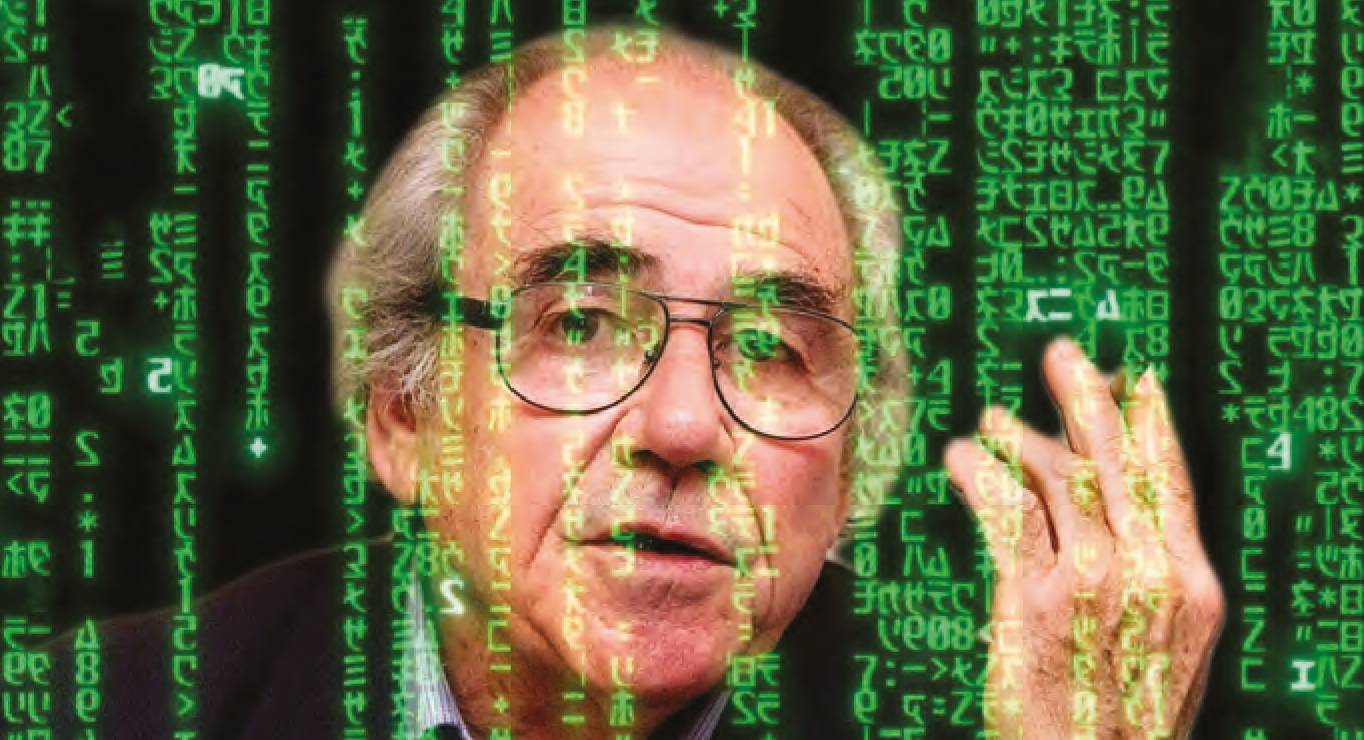
با شکاکیت بودریاری میتوان تحولات ضد معرفتشناسانه جدید را تبین کرد؟
Before that, let me mention one point. One of the earliest and most established definitions of knowledge, which reveals an important element of knowledge, goes back to Plato's dialogue Theaetetus, in which Socrates is to explain to a mathematician named Theaetetus what knowledge is not (later, in Plato's Republic, he will discuss what knowledge is). The common understanding of the Theaetetus that has become established among philosophers, and which is by no means a precise understanding but helps our discussion, is that Socrates says knowledge is "justified true belief." According to this reading, Socrates believes a necessary condition for knowing is having a true belief, and this truth is very important. Epistemologists have a strong consensus that one can know the falsity of beliefs, but one cannot know a false belief. This means a requirement of knowing is truth or veracity. Let us return to Baudrillard. Baudrillard believes that in the postmodern world, which has been overtaken by advanced computer technologies and in which the media, like the God of traditional Semitic theology, is omnipresent, there is no longer any truth, and all that exists are merely images, copies, and signs without referent or signified, which he calls the "simulacrum." If truth does not exist (and Baudrillard says it does not), then knowing is impossible. It might interest you to know that the film The Matrix was made under the influence of these very ideas of Baudrillard. Lana Wachowski and Lilly Wachowski, the two trans sisters who produced The Matrix, even went to Baudrillard himself and asked him to be a consultant for the film, which Baudrillard, of course, declined. They asked Keanu Reeves (the star of The Matrix) to read Baudrillard's book Simulacra and Simulation to better prepare for his role. You even see this book in Neo's (Keanu Reeves) hands at one point in the film, where Neo keeps his illegal files inside it. Right at the beginning of Simulacra and Simulation, where he recounts the Borges story I told you about, Baudrillard has a phrase that we hear from another character in The Matrix, Morpheus: "the desert of the real." In short, the film is meant to be a Baudrillardian film, but as Baudrillard himself says about The Matrix, the film misunderstood his point. In fact, as can be understood from clues within the film itself, Neo in The Matrix has a kind of Socratic mission and ultimately, by choosing the red pill, exits the Platonic cave of the Matrix. But as I said, Baudrillard's view is different from this, and he fundamentally does not believe that a reality remains standing behind the simulacra. Simulacra are not a mask on the face of reality; rather, they have taken the place of reality. The "fact" is dead, and so is truth. Of course, this claim, like many claims of postmodern and post-structuralist philosophers, is inspiring and provides very good insights into human thought, and there are traces of truth in it, but like many such claims, it is extreme. It is entirely true that the world of media and the age of hyper-advanced technologies have changed our perception of reality. And it is also entirely true that being deceived in this world and the manipulation of the masses by the media, politicians, and capitalists has become easier, but one cannot conclude from all this that reality has completely vanished into thin air and truth is utterly dead. I said that such claims undermine themselves. Someone who claims these statements are true must have an acceptable conception of "true." Let me explain a point right here. When I say "truth," I do not mean a Platonic or mystical conception of truth: that is, something you either possess entirely or not at all. According to this view of truth (which usually employs the analogy of "light"), truth is not a matter of degrees, obtained piecemeal in the form of individual propositions, but is an all-or-nothing affair. Either you have attained all of truth and its light has made your eyes see, or you are in the darkness of ignorance. In short, by truth I mean true or correct propositions. It might be better (and it has been said to be better) to call it veracity. That is, beliefs that correspond to the external world. These true propositions are obtained bit by bit and with great effort, and unfortunately, they are never all in the possession of one person. It is true that the structure of human language is deceptive, it is true that the mind plays tricks, the human mind is deceitful and fools itself and is easily fooled. این درست که در جهان ما منافع عدهای در گرو فریفتن اذهان تودههاست، اصلاً در اینها تردیدی نیست اما وقتی این حرفها را درست میدانیم یعنی مدعی هستیم که واقعیت از این قرار است. اینکه در جهان وانمودهها زندگی میکنیم البته کار دانستن را دشوار میکند ولی نمیتوان از آن نتیجه گرفت که واقعیت امحا شده و دانستن محال است. دانستن جد و جهد بیشتری میطلبد. بسی بیش از آنچه تودۀ مردم گمان میکنند. حتی داخل ماتریکس هم برخی چیزها میتوانند درست باشند. کمِ کمش خود ماتریکس که واقعیت دارد. البته ماتریکس، مصنوعی است ولی واقعیت دارد. مثل گلهای مصنوعیِ واقعی. اگر ماتریکس واقعیت نداشت که نیو نمیتوانست از آن خارج شود. البته کسانی که داخل ماتریکس هستند نمیدانند ماهیت آن دیجیتال است. کمااینکه ما انسانها دربارۀ همین جهان مادی خودمان هم باورهای نادرست بسیاری داریم، مثلاً عموماً فکر میکنند ماده امری صلب و تو پُر است، ولی میدانیم که ماده عمدتاً توخالی است و موارد بسیاری از این دست. در واقع بودریار اپیستمولوژی یا معرفتشناسی را با متافیزیک یا هستیشناسی خلط میکند.
Given the fundamental change in propositions, facts, signs, etc., have the methodologies of epistemology changed? Is change essentially necessary for epistemology? If it is necessary, does epistemology possess the property of flexibility in the face of transformations?
In my opinion, by referring to the discussions taking place in this field, one can see how dynamic and generative such disciplines are in the West, engaged in lengthy debates and dialogues every day, with new currents and fresh perspectives constantly emerging and flourishing in the domain of modern epistemology. Epistemology has by no means closed its doors to the various sciences that speak of the numerous errors and biases of human beings. For instance, social psychology, which discusses all kinds of biases and deceptions of the mind, has greatly assisted epistemologists in developing their views. In short, truth is not attained easily and simply, but ignorance and folly are so pitiable and perilous that humanity is compelled to engage in these strivings to reach fragments of truth.
-Our main pretext for this conversation was the topic of deepfakes. We have seen its good uses—for example, in cinema—and its dysfunctions as well. But there is a point, which is that the technology represented here by deepfakes will truly lead us to a point where perhaps the very definition of truth and falsehood may fundamentally change. In your view, for instance, if they had Marlon Brando act in a film using deepfake technology, with the same character, the same acting technique, the same tone and appearance, etc., could it be said that he is not Marlon Brando?
Deepfake technology, like other similar computer technologies today, makes the task of accessing truth difficult, but it does not kill truth. First, let me say that these very technologies are themselves the result of accepting a set of true beliefs in the realm of certain sciences. One cannot build a computer with astrology and magic. It must also be considered that the fact that two things are so similar that the subjective experience they create is indistinguishable does not mean that these two things are exactly the same thing in the external world. Hilary Putnam, the contemporary American philosopher, has thought experiments to demonstrate this. One is to suppose that Earth has a twin planet where everything in our world is exactly like everything that exists on this twin Earth. The liquid water on our Earth, in terms of perceptual qualities, is indistinguishable from the water on that twin Earth. There is only one difference: the chemical formula of water on planet Earth is H2O, but the chemical formula of water on the twin planet is XYZ. So, we have two things that appear identical to the naked eye and unaided senses, yet they are nonetheless two different things. The mere fact that a moving, three-dimensional image of Marlon Brando is indistinguishable from him during his lifetime, and that a person cannot tell the original from the simulacrum, does not mean the original is the same as the simulacrum. Even if the task of distinguishing the original from the copy is not easy. Suppose, with the help of new technologies, they make a film starring a deepfake copy of Marlon Brando, where the actor is exactly like Brando himself: his appearance, his mannerisms, his acting style, his tone of voice, and suchlike. The reality remains that Brando himself departed this world years ago, and the person acting in this film is his double. Perhaps if Brando were alive, he would have chosen a different acting style for this film, or perhaps he would not have acted in this film at all; however, the acting style of this counterfeit Brando has been chosen by someone else, just as someone else selected it for acting in the film.
Today, when deepfakes are a nascent technology, as I have heard, only advanced technologies that analyze a person's blood circulation in a video can distinguish the real from the fabricated. Naturally, both the measurement tools and, of course, the counterfeiting technologies will advance. The point is that, from now on, it seems that in addition to the need for philosophical thinking and a critical encounter with the truth and falsehood of phenomena and propositions, a tool is required that is not accessible to everyone, and the toolbox for verifying truth must henceforth be very well-equipped. Won't these conditions gradually create human beings for whom truth and falsehood are meaningless? Not that we are in the Matrix; I mean the existence of people for whom it simply does not matter what truth is and what falsehood is. Even now, many believe we are living in a post-truth era. In your opinion, doesn't the situation ahead favor their theory?
The claim that determining truth and falsehood requires a tool or tools not accessible to everyone is correct, and this situation is becoming increasingly pervasive, especially in the modern world. We are in a condition that the renowned German sociologist Georg Simmel calls the "tragedy of culture." The mass of objective cultural products has mocked the subjective capabilities of the individual, and this situation, despite the blessings it has brought humanity, has created a tragic condition for people and made individuals despondent. Human knowledge has become specialized and grows more specialized by the day, the complexity of life in the modern world increases more and more, and human beings become one-dimensional. Just think how much knowledge there is that we would like to grasp, but we lack the time, energy, and money for it. This, of course, also has a positive aspect: the range of human choices among cultural worlds expands, and the individual has more possibilities for self-cultivation before them. But upon entering any domain of human knowledge, learning, and techniques, we lose the opportunity to enter other domains. In the words of economists, every choice has an "opportunity cost." I cannot be both an outstanding physicist, a sociologist, a fashion designer, a painter, and so on... in short, I must always sacrifice one choice for another. This is one of the predicaments of human life. On the other hand, one can trust the words and opinions of those who are experts in other fields. Perhaps an important change in epistemology that can arise in confronting this situation is a distancing from epistemic egoism or egocentrism. That is, the notion that only we ourselves are trustworthy in the sphere of knowledge and that others are not to be trusted. The epistemic egoist does not believe the words of others unless they themselves have a reason in its favor. Of course, the ideal of the Enlightenment was intellectual autonomy. When Kant said in his essay "What is Enlightenment?" "Dare to know!" this is what he meant. But the more modern we became, the greater our epistemic need for others grew. The growth of encyclopedias (which are among the important pillars of the Enlightenment) testifies to this very point. No one can be a specialist in all the entries of an encyclopedia. Today, even a specialized encyclopedia has entries, each of which has its own specialist. Right now, when you go to a doctor and, for example, the doctor diagnoses you with a pulmonary infarction or cardiac arrhythmia, you trust their word. Of course, if you have evidence showing that the treating physician is not reliable, you will revoke your trust. The ideal of epistemic autonomy, at least in its maximal formulation, no longer serves human epistemology in the age of the tragedy of culture. If we are to know everything solely by relying on our own reason and accept no one's testimony, we will have very little knowledge. Of course, sometimes others are not trustworthy, just as sometimes we ourselves are not trustworthy. But when we have no reason to believe that we are more trustworthy than others in a specific field, we are compelled to trust others. This by no means implies that we should passively accept the views of others. In accepting the testimony of others, human reason does not go entirely on holiday. As far as possible, one must exercise discernment, be rigorous in accepting beliefs, and have various filters. How rigorous we must be depends on the importance of the belief. But if trusting ourselves is reasonable, trusting others is also reasonable. Likewise, if we know that our own mind engages in deception and trickery, others are similar to us. This is the same egalitarian perspective arising from the Enlightenment. Others who are rigorous and discerning in arriving at their beliefs and keep conscience in view are trustworthy, and we have an epistemic need for them, just as they have an epistemic need for us. Of course, as you mentioned, in this situation, people emerge for whom truth and falsehood hold no importance. Just as people emerge for whom ethics and good and evil hold no importance. But one must not resign oneself to this situation. One must resist it. The meaning of the "post-truth" era is not that we should surrender to it; rather, we must arm ourselves to live in this era. We must learn how to think critically in the post-truth era. Just as learning to work with a computer in the computer age is essential for achieving certain goals. One way to resist this epistemic nihilism is to establish virtuous epistemic communities. Groups in which each member has epistemic trust in themselves and in the other members, and the members engage in epistemic interactions with one another.
These communities must, of course, be adorned with virtues; the members of these communities are critical thinkers who at the same time possess intellectual humility, are not self-centered in the sphere of knowledge, keep epistemic conscience before their eyes, and are at the same time generous and eager in teaching what they know to others. Virtue epistemology has much to say about these epistemic communities. A person possesses a fabric of knowledge, constantly replacing its worn-out threads, and for this task keeps a kind of epistemic economy in view. The tools necessary for this epistemic economy have become more complex today, and this, of course, benefits those who wish truth were dead and the boundary between truth and falsehood blurred. All of this signals that the epistemic life of human beings in this new world requires more complex provisions. Another point is that the prerequisite for knowing in this new age is not certainty. Certainty is a stringent criterion for human knowledge. One can uphold reason and be mindful of truth and falsehood, even if one possesses few certainties. The probability of truth is sufficient for living rationally.[1] Interview of Communications Management Magazine with Kaveh Behbahani, Issue 129, February 2021, on modern computer technologies (deepfake) and their impact on epistemology
.
.
PDF file of the conversation between Communications Management Magazine and Kaveh Behbahani (Deepfake)
.
.



Discussion1 comments
با تشکر از جناب دکتر بهبهانی عزیز . خیلی مطلب جالبی بود. (برای زیستن در عصر پساحقیقت مسلح شویم). من معتقدم ، بهتر است برای زیستن در عصر (غیاب حقیقت) مسلح شویم. ما انسانها به نوعی در (غیاب حقیقت)، زندگی می کنیم . غیابی که خود ما انسانها ، موجب آن شده ایم و می شویم . البته به نظر من در گذشته نیز در برهه هایی از زمان (حقیقت ) غایب بود . غایب به این معنی که "حضور تام " داشت ولی "ظهور " نداشت . هم اکنون نیز حقیقت به نوعی" حضورتام" دارد اما" ظهور" ندارد . (ظهورِ حقیقت ) منوط به (حضورِ تامِ انسان) است . انسان امروزی با ترفندهایی نظیر (دیپ فیک ) عملاً ظهورِ حقیقت را به تعویق انداخته است . چرا که به نوعی می خواهد حضورِ تام خود را انکار کند . در واقع انسان امروزی متاسفانه به سمت (خودفریبی) گرایش پیدا کرده است . به نظر من دیپ فیک مانند ، جادویی است که جادوگران قدیم در زمانه مصریان باستان بکار می بردند . تقریبا همان اعمال جادوگری را با (دیپ فیک) می توان انجام داد . جادوگران قدیم با تصرف در قوه خیال انسانها ،، دروغ و جعل را (حقیقت ) نشان می دادند . مانند ترفندهای (دیپ فیک). اگر بودریار معتقد است که در جهان پسا مدرن ، هوش مصنوعی کامپیوتر مانند خدای الهیات سنتی ادیان ، همه جا حاضر است و دیگر حقیقتی وجود ندارد . به گمان من در اینجا بودریار ، جهان را در حالت( ابژه بیرونی) می بیند . در واقع جهانی که او خلق می کند و فاقد حقیقت است ، جهانی ترسناک و تاریک است . جهانی که در آن حقیقتی حضور نداشته باشد مثل همان جهان ساخته شده دست جادوگرانی است که در زمان موسی پیامبر ، ریسمانها را در قوه خیال و عالم خیال مشاهده گران، به مار مبدل می کردند. آنگاه موسی پیامبر با عصای خود به مشاهده گران نشان داد که آن حقیقتی که جادوگران به اسم حقیقت ، جعل می کنند ،، جعلی است . در واقع او نقاب از چهره( ناحقیقت) برداشت و (حقیقت) را از "غیب" بیرون آورد . حقیقتی که (حضورِتام) داشت و با دست موسی به( ظهور) رسید . حال ما انسانها در این زمانه( غیاب حقیقت ) چه کنیم ؟ به نظرم با (خودآگاهی ) می توانیم (حقیقت) را به ظهور برسانیم. در واقع با" آگاهی از خودِناآگاه" و" آگاه شدن به خودِآگاه" ، می توان در این عصر از این ماتریکس ساخته شده توسط خود انسان ، رهایی پیدا کرد ...