اندیشهفلسفهخردگفتگوحکمتمعناپرسشفرهنگ
Political Science
Dr. Gorgi Azandariani’s Foreword to *Imam and Successor: The Reason of the State, the Guarantee of the State’s Ethics*
Ali-Akbar Gorji Azandariani, in his foreword to Dr. Mohammad Amir Qodousi’s book *Imam and Successor*, examines the relationship between political power, ethics, and the responsibility of the state. By raising the question of whether preserving a political system can justify violating moral principles, he highlights the importance of the connection between the will of the people, human rights, and the ethics of governance.
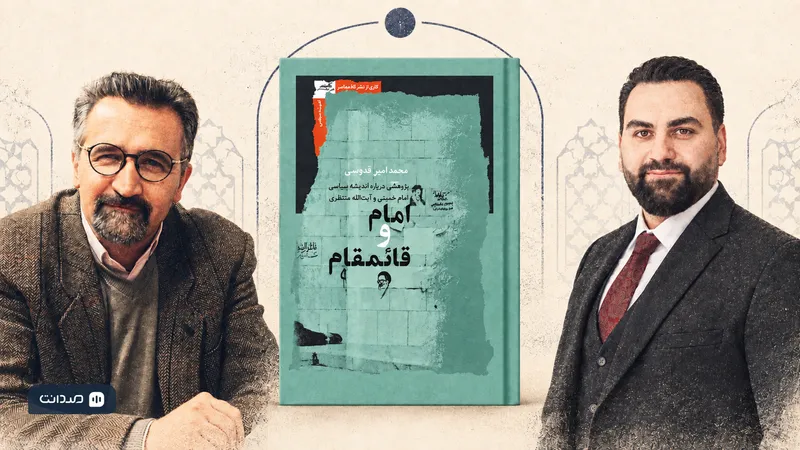


Mohammad Amir Ghodousi
Book AuthorStates are shaped and produced by the customs, habits, ideas, imaginings, and interests of human beings. States (systems of governance) are created so that society may be brought into order, the fabric of affairs may not fall apart, and the common good and public interest may be secured. Systems are placed at the service of order so that human beings, the noblest of creatures, may find a moment of repose and set their body and soul on the path of flourishing.
With this description, the raison d'être of states and political systems can be understood as serving, administering for, and acting as servants of humankind. Therefore, no political system is so valuable that it may be permitted to disregard human beings, their rights, freedoms, and human dignity. A state whose preservation requires disrespecting the sacred essence of humanity is not worthy of defense.
It is true that the reason of the state may be regarded as the rational foundation that supports and safeguards a political system; yet a state that turns its back on the true rulers (the people) has betrayed both the concept of reason and ethics. A state that does not rely on the will of the people as a whole will lose its way and lead both itself and the nation toward ruin.
Dr. Mohammad Amir Qodousi is a conscientious, perceptive, dynamic, and truth-seeking researcher who, in the book Imam and Successor, has examined, criticized, and analyzed the issues of ethics, power, the state, and humanity. The foundation of the author's critical analysis is the ideas and actions of Ayatollah Ruhollah Khomeini, the first leader of the Islamic Republic, and Ayatollah Hossein-Ali Montazeri, his removed successor. Naturally, when the author passes judgment on the intellectual or practical approaches of these figures, one may agree or disagree with him; however, what has been and remains strategically important to me as a guiding principle of this research is that the author has made every effort to remain faithful to the truth.
A reader may not accept some of the criticisms of the book regarding either of the aforementioned figures, but this does not diminish the value of Dr. Qodousi’s work, because, in our view, the value and significance of his research lies in raising a major question: Have the political ideas and actions of these two figures been consistent with the standards and foundations of ethical theories?
Answering this question in an unusual and authoritarian environment is not an easy task, but Qodousi has succeeded in carrying it out well. The central concern of the researcher’s inquiry revolves around this question: Can ethical rules be violated in order to preserve a political system? Does the preservation of the system take priority, or the preservation of ethical principles?
To answer this question, the author traverses a difficult path and ultimately undertakes distinctions and elaborations. These distinctions and elaborations pass through the terrain of ethical schools and arrive at the arena of the history of thought and politics.
Our understanding of the matter is that the more the structure of power distribution and the design of political and administrative institutions are compatible with the principles and standards of reason, the collective wisdom of rational people, and the will of the people at large, the fewer their conflicts with ethics will be. The great conflicts between ethics and power usually arise in structures where political institutions and rulers present a definition of governance that does not accord with the preferences of the people. Policies whose outcomes do not secure the common interests of the nation will inevitably come into conflict with ethical foundations.
In any case, I recommend a tolerant reading of this book to scholars, those engaged in culture, law, and politics.



Discussion0 comments
No comments yet; let yours be the first voice.