Religion
Farhad Shafti: A Theology of Sorrow
In his exposition of the theology of sorrow, Farhad Shafti examines God's relationship to grief in the Abrahamic faiths and, by analyzing anthropomorphic divine attributes, asks: 'If God were to grieve, what would He grieve over?'

A Theology of Sorrow
Farhad Shafti
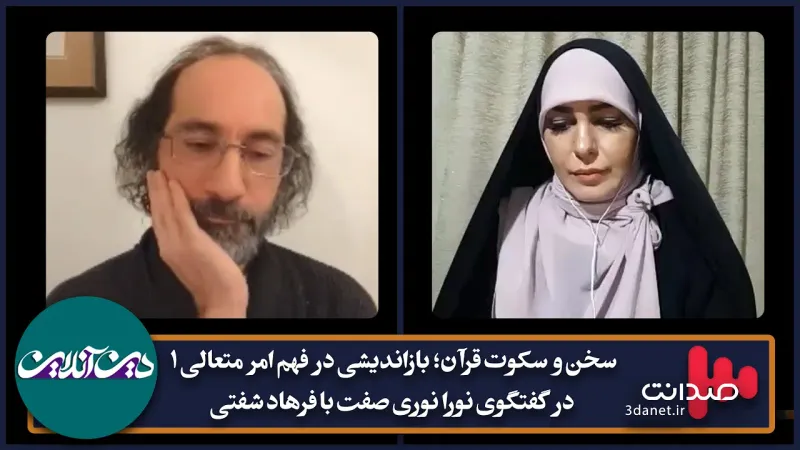
Note: What you are reading is the edited and expanded text of a discussion that took place on DinOnline Instagram on 17 August 2021 (watch it here). In the written version of the discussion, the conversational language has been preserved; also, to maintain the coherence of the discussion, the dialogue with the program host, which was only relevant to the live discussion, has been removed. To avoid lengthening the text, the question-and-answer section has also been removed, with only the answer to one question appearing in a footnote. Further explanations to better clarify the discussion or to document claims have also been added in the footnotes.
The title of the discussion is a theology of sorrow. When I say a theology of sorrow, what I really mean is the relationship between sorrow and that image we have of God in the Abrahamic religions. I think that if we can discuss and explicate God's relationship with sorrow, we can claim that we have, if not fully understood a theology of sorrow, at least talked about it.
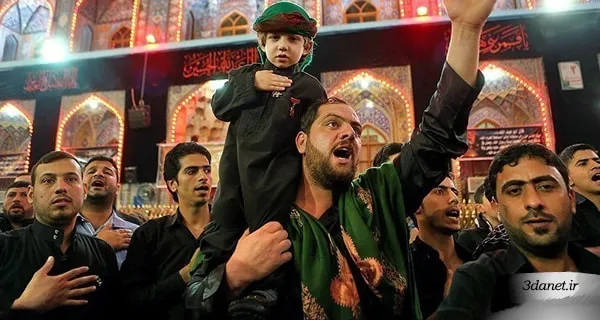
My talk will have three parts. The first part will be the longer one, and in it I will directly try to address the question of what one can do with the question of a theology of sorrow and what God's relationship with sorrow is. In the second part, based on the conclusions of the first part, I will try to discuss what the practical meaning of a theology of sorrow is for a human being who considers themselves a servant of that God. In the third part, naturally, in keeping with these days and these nights, I will bring the discussion to the matter of Imam Hussein and the mourning for him.
Part One: God's Relationship with Sorrow
I begin the first part with this question: "Does God become sorrowful?" By God, I mean that image of God we have in the Abrahamic religions, and here I do not mean other images of God or an impersonal God, although (in footnote 8) I will explain that the conclusions of this section are largely generalizable to other images of God as well. An acceptable answer to this question is that God cannot be anthropomorphic, and therefore He does not become sorrowful. We find the same in the Quran, where it says "... There is nothing like unto Him ... – 42:11," and also where His names such as the First and the Last, the Manifest and the Hidden, the All-Hearing and the All-Seeing are mentioned. A God whom we know to be Omnipotent, why and how could He become sorrowful? Sorrow, though respected, is also in a way a sign of limitation and weakness. We usually become sorrowful when what we wanted to happen has not happened.
Nevertheless, can it not be said that for the same reason that God cannot have sorrow, He also cannot have wrath, cannot be in the business of taking revenge, cannot plot, and cannot forget the one who has forgotten Him? Like sorrow, wrath, plotting, taking revenge, and forgetting can also be signs of weakness. So why have these expressions appeared in the Quran?[1]
This brings us to the next point in this section, namely that in the Qur’an certain expressions are used for God that humans use for themselves, such as wrath, vengeance, and cunning. In light of verses like “There is nothing like unto Him,” the conclusion we can draw is that the meaning of these expressions is not that God becomes wrathful or practices cunning like a human being; rather, the referent of such verses returns to the Qur’an’s addressee, i.e., the human being. In fact, such verses indicate that you, O human, perform an action such that, were God to become angry, He would become angry here; were God to forget you, He would forget you here. The emphasis is on the human act, and on the fact that the outcome of this act is such that it is as if God has become wrathful with you, or you have fallen into God’s cunning, or as if He takes vengeance on you or has forgotten you.[2] In other words, wrath, cunning, vengeance, and other anthropomorphic expressions for God speak of a reality in the transcendent realm that, for us humans in the material world, can be depicted with these expressions. Thus, it can be said that from a theological, philosophical, and divinity perspective in the Abrahamic religions, if we were to say that God becomes sorrowful, it is acceptable given what I have explained.[3]
Another point is that we know that sorrow is not attributed to God in the Qur’an. In the Torah and the Gospel, however, although not abundantly, we see expressions that clearly or implicitly attribute sorrow to God. In Genesis 6:5 and 6:6, for example, we read that when God saw the evil that man had begun on earth—and which still continues!—He regretted that He had made man on the earth, and of course this “regretting” also goes back to the same kind of expressions like wrath that we discussed earlier. It goes on to say, “and (the Lord) was grieved in His heart.”[4] So although we can say that sorrow is not attributed to God in the Qur’an, we cannot say that sorrow is not attributed to God in the scriptures of the Abrahamic religions, because this expression appears in the Torah. I cannot prove it, but my supposition is that the reason sorrow is not attributed to God in the Qur’an, while attributes like vengeance, anger, and cunning are attributed to Him, is due to the culture of the addressee’s time; that is, attributes were attributed to God that are power-laden, and attributes were not attributed that could, in the addressee’s mind, present an image of God as helpless, even if it could be explained.
With these explanations, we can now bring sorrow into this discussion, like other human attributes such as wrath and cunning, without a theological problem arising. We can look at it this way and say that yes, God does not truly become sorrowful, but to elucidate God’s relationship with sorrow, we pose the question: “Were God to become sorrowful, what would He become sorrowful about?” I should explain that by “were He to” I do not mean that we are engaging in fantasy. The phrase “were He to” is to remedy the limitation of language, but conceptually, like God’s wrath or cunning, it speaks of a reality. In truth, we see a consequence in the real world that is such that it is as if God has become sorrowful at the occurrence of something.
To answer this question, we need to delve into the depth of the concept of sorrow and define it, and then try to find a relationship between sorrow and God based on Qur’anic concepts. It seems that among many different definitions of sorrow, there is a common denominator, which is: “A feeling that comes to a person when it seems to them that they have lost something valuable.” Now, either this valuable thing has been lost to them, or it is inaccessible, or someone else’s valuable thing has been lost and that person is valuable to the individual. So the entire discussion is about losing something valuable. Now, if we accept that sorrow means losing something valuable, and if we accept, with the explanation I gave, that sorrow can also be attributed to God, the question is: “What is valuable to God?”[5]
This question is both difficult and easy. Many things can be named that are valuable to God, such as monotheism, performing prayers, good deeds, but I emphasize here something that can encompass all of these and, in my view, is the most valuable to God, and that is "truth" (Haqq). By truth here I mean the core meaning of this word, which, through spiritual commonality, has different applications,[6] and I particularly mean truth in opposition to falsehood, and also truth and its relation to injustice. In the Quran, there are more than 220 verses about truth, especially truth versus falsehood. Reading these verses, we see that it is not the case that God proves truth through Himself, but rather God proves Himself through truth. God does not say that this is the truth because I say so, but rather says that I am God because what I say is the truth. Perhaps with a little boldness and exaggeration, I could say that in the Quran there is a concept that is higher than the concept of God, and that is "truth."[7] Yes, from a philosophical-theological perspective, truth and God are indeed one; as the mystics and sages say, God is the Truth of truths, and it is also stated in the Quran that God is the Truth, and we also consider Truth to be among the names of God. I, however, am speaking from the perspective of God's interaction with humanity.
I will review just a few verses of the Quran on the importance of the concept of truth here. In Surah Fussilat, verse 53, we read: "We will show them Our signs in the horizons and within themselves until it becomes clear to them that it is the truth..." (Soon We will show them Our signs in the horizons of the universe and in their own souls, until it becomes manifest to them that He is indeed the Truth... – translation by Asghar Barzi). What need does God have to prove Himself or His Quran? This is the Quran's concern: to prove itself through truth. In verse 54 of Surah Al-Hajj, after an incident that happened to the Prophet, which is beyond this discussion, it is stated that God establishes His verses firmly, then it says: "And so that those who have been given knowledge may know that it is the truth from your Lord, and believe in it, and their hearts humble themselves before it..." (So that those who have been given knowledge may know that it is the truth from your Lord, and believe in it, and their hearts may humbly submit to it... – same translation). In verse 1 of Surah Ar-Ra'd, we read: "... And that which has been revealed to you from your Lord is the truth..." (... And that which has been revealed to you from your Lord is the truth, but most people do not believe... – same translation). In Yunus 94, it is stated: "... The truth has certainly come to you from your Lord, so never be among the doubters" (... Indeed, the truth has come to you from your Lord. So never be among the doubters – same translation). This emphasis on truth and on proving the truth to the audience contradicts Ash'ari thought, which considers God Himself to be the criterion of truth and concludes, for example, that if in the Hereafter God were to cast the good into Hell and the evil into Paradise, this would, at least in terms of divine justice, be the truth. Based on the Quran, however, this is not the case; it is truth that is the criterion for God.
This extends to other concepts that originate from truth and are branches of truth. For example, "righteous deed" – does the Quran detail righteous deeds? No, a few instances are mentioned, but in general, the discernment of righteous deeds is left to human beings because that truth which is the source of righteous deeds is visible and comprehensible to humans; it is part of their innate nature. Another example is "enjoining what is right" (Amr bil Ma'ruf); this does not mean imposing belief, but rather Ma'ruf is that which everyone recognizes as good. It is a truth that everyone recognizes as truth. When the Quran says that on the Day of Judgment no injustice will be done, it speaks of this injustice in our language, not that something which appears to be injustice to humankind is not injustice and is truth simply because God is the agent of it. This is not the case; the meaning of such verses is that what God does in the Hereafter, especially from the human perspective, is the very essence of truth and is not injustice.
So, if we were to have an interpretation based on the Quran regarding when God becomes sorrowful, considering the meaning of sorrow and the value of truth, I present this theory as follows: "God becomes sorrowful when a truth is lost. The causes of sorrow for God are the loss of truth." For me, this proposition is the summary of the result of contemplation on the concept of the theology of sorrow and the core of this concept.[8]
Part Two: Sorrow and Humanity
So far we have spoken about sorrow and God. Now let us briefly address sorrow and the human being. Interestingly, in the Qur’an, although sorrow is not attributed to God, it is frequently attributed to human beings, using the word “ḥuzn,” as in “lā khawfun ʿalayhim wa lā hum yaḥzanūn” (no fear shall be upon them, nor shall they grieve), which appears often in the Qur’an. It then states that in the Hereafter, the saved will have no sorrow: “Yā ʿibādi lā khawfun ʿalaykumu l-yawma wa lā antum taḥzanūn – 43:68” (O My servants, today no fear shall be upon you, nor shall you grieve – translation by Asghar Barzi). Why will they have no sorrow? Because the criterion of truth is established in the Hereafter: “wa-l-waznu yawmaʾidhin al-ḥaqq … – 7:8,” meaning the measure that Day is the truth, everything is truth, and when everything is truth, no truth is lost, and when no truth is lost, there will be no sorrow or grief. That earlier proposition—that the cause of sorrow for God is the loss of truth—holds true for the human being as well.
This sameness in the causes of sorrow is, of course, not unexpected. In the Qur’an, the human being is encouraged to be on a path that takes on a divine hue, ṣibghat Allāh, and what hue is better than God’s hue (2:138). To have God’s hue means to possess the attributes of God within this very human limitation. “Nafakhtu fīhi min rūḥī” (15:29), meaning “I breathed into him of My spirit,” can be a reason for the human being’s potential capacity to take on the hue of God. That is, the human being, with all its limitations, is a godlike being unto itself. The same attributes and the same values also find a place within the limited human framework. What does this mean? It means that the closer a human being draws to God, the more it takes on a divine hue, the more the loss of truth grieves it, inflames it. From this perspective, human sorrow is an extension of God’s sorrow.
It is as if the God of the Qur’an tells the human being precisely this: that the remedy for your pain, in terms of sorrow, in terms of not suffering loss, is to remain with the truth, where it says: “Wa-l-ʿaṣr, inna l-insāna la-fī khusr, illā lladhīna āmanū wa ʿamilū ṣ-ṣāliḥāti wa tawāṣaw bi-l-ḥaqqi wa tawāṣaw bi-ṣ-ṣabr.” My understanding is that the key phrase in this surah is “tawāṣaw bi-l-ḥaqq” (enjoin one another to truth). It speaks of a faith that leads to righteous action, and righteous action that includes enjoining one another to truth, and of course this enjoining to truth also requires enjoining to patience, because standing with the truth is not always easy. Moreover, you cannot truly enjoin others to the truth unless you yourself stand by the truth. One who has eaten dates cannot forbid others from eating them.
I was a little concerned that in these difficult circumstances, with illness and economic problems throughout the world and especially in Iran, we want to talk about a theology of sorrow. But if we see sorrow from this viewpoint, that is, as a feeling arising from the loss of truth, then this sorrow reaches its destination and does not turn into despair; rather, it becomes a constructive sorrow. It becomes a sorrow that leads to righteous action. The loss that this surah speaks of does not occur, or occurs less. If we load this meaning onto sorrow—that the loss of truth causes sorrow—then this might become a motivation for each of us to try to play our part in upholding and safeguarding the truth. Perhaps this is how one can cope with sorrow and bring it to fruition.
Part Three: The Sorrow of Imam Husayn and Mourning
I imagine that when we look at the event of Karbala, we see that Husayn is, in reality, a beautiful allegory of Surah al-ʿAṣr. See how much Imam Husayn, throughout this journey, directly and indirectly refers to truth and how much he refers to patience. The entire story of Husayn and Karbala is as if a performance of Surah al-ʿAṣr. Sayings of his along the path to Karbala have been narrated; see what Imam Husayn’s concern is: “A-lā tarawna anna l-ḥaqqa lā yuʿmalu bih,”[9] (Do you not see that the truth is not acted upon?). See where Imam Husayn’s sorrow comes from. Imam Husayn’s concern is the truth itself. It is the same concern that his God has.
You have heard the famous story of the Sultan and the two tailors.[10] Two tailors devise a trick and say they have made a garment that only pure people can see, and others cannot see it. In reality, they had made a fool of the Sultan. They pretend the garment is ready and dress the Sultan in it. The Sultan, too, sees no garment on himself in the mirror, but so as not to be accused of impurity, he pretends he sees it. The Sultan's entourage, though they see no garment on the Sultan, praise it. The Sultan leaves the palace to show off his, as he imagines, splendid garment to the people. The people, too, are astonished to see the Sultan naked but say nothing; instead, they even cheer for the Sultan and his supposed garment. Amidst this, suddenly a child points a finger at the Sultan and says, look, the Sultan is naked, and as he says this, the people also laugh at the Sultan. Everyone uses this story in their own way. For some, the Sultan and his pride are interesting; for some, the Sultan's entourage who dare not speak; for some, the people who see and say nothing. For some, however, that child is interesting. The child, possessing a pure heart free from expedient complexities, does not care what others say; he says what he sees as the truth. The event that led to Karbala was of this kind. In that terrifying situation, it is Hussein's sacred concern for truth that moves him to action. He is the one who does not care what the crowd thinks; he stands for truth to the very end and gives his life in this path, and for this reason, he is a "martyr," because he bears witness to the truth.
The discussion above was about a theology of sorrow, not a theology of mourning, but perhaps some conclusions for a theology of mourning can also be drawn from this discussion. I will raise two points:
First, it is good to be aware of what the main reason for our sorrow and mourning for Imam Hussein truly is, or what it should be. Is it sufficient that the reason for our sorrow is that Hussein was the grandson of the Prophet? No! In the Quran, we read about the son of Noah that he was not worthy of his father. Yes, being the grandson of the Prophet brings respect and affection, but this is not the main reason for our mourning for Hussein. Is the reason we must be sorrowful and mourn for Imam Hussein the hardships, difficulties, and calamities he endured? Of course, these hardships and calamities grieve and rend the heart, but here too, my claim is that this is not the main reason either. You can find a group with whose movements, demeanor, character, and thoughts you do not agree at all—a group of bandits and criminals. Now, for whatever reason, this group has also been killed in a very terrible way. You might not approve of the way they were treated, but you certainly will not feel a sorrow for them as deep as your sorrow for Imam Hussein. Is the reason we are sorrowful for Imam Hussein and mourn him simply because he is the third Imam of the Shia? Not necessarily; must one be Shia to mourn for Imam Hussein? So what is the main reason we mourn? I say the main reason is precisely Imam Hussein's alignment with truth, his solitude in upholding the truth, and his standing for it to the very end and to the point of death. This is the main reason for our mourning for Imam Hussein. We mourn for truth in the name and memory of Imam Hussein.
The second point is, do I mean that when we people go to mourning gatherings, we must only think about this, and only these matters should be told to us, and we should not give importance to the emotional aspects of mourning? No, I am not saying that. Such a thing would not be realistic or practical at all. Mourning certainly has cultural aspects, and many of these are also very beautiful. Such an expectation cannot be had, but another expectation can be had, and that is that the experience of mourning for Imam Hussein should incline us more towards truth and truthfulness, make us stand more firmly for truth, and cause us to shun falsehood and oppression. Let us look at it this way:
Repentance: It is said that one of the signs that a person's repentance has been accepted is that the person does not return to the sin they committed.
Prayer: The Qur'an says, “… indeed, prayer prohibits immorality and wrongdoing …” (29:45). Prayer restrains from indecency and evil. So it can be said that one of the signs of a correct prayer is that it distances you from indecency and evil.
Thus:
Mourning: One of the signs that a mourning ritual has been correct and proper is that, through its effect, we stand with the truth, are truth-oriented, are not with falsehood, do not commit injustice, and become agitated at the sight of falsehood and injustice. If we do not derive such an outcome from mourning, then with all humility and respect I submit that if a time machine existed and took us back to that time and place, there would be no guarantee that we would not be fighting on the side of falsehood against this very Imam Hussein for whom we beat our chests.
It is like fasting, about which it is said, “that you may become righteous” (la‘allakum tattaqūn), meaning we fast to practice piety. If fasting does not culminate in piety, it is entirely mere hunger and thirst, and likely overeating at the time of breaking the fast. Mourning is likewise. If our mourning leads us, in practice, to the result of being more devoted to the truth and, especially, not committing injustice ourselves, then like the fast that connects to piety, this mourning also finds its true meaning. Otherwise, we have merely beaten our chests, and God willing, God helps, but we have not been able to achieve that primary result.
I conclude this discussion with some verses from the Mathnawi of the Idol-Smasher of Babylon, the late Mehdi Hamidi. These verses depict how, among Abraham’s people, a woman is being sacrificed to the idols, and everyone stands watching, no one does anything, and everything seems normal, but Abraham is restless. In these verses, the poet portrays Abraham standing alone with the truth. This is the scene after Abraham has seen what transpired and has become agitated, pondering a solution; he pauses and gazes at the city, the mountains, and the plain:
The sky leaned its flank upon the mountains / The mountains, kneeling camels
Again, wherever he looked, wherever he gazed / That axe-wielder stood, that woman wept
From within he moaned, “O woman, I am coming” / “Hark, O axe-wielding man, I am coming”
He turned toward the temple, a mountain at his back / And that great axe in his fist
He went, and one man went, and went like a mountain / He went, and alone he went, and a multitude went
Neither idol nor temple nor aloes-wood remained / Neither axe-wielder nor Nimrod remained
.
.
[1] There are many verses that refer to divine wrath, including at the end of Surah Al-Fatiha. For plotting, see verse 3:54; for vengeance, for example, verses 3:4, 7:136; and for forgetting those who forget Him, verse 9:67.
[2] As an example, see Al-Razi’s Great Commentary on God’s plotting in verse 3:54 (Vol. 8, p. 236, Dar Ihya’ al-Turath al-‘Arabi) and the explanation of being forgotten by God in the commentary on verse 9:67 (Vol. 16, p. 97).
[3] I do not use the terms literal and figurative because, in my view, this concept can be more complex and profound than this division. Sometimes such categorizations may restrict the perspective of thought from what is. It might be claimed that every human attribute (such as sorrowful, wrathful) is in fact a manifestation of the reality of one of the divine attributes. With this view, if we use the term “figurative meaning” for divine sorrow and wrath, we may not do justice to the matter.
[5] This discussion could also be pursued in reverse, that is, from the human to God: we could analyze human sorrow to see what is valuable to a human being, and then, considering that according to the Quran the spirit of God has been breathed into the human, find what its equivalent is for God. As I understand it, both paths of reasoning lead us to the same conclusion.
[6] Jurjānī (ʿAlī ibn Muḥammad), in Muʿjam al-Taʿrīfāt (ed. Muḥammad Ṣiddīq al-Minshāwī, Cairo: Dār al-Faḍīla, p. 79), defines ḥaqq as: "al-thābit alladhī lā yasūghu inkāruhu" (that which is established and undeniable). Abū al-Qāsim al-Khūʾī, in Miṣbāḥ al-Faqāha (Qom: Maktab al-Dāwarī Publications, 1377 AH, vol. 2, p. 54), writes: "… the word ḥaqq in the language means thubūt (establishment, constancy), and therefore it is correct to apply it to any matter that is established in its appropriate context, whether this establishment is existential or conventional, and in this sense the word has been used in several places in the Noble Book." His teacher, Muḥaqqiq Iṣfahānī, held a similar view (Ḥāshiyat al-Kitāb al-Makāsib, Qom: al-Muḥaqqiq Publications, 1419 AH, p. 44). On this basis, Jawādī Āmulī explains human entitlement to rights by saying that "those matters are established for him" (Ḥaqq wa Taklīf dar Islām, Qom: Isrāʾ, 1385 AH, p. 238).
[7] I uttered this hyperbolic and audacious sentence solely to emphasize the importance of the concept of ḥaqq in the Quran, but if instead of "the concept of God" I use the phrase "the image we have of the concept of God," then I consider this sentence neither audacious nor hyperbolic: "In the Quran, there is a concept that is higher than the image we have of the concept of God, and that is ḥaqq."
[8] I believe a similar proposition can be stated for an impersonal God as well. In general, "the cause of sorrow is the vanishing of ḥaqq." That absolute reality, which some consider a personal God and others an impersonal God—God, or the entire system of existence, or whatever we may call it—is with ḥaqq in such a way that if a ḥaqq vanishes, it is as if it becomes sorrowful, and we see and feel the effects of this sorrow in the horizons.
[9] Ibn Shuʿba al-Ḥarrānī, Tuḥaf al-ʿUqūl, ed. ʿAlī Akbar Ghaffārī, Qom: Islamic Publishing Institute, 1363 AH, p. 245
[10] This story is, of course, by Hans Christian Andersen, but I mistakenly said during the talk that it is from Rumi and in the Masnavi! I apologize to the listeners.
.
.
Discussion0 comments
No comments yet; let yours be the first voice.