Literature
Forugh, Decline, and Hope: A Philosophical Lifeworld or Bipolar Disorder?!
Diagnosing Forough Farrokhzad with bipolar disorder based on her poetry is a weak argument, for a poem is not a precise mirror of the poet's mental state. Rather than positing a mental illness, her lived world can be understood as a philosophical reading of simultaneous decay, hope, and self-creation.
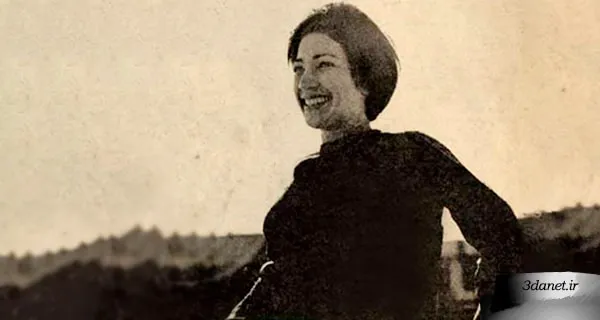
Recently, in the publishing sphere and in cyberspace, articles have been published attributing bipolar disorder to Forugh Farrokhzad. In this piece, I first want to critique one of the articles written on this subject, and then, by citing reasons, show that at least by resorting to Forugh's poems, we cannot prove that ascribing a bipolar disorder to her is correct. In the end, I will present my own view on the coexistence of the components of decline and hope in Forugh's lifeworld, and explain that instead of proposing a mental illness, we can, by considering Forugh's lifeworld, engage in a philosophical and deeper reading of her.
Forugh, Decline, and Hope:
A Philosophical Lifeworld or Bipolar Disorder?!**
Mohammadreza Vaez Shahrestani Philosophy Researcher at the University of Bonn, Germany s5movaez@uni-bonn.de
Recently, in the publishing sphere and in cyberspace, articles have been published attributing bipolar disorder to Forugh Farrokhzad.[1] In this piece, I first want to critique one of the articles written on this subject, and then, by citing reasons, show that at least by resorting to Forugh's poems, we cannot prove that ascribing a bipolar disorder to her is correct. In the end, I will present my own view on the coexistence of the components of decline and hope in Forugh's lifeworld, and explain that instead of proposing a mental illness, we can, by considering Forugh's lifeworld, engage in a philosophical and deeper reading of her.
First, when encountering such material that contains the mentioned claim, the fundamental question is: assuming such a claim is true, what help would attributing such a mental illness to Forugh Farrokhzad, especially in this toxic climate of people's reactions to mental illnesses, ultimately provide to our poetry and literature?
Setting aside this important question, in an article titled "An Exploration into the Psychology of Forugh Farrokhzad's Poetry and Personality", the author has attempted, first based on Forugh's fourth collection, namely the collection "Another Birth," and then based on references to her personal and psychological life and circumstances, to convince the reader that Forugh suffered from bipolar disorder. Considering that I fundamentally hold the theory that critique and opinion should be based on works and not on the personal life and psychological characteristics of the individual under critique (whether it concerns the critique and examination of the poems of someone like Forugh Farrokhzad, whose poems are self-expression and the expression of her own personal life, or another individual whose personal life bears no relation to their works and poems[2]), I will only critique the author's first approach, which is presented based on the collection "Another Birth," in this space.
Based on the first approach, the gist of the author's words is that in the poems of the collection "Another Birth," two dominant themes are striking: one is decline and death, and the other is the passion for life and the joy of love. They explain as follows:
"The fact that the poet has well embedded two contrasting themes in both categories of poems and successfully executed them within the fabric of the poem, besides linguistic skill and knowledge of poetry, speaks of a spirit brimming with various contradictions and the poet's turbulent states. Poems that were composed within a not very long interval of each other and are therefore placed in one collection are clearly divided into two categories: black and white."[3]
Then, by elaborating on details and citing some of the white and black poems of this collection, or poems that contain both white and black fragments, they have concluded that such an approach to life could only come from an individual possessing a bipolar personality.
What I find highly significant is that, even if we were to agree with their arguments in this regard, one could at most say that Forugh suffered from this condition only during the period of her life when she was composing the poems of the collection Another Birth, and nothing can be said about the other stages of Forugh’s life before and after this period. Of course, they have only referred to the collection Another Birth; for Forugh’s other collections, whether those of the first period of her life—namely Captive, The Wall, and Rebellion—or her final collection, do not possess such a characteristic, and for this reason, citing these collections would not have added anything to the strength of their argument.[4]
On the other hand, in the view of some psychiatrists, most artists are suspected of suffering from bipolar disorder; in their opinion, the presence of this illness is a factor in and cause of the creation of many enduring works of art. Taking this point into consideration, if we wish to examine Forugh’s poems precisely and meticulously based on psychiatric science, we will reach the conclusion that the citations in which the author shows the poet’s states to be different and contradictory, even within a single poem, are not a sufficient and scientific criterion for attaching the bipolar label to the individual in question! For, both in terms of number and in terms of time intervals, the manic and depressive states of a bipolar individual have specific measures and minimums, and it is not the case that a bipolar patient is in a manic state in one stanza or line of a poem and immediately in a depressive state in another stanza or line!
Moreover, because the poet, at the moment of composition, is in a state of imagination, ecstasy, and receptions from her unconscious (which some interpret as inspiration), her poem can be a simultaneous and concurrent report of mania, depression, or joy; for the poet, at the moment of composition, free from time and space and on a journey incomparable to normal states, versifies her receptions, therefore her writing cannot be a correct criterion for describing her mental states at the moment of composition. In fact, at the moment of composition, the experiences accumulated over years in the poet’s consciousness come to a boil or eruption.
Leaving the above matters aside, the author is, on the whole, opposed to such a view of Forugh’s psychological personality and, while respecting the perspective of researchers who hold such an interpretation of Forugh’s poetry and life, is drawn to a philosophical and deeper interpretation, generally of Forugh’s poetry and particularly in encountering the concepts of decline and hope that Forugh speaks of in the collection “Another Birth.”
Forugh’s short life can be divided into three main parts: a. the period of wandering and doubt, b. the period of awareness and hope, and c. the period of despair and liberation.[5] In general, it can be said that Forugh Farrokhzad was never a passive and submissive being throughout her life. The course of her life and the thematic progression of Forugh’s poems indicate her self-construction based on free will and freedom of choice. The evolutionary course of Forugh’s existential states shows us well that she was by no means content with a predetermined essence based on her habits and instincts, and with great effort and by enduring many hardships and difficulties, she tried to change and take steps toward growth and flourishing. In other words, Forugh’s lifeworld conforms to the first principle of existentialism. That is, for her, existence precedes her essence.[6][7] In truth, she is initially intensely entangled in her habits and instincts (during the composition of the collections Captive and The Wall), then, by transcending habits and instincts through confrontation with the realm of reality, a philosophical skepticism takes shape within her, and this skepticism confronts her with endless questions. (The collection Rebellion) After that, through understanding the inner and outer worlds, she discovers decline as the dominant truth of her life and finds herself in the wasteland of awareness. (The collection Another Birth)[8]
To be more precise, if we set aside the Rebellion collection, the collection Another Birth represents the peak of Forugh’s conscious presence in the world. This collection reflects Forugh’s self-realization and awareness, which she herself calls “another birth.” In fact, during this period, having left behind the bewilderment of the first phase, Forugh, through recognizing her inner and outer worlds, comes to believe in the decline and impermanence of her life and makes her poetry the arena for expressing this awareness.[9] In the opening poems of this collection, the first manifestations of “decline” and “impermanence” are clearly visible:
So tainted is / my sorrowful love with the fear of decline / that my whole life trembles / when I look at you / it is as if from a window / I gaze at my solitary tree, full of leaves / in the yellow fever of autumn / it is as if I gaze at an image / on the turbulent currents of flowing water / . . . . What are you, but a moment, a moment that opens / my eyes / onto the desert of awareness?.....[10]
And in the poem “In the Green Waters of Summer” we read:
Lonelier than a leaf / with the burden of my forsaken joys / in the green waters of summer / I drift slowly / toward the land of death / toward the shore of autumnal sorrows / ......./ I released myself into a shadow / into the discredited shadow of love / into the fleeting shadow of happiness / into the shadow of impermanence / ......./ We sprouted on barren ground / we rain down on barren ground / we saw nothing on the roads......[11]
Also in the poem “The Wind Will Carry Us Away”:
In my small night / the wind has a rendezvous with the leaves of the trees / in my small night there is the dread of ruin / listen / do you hear the blowing of darkness? / I gaze at this happiness like a stranger / I am addicted to my despair / listen / do you hear the blowing of darkness / ....../ a moment / and after that, nothing. / Behind this window the night is trembling / and the earth is ceasing to turn.....[12]
But in this period, and precisely at this juncture in Forugh’s life, bright rays of hope also emerge in her thought, right where she says in the poem “Another Birth”:
I will plant my hands in the garden / I will grow green / I know / I know / I know / and swallows will lay eggs / in the hollows of my ink-stained fingers . . . [13]
Likewise, in the poem “The Wind Will Carry Us Away,” after Forugh speaks of her estranged gaze upon happiness, despair, and the blowing of darkness, in the continuation and in the final part of the poem, a glimmer of hope can be sought in her thoughts and imaginings:
Behind this window an unknown / worries for you and me / O you who are green from head to toe / place your hands like a burning memory in my loving hands / and entrust your lips like a warm sense of existence / to the caresses of my loving lips / the wind will carry us away / the wind will carry us away.[14]
On the whole, it can be said that in parts of some poems in the Another Birth collection, a glimmer of hope is traceable for Forugh, but it seems this hope only comes to Forugh when she is wishing in the realm of imagination. In other words, while in Forugh’s epistemological system everything reeks of decline and darkness and blackness prevail, her mind occasionally inclines toward light and hope, and the question repeats itself for her: will this blackness and decline bore a tunnel toward the light and lead somewhere?!
From another perspective, perhaps for Forugh this glimmer of hope speaks of spiritual concerns or a faith that once had a different hue on the horizon of her thought. It is as if the faith that once brought her peace and tranquility is no longer present at this stage and under such circumstances, and Forugh merely longs, with regret, for such a faith and a feeling of peace and tranquility.[15]
..... perhaps still behind the crushed eyes in the depths of the freeze/ a half-living, confused thing/ remained/ which in its feeble effort wanted/ to believe in the purity of the waters' song/ perhaps, but what an endless void/ the sun had died/ and no one knew/ that the name of that sorrowful dove/ which has fled from hearts is faith!/ Ah, imprisoned voice/ will the lament of your despair ever/ from any direction in this detested night/ bore a tunnel toward the light? ....[16]
In conclusion, the author reiterates that the era of awareness and hope, meaning that period of Forugh's life in which she was engaged in composing the poems of the "Another Birth" collection, is a phase of Forugh's life in which, while attaining a deep, philosophical perspective on the nature and origin of her life, she was still hopeful for a tunnel of light amidst the darkness and decline.[17]
.
.
Endnotes:
[1] Although many researchers and psychiatrists have previously considered themselves successful in discovering such an aspect of Forugh's personality, among the works in which such a claim has recently been made, one can point to:
Sayeh Eghtesadinia, "An Exploration into the Psychology of the Poetry and Personality of Forugh Farrokhzad", Both Poet and Poetry, Reflections on Contemporary Poetry and Poets, Nashr-e Markaz,
and Farzaneh Milani, A Literary Biography with Unpublished Letters.
[2] Provided, of course, that the poet is not a Nimaic and detail-oriented one; because a Nimaic poet, unlike classical Persian-language poets, must have their poetry observe the objectivity of the external world.
[3] Sayeh Eghtesadinia, "An Exploration into the Psychology of the Poetry and Personality of Forugh Farrokhzad", Both Poet and Poetry, Reflections on Contemporary Poetry and Poets, Nashr-e Markaz, 1394, Tehran. Republished on the Khabgard website.
[4] On this subject, see: Mohammad Reza Vaez Shahrestani, the article “An Existentialist Reading of Forugh Farrokhzad”, Ettela'at-e Hekmat va Ma'refat Monthly, No. 119, Esfand 1394.
[5] This categorization is borrowed, with slight modifications, from Mahmoud Nikbakht's book From Lostness to Liberation. In it, Mahmoud Nikbakht divides Forugh's life into three parts: a. the era of lostness and unawareness, b. the era of self-discovery and awareness, and c. the era of self-sacrifice and liberation. The author is generally in agreement with this categorization and, in order to align it more closely with the main purpose of this book, will apply some changes to it while describing Forugh's existential states and their evolution throughout these three periods.
[6] It should be noted that the concept of "existence precedes essence" within the context of the Existentialist school of thought is completely different from the application of such a concept in Islamic philosophy, and the use of such a term should not cause confusion or misunderstanding. In Existentialist philosophy, "to exist" means to attain a specifically human mode of being, and the concept of "essence" is nothing but realizing oneself through the free choice of possibilities ahead.
[7] For further explanation on this subject and citations to Forugh's poems, see: Mohammad Reza Vaez Shahrestani, the article “An Existentialist Reading of Forugh Farrokhzad”, Ettela'at-e Hekmat va Ma'refat Monthly, No. 119, Esfand 1394.
[8] An explanation of the third stage of Forugh's life, that is, the stage of despair and liberation, which pertains to her collection "Let Us Believe in the Beginning of the Cold Season," cannot be contained within this space. Those interested may refer to: Mohammad Reza Vaez Shahrestani, the article "An Existentialist Reading of Forugh Farrokhzad," Ettela'at Hekmat va Marefat Monthly, No. 119, March 2016.
[9] See: Mahmoud Nikbakht, From Lostness to Liberation, p. 37, Mash'al Publishing Institute, First Edition 1993, Isfahan.
[10] The poem "Passing," from the collection Another Birth, Forugh Farrokhzad, Collected Poems, Shadan Publishing, First Edition 2004, Tehran.
[11] The poem "In the Green Waters of Summer," from the collection Another Birth, ibid.
[12] The poem "The Wind Will Carry Us Away," from the collection Another Birth, ibid.
[13] The poem "Another Birth," from the collection Another Birth, ibid.
[14] The poem "The Wind Will Carry Us Away," from the collection Another Birth, ibid.
[15] For a classification of types of faith and an explanation of wishful faith, see: Soroush Dabbagh, "The Purity of the Song of Waters: A Reflection on the Varieties of Faith," Aseman Magazine, New Series, No. 31.
[16] The poem "Earthly Verses" from the collection Another Birth, Forugh Farrokhzad, Collected Poems, Shadan Publishing, First Edition 2004, Tehran.
[17] For further explanation regarding the component of hope in Forugh's poetry, see: The conversation between Mohammad Reza Vaez Shahrestani and Dr. Soroush Dabbagh about Forugh Farrokhzad, Ettela'at Hekmat va Marefat Monthly, forthcoming.
.
.






Discussion2 comments
سلام و سپاس ،،،اطلاع دقیقی از دو قطبی بودن ندارم در حد عامیانه افراد دوقطبی باید بلحاظ روحی و روانی و اخلاقی و فکری در دو جهت متفاوت باشند با توجه باینکه بشدت با خواهرم فروغ همذات پنداری دارم ، پس منهم باید دو قطبی باشم اما تاکنون کسی چنین برداشتی از بنده نداشته،بنظرم علم روانشناسی در واکاوی شخصیت آدمهای زنده هم دچار نقصان است و اشتباه در تحلیل رفتار افراد بارها مشاهده شده چه رسد باینکه بخواهیم فرد غایب از نظر را تحلیل کنیم و با خواندن اشعار و نامه ها و زندگی خصوصی او چیزی کشف کنیم ، با اینکه شاعر نیستم و فقط روح شاعرانه دارم و گاهی چیزی مینویسم ، و با توجه باینکه زیست بوم ایرانیان در چند قرن اخیر بشدت در بیان افکار ما موثر بوده و هست و عوامل مختلف محدودگر نظیر سنت و حکومت و تربیت خانوادگی تا اموزش های سیاسی اجتماعی در چگونه زیستن ما بیش از حد مجاز موثر هستند ، و در باره شعرا این محدودیت ها بیشتر هستند چون حساس تر هستند پس واکاوای شخصیت روانی یک شاعر تقریبا غیرممکن میشود، شاعر بهنوان یک انسان گاهی افسرده و غمگین است و گاهی شاد ، هر اتفاقی کوچکی برای شاعر بهانه میشود و بسته به شرایط آن لحظه و موضوع شعر مینویسد که علاوه بر الهام ، بخش ناخوداگاه او و یا گذشته او در کودکی و محیط زیست و انواع عوامل مختلف در بیان شعر موثر میشوند و مباحث فنی ادبی و همچنین سلیقه و یا زیبایی شناسی شاعر در تنظیم شعر ،،،،بطور مثال بنده دوست واژه ها حتی از نظر تعداد حروف در مصرع اول با مصرع دوم یکسان باشند ،،،حتی الامکان ،،،و یا تعداد واژه در هر مصرع ...چند وقت پیش در یک نامه خواهرم فروغ به برادرش فریدون دقیقا به همین موضوع اشاره کرد و از اصطلاح بخط کردن کلمات استفاده کرده بود ،،،بنظرم این گونه تحلیل ها درست نیست اما نشان میدهد جایگاه فروغ آنقدر رفیع است که فردی تلاش کند چیزی در باره او بنویسد و به کشف و شهودی برسد که حتی با واقعیت فاصله دارد
۱_ همه جانداران، احوالات متنوع و مختلف دارند، حتی دانشمندان تجربی ( فیزیک و شیمی ... ) نیز پدیده های طبیعی را متنوع توصیف میکنند اما اشکال کار از جایی شروع میشه که یک پدیده ثابت را چندین نوع توصیف کنند؛ مثلا اگر کسی تابستان را به سردی زمستان گزارش کند. در آنصورت افسردگی کمترین نگرانی اش خواهد بود. زیرا قطاری از امراض صف کشیده اند از بدبینی پارانویایی گرفته تا سلولهای بنیادی پزشکی. اما عکس قضیه چطور؟! اگر کسی، چیزی مضر و خطیر را عمدا و یکسره، سودمند بحال خودش میبیند احتمالا جراحی مغزی در انتظارش ست؛ اما اگر پدیده های زشت و زننده را ( ضمن ادراک تفاوت شان ) خوشایند و زیبا و مفید بیابد احتمالا در سطحی عالی نخبگی خلاقانه آرمیده، شبیه کشف طلا و الماس از دل خاک و سنگ. اختراعات و اکتشافات کمابیش چنین حالتی دارند. احیانا مرزهای ظریف و باریک میان جنون و نبوغ هم اینجا بارزتر میشود. اما اگر در همه موارد فوق الذکر، دیگران را نیز عملا مجبور به زیبابینی و تمجید نماید، دو حالت متصورست: در بهترین حالت جناب روانپریش آرمانگرایمان، محتاج دوا و درمان و بستری میباشد. مثل فانتزی دن کیشوتی، ( حالات مانیک در دو قطبی ها هم درین طبقه جای میگیرند ). و یا اینکه حبس و زندان با اعمال شاقه، مناسبترین سرگرمی و وقت گذرانی برای عوامفریبی و شیادی خواهد بود تا راه و رسم کسب حلال را بیاموزند. ۲_ گویند پیکاسو هم گوشش را بریده و نقاشی کرده، شاید بقول ویل دورانت، جهان هستی، نوابغ را مستثنا و اغماض کرده باشه از خطاهایشان، بخاطر خلاقیت و ابداعات آتی شان و این بهایی ست که باید پرداخته شود وگرنه همه طبقات متوسط بسمت پایین، لیز خواهند خورد. گر نبودی در جهان نقدی روان قلبها را خرج کردن کی توان تا نباشد راست کی باشد دروغ آن دروغ از راست میگیرد فروغ بر امید راست کژ را میخرند زهر در قندی رود آن گه خورند گر نباشد گندم محبوب نوش چه برد گندمنمای جو فروش پس مگو کاین جمله دمها باطلند باطلان بر بوی حق دام دلند پس مگو جمله خیال است و ضلال بیحقیقت نیست در عالم خیال